This guide contains affiliate links. We may earn a small commission if you purchase through our links, at no extra cost to you.
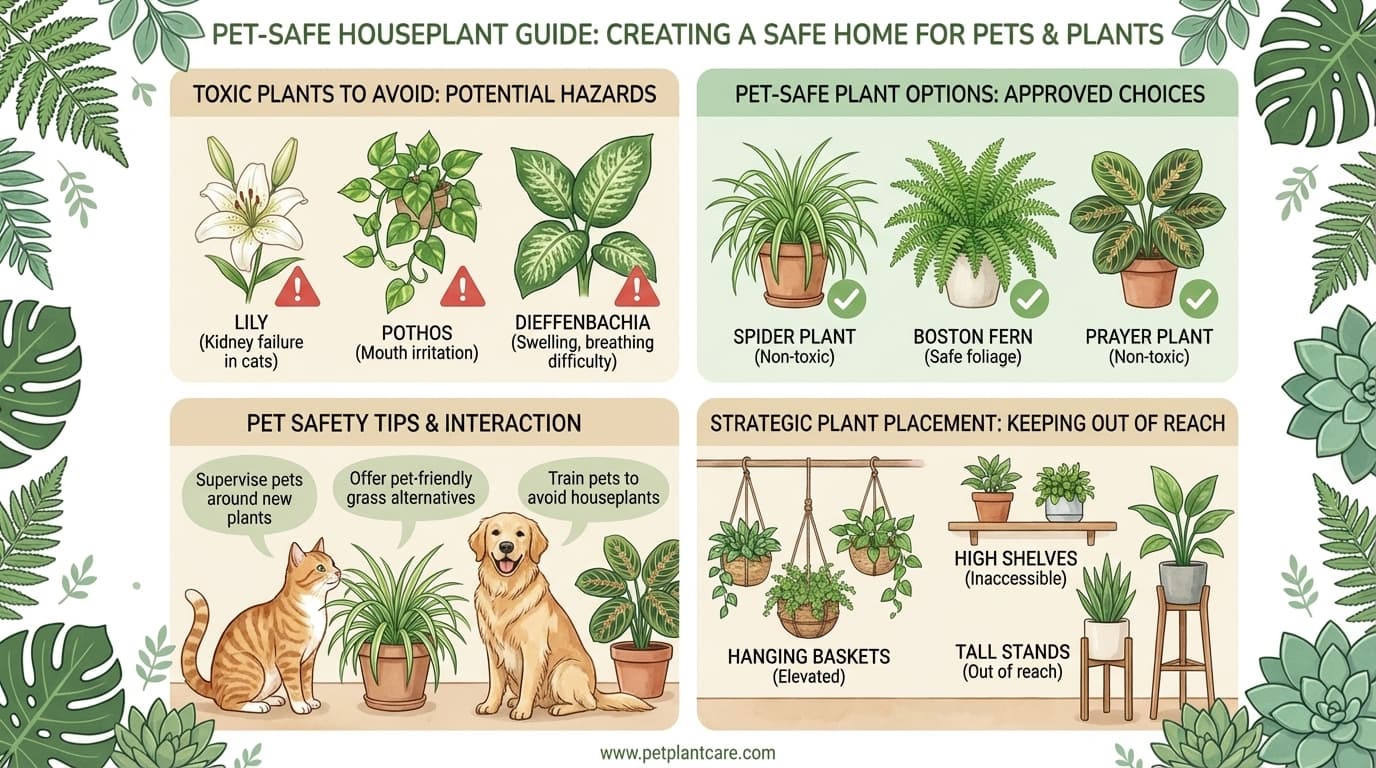
The safest pet safe houseplants are the ones the ASPCA lists as non-toxic to both cats and dogs: spider plant, Boston fern, bamboo palm, peperomia, prayer plant, and cast iron plant. "Non-toxic" means the plant does not contain a known poison — not that your pet can eat a bowl of it without consequences.
That distinction matters more than almost anything else in this guide. According to the ASPCA, a plant on the non-toxic list has no documented toxic principle, but eating enough of any plant material can still produce vomiting or diarrhea in a cat or dog. Non-toxic means "this will not poison your pet." It does not mean "this is food."
We built this page as the hub for everything a plant-keeping pet owner needs: the safe lists for cats and dogs, the plants we would not bring into a house with animals, the emergency steps, and the practical stuff nobody covers — what to do about the chewing, how to fill a dark corner when every classic low-light plant is on the toxic list, and how to treat spider mites without spraying something your cat will lick off a leaf.
If you want to check one specific plant right now, use our pet toxicity checker — it is a searchable database with separate cat and dog entries, symptoms, and severity ratings. Come back here for the strategy.
One note before we start. We are plant people, not veterinarians, and nothing here is a substitute for a vet. Every toxicity claim below is attributed to the ASPCA, the Pet Poison Helpline, or a veterinary source. If your pet has eaten something and you are worried, stop reading and call your vet or the ASPCA Animal Poison Control Center at (888) 426-4435 — the ASPCA notes a consultation fee may apply.
Cat-Safe Houseplants: What Cat Owners Need to Know
Cats are the harder animal to plant around, and it is not close. A dog interacts with whatever is at floor level. A cat treats your bookshelf as a walkway, your hanging basket as a piñata, and your fiddle leaf fig as a scratching post. When people ask us about cat-safe houseplants, the honest answer is that "out of reach" is a much weaker safety strategy for a cat than for a dog — so the plant list itself has to do the work.
There is a second reason cats need a stricter list: grooming. A cat that brushes past a sprayed or sappy leaf will lick its coat clean within the hour. Contact exposure becomes ingestion in a way it usually does not for dogs.
Where we tell cat owners to start
These are the ones we start people on, and all of them tolerate normal apartment conditions. Except where noted, each is listed by name on the ASPCA's non-toxic list:
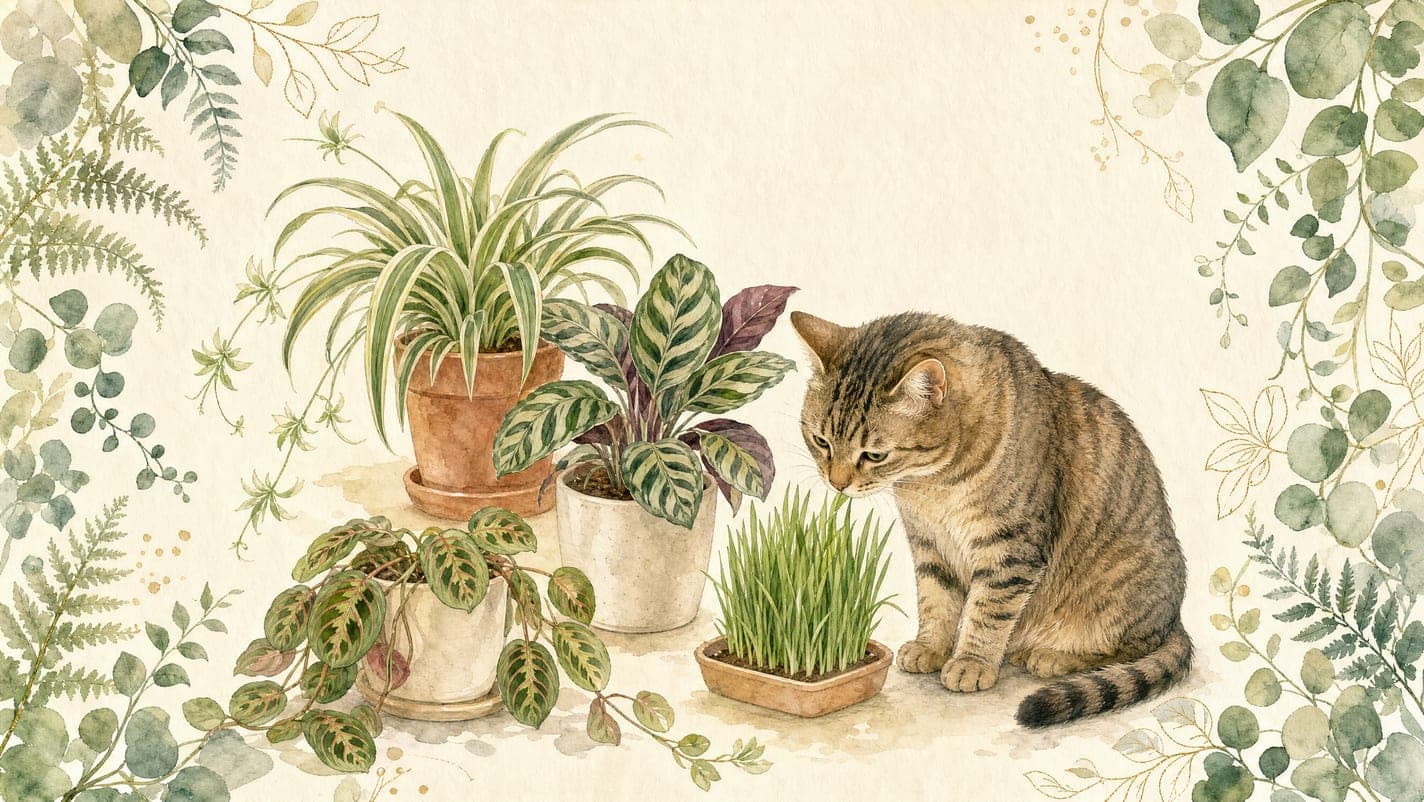
- Spider plant — the classic, and the one cats notice first (more on that below)
- Bamboo palm — soft fronds, slow, forgiving of low light
- Peperomia and watermelon peperomia — thick leaves, small footprint, hard to kill
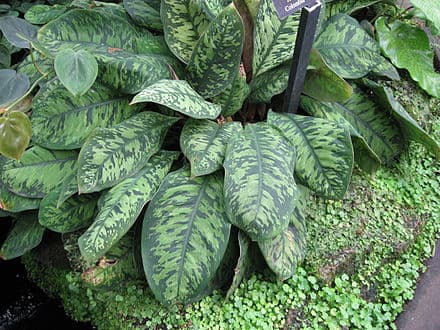
- Prayer plant and the calatheas: rattlesnake, zebrina, orbifolia
- Chinese money plant and aluminium plant — the ASPCA lists aluminium plant and several other Pilea species as non-toxic, but has no entry for Pilea peperomioides itself; that one rests on our own database rating
- Bird's nest fern, button fern, rabbit's foot fern
- Nerve plant and polka dot plant — good for terrariums, which are cat-proof by design
If you are building a first collection from scratch, cross-reference this list against our Best First Houseplants guide — the overlap between "non-toxic" and "genuinely beginner-friendly" is bigger than most people expect.
The spider plant caveat
Spider plants are listed as non-toxic by the ASPCA, and they are also the single plant most likely to get shredded. Cats are drawn to long, strap-like leaves that move in a draft — behavior sources consistently note that indoor cats without access to grass will target grass-shaped foliage. Some owners also report that spider plants seem unusually attractive to cats, though we would treat the frequently repeated "spider plants are mildly hallucinogenic" line as folklore rather than documented fact.
The practical upshot: a spider plant in a cat home is a safe plant, not an undamaged one. Expect chewed tips. And note that non-toxic still has a ceiling — a cat that eats a large volume of leaf can get transient vomiting or diarrhea from the fiber load alone.
What we would keep out of a cat's home entirely
True lilies. Not peace lilies — actual Lilium and Hemerocallis species, the ones that show up in cut-flower bouquets. We cover why in the toxicity section below, but if you take one thing from this guide, take that one.
Dog-Safe Houseplants: Building a Collection Around a Dog
Dogs are easier in one way and harder in another. Easier, because a shelf at chest height genuinely solves the problem for most breeds. Harder, because when a dog does decide to eat a plant, it does not take a polite nibble — it takes the whole thing, pot and soil included. Volume is the dog-specific risk factor.
So when we plan dog-safe houseplants, we think in two layers: a non-toxic plant list, plus a physical setup that survives a tail, a bored adolescent lab, and a digging habit.
The list we actually use
Except where noted, all of the following are listed as non-toxic to dogs by the ASPCA:
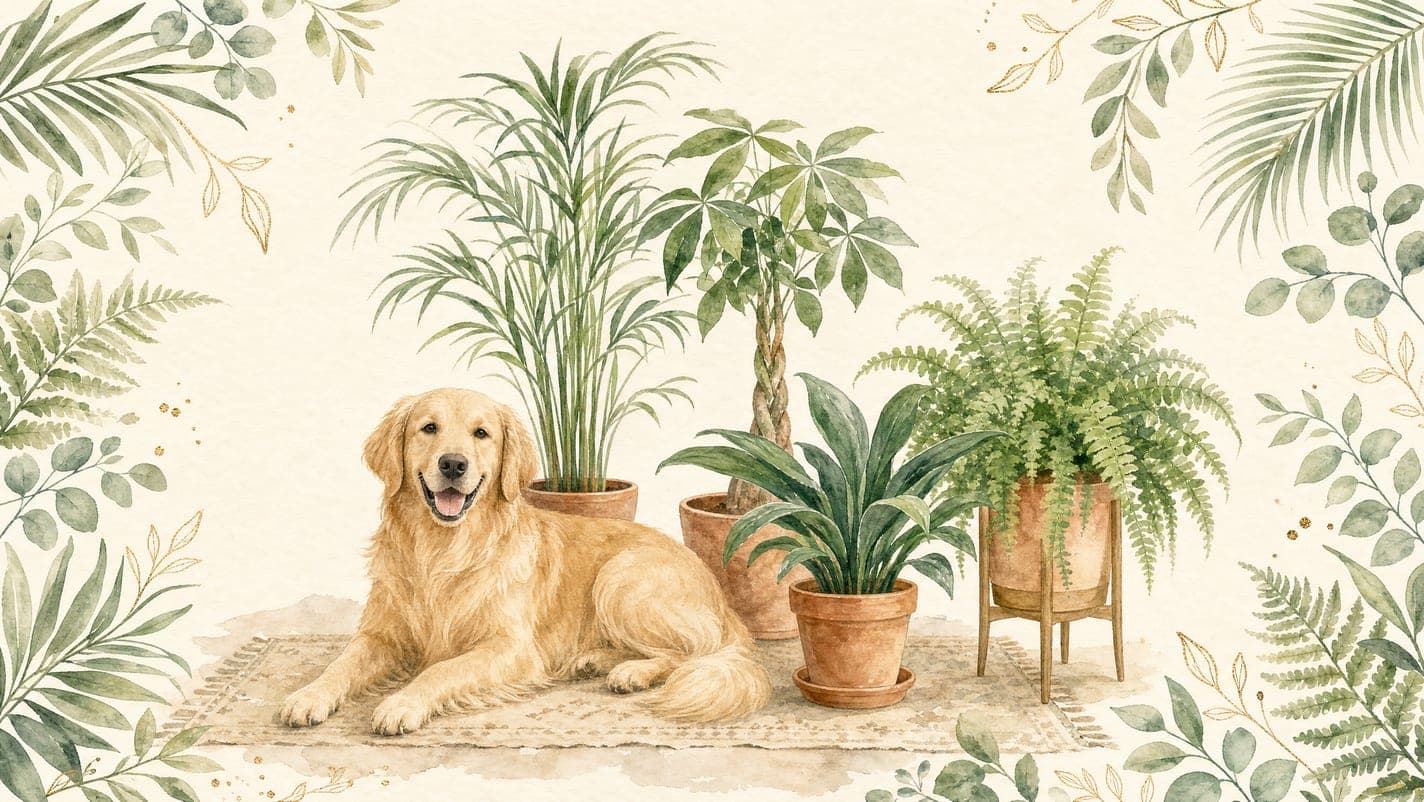
- Cast iron plant — the toughest plant on this page, and it shrugs off a knock from a tail
- Bamboo palm and pygmy date palm
- Boston fern and staghorn fern
- Money tree — a real floor-plant option that is not on the toxic list
- Elephant bush and burro's tail — succulents that are not aloe. The ASPCA lists burro's tail (Sedum morganianum); it has no entry for Portulacaria afra, which our own database rates non-toxic
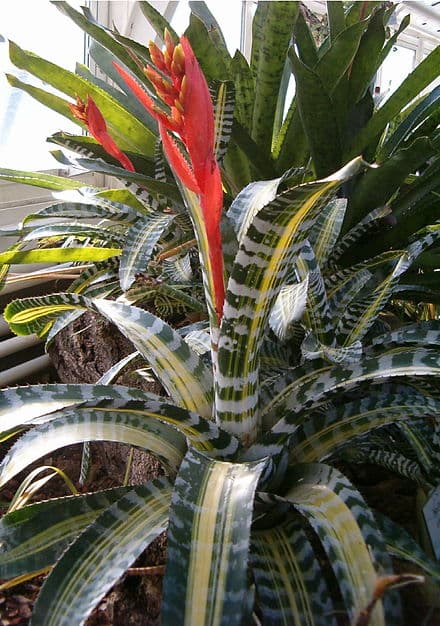
- Urn plant bromeliad and guzmania — the ASPCA lists Guzmania lingulata; Aechmea fasciata is not in its database, so that one is our rating rather than theirs
- Swedish ivy, kangaroo vine, Japanese aralia — the ASPCA lists Swedish ivy and Japanese aralia by name, and lists other Cissus species such as grape ivy as non-toxic, though not Cissus antarctica specifically
Not sure which of these suits your light and your patience level? Our plant quiz narrows it down in about a minute.
The one plant we name every single time
Sago palm. It is not on our profile list because we do not recommend it, but dog owners should know the name. Veterinary sources treat Cycas revoluta as one of the most dangerous common ornamentals for dogs. According to the Pet Poison Helpline, it contains cycasin, every part of the plant carries risk with the seed or "nut" the most dangerous, and ingestion may cause severe gastrointestinal signs, nervous system signs, liver failure and death. It is sold as a houseplant and as a patio plant, it looks like a harmless little palm, and it is not one. If you have a dog, we would not have it in the house or the yard.
Two dog-specific setup rules
Weight your pots. A terracotta pot on a plastic saucer is a tail-height hazard. Heavy, wide-based pots on the floor; lighter pots up high.
Assume the soil is the target. Plenty of dogs have no interest in leaves and enormous interest in potting mix — especially anything containing fish or bone meal fertilizer. Top-dressing with river stones is the single most effective fix we have used.
If you want a starting bundle rather than picking one at a time, the Thorsen's Greenhouse Pet-Safe Houseplant Bundle ships four 4-inch plants — around 5 to 8 inches tall — for $45.99 as of July 2026. It is a grower's-choice bundle, so the specific species vary by shipment; Thorsen's states each plant included is recognized by the ASPCA as non-toxic, and notes plainly that the plants are still not recommended for ingestion as it may cause vomiting. That is a vendor claim about their own assortment, and it is worth verifying whatever arrives against the ASPCA list before you set it on the floor.
The Plants to Avoid: Toxicity Ranked by Severity
Here is the uncomfortable part: most of the houseplants that made Instagram famous are on this list. Pothos, monstera, philodendron, ZZ, snake plant, dieffenbachia, aloe — the ASPCA identifies all of them as toxic (most in its plant database; the ZZ plant in its own published guidance on toxic houseplants). That does not mean your cat will die if it chews a pothos leaf. It does mean these are toxic houseplants to avoid if you want to stop worrying about it.
Why "toxic" is a range, not a verdict
Most of the popular offenders share one mechanism: insoluble calcium oxalates. According to the Pet Poison Helpline, these plants contain microscopic needle-shaped crystals called raphides. When an animal chews the leaf, the crystals release into the mouth and embed in soft tissue, causing intense burning, drooling, pawing at the mouth, vomiting, and painful swallowing. In rare cases, throat swelling can make breathing difficult — that is an emergency.
The saving grace, as veterinary toxicology sources note, is that the pain is immediate, which usually stops the animal from eating more. Many exposures produce no lasting clinical effect at all. That is context, not permission.
The severity tiers
Our database rates each of these; here they are grouped, with ASPCA classification as the underlying authority.
| Severity | Plants |
|---|---|
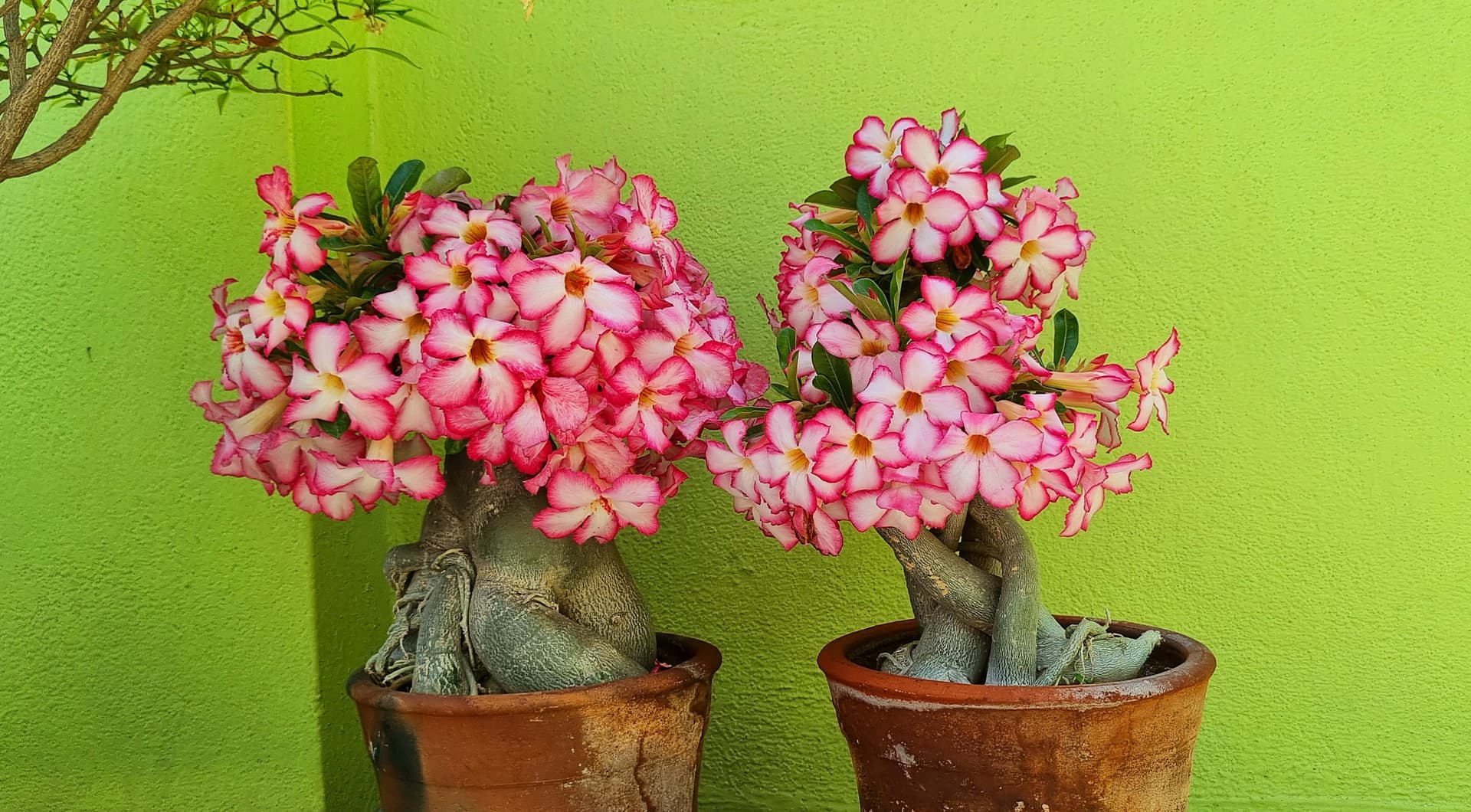
| Severe | Peace lily, cyclamen, desert rose |
| Moderate | Dieffenbachia, aloe vera, philodendron, begonia maculata, oxalis, kalanchoe |
| Mild | Pothos, monstera, snake plant, ZZ plant, anthurium, alocasia zebrina, fiddle leaf fig, rubber plant, dracaena, jade plant, croton, Chinese evergreen, umbrella plant, weeping fig, ti plant |
"Mild" plants are the ones we would allow in a home with a well-behaved adult animal that ignores foliage, placed sensibly. "Moderate" and above, we would rehome or put behind a door. For symptom-by-symptom detail on each of these, our Pet Safety and Plant Toxicity guide goes deeper on what each compound does.
The lily confusion that is genuinely dangerous
This one deserves its own section because the internet gets it backwards in both directions.
True lilies are the catastrophic ones. According to the Pet Poison Helpline and the FDA, all parts of plants in the Lilium and Hemerocallis genera — Easter, tiger, Asiatic, stargazer, and daylilies — can cause acute kidney injury in cats. That includes the leaf, the petal, the pollen, and the water in the vase. Cats have developed fatal kidney failure after licking pollen off their own fur. Veterinary sources emphasize that treatment started well after exposure may not prevent irreversible kidney damage, which makes this a same-hour emergency, not a wait-and-see one. If you have a cat, we would not accept a bouquet without checking it.
Peace lilies are a different plant with a different problem. The peace lily (Spathiphyllum) is not a true lily. The ASPCA lists it as toxic to cats and dogs, with insoluble calcium oxalates as the toxic principle and clinical signs of oral irritation, intense burning of the mouth, tongue and lips, drooling, vomiting, and difficulty swallowing. Multiple veterinary sources state directly that peace lilies do not carry the kidney-failure risk that true lilies do.
Both statements can be true at once: a peace lily is a plant we would keep out of a cat household, and it is not the plant that causes the emergency people are thinking of. Confusing the two is dangerous in both directions — it makes owners panic over a chewed peace lily leaf and, far worse, relax about an actual bouquet of stargazers.
If your cat has contacted a true lily in any form, call your vet immediately.
Emergency: Your Pet Ate a Houseplant
If you are here mid-incident, this is what to do if your pet eats a plant. We are not veterinarians, and this is not veterinary advice — it is the sequence that gets you to real help fastest.
- Take the plant material out of their mouth if you can do it safely, and move the plant somewhere they cannot reach.
- Identify the plant. Photograph the whole plant and a leaf, and keep a sample or the nursery tag. "Some kind of green one" costs time you may not have.
- Call. Your vet first if they are open; otherwise the ASPCA Animal Poison Control Center at (888) 426-4435, which the ASPCA says is staffed every hour of every day, including holidays. The ASPCA notes that a consultation fee may apply. The Pet Poison Helpline is a second option.
- Do not induce vomiting unless a veterinary professional tells you to. With calcium oxalate plants in particular, bringing the material back up means a second pass of crystals through already-inflamed tissue.
- Write down the details while you wait: rough amount eaten, time, your pet's weight, and any symptoms so far. The hotline will ask for all of it.
- Watch. Signs can develop over hours.
Symptoms worth a phone call
Per the ASPCA and Pet Poison Helpline descriptions of insoluble oxalate exposure, the common signs are drooling, pawing at the face, gagging, vomiting, and reluctance to eat.
Escalate immediately for difficulty breathing or swallowing, visible swelling of the mouth, tongue or throat, repeated vomiting, tremors or seizures, collapse, or blood in vomit or stool. Any known true-lily exposure in a cat also belongs in this category regardless of how fine the cat looks — the early hours can be deceptively normal.
Put the number somewhere you will find it
Not in a browser tab. On the fridge, in your phone contacts, and on the pet-sitter's instructions. The moment you need it is the moment you will not be thinking clearly. Our pet toxicity checker also loads fast on a phone and gives you the plant's cat and dog status side by side, which is what a hotline operator will ask for first.
Stopping the Chewing and Digging
A non-toxic collection removes the danger. It does not remove the behavior — and a shredded calathea is still a sad calathea. If you want to stop cats from eating your plants, the strategy that works is redirection, not punishment.
Understand why it is happening
Behavior sources point to a handful of drivers: boredom, curiosity, attraction to fluttering movement, texture preference for long grass-like leaves, and a possible pull toward plant fiber that indoor cats cannot get elsewhere. Cats generally do not respond to prohibition-based training. Removing the opportunity and offering a better target works far better than a spray bottle.
Vets also note that compulsive, escalating plant-eating is worth a checkup rather than a behavioral fix — a sudden change in appetite or chewing habits can be a symptom of something else.
Give them a plant they are allowed to destroy
This is the highest-leverage move in the whole guide. A pot of cat grass gives a cat the texture it is looking for, in a container it is allowed to have.
The Cat Ladies Organic Cat Grass Growing Kit is the version we point people to — a 3-pack of wheat, oat, barley and rye seed with soil disks and BPA-free containers for $14.90 as of July 2026. The vendor states it sprouts up to 4 inches in 4 to 7 days and positions it as a decoy that deters cats from chewing other houseplants. In our experience "decoy" is the right word: it does not work on every cat, but when it works it works immediately, and staggering the three containers a week apart keeps a fresh one always available.
Physical deterrents that hold up
- Stone top-dressing. River rock or large gravel over the soil surface stops digging and litter-box behavior in one move. This is the fix for dogs too.
- Citrus. Many cats dislike citrus scent; peels tucked at the pot edge cost nothing to try.
- Location over correction. A closed spare room, a bathroom with good light, or a closed terrarium removes the argument entirely.
- Bitter sprays. Some owners have luck with them; test on one leaf first, since surfactants can mark foliage.
For dogs
Dogs respond to boundary training in a way cats simply do not, so the mix shifts: raise the plants, weight the pots, top-dress with stone, and increase exercise. Most dog plant-destruction we hear about is a boredom problem wearing a plant costume.
Pet-Safe Plants for Low-Light Rooms
Here is the bind every pet owner hits. The plants everyone recommends for dark apartments — pothos, ZZ, snake plant, philodendron, Chinese evergreen, dracaena — are, without exception, identified as toxic by the ASPCA. That is not a coincidence: many are aroids, and aroids carry the calcium oxalate crystals described above.
Good news: there is a real list of pet-safe plants for low light. It is shorter, and it skews toward ferns and palms rather than glossy trailers.
The picks
- Cast iron plant — the single best answer. Genuinely tolerates dim corners, genuinely non-toxic, genuinely unkillable.
- Bamboo palm — the low-light palm, and it stays a sensible size for years.
- Bird's nest fern and holly fern — both handle north-facing rooms.
- Prayer plant, calathea zebrina, never never plant — the marantas evolved on a forest floor, so low light suits them; humidity is the harder demand.
- Peperomia — tolerates less light than most people assume.
For a single 4-inch starter, look at the parlor palm. Thorsen's Greenhouse states the parlor palm (Chamaedorea elegans) is recognized by the ASPCA as non-toxic to cats and dogs, and that it does well at any lighting level including low light — the ASPCA listing is the part that matters for safety, and it checks out against the ASPCA's own parlor palm entry. Thorsen's also markets it as a "natural air purifier," which is a marketing claim rather than a measured one; we unpack what the research actually supports in our air-purifying plants guide.
Be honest about how dark the room really is
"Low light" is the most abused phrase in this hobby, and the usual failure is not a plant that dies — it is a plant that sulks for eight months. Measure before you buy: our light guide converts window direction and distance into foot-candles, and our Best Houseplants for Low Light Apartments guide covers what each level actually supports. A cast iron plant in a genuinely dark hallway is fine. A calathea in the same spot is a slow disappointment.
Getting Plants Out of Reach
Height is the standard advice for pet owners, and it works — with one honest caveat. Hanging a plant solves the problem for a dog. For a cat, it relocates it.
Cats climb, and trailing stems dangle straight back down into swatting range. We have watched a cat pull a full basket of string of pearls off a ceiling hook. So treat pet-safe hanging plants as a two-part decision: the height and a plant that does not matter if it is reached.
Non-toxic trailers worth hanging
- String of hearts — fine trailing stems; note that Ceropegia woodii is not in the ASPCA's database, so this one rests on our own non-toxic rating rather than an ASPCA listing
- Hoya bella — slow, tidy, waxy leaves that hold up to a swipe
- Burro's tail — beautiful, but the leaves drop if you look at it wrong; hang it where it will not be brushed
- Swedish ivy — fast, forgiving, cheap to replace
- Rabbit's foot fern — the furry rhizomes trailing over the rim are the whole point
- Kangaroo vine — a genuine non-toxic alternative to the vining aroids
- Boston fern — still the best hanging fern
For a ready-made version, the Costa Farms Boston Fern in a 10-inch hanging basket is $29.66 as of July 2026 and arrives already in the basket, which saves the fiddly repotting step. Costa Farms states it is non-toxic and safe for cats and dogs, and that it thrives in low to bright indirect light — the ASPCA independently lists Boston fern as non-toxic to both species, which is the confirmation we would want before trusting a label.
The unglamorous hanging rules
Anchor into a stud or a proper ceiling anchor. A wet 10-inch basket is heavy, and a pot falling on a pet is a worse outcome than a chewed leaf. This is the part people skip.
Expect to water more. Hanging baskets dry out faster than anything else in the house — warm air collects at ceiling height, and the pots are usually small for their canopy. A basket you cannot reach comfortably is a basket you will underwater.
Shelves beat hooks for cats, sometimes. A high shelf with nothing to climb to — no adjacent furniture, no cat tree line of sight — is often more effective than a hook a cat can reach from a curtain rod.
Large Pet-Safe Plants for Empty Corners
This is where pet owners feel the loss most sharply. The standard floor plants — fiddle leaf fig, rubber plant, monstera, dracaena, snake plant, umbrella plant, weeping fig — are all on the toxic list. Every single one. So the search for large pet-safe houseplants tends to end in frustration.
It should not. The options are real; they are just mostly palms and ferns.
What actually gets big and stays safe
- Bamboo palm — the workhorse. Reaches a proper floor-plant size, listed as non-toxic to both cats and dogs, and tolerates the mediocre light most corners get.
- Pygmy date palm — architectural and dramatic. Worth knowing that, per the NC State Extension plant database, the basal leaflets on date palms are modified into sharp spines two to three inches long near the base of each frond; that is a physical hazard rather than a toxicity one, but it argues against putting one at nose height for a curious dog.
- Money tree — the braided-trunk plant, non-toxic, and the closest thing to a "statement tree" on the safe list.
- Japanese aralia — huge glossy palmate leaves, and the best fiddle-leaf-fig substitute we know of for a pet home.
- Cast iron plant — not tall, but it spreads into a substantial clump and survives conditions that kill everything else.
- Staghorn fern — mount it on a board and it becomes wall art, which is its own out-of-reach strategy.
- Boston fern on a plant stand — a mature one fills a corner as well as any tree.
Corner logistics with an animal in the house
A floor plant in a pet home needs a wide, heavy base — a tall narrow pot goes over the first time a dog turns around too fast. It needs a stone or bark top-dressing if your dog digs. And it needs to sit far enough from the wall that a cat cannot use it as a ladder to a shelf you were relying on for safety.
One more thing: large plants are expensive, and their leaves take months to replace. If your animal is a determined chewer, buy a cheap medium plant first and see what happens before committing to a four-foot palm.
Treating Pests Without Poisoning Your Pet
Every houseplant collection eventually gets fungus gnats, spider mites, or scale. The question for a pet owner is not whether to treat, but what you are willing to leave on a leaf that a cat will rub against and then groom off. This is where pet-safe pest control gets genuinely tricky, because "natural" and "safe around animals" are not the same claim.
What the sources support
Insecticidal soap is the mildest effective option. Products based on potassium salts of fatty acids work mechanically — they break down the pest's outer layer — and university extension sources such as Colorado State and UConn describe them as having low mammalian toxicity, degrading rapidly, and being considered safe for use around children and pets at label rates. It is our default first treatment in a pet home.
Neem oil is more nuanced than its reputation. It is not listed as toxic to cats or dogs by the ASPCA Poison Control Center or the Pet Poison Helpline at appropriate concentrations. But PetMD and veterinary sources note there is less documented safety data in cats than dogs, and cats are more likely to ingest it by grooming, so caution is warranted. The consistent guidance: keep animals out of the room while you spray, let the application dry completely before letting them back, and talk to your vet first if your pet is on medication — neem has documented interactions with insulin, oral diabetes drugs, and thyroid supplementation.
Essential oils are the one we would skip. Veterinary sources are direct that cats lack the liver metabolism to process many essential oil compounds the way dogs do, which makes DIY tea-tree or citrus-oil sprays a poor trade for a plant problem. Diffusing is safer than direct application, but a pest spray is direct application by definition.
Systemic granules put the insecticide inside the plant tissue where you cannot wipe it off, and we would not use them in a home with an animal that chews foliage. That is our editorial line, not a published toxicity finding — but the logic is hard to argue with.
Prevention beats treatment
The best pest strategy in a pet home is not needing a spray. Quarantine new plants for two to three weeks in a room the pets do not use, inspect leaf undersides weekly, and wipe rather than spray whenever the infestation is small enough to allow it. A damp cloth removes spider mites and scale with zero chemistry.
When you do need to escalate, our houseplant pest treatments compared guide ranks the options by what they actually kill, and the complete IPM guide covers the full quarantine-to-eradication sequence.
If you remember nothing else
- Non-toxic means "not poisonous," not "edible." Any plant can cause vomiting if a pet eats enough of it, per the ASPCA.
- True lilies are the emergency. Lilium and Hemerocallis — including pollen and vase water — are associated with acute kidney injury in cats. Peace lilies are a different, far less severe problem.
- The ASPCA list is the authority. Vendor "pet safe" labels are marketing until you check them against it.
- Cast iron plant, parlor palm, peperomia, Boston fern, calathea, and spider plant cover low light, floor plants, hanging baskets, and shelves between them.
- Save (888) 426-4435 in your phone before you need it, and expect a consultation fee.
Build the collection around the animal, not the other way around. You lose the fiddle leaf fig. You keep the peace of mind, and honestly, a well-grown Japanese aralia is the better plant anyway.
Explore the full series
- Cat-Safe Houseplants: 20 Vetted Non-Toxic Plants for Cat Owners — The vetted list for cat owners, plus why grooming makes cats a stricter case.
- Dog-Safe Houseplants: The Complete Vetted List for Dog Owners — Non-toxic picks that survive a dog, including the large floor plants.
- Toxic Houseplants to Avoid With Pets, Ranked by Severity — The plants to avoid, ranked by what the toxin actually does rather than alphabetically.
- My Pet Ate a Houseplant: Symptoms, Timeline, and When to Call the Vet — What to do in the first ten minutes, the symptom timeline, and when it is a real emergency.
- How to Stop Cats From Eating and Digging in Your Plants — Why cats chew and dig, and which fixes hold up once you sort by motive.
- Pet-Safe Plants for Low-Light Rooms: 12 Non-Toxic Picks That Cope — The short honest list of non-toxic plants that cope with a genuinely dark room.
- Pet-Safe Hanging and Shelf Plants: Greenery Out of Reach — Why height helps a dog more than a cat, and the trailing plants worth hanging.
- Large Pet-Safe Houseplants: Floor Plants That Fill a Corner Safely — The floor plants that get genuinely big without the toxicity, sorted by how fast they get there.
- Pet-Safe Pest Control: Which Houseplant Treatments Are Actually Safe — Treatments ranked safest first, and why "natural" is not the same claim as "safe around cats".
This completes the series.