This guide contains affiliate links. We may earn a small commission if you purchase through our links, at no extra cost to you.
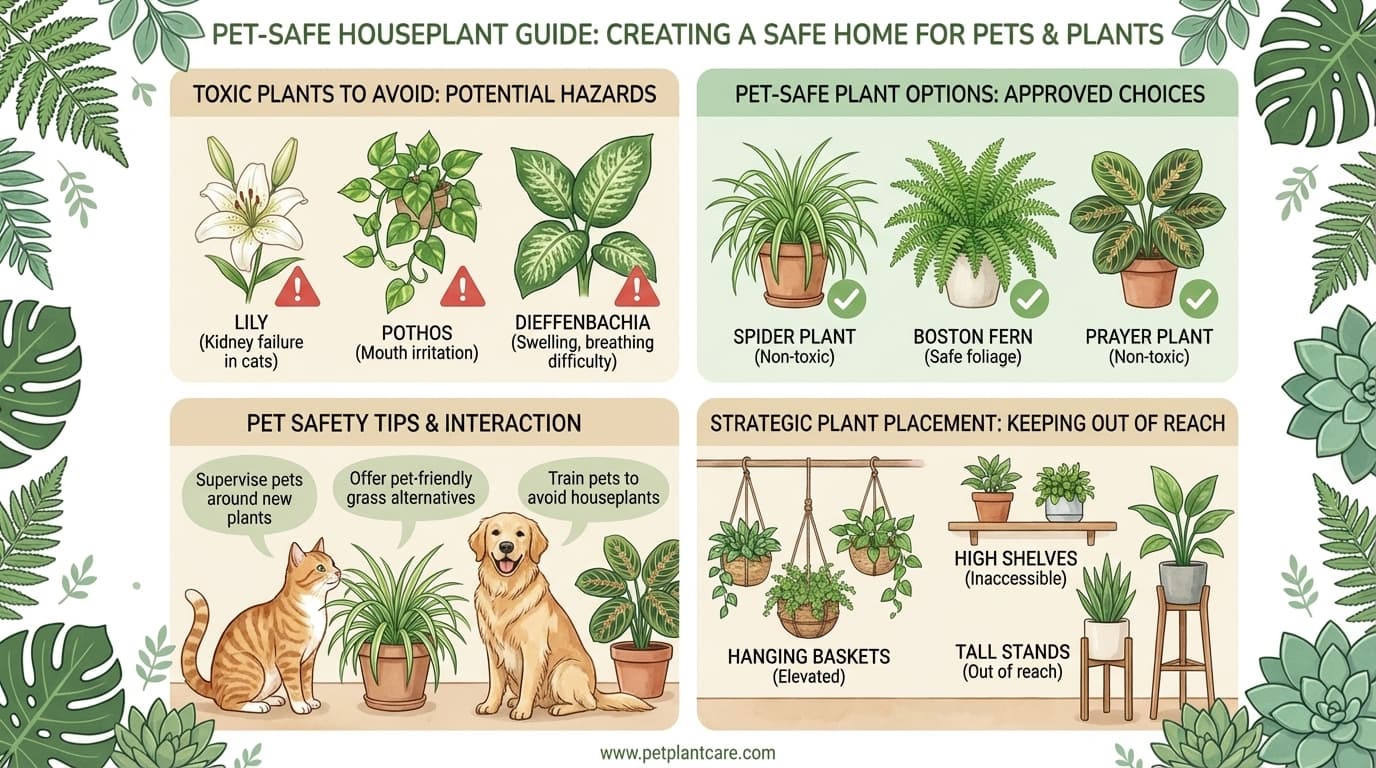
Cat-safe houseplants are species the ASPCA lists as non-toxic to cats: spider plants, most true ferns, prayer plants, peperomias, palms, and bromeliads. "Non-toxic" is not the same as "edible." It means a curious nibble is unlikely to become an emergency, not that your cat can graze on the leaves without consequence.
Cats are a specific problem, not a generic "pet" problem. A dog eats what hits the floor. A cat gets on top of the bookshelf, works a grassy leaf between its back teeth, knocks the pot off the ledge, then grooms whatever landed on its fur. That last step is what most plant lists skip, and it is why the advice below is as much about placement as species.
This is the cat-specific deep dive in our complete guide to pet-safe houseplants. If you want to check something we do not cover here, our pet toxicity checker searches cat and dog toxicity by plant name.
What Are Cat-Safe Houseplants, Exactly?
The reference that matters is the ASPCA Animal Poison Control Center's toxic and non-toxic plant list, searchable by common and scientific name. When we call a plant on this cat-safe houseplants list safe, we mean it appears in the non-toxic column of that database — not that it is harmless in unlimited quantities. Neither does the ASPCA. The database also indexes some plants at genus level or under an older common name, and the ASPCA says outright that the list is "not meant to be all-inclusive," so a few entries below are covered by a genus or sibling-species listing rather than a page of their own. We flag those where it matters.
Three caveats before you shop.
Non-toxic does not mean no reaction. A cat that eats a large volume of any plant can vomit from the fiber load alone. Pet-safety publishers repeat the point consistently: plant material in quantity may cause mild digestive discomfort even in species the ASPCA classifies as non-toxic. One vomit or a skipped meal after a chewing session is not proof of poisoning.
Non-toxic does not mean pest-treatment-safe. A spider plant listed as non-toxic by the ASPCA stops being a safe object once you have drenched it in a systemic insecticide or dosed the soil with granules. The plant is safe; the chemistry you added is a separate question, answered by your product label rather than the ASPCA list. We would skip systemic products entirely in a household with a chewer.
Common names lie. This is the single biggest failure point in cat safety. Half a dozen unrelated plants are sold with "lily" in the name, and they are not remotely equivalent.
The Lily Warning Every Cat Owner Needs First
Before any shopping list: true lilies are in a category of their own for cats, and no amount of careful placement makes them acceptable.
According to ASPCA Pro, two genera cause acute kidney injury in cats: Lilium species (the true lilies — ASPCA Pro names Asiatic lilies; MSPCA-Angell adds tiger, stargazer, Easter, and Oriental varieties) and Hemerocallis species (daylilies). MSPCA-Angell states that every part of the plant is toxic if ingested, including the water in the vase, and that only a small amount can be fatal. ASPCA Pro notes there are documented cases where exposure to the pollen alone has caused acute kidney injury.
Grooming is what makes this a cat problem specifically. A cat brushes past an arrangement, picks up pollen on its coat, and cleans it off ten minutes later.
MSPCA-Angell describes the progression as nausea, drooling, and vomiting in the first one to three hours, excessive thirst and urination at roughly 12 to 30 hours as kidney damage develops, and potential kidney shutdown at 24 to 48 hours. ASPCA Pro adds the detail that should shape your reaction: if treatment begins more than 18 hours after exposure, the renal damage may be irreversible. Any suspected contact with a true lily is a same-hour call to your veterinarian or an emergency clinic, not a wait-and-see.
For most readers the practical risk is not a houseplant. It is a gift bouquet. Florist arrangements routinely include Lilium stems, and the vase water counts.
The Peace Lily is a different plant. Peace Lily (Spathiphyllum) is not a true lily. The ASPCA's own entry lists its toxic principle as insoluble calcium oxalates, with clinical signs of oral irritation, intense burning of the mouth, tongue, and lips, excessive drooling, vomiting, and difficulty swallowing. That is unpleasant and can warrant a vet visit, but ASPCA Pro groups peace lilies with the non-nephrotoxic "lilies" rather than with Lilium and Hemerocallis. We would still keep one away from a chewer — just do not confuse the two hazards. Our pet safety and plant toxicity guide covers how calcium oxalate plants behave in cats and dogs.
20 Cat-Safe Houseplants, Grouped by Where They Work
We have grouped these by the job they do in a room, because placement is what actually keeps a cat out of trouble.
The Easy Five: Cat-Safe Houseplants That Survive Neglect
Start here if this is your first plant, or your fifth attempt at a first plant.
- Spider Plant (Chlorophytum comosum) — The default recommendation, and listed as non-toxic to cats and dogs by the ASPCA. You will also read that spider plants are "mildly hallucinogenic" to cats; we found no scientific evidence behind that claim, and several plant-care publishers now flag it as folklore. What is true is that cats find the arching, grassy foliage extremely chewable — hang it high or expect a trimmed plant.
- Cast Iron Plant (Aspidistra elatior) — Named for what it survives. Tolerates deep shade, irregular watering, and the corner nobody thought a plant would live in. See our low-light apartment plants guide for placement ideas.
- Bamboo Palm (Chamaedorea seifrizii) — A floor palm with real presence and no toxicity listing. For the same genus in tabletop size, Thorsen's Greenhouse sells a Parlor Palm in a 4-inch pot, 5 to 8 inches tall at shipping, $22.99 as of July 2026. Thorsen's states that Parlor Palm (Chamaedorea elegans) is recognized by the ASPCA as non-toxic to cats and dogs and tolerates low to moderate light — confirm any vendor claim against the ASPCA database before buying.
- Peperomia (Peperomia obtusifolia) — Thick, semi-succulent leaves that hold water, so it forgives a missed week. The genus reads as non-toxic on the ASPCA list.
- Chinese Money Plant (Pilea peperomioides) — Coin-shaped leaves on wiry stems, and it produces offsets you can pot up and give away. The ASPCA lists several Pilea species as non-toxic to cats but has no dedicated entry for this one, so treat it as a genus-level read rather than a checked box. It is still one of the better picks in our best first houseplants roundup.
Six Cat-Safe Ferns for Humid Corners
True ferns are the largest cat-safe category in houseplants, which is lucky, because they are also the plants that most reward a bathroom or a humidifier. See our humidity management guide if your rooms run dry in winter.
- Boston Fern (Nephrolepis exaltata) — Non-toxic to cats and dogs per the ASPCA, and the most widely available cat-safe fern. Best in a hanging basket, which conveniently also solves the chewing problem.
- Bird's Nest Fern (Asplenium nidus) — Strappy, glossy fronds with none of the shedding of a Boston. Less fussy than it looks.
- Button Fern (Pellaea rotundifolia) — Small, round leaflets and a genuinely compact habit. One of the few ferns that stays desk-sized.
- Rabbit's Foot Fern (Davallia fejeensis) — Furry rhizomes creep over the pot rim. Cats find those fascinating, which is either a feature or a reason to shelve it high.
- Staghorn Fern (Platycerium bifurcatum) — Mounts on a board and hangs on a wall, which puts it geometrically out of reach. Our favorite structural answer to a climbing cat.
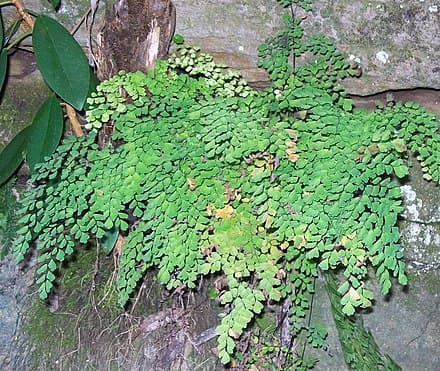
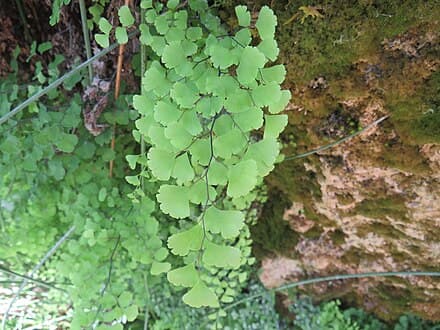
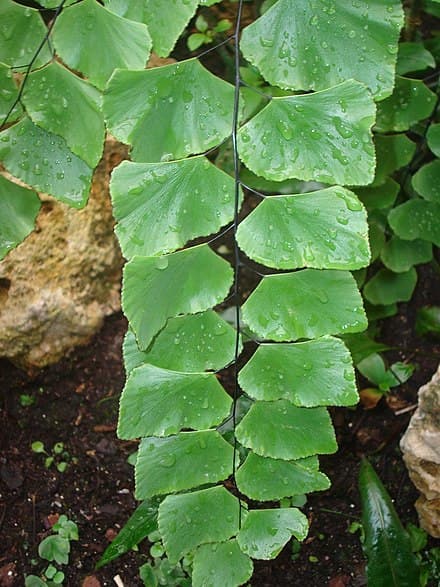
- Maidenhair Fern (Adiantum capillus-veneris) — The prettiest and least forgiving plant here. It wants consistently moist soil and browns at the first dry-out.
Five Prayer Plants and Calatheas for Pattern
The Maranta and Goeppertia (formerly Calathea) group gives you the boldest foliage patterns available in a non-toxic plant. They are thirstier and fussier than the easy five — read our watering 101 guide first — but nothing else looks like them.
- Prayer Plant (Maranta leuconeura) — Leaves fold upward at night and open in the morning. Thorsen's Greenhouse sells a Lemon Lime Prayer Plant in a 4-inch pot for $25.98 as of July 2026; the vendor states that all Prayer Plants are recognized by the ASPCA as non-toxic and that this one grows sideways rather than upward, which suits a hanging spot.
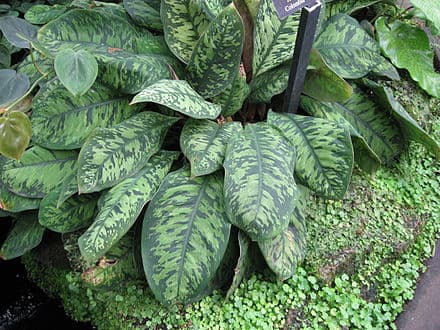
- Rattlesnake Plant (Goeppertia insignis) — Long, wavy leaves with alternating dark blotches and deep purple undersides.
- Calathea Orbifolia (Goeppertia ornata) — Wide, silver-striped leaves. The showpiece of the group and the one most likely to complain about tap water.
- Calathea Zebrina (Goeppertia zebrina) — Velvety leaves with chevron banding.
- Calathea Makoyana (Goeppertia makoyana) — The peacock plant, with translucent windowing between the dark markings.
To try several at once, Plants for Pets sells a live Calathea variety 4-pack in 4.25-inch nursery pots, around 9 inches tall, for $36.99 as of July 2026. The vendor states Calathea is non-toxic to cats and dogs, and — sensibly — still recommends displaying them out of reach of high-energy animals to protect the plants. The rotating assortment may include Makoyana, Rattlesnake, Roseopicta, Freddie, and Orbifolia.
Cat-Safe Vining and Trailing Houseplants
This is where most cat owners get burned: the three most popular trailing houseplants — pothos, philodendron, and English ivy — are all on the toxic side of the ledger. These four are not.
- String of Hearts (Ceropegia woodii) — Thin trailing strands of marbled, heart-shaped leaves. Wants bright light and very little water. Dangling strands are the most attractive object in any room to a cat, so mount the pot where they hang clear of a launching surface.
- Hoya bella (wax plant) — Waxy leaves, clustered star-shaped flowers on mature plants, and near-succulent drought tolerance. The genus reads as non-toxic on the ASPCA list.
- Swedish Ivy (Plectranthus verticillatus) — Not an ivy at all, which is the point. Scalloped leaves, fast growth, easy to propagate from cuttings in water.
- Burro's Tail (Sedum morganianum) — Plump, overlapping leaves on trailing stems that detach at the slightest bump. A high-shelf plant for the plant's sake, not the cat's.
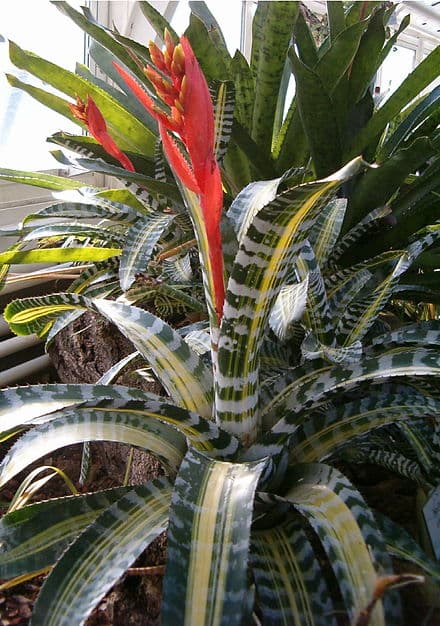
Also non-toxic per the ASPCA: Watermelon Peperomia (listed as Emerald Ripple Peperomia), Nerve Plant, Polka Dot Plant, Money Tree (the ASPCA entry is Pachira aquatica), Guzmania bromeliad (listed as Orange Star), and Japanese Aralia. One caveat: Elephant Bush (Portulacaria afra) is widely sold as pet-safe, but we could not find it in the ASPCA database at all — treat it as unlisted rather than cleared. Bromeliads are the underrated pick here: vivid flower spikes, no toxicity listing. And if your interest in plants started with air quality claims, read our air-purifying plants guide before buying on that basis.
Popular Houseplants to Skip If You Have a Cat
These are the plants we would not put in a home with a chewer. The ASPCA lists all of them as toxic to cats, though severity varies — most cause mouth and stomach irritation rather than organ damage.
| Plant | Why it's on the list | What owners typically see |
|---|---|---|
| Cyclamen | Terpenoid saponins, most concentrated in the tubers | The most serious entry here — treat as a vet call |
| Dieffenbachia | Insoluble calcium oxalates | Mouth pain, swelling, drooling |
| Philodendron | Insoluble calcium oxalates | Oral irritation, drooling, vomiting |
| Peace Lily | Insoluble calcium oxalates | Burning mouth, drooling, trouble swallowing |
| Pothos | Insoluble calcium oxalates | Mouth irritation, vomiting |
| Monstera Deliciosa | Insoluble calcium oxalates | Mouth irritation, drooling |
| Alocasia Zebrina | Insoluble calcium oxalates | Mouth irritation, drooling |
| Aloe Vera | Saponins and anthraquinones | Vomiting, lethargy |
| Snake Plant | Saponins | Nausea, vomiting, diarrhea |
| ZZ Plant | Calcium oxalates | Mouth irritation, stomach upset |
| Jade Plant | Unknown mechanism | Vomiting, incoordination |
| Oxalis / Shamrock | Soluble calcium oxalates | Salivation, tremors; rarely kidney failure |
| Dracaena | Saponins | Vomiting, drooling, dilated pupils |
| Fiddle Leaf Fig | Ficin and ficusin, per the ASPCA's Ficus entry — not calcium oxalates | Skin and mouth irritation, vomiting, diarrhea |
A cat that has never touched a plant in three years can start at year four. We would rather you build the collection you can stop supervising.
Cat-Proofing Is a Design Problem, Not Just a Shopping List
Choosing houseplants safe for cats is step one. Step two is arranging a room around an animal that treats vertical space as a hallway.
Assume every shelf is reachable. Cats route through furniture. A pot two feet from the back of a sofa is not "up high." Look at the path, not the height.
Hang, mount, or hook. Ceiling hooks, wall planters, and mounted staghorns remove the launch surface entirely. This is the single most effective change most cat owners can make.
Cover the soil. Large decorative stones or coarse bark over the potting mix ends the digging and the litter-box confusion. Keep it breathable so you can still read moisture.
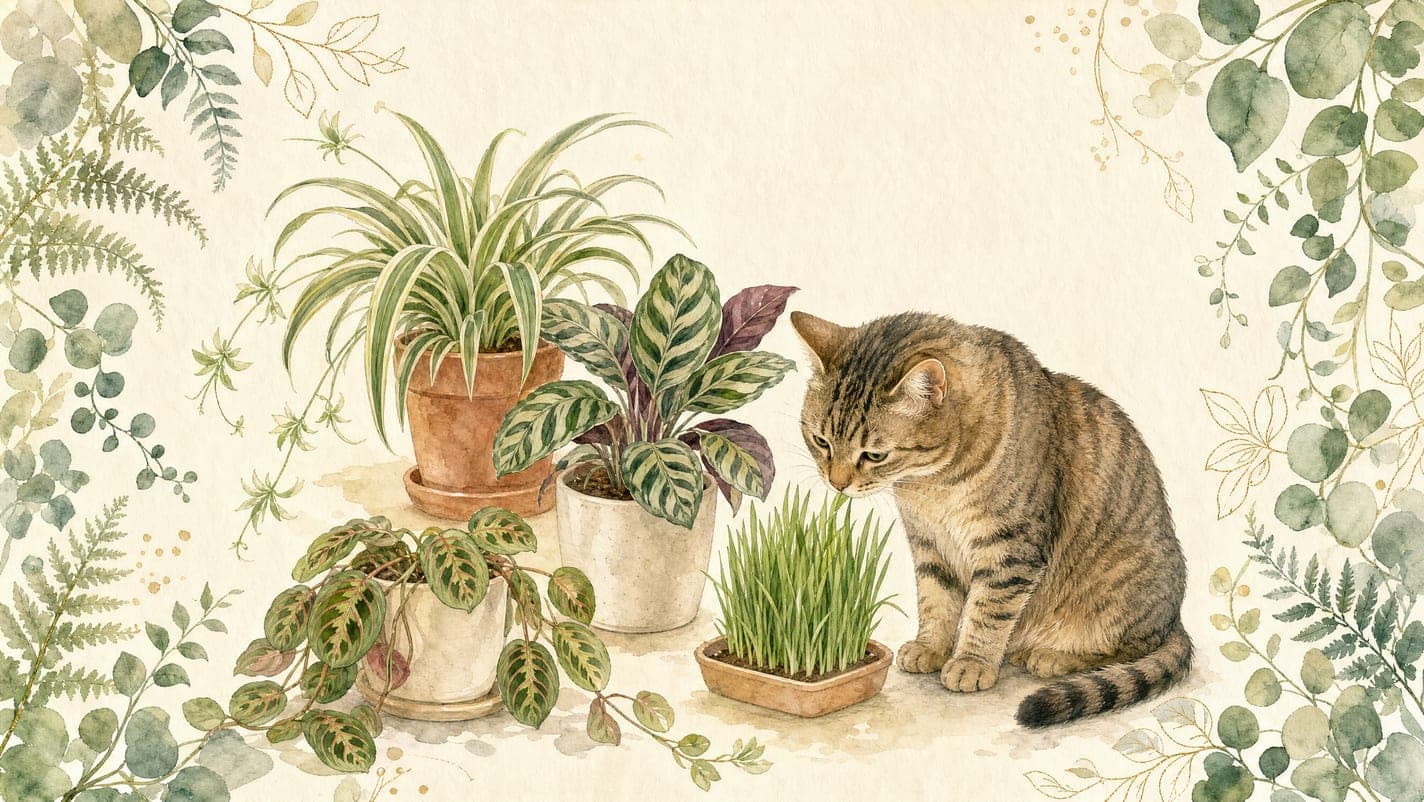
Give the chewing somewhere to go. Veterinary sources are candid that the research on why cats eat plants is thin. The leading theories involve fiber, folic acid, an ancestral role in expelling intestinal parasites, and sensory boredom in indoor-only cats — and the popular assumption that cats eat grass to make themselves vomit is not supported by the data. Whatever the driver, the response is the same: offer a legal target. The Cat Ladies sells an organic cat grass growing kit in a 3-pack — wheat, oat, barley, and rye seed with soil disks and BPA-free containers — for $14.90 as of July 2026. The vendor states it sprouts up to 4 inches in 4 to 7 days and positions it as a decoy that keeps cats off other houseplants. We have seen it work and we have seen cats ignore it; at that price it is worth one trial.
Check bouquets at the door. Given the lily risk above, the highest-value habit in a cat household is inspecting cut flowers before they reach a vase.
If Your Cat Eats a Plant
We are not going to tell you how to handle this at home. The right answer depends on the plant, the amount, and your cat.
- Identify the plant. Photograph it and keep the nursery tag. Scientific name beats common name every time.
- Call someone. Your veterinarian, an emergency clinic, or the ASPCA Animal Poison Control Center at (888) 426-4435, which the ASPCA staffs around the clock. The ASPCA notes that a consultation fee may apply.
- Do not induce vomiting unless a veterinary professional on the phone tells you to. With calcium oxalate plants in particular, bringing material back up the esophagus can compound the irritation.
- Treat any true lily contact as time-sensitive, per the 18-hour window ASPCA Pro describes.
Signs worth a call include persistent drooling, pawing at the mouth, repeated vomiting, refusing food or water, lethargy, or any change in drinking and urination.
Building Your Cat-Safe Collection
If you take one thing from this, separate the two risks. Chewable-but-non-toxic plants are a housekeeping problem. True lilies are a medical emergency, and they usually arrive as a bouquet rather than a houseplant.
Start with three plants, not twelve. A spider plant in a hanging basket, a cast iron plant in the dim corner, and a Boston fern in the bathroom will tell you within a month whether your cat is a chewer or a bystander. Then build outward: ferns if your rooms hold humidity, Calatheas if you enjoy fussing, trailing plants if you have hooks and high shelves.
Share the house with a dog too? The overlap is large but not total, and our guide to dog-safe houseplants covers the species that behave differently across the two. For the full picture across both animals, start at our guide to pet-safe houseplants.
And when a plant is not on any list here, check it before it comes home. The ASPCA's database is free, and our pet toxicity checker answers the same question by plant name in a few seconds.