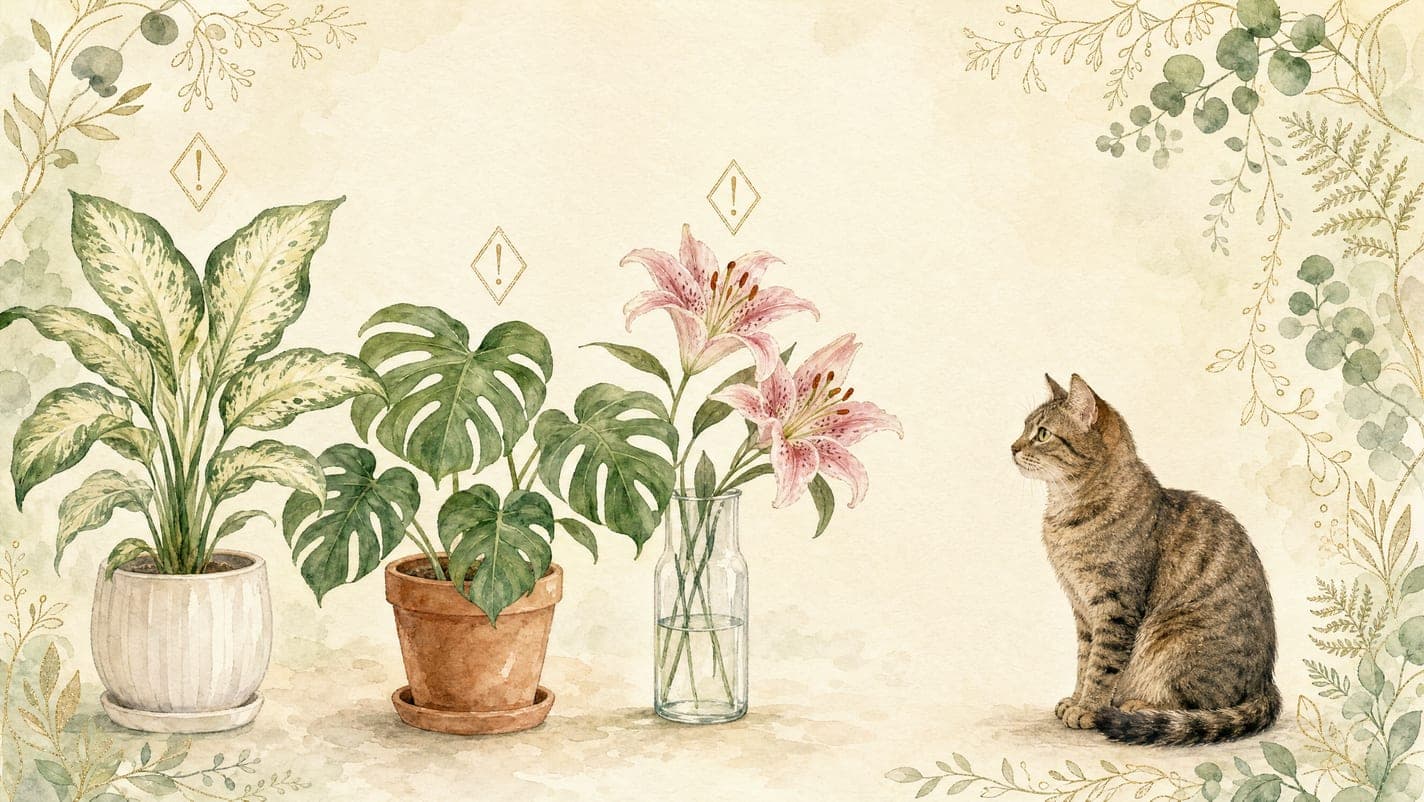
Toxic Houseplants to Avoid With Pets, Ranked by Severity
The most dangerous toxic houseplants for pets are the ones that act on organs rather than on the mouth. A true lily may cause acute kidney injury in a cat. A pothos causes a burning mouth. Both get the same one-word label — "toxic" — and treating them as equivalent is why owners panic over the harmless and miss the real emergency.
Almost every poisonous-plant list online is alphabetical, and alphabetical order tells you nothing about what to do. So we ranked this one by mechanism — what the plant's chemistry actually does inside an animal — because mechanism predicts how bad an exposure is likely to be. For the wider strategy on keeping plants and animals in one house, start with our guide to pet-safe houseplants. To check one plant right now, our pet toxicity checker is searchable, with separate cat and dog entries.
One caveat. We are plant people, not veterinarians; every claim below is attributed to the ASPCA, the Pet Poison Helpline or a veterinary source, and none of it replaces a phone call. If your animal has eaten something, the ASPCA Animal Poison Control Center is at (888) 426-4435; the ASPCA says it is staffed 24/7 and that a consultation fee may apply.
The Six Mechanisms That Actually Predict Severity
Worst to mildest, the common indoor plants sort into six groups:
- Nephrotoxic to cats — true lilies and daylilies. Acute kidney injury.
- Systemic organ toxins — the sago palm, a cycad sold as indoor bonsai, associated with liver damage.
- Cardiac glycosides — a small group, including Kalanchoe, that acts on heart muscle.
- Soluble calcium oxalates — absorbed systemically; can affect blood calcium.
- Insoluble calcium oxalates — the aroids, by far the biggest group. Oral pain, almost never systemic.
- Saponins and irritant sap — the mild tier. Drooling, vomiting, sometimes lethargy.
Two things fall out of that ordering. The plants with the worst reputations — pothos, monstera, philodendron — sit near the bottom. And the plant most likely to put a cat in intensive care is not a houseplant; it arrives in a bouquet.
If your pet has already eaten something, skip the ranking and read what to do if your pet eats a plant instead. This page is for deciding what to buy.
The Most Toxic Houseplants for Cats: True Lilies and Daylilies
Nothing else on this page is in the same category. According to ASPCA Pro, the two dangerous genera are Lilium species — Asiatic, Easter, tiger, stargazer — and Hemerocallis species, the daylilies. Both, ASPCA Pro states, "can produce severe toxicosis and acute kidney injury" in cats.
Two details make this different from every other entry here:
- All parts are toxic. ASPCA Pro notes there are "documented cases where exposure to the pollen alone has caused AKI." A cat does not have to eat a leaf; brushing past an arrangement and grooming pollen off its coat has been enough.
- Time is the variable that matters most. ASPCA Pro states that if treatment begins more than 18 hours after exposure, "the renal damage might be irreversible." The Merck Veterinary Manual likewise notes that cats are highly sensitive to this poisoning and describes acute renal failure developing over the following days in untreated cases — while stating that "when treatment is initiated early after ingestion and only mild effects develop, prognosis is excellent."
Dogs are not thought to be affected the same way.
These are almost never sold as houseplants. They arrive as bouquets, Easter gifts and grocery-store arrangements. If you live with a cat, our rule is that no arrangement enters the house until someone has confirmed there is no Lilium or Hemerocallis in it.
The Peace Lily Confusion — and Why It Matters
The mistake that causes the most panic is a naming accident.
The peace lily, Spathiphyllum, is not a lily. It is an aroid — same family as pothos and philodendron — with a completely different toxic principle. Pet Poison Helpline lists Peace Lily among the insoluble calcium oxalate plants, directly alongside Dieffenbachia, Philodendron and Pothos. The result is a painful mouth, not a damaged kidney. The kidney-failure risk that applies to Lilium and Hemerocallis does not carry over to Spathiphyllum. The same goes for the calla lily, another aroid with a misleading common name, which Pet Poison Helpline also groups with the insoluble oxalate plants.
This matters in both directions. A peace lily owner who reads "lily toxic to cats" may rush to an emergency clinic over a plant that causes drooling. Worse, someone whose peace lily incident "was fine" may under-react to an actual Lilium exposure. Severity ratings on retail sites, care apps and plant databases frequently conflate the two — ours has too — so trust what the ASPCA and Pet Poison Helpline say about the genus over any numeric severity score, including ours.
Cardiotoxic Houseplants: Kalanchoe, Desert Rose, Cyclamen
Small group, disproportionate risk, and the tier fewest people know about. Kalanchoe — sold as florist kalanchoe and as the propagating succulents mother of thousands and air plant kalanchoe — contains bufadienolides, cardiac toxins that Pet Poison Helpline describes as similar to digitalis compounds. The Merck Veterinary Manual describes cardiac glycosides in the leaves and lists depression, ataxia and paralysis among the potential effects. Pet Poison Helpline notes that ingestion by dogs and cats most often produces gastrointestinal upset, but that larger ingestions carry risk of changes in heart rate and rhythm, weakness and collapse.
That "usually GI, occasionally cardiac" pattern is what puts Kalanchoe above the aroids for us. The floor is similar; the ceiling is not.
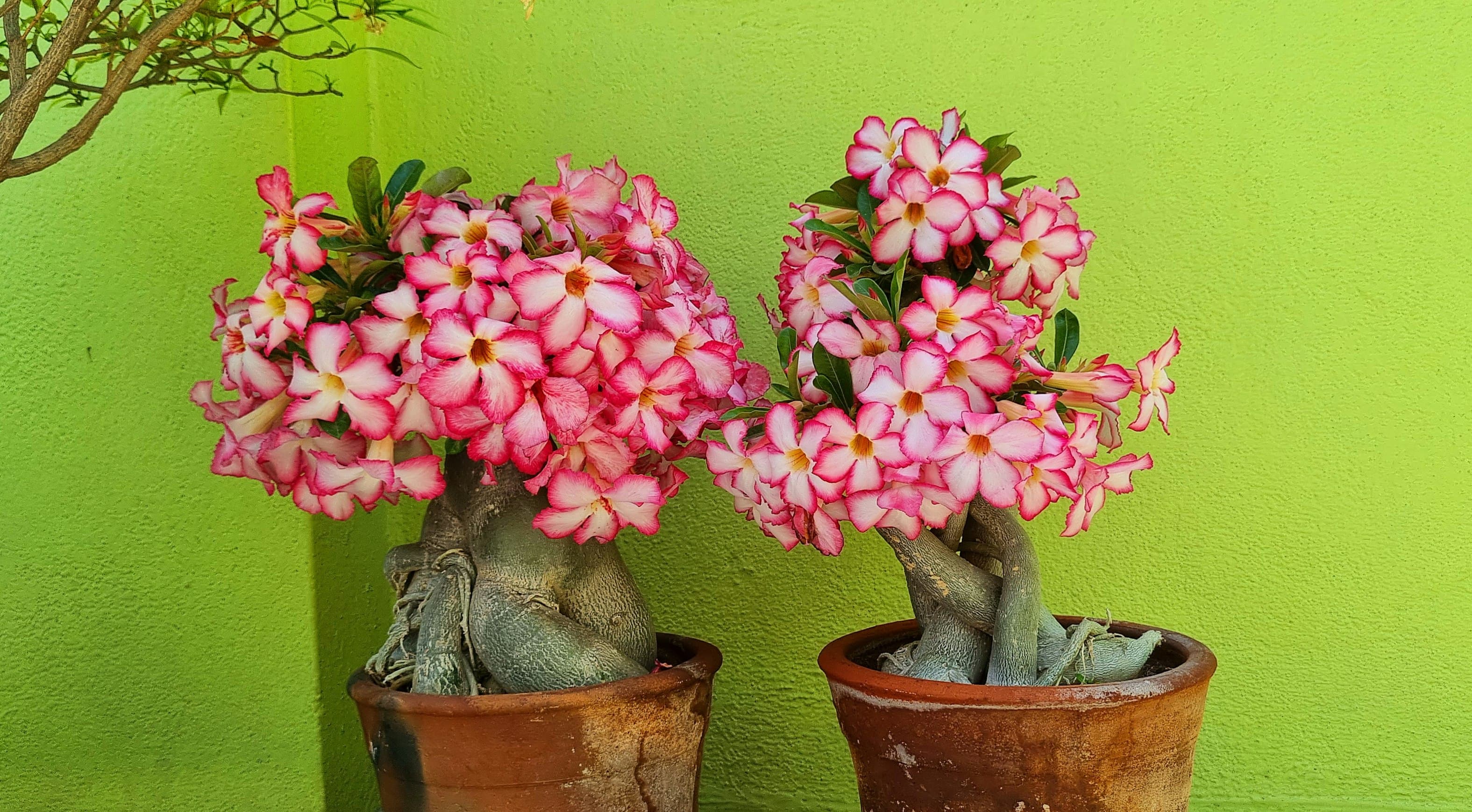
The desert rose, Adenium obesum, deserves the same caution: the ASPCA lists its toxic principle as cardiac glycosides, with signs of "vomiting, diarrhea, anorexia, depression, irregular heart beat, death." Cyclamen sits here for a related reason: the ASPCA lists its toxic principle as terpenoid saponins with signs of "salivation, vomiting, diarrhea" — but adds, "following large ingestions of tubers: heart rhythm abnormalities, seizures, death." The concentration is in the tuber, exactly the part a digging dog reaches.
The classic cardiac-glycoside offenders — oleander, foxglove and lily of the valley — are not houseplants, but they turn up in arrangements and on patios.
The Sago Palm: The One We Would Simply Refuse
The sago palm, Cycas revoluta, is not really a palm — but it is sold as an indoor bonsai across the United States, which is how it ends up in living rooms.
Clinician's Brief lists cycasin among the sago palm's three primary toxins — the one that produces hepatotoxicity, with gastrointestinal signs seen first and signs of acute liver necrosis described within two to three days — and names a second compound, BMAA, as the one responsible for neurotoxicity. PetMD states that "all parts of the sago palm are toxic, but the seeds (nut) are the most toxic," and that the plant is sold across the United States.
We will not quantify that further — quantities are a veterinarian's business. But this is the only plant here where our advice is not "place it carefully": we would not bring one into a home with a dog. Any suspected ingestion is an emergency-vet call, not a wait-and-see.
Soluble Calcium Oxalates: The Confusingly Named Middle Tier
Two chemically distinct groups share almost the same name. Insoluble oxalates stay where they land — in the mouth. Soluble oxalates are absorbed. Pet Poison Helpline explains that soluble oxalate salts bind with the body's systemic calcium, which can result in acute hypocalcemia, and that calcium oxalate crystal formation can affect the kidneys; reported signs include hypersalivation, vomiting, diarrhea, lethargy, weakness and tremors. The Merck Veterinary Manual similarly describes vomiting plus signs consistent with hypocalcemic tetany, including ataxia, tremors and seizures.
The group is small among houseplants. The two you are most likely to own:
- Purple shamrock (Oxalis) — the ASPCA lists the toxic principle as soluble calcium oxalates, with clinical signs of "kidney failure (rare in dogs/cats), tremors, salivation."
- Polka dot begonia and other begonias — the ASPCA also lists soluble calcium oxalates here, notes kidney failure primarily in grazing animals with vomiting and salivation in dogs and cats, and specifies that the "most toxic part is underground."
In both cases the ASPCA's wording puts serious outcomes in cats and dogs as rare and locates the concentration underground rather than in the leaves. Hence the ranking: above the aroids, well below the lilies. A different mechanism, not automatically a worse day.
Insoluble Calcium Oxalates: The Aroids Everyone Owns
The biggest group by a wide margin, and the one whose reputation is furthest out of line with its risk.
The mechanism is mechanical rather than metabolic. According to the ASPCA, plants in this family contain very small, needle-like crystals called raphides, released into the mouth when a pet chews the leaf, causing immediate irritation and pain. Pet Poison Helpline describes the typical result as drooling, gagging and vomiting. Critically, the Merck Veterinary Manual states plainly that "insoluble oxalates do not pose a concern for renal injury," and describes the prognosis as generally excellent with supportive care. And because the crystals hurt on contact, the irritation itself is commonly what stops an animal eating more — though that is a general pattern, not a guarantee about any individual case.
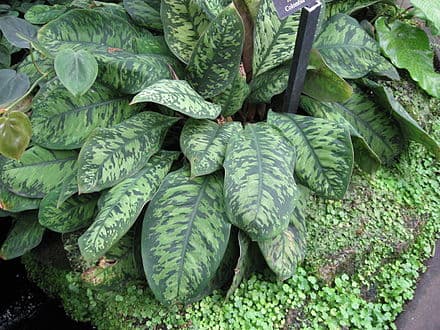
The group includes pothos, heartleaf philodendron, monstera, ZZ plant, arrowhead vine, anthurium, alocasia, Chinese evergreen, and the peace lily and calla above.
Dieffenbachia is the exception in this tier
If you single out one aroid, make it dieffenbachia — the plant whose common name, dumbcane, comes from what it does to speech. The ASPCA lists its toxic principles as insoluble calcium oxalates plus a proteolytic enzyme, with clinical signs including intense burning and irritation of the mouth, tongue and lips, excessive drooling, vomiting and difficulty swallowing. That extra enzyme is why dieffenbachia reactions run more severe than a pothos reaction. Pet Poison Helpline notes that with insoluble oxalate plants generally, "in rare instances severe throat swelling resulting in breathing difficulty can occur."
Rare is not never, and airway swelling is the one insoluble-oxalate outcome we would take to a vet without waiting. We keep dieffenbachia out of homes with animals that chew: small risk, respiratory failure mode.
Irritant Sap: The Euphorbias
The euphorbias are a contact hazard as much as an ingestion hazard. The ASPCA classifies Euphorbia as toxic to cats and dogs: its entry for the pencil cactus (Euphorbia tirucalli) records the toxic principle as "Irritant Sap (latex)," with signs "irritating to the mouth and stomach, sometimes causing vomiting, but generally over-rated in toxicity." That last phrase is about swallowing. Separately, the ASPCA warns that there is "concern for eye irritation including redness, swelling, squinting or pawing of the eyes if any gets near or in the eye," and that "in severe cases ulcers on the surface of the eye, called corneal ulcers, are possible." Eye contact, not swallowing, is the exposure route we take seriously here.
The relevant indoor species are the African milk tree, pencil cactus and crown of thorns. The practical implication is about pruning, not just placement: cutting one of these releases sap that can reach a curious animal's face, so take cuttings away from your pets and clean up thoroughly.
Poisonous Houseplants for Cats and Dogs That Are Over-Feared
Some plants earn a "toxic" label on a technicality, and the panic is out of proportion to the mechanism. Rounding out the bottom of the ranking:
- Snake plant and the other dracaenas — the ASPCA lists saponins as the toxic principle, with nausea, vomiting and diarrhea as the signs.
- Aloe vera — the ASPCA lists saponins and anthraquinones, with vomiting, lethargy and diarrhea, and notes that the gel "is considered edible."
- Schefflera — grouped with the insoluble oxalate plants by Pet Poison Helpline, so the oral-irritation pattern applies.
- Jade plant — the ASPCA lists it as toxic to cats and dogs, but records the toxic principle as "Unknown" and the signs as "Vomiting, depression, incoordination."
- Fiddle leaf fig and the other figs — the ASPCA lists Ficus toxic principles as the proteolytic enzyme ficin and the compound psoralen, an irritant-sap profile, not a systemic one.
We would not tell a cat owner to avoid any of these on principle. Place them out of easy reach, watch for chewing, and stop worrying — a snake plant with a non-chewing cat is a smaller risk than a bouquet on the counter.
One Hazard That Is Not the Plant
What you spray on a plant is its own exposure route, independent of the plant. The National Pesticide Information Center advises keeping pets away from treated areas for the time specified on the label or until sprays have dried, whichever is longer, and notes residues can remain after drying — so it is worth preventing chewing on treated plants later too. That applies to a non-toxic spider plant as much as to a philodendron. Our pest mastery guide covers treatment choices.
What Houseplants Are Not Toxic to Pets?
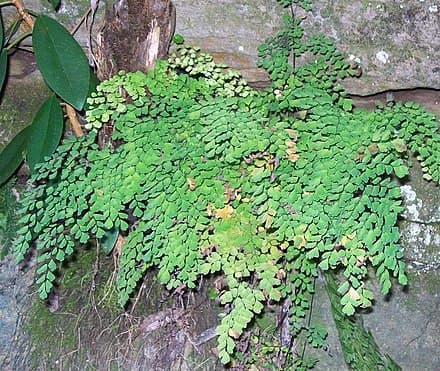
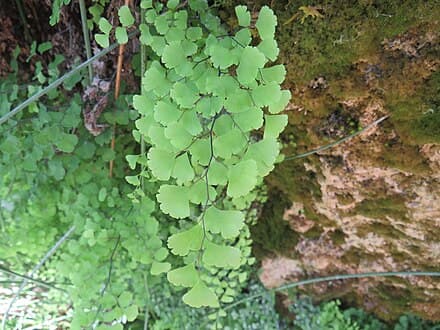
The replacement list is better than most people expect. The ASPCA lists the spider plant as "Non-Toxic to Dogs, Non-Toxic to Cats," and the same goes for the Boston fern and the prayer plant (Maranta) — between them covering trailing, textural and patterned. For something architectural, the bamboo palm is a common pick, but read the label: the ASPCA's non-toxic "Bamboo Palm" entry is for Chamaedorea elegans, the parlor palm, and the closely related C. seifrizii sold under the same common name does not have its own entry.
Two caveats. "Non-toxic" means no documented toxic principle, not that the plant is food; the ASPCA notes that consumption of any plant material may cause vomiting and gastrointestinal upset in dogs and cats. And the ASPCA is explicit that its list "is not meant to be all-inclusive, but rather a compilation of the most frequently encountered plants." Absence from the list is not evidence of safety — look the specific plant up rather than assuming.
We keep separate lists of cat-safe houseplants and dog-safe houseplants, because the risk profiles genuinely differ — cats climb and groom, dogs dig and swallow. For dark rooms, low-light apartment plants covers the corners where pothos usually wins by default, and pet safety and plant toxicity goes deeper on household setup.
The Bottom Line
Rank by mechanism and the picture simplifies fast:
- Refuse outright: true lilies and daylilies in a cat household; the sago palm in a dog household.
- Skip if your animal chews: dieffenbachia, kalanchoe, cyclamen with a digging dog, the euphorbias.
- Place thoughtfully and stop worrying: the aroids and the saponin plants — pothos, monstera, philodendron, ZZ, snake plant, aloe.
Keep a number where you can find it under stress: the ASPCA Animal Poison Control Center is (888) 426-4435 and the Pet Poison Helpline is (855) 764-7661; both note that consultation fees may apply. And check anything you are unsure about in our pet toxicity checker before you buy it, not after.
If you would rather work from the yes-list than the no-list, that is what our complete pet-safe houseplant guide is for.