This guide contains affiliate links. We may earn a small commission if you purchase through our links, at no extra cost to you.
Overwatering kills more houseplants than any other mistake. Yet most plant parents struggle to find the right balance between too much and too little water. This guide will help you develop the intuition to water any plant correctly, using techniques that work whether you have a drought-tolerant Snake Plant or a thirsty Peace Lily.
Understanding Plant Water Needs
Different plants have evolved in vastly different environments, and their water needs reflect this history. Succulents like Aloe Vera and the ZZ Plant store water in their leaves and rhizomes, allowing them to survive weeks without watering. Tropical plants like Monstera Deliciosa and Peace Lily come from rainforest floors where moisture is constant.
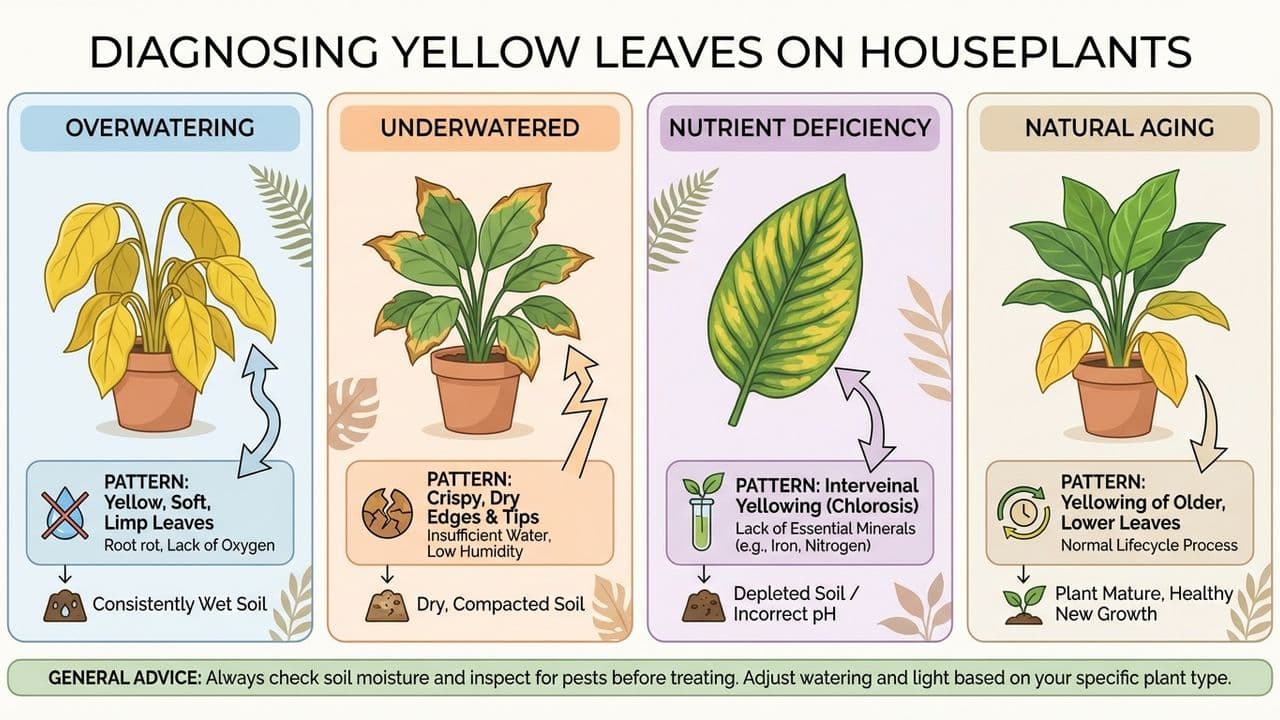
The key is observing your specific plant. Watch for signs of overwatering (yellowing leaves, mushy stems, fungus gnats) and underwatering (crispy leaf edges, wilting, slow growth). Your Pothos will tell you exactly what it needs if you learn to read its signals.
The Right Way to Water
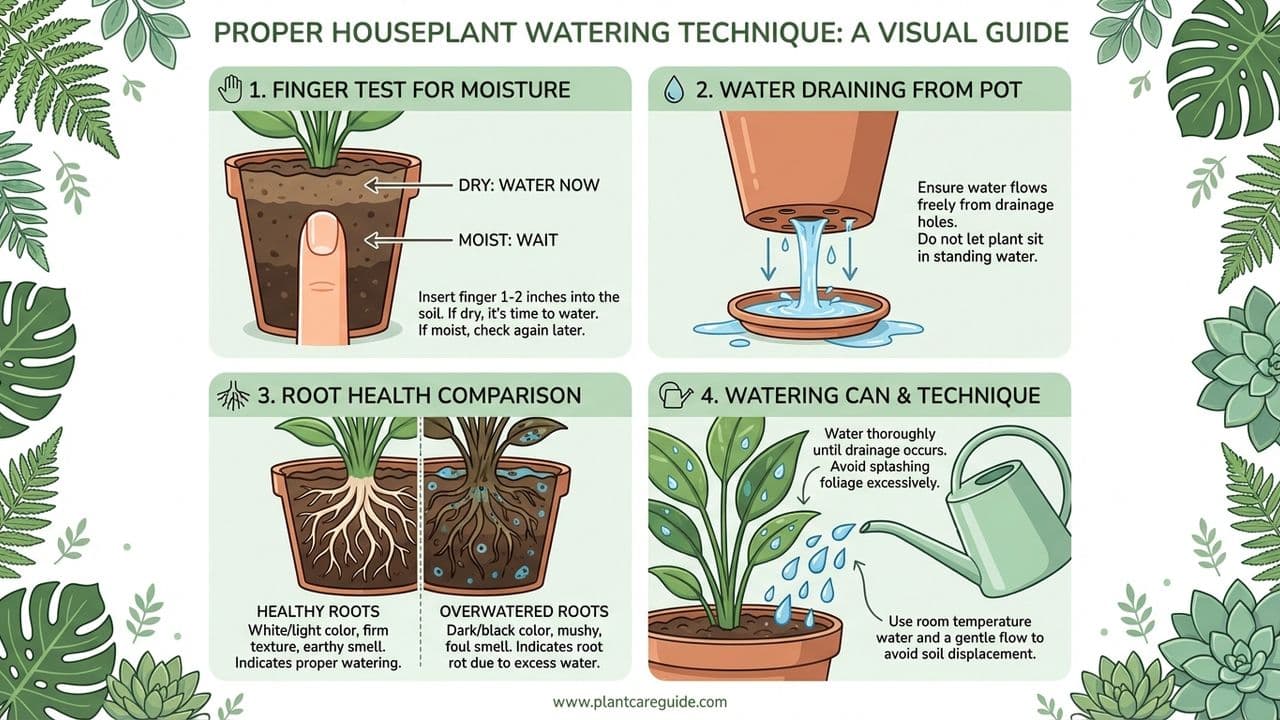
When you water, water thoroughly. Pour slowly until water runs out the drainage holes, ensuring the entire root ball is saturated. This deep watering encourages roots to grow downward, creating a more resilient plant. Never let pots sit in standing water for more than 30 minutes, as waterlogged roots quickly rot.
For most houseplants, it's better to water deeply but less frequently. Shallow, frequent watering creates weak, surface-level roots that can't sustain the plant during dry periods. This applies especially to larger plants like Fiddle Leaf Fig and Rubber Plant.
When to Water
Forget fixed schedules. The finger test is your most reliable tool: insert your finger 1-2 inches into the soil. If it feels dry at that depth, water. For drought-tolerant plants like Snake Plant and ZZ Plant, wait until the soil is completely dry throughout. For tropical plants, water when the top inch is dry.
Most plants prefer a slight dry period between waterings. This allows oxygen to reach roots, which is just as important as water. Constantly wet soil suffocates roots and creates conditions for fungal diseases. See our yellow leaves guide for diagnosing moisture problems.
Seasonal Adjustments
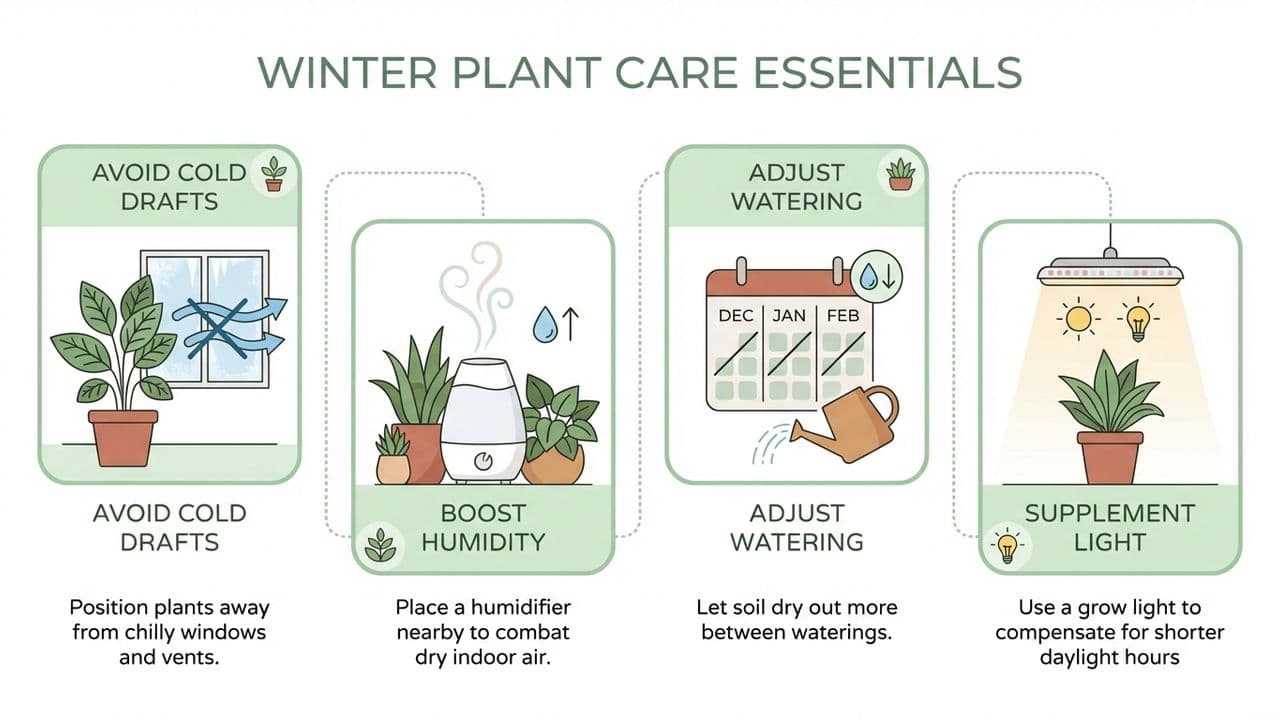
Plants need significantly less water in winter when growth slows and daylight decreases. Your Pothos that needed weekly watering in summer might only need water every 2-3 weeks in winter. Always check the soil rather than following a calendar. For detailed seasonal advice, see our winter care and summer care guides.
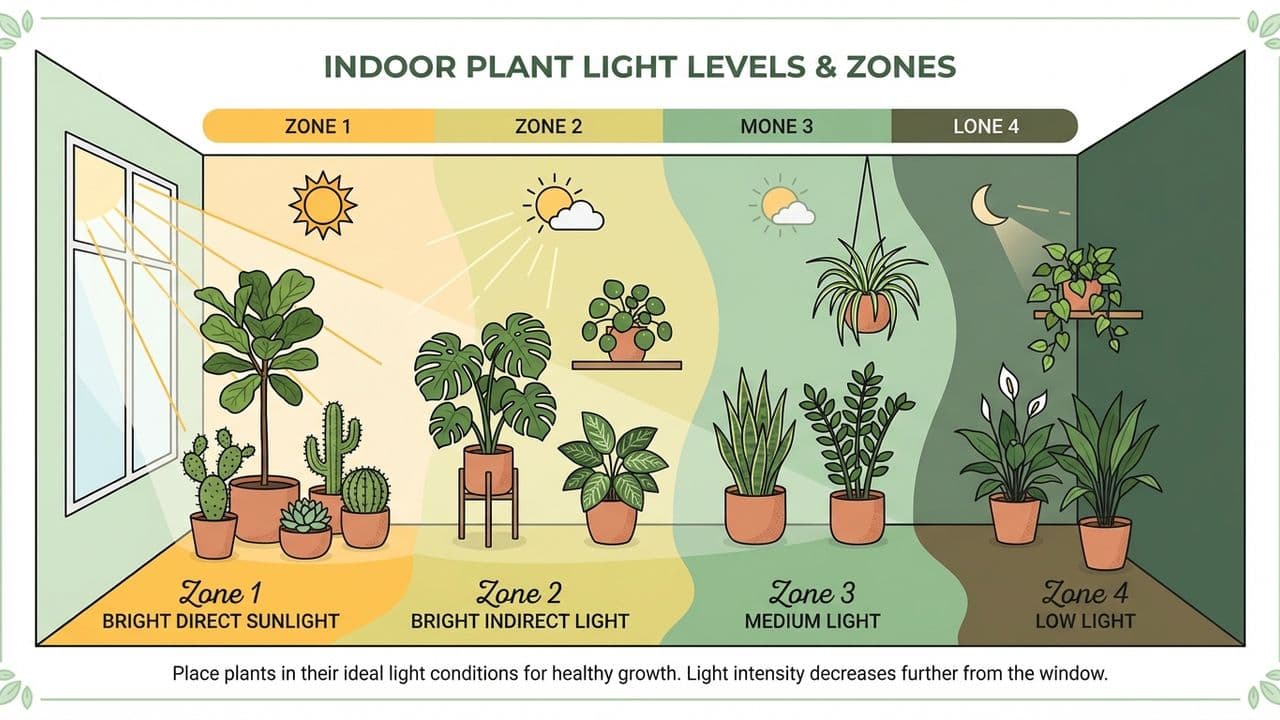
Environmental factors also matter. Plants in bright, warm locations dry out faster than those in dim, cool spots. Heating and air conditioning reduce humidity, affecting how quickly soil dries. A Spider Plant near a sunny window may need watering twice as often as one in a shaded corner.
Water Quality Matters
Many houseplants are sensitive to chemicals in tap water. Chlorine, fluoride, and mineral salts can cause brown leaf tips, especially on sensitive plants like Spider Plant and Peace Lily. If you notice browning tips, try filtered water, rainwater, or let tap water sit overnight so chlorine can evaporate.
Always use room temperature water. Cold water shocks roots and can cause leaf spotting on tropical plants. In winter, let water warm to room temperature before using it on your plants.
Common Watering Mistakes
Overwatering is the number one killer. Signs include yellowing leaves, mold on soil, fungus gnats, and a plant that looks droopy despite wet soil. If you suspect overwatering, stop watering immediately and let the soil dry completely. For severe cases, you may need to repot (see our repotting guide) and trim rotted roots.
Underwatering stress makes plants vulnerable to pests and disease. Signs include crispy brown leaf edges, wilting, and stunted growth. If a plant is severely dehydrated, water gradually over several hours to avoid shock. See our plant revival guide for rescuing neglected plants.
Watering Tools and Techniques
A watering can with a narrow spout gives you precise control. Moisture meters are invaluable for large pots where the finger test is impractical—they're especially useful for Monstera Deliciosa and Fiddle Leaf Fig in big containers.
Bottom watering works well for plants that hate wet leaves. Place the pot in a watering tray filled with water for 20-30 minutes, allowing soil to absorb moisture from below. This technique encourages deeper root growth and prevents overwatering. It's particularly effective for Aloe Vera and other succulents.