This guide contains affiliate links. We may earn a small commission if you purchase through our links, at no extra cost to you.
You've probably walked past the houseplant section at your local store dozens of times, admiring the lush greenery but convincing yourself you'd kill anything you brought home. Maybe you've even tried before—bought a plant on impulse, watched it slowly decline, and decided you just don't have a green thumb.
Here's the truth: there's no such thing as a "black thumb." There's only a lack of information. The difference between people who keep plants alive and those who struggle isn't some mystical gift—it's understanding a few fundamental principles that most beginners never learn.
This guide changes that. We're going to walk you through everything you need to know to successfully grow houseplants, from choosing your first plant to troubleshooting problems when they arise. By the end, you'll understand not just what to do, but why—which means you'll be able to care for any plant, not just follow rigid instructions.
What you'll learn in this guide:
- How to choose the right first plant for your specific living situation
- The essential supplies you actually need (and what you can skip)
- How to assess and work with the light in your home
- The single most important skill in plant care (hint: it's about water)
- Common mistakes that kill beginner plants—and how to avoid them
- How to read your plants and respond to problems early
- When and how to expand your collection confidently
Let's turn you into the plant parent you want to be.
Table of Contents
- Choosing Your First Plant
- Essential Supplies
- Understanding Light
- Watering Fundamentals
- Common Mistakes to Avoid
- Troubleshooting Problems
- Growing Beyond the Basics
- Resources and Tools
- Frequently Asked Questions
Choosing Your First Plant
The most common mistake new plant parents make happens before they even bring a plant home: they choose based on looks alone. That stunning Fiddle Leaf Fig in the store? It needs bright, consistent light, high humidity, and will drop leaves if you look at it wrong. That delicate fern? It needs daily attention to humidity levels.
Your first plant should be forgiving. It should tolerate inconsistent watering, adapt to various light conditions, and bounce back from neglect. Once you've built confidence with a resilient plant, you can graduate to pickier species.
Matching Plants to Your Environment
Before you shop, do a quick assessment of your space:
Light: Which direction do your windows face? How far from windows will the plant sit? We'll cover this in detail in the light section, but for now, note whether your space feels bright, moderate, or dim.
Humidity: Is your home dry (especially in winter with heating)? Do you have naturally humid areas like a bathroom? Most beginner plants tolerate average household humidity, but it's worth noting.
Temperature: Do you have drafty windows or heating vents that create hot or cold spots? Plants generally prefer stable temperatures between 65-80°F.
Your schedule: Be honest. Are you home enough to check on a plant weekly? Or would you prefer something you can ignore for two weeks at a time?
For a deeper dive into matching plants to your lifestyle, see our guide on how to choose your first houseplant.
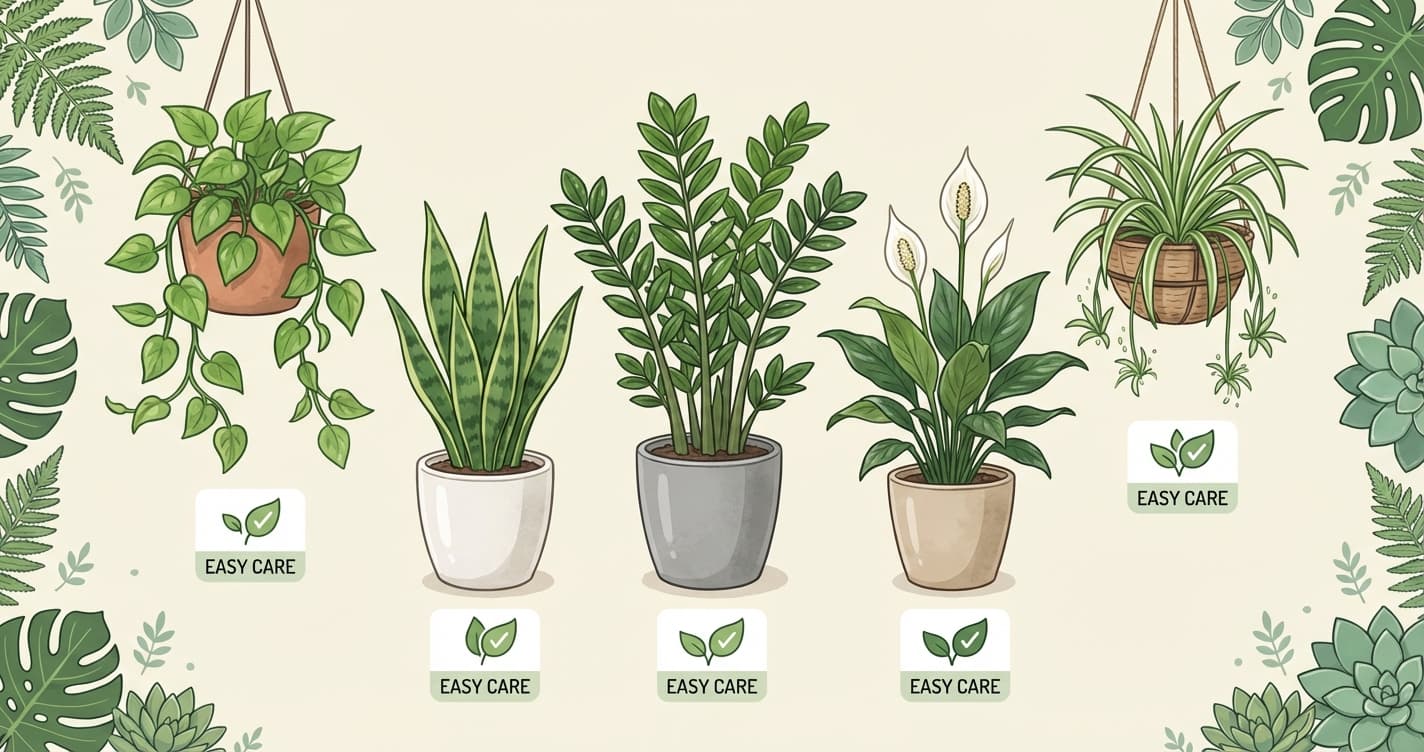
The 8 Best Beginner Plants
These plants have earned their beginner-friendly reputation through years of surviving new plant parents. Each one tolerates the most common care mistakes while still looking beautiful.
1. Pothos (Epipremnum aureum)
Pothos tops nearly every "best beginner plant" list for good reason. This trailing vine grows quickly in almost any light condition, tolerates irregular watering, and tells you clearly when it needs attention (the leaves droop dramatically, then perk right back up after watering).
Why it's great for beginners: You can forget to water it for two weeks, keep it in a dim corner, and it will still grow. It's also incredibly easy to propagate—just snip a piece and put it in water.
Best for: Low to bright indirect light, infrequent waterers, anyone who wants a trailing plant.
2. Snake Plant (Sansevieria trifasciata)
The Snake Plant is practically indestructible. Its stiff, upright leaves store water like a succulent, meaning it thrives on neglect. In fact, the fastest way to kill a Snake Plant is to overwater it.
Why it's great for beginners: It actually prefers to dry out completely between waterings, so forgetting about it is built into its care routine. It tolerates low light better than almost any other plant.
Best for: Low light spaces, travelers, people who tend to forget about their plants.
3. Spider Plant (Chlorophytum comosum)
If you have pets, the Spider Plant should be at the top of your list. It's one of the few truly pet-safe beginner plants, and it's equally forgiving of care mistakes. Bonus: it produces "babies" (small plantlets) that dangle from the mother plant, creating a fun visual display.
Why it's great for beginners: Tolerates a wide range of conditions, clearly shows when it needs water (leaf tips brown slightly), and propagates easily.
Best for: Pet owners, medium light spaces, anyone who wants to share plants with friends.
4. Peace Lily (Spathiphyllum)
The Peace Lily does something incredibly helpful for beginners: it droops dramatically when thirsty, then perks up within hours of watering. This built-in communication makes it almost impossible to underwater. It also produces elegant white flowers with minimal effort.
Why it's great for beginners: Clear visual signals for watering needs, blooms even in lower light, and tolerates average humidity.
Best for: Low to medium light, people who want flowers, visual learners who want obvious plant feedback.
5. ZZ Plant (Zamioculcas zamiifolia)
The ZZ Plant stores water in its thick rhizomes and waxy leaves, allowing it to survive extended periods without water. It's also one of the most low-light tolerant plants available, making it perfect for dim apartments and offices.
Why it's great for beginners: Nearly impossible to kill through neglect. Some ZZ Plants have survived months without water in low light.
Best for: Very low light spaces, frequent travelers, offices with no windows.
6. Monstera (Monstera deliciosa)
The Monstera has become an Instagram icon, and unlike many trendy plants, it's actually beginner-friendly. Its famous split leaves (called fenestrations) develop as the plant matures, giving you something to look forward to. It grows quickly and bounces back from most care mistakes.
Why it's great for beginners: Dramatic growth is rewarding and motivating, tolerates various light conditions, and easily shows when it needs water.
Best for: Medium to bright indirect light, people who want a statement plant, anyone who enjoys watching rapid growth.
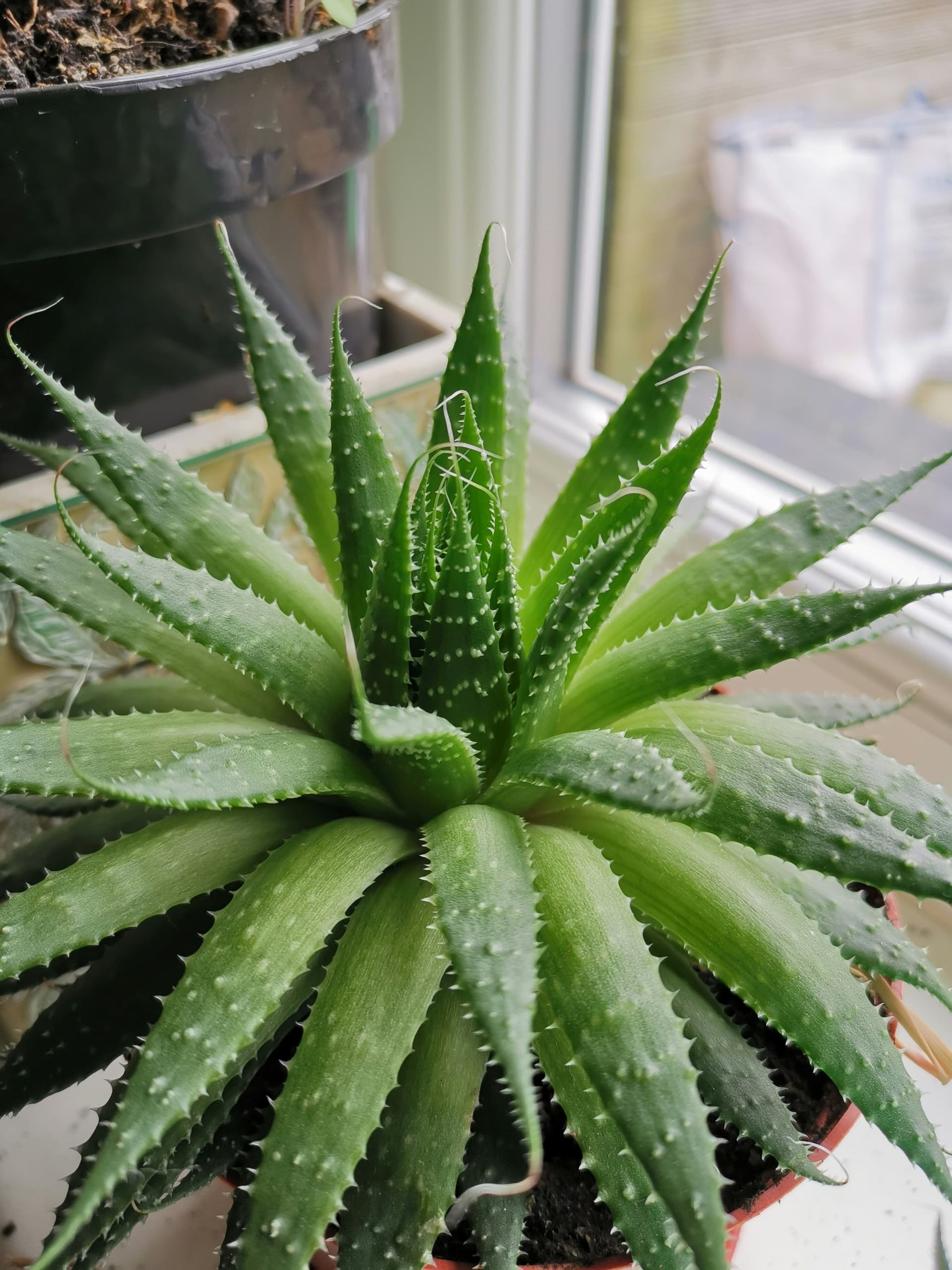
7. Aloe Vera (Aloe barbadensis miller)
Aloe Vera combines beauty with function—the gel inside its leaves has real medicinal uses for minor burns and skin irritation. Like Snake Plants, it stores water in its leaves and prefers to dry out between waterings.
Why it's great for beginners: Practical uses keep you engaged with the plant, and it thrives on neglect.
Best for: Bright light spaces, people who want a functional plant.
Note: Aloe Vera is toxic to cats and dogs if ingested—keep out of reach of pets.
8. Rubber Plant (Ficus elastica)
The Rubber Plant offers the dramatic, tree-like presence of a Fiddle Leaf Fig without the fussy care requirements. Its thick, glossy leaves come in deep green or striking burgundy, and it tolerates lower light better than most Ficus species.
Why it's great for beginners: More forgiving than other Ficus plants, makes a bold visual statement, and grows into an impressive indoor tree.
Best for: Medium light, people who want a tall statement plant, anyone who's been intimidated by Fiddle Leaf Figs.
For detailed comparisons between these options, check out our guide on Pothos vs Snake Plant vs ZZ Plant, or browse our full list of best first houseplants.
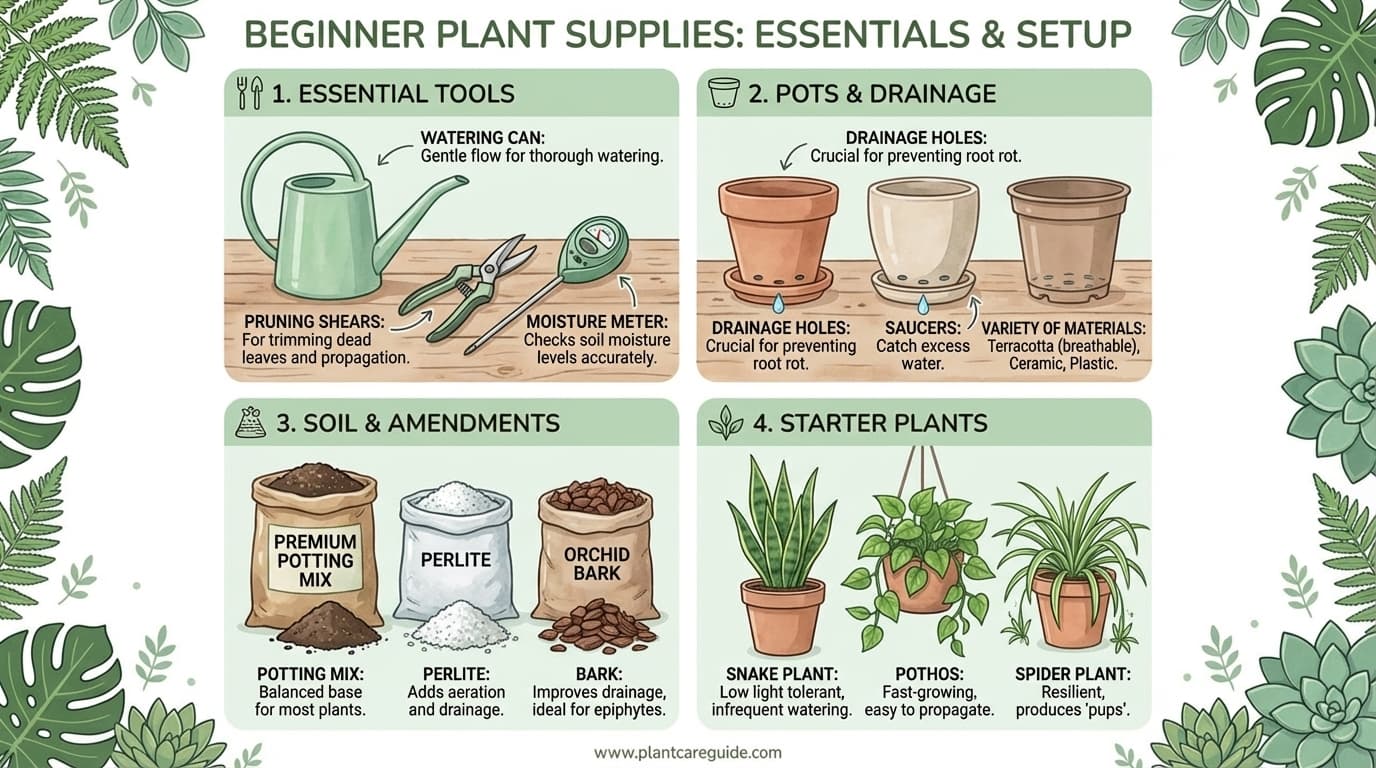
Essential Supplies
The good news: you don't need much to get started. Many beginners overspend on gadgets and specialized products they'll never use. Focus on the fundamentals, and add tools only as you identify specific needs.
Must-Have Items
These are non-negotiable for successful plant care:
Pots with Drainage Holes
This is rule number one: never plant directly into a pot without drainage. When water can't escape, it pools at the bottom, drowning roots and creating conditions for root rot—the number one killer of houseplants.
Use nursery pots (the plastic containers plants come in) inside decorative cache pots. This gives you the best of both worlds: proper drainage plus aesthetic appeal. Plus, you can easily lift the plant out to check moisture or swap decor.
Watering Can with Long Spout
A narrow spout watering can lets you water directly at soil level without splashing water on leaves. Wet foliage can lead to fungal problems and leaf spots. Avoid watering cans with shower-head attachments—those are designed for outdoor gardens.
Budget tip: Any long-spouted can under $15 works perfectly. Fancy isn't better here.
Quality Potting Mix
Skip "garden soil" or "topsoil"—these are too dense for containers and will suffocate roots. Look for bags labeled "indoor potting mix" or "houseplant soil." These contain ingredients like peat moss, perlite, and bark that provide the drainage and aeration container plants need.
For more on choosing the right soil, see our soil selection guide.
Saucers or Trays
Place plant saucers under your pots to catch drainage water and protect your furniture. Important: empty them 30 minutes after watering. Plants shouldn't sit in standing water.
For a complete shopping list with specific product recommendations, see our Houseplant Starter Kit guide.
Recommended Additions
These items make plant care easier and help you catch problems early:
Moisture Meter ($10-15)
A moisture meter takes the guesswork out of watering. Insert the probe 2-3 inches into soil and read the gauge. Most plants should be watered when the meter reads "dry" (1-3 on most scales).
These are especially valuable while you're developing your intuition. Eventually, you'll be able to judge moisture by the weight of the pot or the look of the soil, but a meter provides helpful training wheels.
Pruning Shears or Sharp Scissors
Clean cuts heal faster than torn stems. Designate a pair of pruning shears specifically for plant care and keep them clean and sharp. You'll use these for removing dead leaves, taking cuttings for propagation, and shaping overgrown plants.
Hygrometer ($10)
This small hygrometer measures humidity levels in your home. Most houseplants prefer 40-60% humidity, which is comfortable for humans too. If you're growing tropical plants or notice crispy leaf edges, a hygrometer helps you diagnose humidity issues.
Learn more about managing indoor humidity in our humidity guide.
Spray Bottle
A plant mister is useful for cleaning dusty leaves, applying pest treatments, and misting air plants. Choose one with a fine mist setting for versatility.
What to Skip (For Now)
Skip these as a beginner:
- Expensive plant care apps — Your eyes and hands work better for assessing plant health
- Leaf shine products — Many can clog leaf pores and cause damage
- Self-watering pots — Learn manual watering first to develop intuition
- Complex fertilizer schedules — One balanced fertilizer is all you need
- Heat mats — Unless you're propagating specific species
- Grow lights — Only necessary if you have no natural light (see our grow lights guide if you need them)
Your toolkit will grow naturally alongside your plant collection. Start minimal and add tools only when you identify a specific need.
Understanding Light
Light is the food source for plants. Through photosynthesis, they convert light energy into the sugars they need to grow. Understanding light is the foundation of successful plant care—get this right, and everything else becomes easier.
Light Level Definitions
When plant care guides mention light levels, they're usually referring to these categories:
Low Light: Areas far from windows, north-facing windows, or spaces with obstructed natural light. Think hallways, bathrooms without windows, and interior rooms. Few plants truly thrive here, but some survive.
Medium/Indirect Light: Bright rooms where direct sun doesn't hit the plant. Near east-facing windows, a few feet from south or west windows, or filtered through sheer curtains. Most houseplants are happiest in this range.
Bright Indirect Light: Close to south or west-facing windows but protected from direct sun rays. This might mean just out of the sun's path or filtered through a sheer curtain. Many popular houseplants thrive here.
Direct Light: Sun rays actually hitting the plant's leaves. South and west-facing windowsills in the afternoon. Most tropical houseplants will burn in direct sun, but succulents and cacti often need it.
Assessing Light in Your Home
Don't guess—actually measure. Here's a simple method:
- On a sunny day around midday, stand in the spot where you want to place your plant
- Hold your hand about a foot above a white piece of paper
- Look at the shadow:
- Sharp, dark shadow = bright light
- Soft shadow with fuzzy edges = medium light
- Barely visible shadow = low light
Another test: Can you comfortably read a book in that spot without turning on a lamp? If yes, it's probably medium light or better.
Window Direction Guide
Your windows' compass direction significantly affects the light they provide:
North-Facing Windows: The dimmest option in the Northern Hemisphere. These provide consistent but low light all day without direct sun. Best for: low-light plants like Snake Plants, ZZ Plants, and Pothos.
East-Facing Windows: Gentle morning sun followed by indirect light for the rest of the day. This is the "Goldilocks" exposure for most houseplants—bright enough for good growth without the intensity that causes burns. Best for: most beginner plants thrive here.
South-Facing Windows: The brightest exposure, with direct sun for much of the day. Plants right on the windowsill may burn, but a few feet back provides excellent bright indirect light. Best for: succulents, cacti, and sun-loving plants on the sill; most others set back 3-6 feet.
West-Facing Windows: Intense afternoon sun that's hotter than morning east light. Similar to south-facing, plants may burn on the sill but thrive a few feet away. Best for: bright-light plants set back from the window.
For apartment dwellers struggling with dim spaces, see our guide on best houseplants for low light apartments.
Matching Plants to Available Light
Here's a quick reference for the eight beginner plants we recommended:
| Plant | Light Tolerance | Ideal Placement |
|---|---|---|
| Pothos | Low to bright indirect | Anywhere except direct sun |
| Snake Plant | Low to bright indirect | Perfect for dim corners |
| Spider Plant | Medium to bright indirect | Near east/west windows |
| Peace Lily | Low to medium | North windows or interior rooms |
| ZZ Plant | Low to medium | The darkest corners |
| Monstera | Medium to bright indirect | Near bright windows, no direct sun |
| Aloe Vera | Bright to direct | South-facing windowsill |
| Rubber Plant | Medium to bright indirect | Near bright windows |
Signs your plant isn't getting enough light:
- Leggy, stretched growth toward the window
- Smaller new leaves than older leaves
- Loss of variegation (colored patterns turning all green)
- Slow or no growth during growing season
Signs your plant is getting too much light:
- Brown, crispy patches on leaves
- Faded or bleached-looking leaves
- Leaves curling away from the light source
Watering Fundamentals
If you master one skill from this guide, let it be watering. Improper watering—especially overwatering—kills more houseplants than any other mistake. Understanding how and when to water will solve 80% of plant problems before they start.
The #1 Beginner Mistake
You are almost certainly overwatering. New plant parents, eager to care for their plants, water on a rigid schedule ("every Sunday"), water when the surface looks dry, or water "just in case."
Here's what happens: roots need oxygen as much as water. When soil stays constantly wet, roots can't breathe. They begin to rot. The plant shows stress symptoms—drooping, yellowing leaves—which look a lot like underwatering symptoms. So the new plant parent waters more. The cycle accelerates until the plant dies.
The solution: Learn to water based on the plant's actual needs, not a calendar.
For detailed watering techniques, see our Watering 101 guide.
How to Check Soil Moisture
Before you water any plant, check the soil. Here are three methods:
The Finger Test: Stick your finger 1-2 inches into the soil. If it feels moist, don't water. If it feels dry, water thoroughly. Simple, free, and surprisingly reliable once you get the hang of it.
The Weight Test: Lift the pot right after watering and note how heavy it feels. As the soil dries, the pot gets noticeably lighter. With practice, you can tell at a glance when a plant needs water.
Moisture Meter: Insert the probe 2-3 inches deep. Most meters use a 1-10 scale. For most houseplants, water when the meter reads 2-3 (dry zone).
Understanding Water Needs by Plant
Different plants have different moisture preferences:
Let Dry Completely Between Waterings:
- Snake Plant
- ZZ Plant
- Aloe Vera
- Succulents and cacti
- These plants store water and are adapted to drought. Err on the side of underwatering.
Let Top 1-2 Inches Dry Between Waterings:
- Pothos
- Monstera
- Rubber Plant
- Spider Plant
- Most tropical foliage plants fall into this category.
Keep Consistently Moist (Not Wet):
- Peace Lily
- Ferns
- Calathea
- These plants don't tolerate drying out, but "moist" doesn't mean soggy.
Watering Frequency Factors
How often you water depends on many variables:
Pot size: Smaller pots dry faster than larger ones.
Pot material: Terra cotta breathes and dries quickly; plastic and ceramic retain moisture longer.
Season: Plants need more water during active growth (spring/summer) and less during dormancy (winter). Adjust accordingly—see our winter care guide for seasonal tips.
Humidity: Low humidity causes faster evaporation from both soil and leaves.
Light: Plants in brighter light photosynthesize more actively and use more water.
Temperature: Warmer temperatures increase water needs.
This is why "water every X days" advice is unreliable. Your specific conditions determine the right frequency.
Signs of Overwatering vs. Underwatering
Learning to read these signs helps you adjust before problems become severe:
| Symptom | Overwatering | Underwatering |
|---|---|---|
| Leaves | Yellow, often starting with lower leaves | Brown, dry, crispy edges |
| Soil | Wet or soggy, possibly smells musty | Pulling away from pot edges, very dry |
| Stems | Soft, mushy at base | Firm but plant is droopy |
| Growth | Stunted, may have fungus gnats | Stunted, leaves may curl |
| Recovery | Slow—root damage takes time to heal | Fast—plants usually perk up within hours |
The critical difference: underwatered plants usually recover quickly once watered. Overwatered plants with root rot may not recover at all.
Creating a Watering Routine
Rather than watering on a schedule, create a checking schedule:
- Pick a day each week to check all your plants
- Use the finger test or moisture meter on each one
- Water only the plants that need it
- Note which plants needed water and which didn't
Over time, you'll learn each plant's rhythm. Your Pothos might need water every week in summer but every two weeks in winter. Your Snake Plant might go three weeks between waterings year-round.
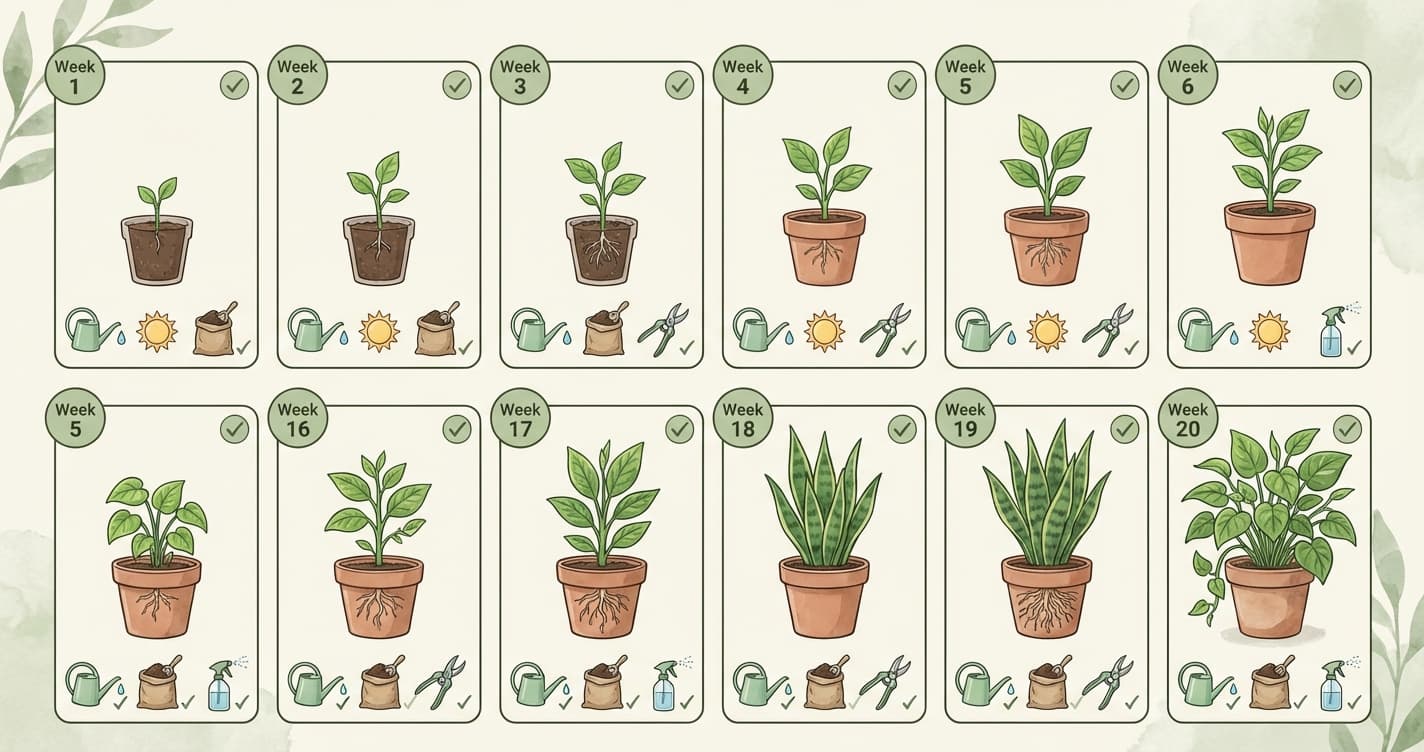
For a complete week-by-week care guide, see How to Keep Your First Houseplant Alive.
Common Mistakes to Avoid
After years of helping new plant parents, we've seen the same mistakes repeatedly. Learning from others' errors can save your plants and your confidence.
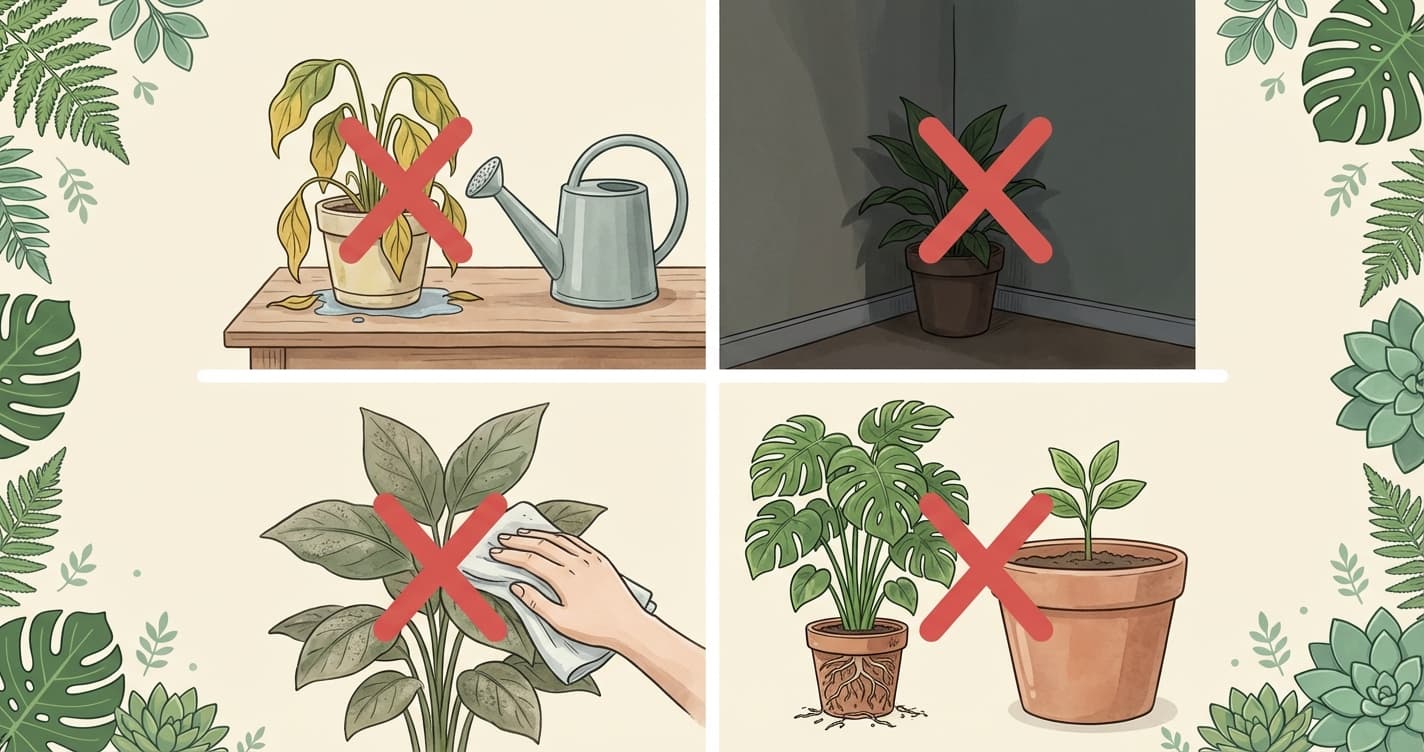
The 7 Biggest Beginner Mistakes
1. Overwatering
We've covered this extensively, but it bears repeating: overwatering is the #1 killer. When in doubt, wait another day or two before watering.
How to prevent it: Always check soil moisture before watering. Never water on a rigid schedule.
2. Choosing the Wrong Plant for Your Light
That gorgeous Fiddle Leaf Fig won't thrive in your dim apartment, no matter how much you want it to. Matching plants to your actual light conditions—not the conditions you wish you had—is essential.
How to prevent it: Assess your light honestly before shopping. Choose plants that match your space.
3. Repotting Too Soon (or Too Large)
New plant parents often assume plants need bigger pots. In reality, most plants prefer to be slightly root-bound, and too-large pots hold excess moisture that leads to root rot. Learn more in our repotting guide.
How to prevent it: Only repot when roots circle the drainage holes or growth stalls. Go up only 1-2 inches in pot diameter.
4. Neglecting Humidity
Many popular houseplants are tropical and prefer higher humidity than typical homes provide, especially in winter when heating dries the air.
How to prevent it: Group plants together (they create a humid microclimate), use a pebble tray, or run a humidifier. Monitor with a hygrometer. See our humidity management guide.
5. Placing Plants in Drafts
Hot or cold drafts from heating vents, air conditioners, or drafty windows stress plants. They prefer stable temperatures.
How to prevent it: Keep plants away from vents and drafty windows. Check for temperature fluctuations in your plant's location.
6. Ignoring Pests Until It's Too Late
Small pest populations are easy to treat. Large infestations can kill plants or spread to your entire collection. Regular inspection catches problems early.
How to prevent it: Check leaves (tops and undersides) and stems weekly. Quarantine new plants for 2-3 weeks before placing them near others.
7. Expecting Instant Results
Plants operate on a slower timeline than we do. A cutting might take months to root. A stressed plant might need weeks to recover. Impatience leads to overcare.
How to prevent it: Give plants time. Most changes—positive or negative—take weeks to become visible.
For detailed solutions to each of these issues, read our complete guide on the 7 most common beginner houseplant mistakes.
Troubleshooting Problems
Even with perfect care, plants occasionally develop problems. Learning to diagnose and respond to issues is a crucial skill. The good news: most problems have straightforward solutions when caught early.
Yellow Leaves
Possible causes:
- Overwatering (most common)—check if soil is soggy
- Underwatering—check if soil is bone dry
- Natural aging—lower leaves yellowing while upper growth is healthy is normal
- Nutrient deficiency—if plant hasn't been fertilized in 6+ months
- Light issues—too little light over time
What to do: Check soil moisture first. If soil is wet, let it dry before watering again. If dry, water thoroughly. If neither, consider light levels or fertilizing.
Brown Leaf Tips
Possible causes:
- Low humidity—especially common in winter
- Underwatering—inconsistent moisture
- Water quality—fluoride or chlorine sensitivity
- Fertilizer burn—too much or too concentrated
What to do: Trim brown tips with clean scissors (the tissue won't recover). Address humidity or watering consistency. If using tap water, try letting it sit overnight before watering.
Drooping Leaves
Possible causes:
- Underwatering (most common)—soil is dry, plant wilts
- Overwatering—soil is wet, roots are damaged
- Temperature shock—exposure to cold drafts
- Root bound—roots have no room to absorb water
What to do: Check soil moisture immediately. Underwatered plants recover within hours of watering. Overwatered plants need their soil to dry out and may need root inspection.
When to Worry vs. When to Wait
Normal events that look concerning:
- A few lower leaves yellowing and dropping (natural aging)
- Slight drooping before watering day (normal thirst signal)
- Slower growth in winter (seasonal dormancy)
- Older leaves being smaller than new leaves (indicates improving conditions)
Signs that need attention:
- Multiple leaves yellowing rapidly
- Soft, mushy stems
- Visible pests or webbing
- Foul smell from soil
- Rapid leaf drop
For a deeper dive into plant problems, see our guide: Why Do My Houseplants Keep Dying?
Growing Beyond the Basics
Congratulations—if you've made it this far and successfully kept your first plant alive for a few months, you've developed real plant care skills. Now comes the fun part: expanding your collection and trying new challenges.
When You're Ready for Your Second Plant
Signs you're ready to expand:
- Your first plant is stable and showing new growth
- You understand its watering rhythm without thinking
- You've successfully recovered from at least one minor problem
- You find yourself wanting to learn more
How to choose your second plant:
Look for something slightly different from your first. If you started with a low-light Snake Plant, try a medium-light Pothos. This expands your experience without overwhelming you.
For specific recommendations on progressing your collection, see Your Second Houseplant: Level Up After Mastering the Basics.
Building a Collection Mindfully
The biggest danger for new plant parents who've had initial success is overbuying. It's easy to go from one plant to twenty in a matter of weeks—and suddenly you're overwhelmed.
Sustainable collection growth:
- Add one plant at a time
- Wait until you've established a routine with new additions before getting more
- Consider care requirements as a group—can you realistically water 20 plants weekly?
- Quality over quantity: one thriving plant beats five struggling ones
Progressing to Moderate Care Plants
Once you've mastered beginner plants, you might try:
- Calathea or Prayer Plants—Beautiful patterns, but need consistent humidity
- Fiddle Leaf Fig—Instagram favorite that rewards consistent care
- Alocasia—Dramatic leaves, needs brighter light and regular attention
- Orchids—Not as hard as their reputation suggests
- String of Pearls—Needs bright light and careful watering
These plants are less forgiving but offer incredible rewards when you meet their needs. The fundamentals you've learned apply—you're just working with smaller margins for error.
For help deciding what to try next, check out our best houseplants for apartments or find budget-friendly options under $20.
Resources and Tools
As your plant collection grows, you might find certain tools and resources helpful for staying organized and informed.
Plant Care Apps
While we recommended skipping expensive apps as a beginner, some free options can help track multiple plants:
- Basic notes app—Create a simple log of watering dates and observations
- Calendar reminders—Schedule weekly plant check-ins
- Photo documentation—Take monthly photos to track growth and catch gradual changes
For a detailed review of available options, see our guide to the best plant care apps for beginners.
Creating a Care Schedule
As your collection grows beyond 5-6 plants, a care schedule helps ensure nothing gets neglected:
Weekly tasks:
- Check soil moisture on all plants
- Water plants that need it
- Quick visual inspection for pests or problems
- Rotate plants for even growth (especially near windows)
Monthly tasks:
- Wipe dust from leaves with a damp cloth (see our leaf cleaning guide)
- Check for pests more thoroughly (undersides of leaves, soil surface)
- Assess if any plants need larger pots
Seasonal tasks:
- Spring: Increase watering and resume fertilizing
- Summer: Monitor for increased water needs
- Fall: Gradually reduce watering and stop fertilizing
- Winter: Water sparingly, watch humidity levels
Download our free plant care schedule template for a printable checklist to keep your plants thriving all year.
For a detailed breakdown of care tasks by timeframe, see our Houseplant Care Schedule Template guide.
Finding Plants Locally
Buying from local nurseries offers advantages over big box stores:
- Healthier plants acclimated to your region
- Expert advice from knowledgeable staff
- Supporting local businesses
- Often better selection of unusual varieties
Use our nursery finder to discover highly-rated plant shops near you.
Frequently Asked Questions
How often should I water my houseplant?
There's no universal schedule—watering frequency depends on the plant species, pot size, soil type, light levels, and humidity. Instead of watering on a calendar, check soil moisture before watering. Most houseplants should be watered when the top 1-2 inches of soil feels dry. Succulents and Snake Plants prefer to dry out completely between waterings. Always check first rather than guessing.
What's the easiest houseplant to keep alive?
Snake Plant (Sansevieria) and ZZ Plant are considered the most indestructible houseplants. Both tolerate low light, infrequent watering, and general neglect. Pothos is another excellent choice that's slightly more forgiving of overwatering and grows quickly enough to provide satisfying feedback.
Do houseplants need direct sunlight?
Most common houseplants are tropical understory plants that evolved in filtered forest light—they actually prefer indirect light and can burn in direct sun. Only succulents, cacti, and a few other species need direct sunlight. Place most houseplants near bright windows but out of direct sun rays, or use sheer curtains to filter intense light.
How do I know if I'm overwatering my plant?
Signs of overwatering include: yellow leaves (especially lower leaves), soft or mushy stems near the soil line, soil that stays wet for days, a musty smell from the pot, and fungus gnats flying around the soil. The soil itself is the best indicator—if it's still wet a week after watering, you're watering too frequently or your pot doesn't have adequate drainage.
Are houseplants safe for pets?
Some are, many aren't. Spider Plant is one of the few truly pet-safe beginner options. Many popular houseplants including Pothos, Peace Lily, Monstera, and Aloe Vera are toxic to cats and dogs if ingested. Always check before bringing a plant home, and place toxic plants out of reach. For comprehensive information, see our pet safety guide.
When should I repot my plant?
Signs that a plant needs repotting include: roots growing out of drainage holes, roots circling visibly at the soil surface, water running straight through without absorbing, and significantly slowed growth despite good care. Most plants need repotting every 1-2 years. The best time to repot is early spring, at the start of the growing season. For detailed instructions, see our repotting guide.
Do I need to fertilize houseplants?
Houseplants benefit from fertilizing during their active growing season (spring through early fall), but it's not immediately necessary. New plants and recently repotted plants don't need fertilizer for several months—the fresh soil contains nutrients. Over-fertilizing causes more problems than under-fertilizing. A balanced liquid fertilizer (like 10-10-10) diluted to half strength, applied monthly during growing season, is sufficient for most plants.
How do I clean houseplant leaves?
Dust blocks light and can attract pests. Wipe leaves gently with a damp cloth every few weeks. For plants with many small leaves, rinse them in the shower or sink with room-temperature water. Avoid commercial leaf shine products, which can clog the pores (stomata) that plants use to breathe. Learn more in our leaf cleaning guide.
Why are my plant's leaves turning brown at the tips?
Brown leaf tips usually indicate low humidity, inconsistent watering, or water quality issues. Increase humidity by grouping plants together, using a pebble tray, or running a humidifier. Water more consistently—don't let soil completely dry out between waterings (unless the plant prefers it). If using tap water, try letting it sit out overnight before using, or switch to filtered water.
Can I save a dying plant?
Often, yes. First, diagnose the problem—is the soil too wet or too dry? Are there pests? Is it getting appropriate light? If roots have rotted from overwatering, you may be able to save the plant by removing it from soil, cutting off rotted roots, and repotting in fresh, dry soil. If stems and roots are entirely mushy, the plant is likely beyond saving, but healthy stem cuttings might still be propagated.
Your Plant Parent Journey Starts Now
You've just absorbed everything you need to successfully grow houseplants. The knowledge in this guide transforms mysterious plants into understandable, predictable living things that respond to your care.
Here's what we hope you take away:
-
Start simple. Choose a forgiving plant, learn its rhythms, and build confidence before expanding.
-
Check, don't schedule. Water when your plant needs it, not when the calendar tells you to.
-
Trust your observations. Plants communicate constantly—yellowing leaves, drooping stems, reaching toward light. Learn to read these signals.
-
Expect mistakes. Every plant parent has killed plants. Each loss teaches you something valuable. Persistence beats perfection.
-
Enjoy the process. Watching a new leaf unfurl, seeing roots develop on a cutting, helping a struggling plant recover—these small victories are what plant parenthood is really about.
You're not going to get everything right immediately. You'll probably overwater something. You might choose a plant that doesn't suit your light. A pest infestation might catch you off guard. That's all normal—it's how you learn.
Ready to get started?
Find your first plant at a local nursery near you. Support local businesses while getting healthier plants and expert advice.
Want to stay organized?
Download our free plant care schedule template to track watering, fertilizing, and seasonal care tasks for all your plants.
Welcome to the world of houseplants. Your green thumb starts today.