This guide contains affiliate links. We may earn a small commission if you purchase through our links, at no extra cost to you.
Pet safe pest control for houseplants starts with the treatments that have no chemistry in them at all: a damp cloth, a rinse in the shower, sticky traps, pruning out the worst growth, and drier soil. When that is not enough, insecticidal soap is the standard next step, then horticultural oil or neem. Pyrethrin and permethrin sprays, essential-oil home remedies and systemic granules are where we stop.
Here is the part most pest guides skip: plenty of organic, plant-derived, OMRI-listed products are dangerous to cats. Pyrethrins are extracted from chrysanthemums. Essential oils are natural. Neither fact makes them safe to leave on a leaf a cat will rub against and then groom off. "Natural" and "safe around pets" are two different claims.
That grooming pathway is why this article exists. For a dog, the exposure question is mostly whether it will eat the leaf; for a cat, the plant does not have to be eaten at all. So the useful question is never "is this product toxic?" but "what is left on the leaf once it dries, and what happens when a cat swallows it?" For the wider picture — safe species, chewing, emergencies — start with our pet-safe houseplant guide.
We are plant people, not veterinarians, and nothing here is a treatment protocol. Identify the pest first: our pest identification guide covers what each one looks like, and plenty of "infestations" turn out to be a watering problem.
Why Cats Are the Strict Case
The metabolic difference. The American Association of Feline Practitioners explains that permethrin poisoning in cats results from "insufficient glucuronide conjugation of the permethrin by the feline liver, resulting in high levels of the permethrin." VCA Animal Hospitals puts it more broadly: cats "are also very sensitive to pyrethrins and pyrethroids because they're unable to metabolize (break down) these agents quickly and efficiently due to their peculiar liver metabolism." The same pattern reappears with essential oils, where Pet Poison Helpline says cats "lack an essential enzyme in their liver and as such have difficulty metabolizing and eliminating certain toxins like essential oils."
The behaviour. A cat that brushes past a freshly treated leaf carries the residue away on its fur and swallows it later, grooming. VCA advises keeping cats away from any area, indoor or outdoor, treated with a pyrethrin or pyrethroid product "until it has completely dried."
Dogs are not immune, but the route is simpler and more preventable: a dog generally has to chew the plant. Placement solves a great deal for a dog and very little for a cat, as our dog-safe houseplants guide covers.
The Ladder, Safest First
Each rung is more effective and less forgiving than the one above it. Move down only when the pest demands it.
Rung 1: No Chemistry At All
Underrated, and where most small infestations should end.
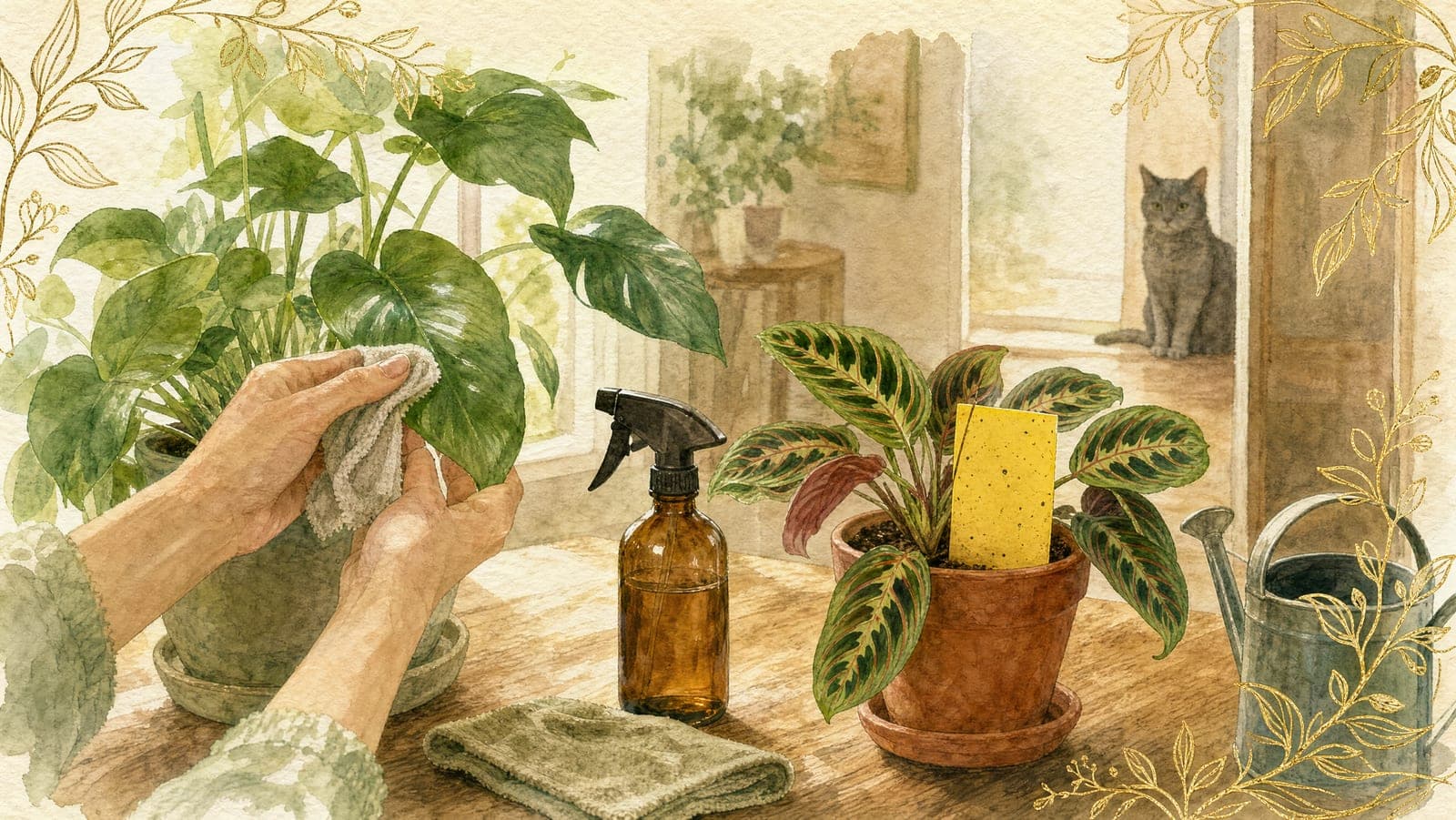
- Wipe the leaves. A damp microfibre cloth removes mealybugs, scale crawlers, aphids and much of a spider-mite population; our leaf cleaning guide covers technique. Thick, flat foliage makes this easy — a baby rubber plant wipes clean in two minutes. A Boston fern cannot be wiped at all, and a spider plant is a tedious middle case.
- Rinse it in the shower. Lukewarm water, leaf undersides included. For mites and aphids this works and leaves nothing behind.
- Prune out the worst. One badly infested stem is often the whole problem.
- Let the soil dry. For fungus gnats this is not a supporting measure, it is the treatment.
- Sticky traps. A yellow glue card catches adult gnats and tells you if the population is rising or falling.
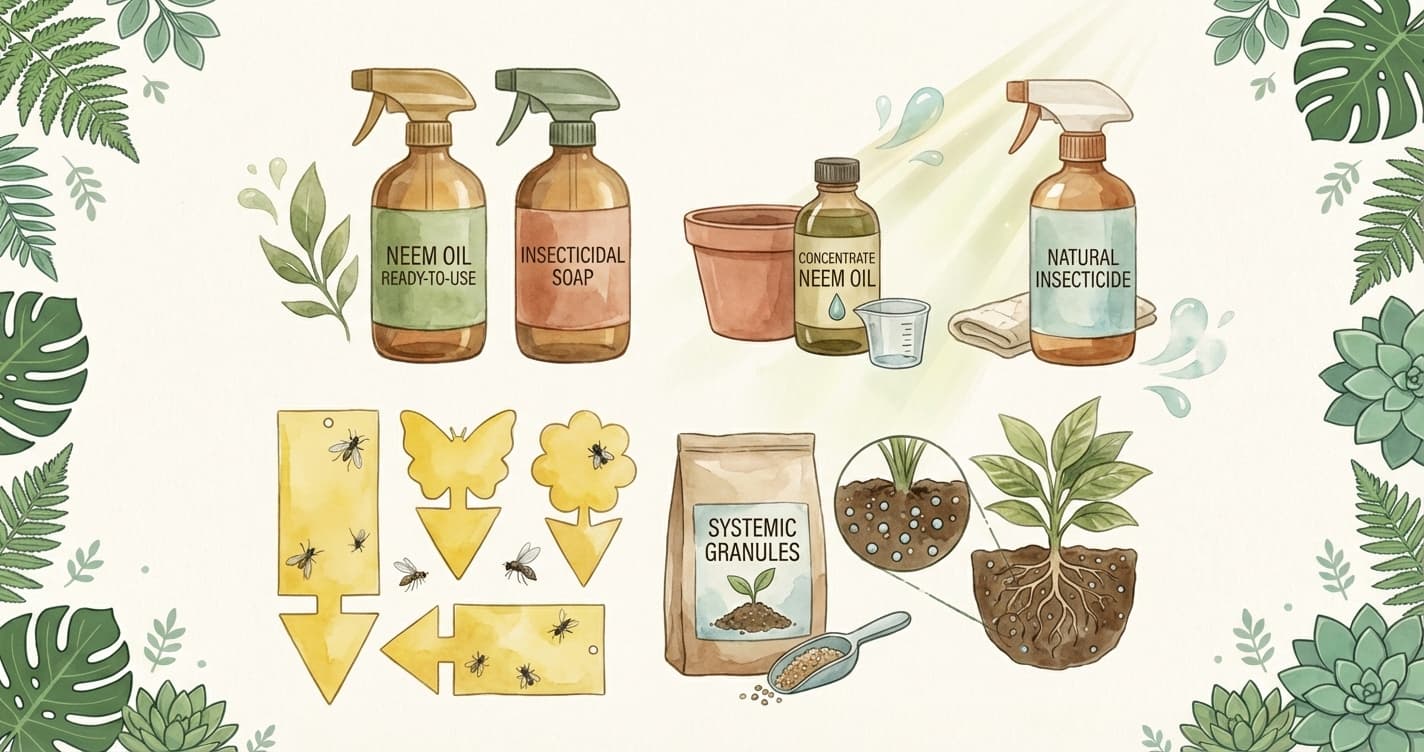
A trap cannot be licked off a leaf because there is nothing on the leaf, which makes it the cleanest option in a pet home. A 40-pack of yellow sticky fungus gnat traps was $7.99 as of August 2026, with a pointed base that pushes into the soil. Two honest caveats: they are sticky, and a cat or long-haired dog that gets one stuck to fur or a paw is a real nuisance even if not a toxic one, so set them low in the pot away from where the animal patrols. And they catch adults only, not larvae, so they are half a fungus-gnat answer at best.
Scale with the plant, not the pest: a floor-standing specimen has far more leaf area than a shelf plant, and wiping one by hand is an afternoon. Read our roundup of large pet-safe houseplants with that in mind.
Rung 2: Insecticidal Soap
The default first spray.
Clemson Cooperative Extension describes insecticidal soaps as potassium salts of fatty acids and calls them "natural products that are virtually non-toxic to animals and birds" and "among the safest pesticides." They work mechanically rather than neurologically — Clemson lists suffocation, disruption of the insect's cellular membranes, and removal of the protective waxes that cover it.
The pet-relevant consequence is residue. Colorado State University Extension notes soaps "act strictly as contact insecticides, with no residual effect," and Clemson puts it plainly: "There is no residual effectiveness because soap dries or is washed away." A spray with no residual is a spray with much less to groom off later.
What it kills: Clemson lists small, soft-bodied insects — aphids, mealybugs, thrips, scale crawlers and spider mites — as most susceptible. The honest limitation: no residual also means no protection. It kills only what the spray touches, so leaf undersides matter and repeat applications are the norm.
A ready-to-use insecticidal soap sold for indoor plants was $9.99 as of August 2026; the listing targets aphids, mealybugs, mites and whiteflies. Low mammalian toxicity is not zero toxicity: keep pets out until the foliage is dry, and follow the label rather than us.
Read the actual label, not the front of the bottle. The EPA-registered label is the legally binding document; marketing copy is not. One of the best-selling "insecticidal soap" results you will find shopping for houseplant pests carries manufacturer copy describing it as designed for outdoor residential use in home gardens, lawns, ornamentals and greenhouses. Not a scandal — but its own maker did not label it for the job you are about to use it for.
Rung 3: Horticultural Oil and Neem
The step up when soap alone is not clearing spider mites, and the rung that needs the most careful framing.
On pet status the sourcing is reassuring but thin. PetMD reports that "neem oil is not listed as a toxic plant product for cats or dogs as per the ASPCA Poison Control Center or Pet Poison Helpline," while still recommending cautious use under your own vet's guidance, and it is specific about cats: "Cats have not used neem as widely, and for now, we would still recommend caution, as cats groom much more than other species (and are more likely to ingest it)." Undiluted or insufficiently diluted neem, PetMD adds, can cause "excessive salivation, appetite changes, vomiting, or other health concerns."
One caveat is real advice rather than boilerplate: PetMD notes neem oil "can interact with insulin, some oral diabetic medications agents, and thyroid hormone supplementation medication." If your animal is on any of those, asking the vet first is a genuine question. And since the pet-relevant risk lives mostly in over-concentration, a ready-to-use bottle removes the step where that mistake happens. A ready-to-use neem oil spray was $9.99 as of August 2026, down from a $11.97 list price; sold as a three-in-one fungicide, miticide and insecticide, its listing states it kills egg, larval and adult stages — which is why it beats soap on mites.
Oils work by smothering: UConn Extension describes "a coating of oil on the insect's body, blocking the spiracles or breathing opening."
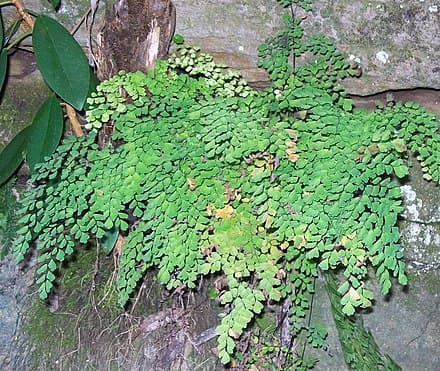
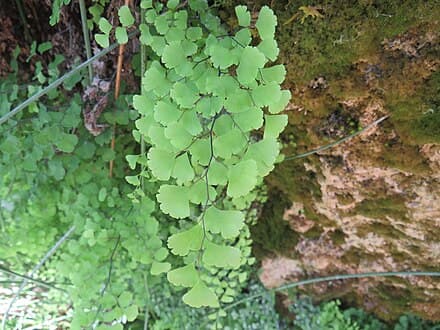
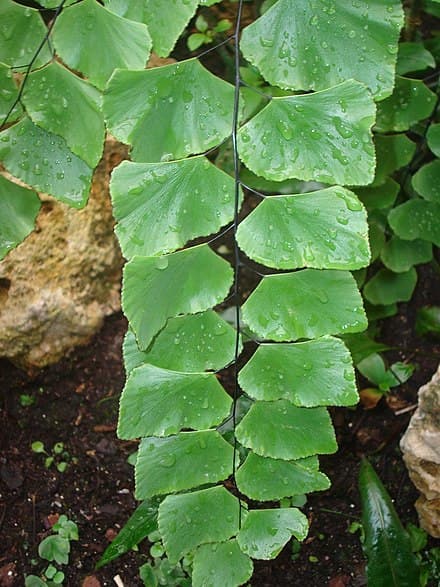
The plant-damage caveat, not a pet issue but it will ruin your week anyway: UConn's horticultural oil guidance says flatly, "Do not use on ferns." Clemson lists maidenhair fern among plants sensitive to soap, with azaleas, begonias, fuchsias, geraniums and impatiens somewhat sensitive. Test a few leaves and wait three days.
Where We Stop
Pyrethrin and permethrin products. The highest-stakes paragraph on the page. The AAFP notes that dog-marketed permethrin products typically contain 45 to 60 percent permethrin while products marketed as safe for cats contain less than 0.1 percent, and that clinical signs in an affected cat range from "restlessness and hypersalivation to muscle spasms, seizures, and death," with prompt treatment necessary for survival. VCA adds that there is "no antidote for pyrethrin or pyrethroid poisoning," and lists "home and outdoor yard and garden insecticides" — liquids, sprays, granules and foggers — among the product types these compounds turn up in. Pyrethrins are botanical, extracted from chrysanthemums — exactly the point about "natural." In a house with a cat we do not use these on houseplants, and we are not going to link one.
Essential-oil DIY sprays. Pet Poison Helpline lists wintergreen, sweet birch, citrus (d-limonene), pine, ylang ylang, peppermint, cinnamon, pennyroyal, clove, eucalyptus and tea tree oils among those known to cause poisoning in cats, and notes essential oils are rapidly absorbed both orally and across the skin. A poor trade for a spider-mite problem a shower rinse would have solved.
Systemic granules. Here we are explicit about where published toxicology ends and our editorial line begins. The Merck Veterinary Manual gives an acute oral LD50 for imidacloprid of 379 to 648 mg/kg in rats and describes dinotefuran as having "very low acute oral or dermal toxicity in rats and mice," so the published acute-toxicity picture is not alarming, and imidacloprid appears in licensed veterinary flea products at label doses. Our objection is structural, not toxicological. A systemic puts the insecticide inside the plant tissue, where it cannot be wiped off, rinsed away or waited out — and every other rung here is manageable precisely because the residue is removable. A chewing animal plus a systemic-treated plant is the one combination we would rule out in our own homes. Our pest treatment comparison ranks these on effectiveness alone.
Pest by Pest: What to Actually Use
Fungus Gnats
One of the most common houseplant pests, the one with the least chemical answer, and the perfect illustration of everything above. UC IPM is direct: "Insecticides are rarely warranted to control these flies in and around homes." The fix is cultural. Allow the surface of container soil to dry between waterings, because the larvae live in the top layer of consistently moist media. UC IPM notes a generation can be produced in about 17 days depending on temperature, so give any change two to three weeks before judging it. Sticky traps handle the adults. For larvae, UC IPM describes Bacillus thuringiensis subspecies israelensis as needing repeated applications at about five-day intervals in potting media, since it does not persist indoors.
If gnats keep coming back, the honest diagnosis is the watering can — our watering 101 guide covers judging soil by weight and feel rather than by calendar.
Spider Mites
Dry air, fine webbing, stippled leaves. Palms and prayer plants are magnets: a bamboo palm or prayer plant in a heated winter room is the classic case. Rinse in the shower and raise the humidity. Soap works on contact; neem is the step up because it hits eggs as well as adults.
Mealybugs and Scale
Mealybugs are white cottony clusters in leaf joints; their waxy coating repels water, so a cloth outperforms a spray. Scale are immobile brown bumps that scrape off with a thumbnail — Clemson's susceptible-pest list names scale crawlers, the mobile juvenile stage, rather than scale generally, so physical removal does the heavy lifting on settled adults. Big glossy-leaved plants like Japanese aralia are both scale-prone and easy to wipe.
Thrips, Aphids and Whiteflies
All three are soft-bodied and sit in insecticidal soap's range per Clemson's list. Aphids rinse off easily. Whiteflies scatter when disturbed and need repeat treatment. Thrips are the stubborn one, usually several rounds.
Application Rules That Do the Real Work
The habits matter more than the product choice.
- Get pets out of the room first, and keep them out until the foliage is dry. NPIC's guidance is to keep pets away from treated areas "until the pesticide is completely dry and the area has been well ventilated."
- "Dry" means dry to the touch on both leaf surfaces, not merely no longer dripping. On a thick-leaved plant in a warm room that is often under an hour; on a dense fern in a cool bathroom, several hours. If in doubt, wait longer.
- Treat somewhere else and bring the plant back dry. A bathtub, balcony or garage contains the overspray.
- Deal with the runoff. Standing liquid in a drip tray is a drinking source. Empty and rinse it, or pull the tray.
- Clear the area. NPIC advises removing "all pet toys, chew bones, food bowls and bedding" before treating. Rinse the sink or tub afterwards, and wash your hands before you touch the animal.
- Store the bottle where an animal cannot reach it. The point people skip, and the biggest one: concentrated product behind a chewable cap in a low cupboard is a far greater hazard than diluted spray dried onto a leaf.
If Your Pet Has Already Been Exposed
Do not diagnose or treat at home, and do not induce vomiting unless a veterinary professional tells you to.
Get the container in your hand, find the product name and the EPA registration number on the label, and call your own vet or an emergency clinic. If you cannot reach them, the ASPCA Animal Poison Control Center is available at (888) 426-4435, and the ASPCA notes a consultation fee may apply. The Pet Poison Helpline is available at (855) 764-7661; its site states an $89 per-incident fee that includes all follow-up consultations.
If the worry is the plant rather than the product, our guide on what to do if your pet eats a plant walks through the first fifteen minutes. To check a species, use our pet toxicity checker; our roundup of toxic houseplants to avoid covers the ones behind most calls.
Prevention Beats Treatment
Almost every pet-safety question above disappears if the pest never establishes.
- Quarantine new plants for two to three weeks in a room the animals do not use. New plants are a common route in; our pest quarantine protocols guide covers the routine.
- Inspect leaf undersides weekly. Thirty seconds per plant while you water. Mites and scale are trivial at ten insects and miserable at ten thousand.
- Wipe rather than spray while the problem is small. The whole ladder above exists because people wait.
- Watch the watering. Overwatered soil is a fungus gnat nursery and a root rot risk in the same pot.
For the full integrated approach, our pest mastery guide is the hub.
The Bottom Line
Sort treatments by what they leave behind, not by whether the bottle says natural. Nothing on the leaf beats something on the leaf, and something removable beats something absorbed.
Start at the top of the ladder — wipe, rinse, trap, let the soil dry — then move to insecticidal soap, then to a ready-to-use neem or horticultural oil, with pets out of the room, foliage fully dry, and a vet consulted first if your animal is on insulin, an oral diabetes medication or thyroid supplementation. Skip the pyrethrin sprays, the essential-oil recipes and the systemic granules. Low toxicity is not no toxicity, and an absence of listed toxicity is not a guarantee — often it just means nobody has studied it in cats.
For the full strategy — safe species, plants to avoid, chewing and emergencies — go back to Better Indoor Houseplants' pet-safe plant guide.