This guide contains affiliate links. We may earn a small commission if you purchase through our links, at no extra cost to you.
If you've killed multiple plants, you're not alone—and you're not cursed. Almost every experienced plant person has a history of dead plants. The difference is understanding why they died so you can prevent it next time.
This guide diagnoses the most common plant killers and shows you how to fix them.
For prevention strategies, see our guide on common beginner houseplant mistakes.
The #1 Killer: Overwatering
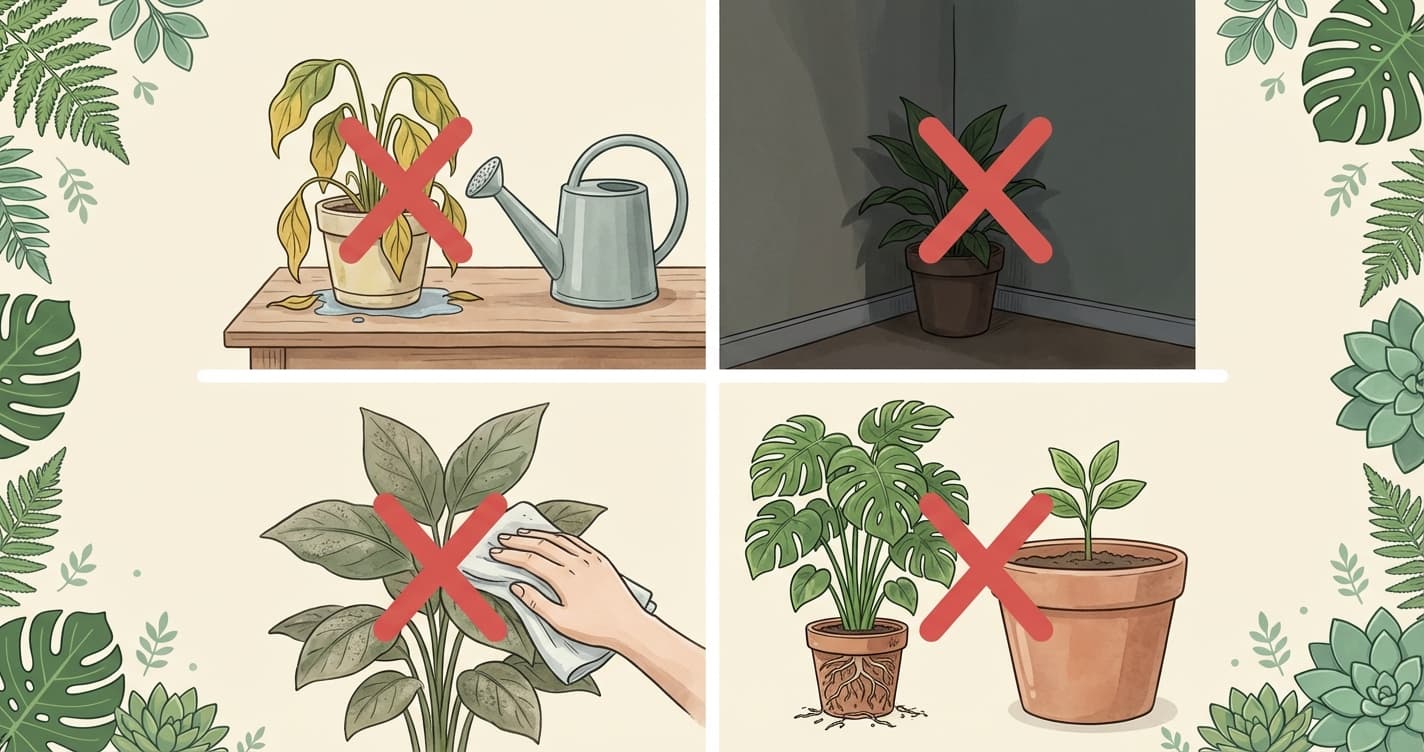
More plants die from too much water than too little. This surprises most beginners, who assume more care = better care. But roots need oxygen as much as water. Constantly wet soil suffocates them.
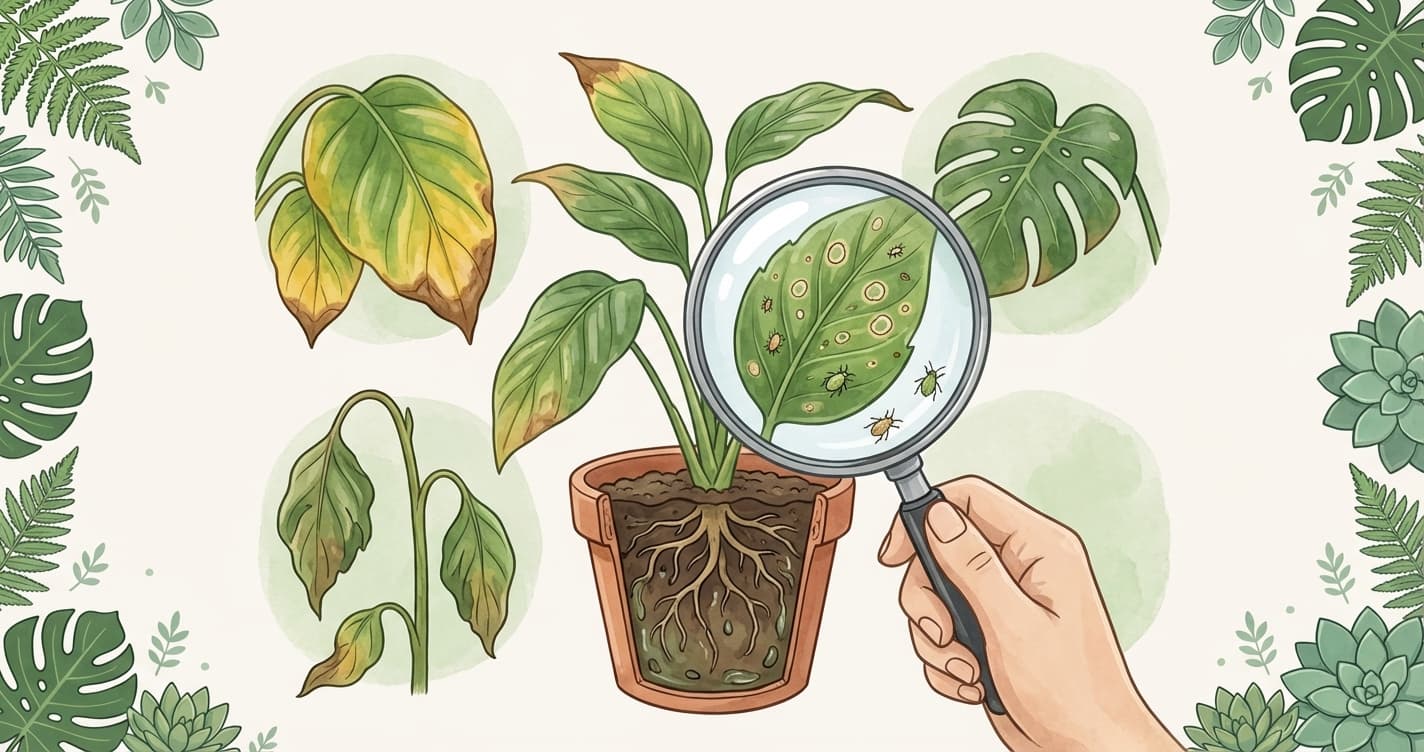
Symptoms
- Yellow leaves, especially lower leaves
- Soft, mushy stems near the soil
- Soil that stays wet for more than a week
- Musty smell from the pot
- Fungus gnats hovering around soil
- Drooping that doesn't improve after watering
What Happened
You watered on a schedule ("every Sunday") or watered whenever the surface looked dry, not checking deeper soil moisture. Roots stayed wet, couldn't breathe, and began rotting. Once root rot starts, the plant can't absorb water or nutrients—creating a death spiral where overwatering symptoms look like underwatering.
The Fix
- Stop watering on a schedule. Check soil moisture first, always.
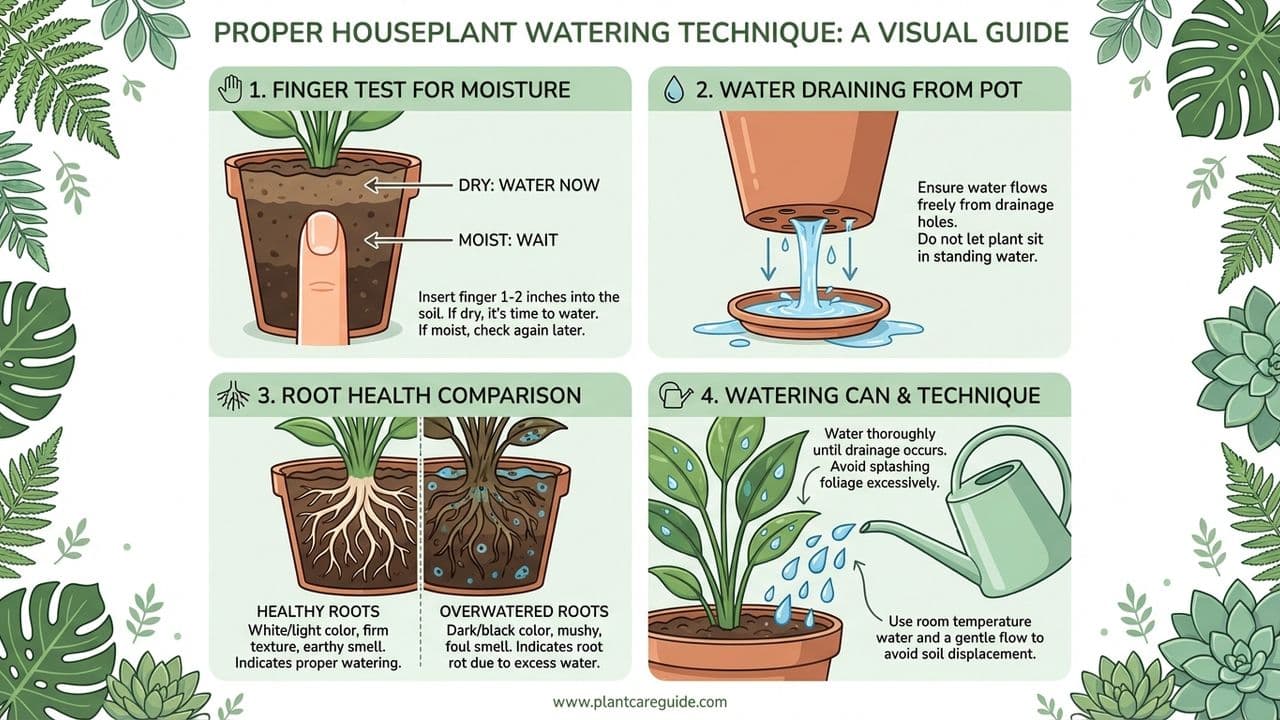
- Use the finger test: Stick your finger 1-2 inches into soil. Water only when dry.
- Ensure drainage: Pots must have drainage holes. Never let plants sit in standing water.
- Choose forgiving plants: Pothos tolerates wet soil better than Snake Plant or ZZ Plant.
Can you save an overwatered plant? Sometimes. Remove from pot, cut away mushy roots, let root ball dry, and repot in fresh, dry soil. Recovery isn't guaranteed.
For detailed watering techniques, see our watering guide.
The #2 Killer: Wrong Light
Plants can't adapt to conditions they weren't designed for. A sun-loving plant in a dark corner will slowly decline no matter how well you water or fertilize. Conversely, a shade plant in direct sun will burn.
Symptoms
Too little light:
- Leggy, stretched growth reaching toward windows
- Smaller new leaves than older leaves
- Loss of variegation (colored patterns fade to green)
- Slow or stopped growth during growing season
- Gradual decline despite correct watering
Too much light:
- Brown, crispy patches on leaves (sunburn)
- Faded, bleached appearance
- Leaves curling away from light
What Happened
You chose a plant based on looks rather than your light conditions. That gorgeous Fiddle Leaf Fig can't survive your north-facing studio. That fern can't handle your sun-drenched window.
The Fix
- Assess your light honestly. Use the shadow test (sharp shadow = bright light; fuzzy = medium; barely visible = low).
- Match plants to conditions: Low light spaces need Snake Plant, ZZ Plant, Pothos. Bright spaces can handle broader varieties.
- Supplement if necessary: Grow lights extend your options in dim spaces.
For more low-light options, see best houseplants for low light apartments.
The #3 Killer: Root Rot from Poor Drainage
Pots without drainage holes trap water, creating swamp conditions even when you water correctly. Root rot follows.
Symptoms
Same as overwatering: yellow leaves, soft stems, musty smell, general decline.
What Happened
You planted directly into a decorative pot without drainage, or the pot's drainage hole is blocked, or you let the plant sit in a saucer of water.
The Fix
- Use pots with drainage holes. Non-negotiable.
- Keep plants in nursery pots inside decorative cache pots.
- Empty saucers 30 minutes after watering.
- Check for blockages if water doesn't drain freely.
The #4 Killer: Shock from Environmental Change
Plants hate sudden changes. Moving from a nursery's ideal conditions to your home stresses them. Repotting immediately, changing locations repeatedly, or exposing to drafts compounds the shock.
Symptoms
- Rapid leaf drop after bringing plant home
- Wilting that doesn't respond to watering
- General malaise without obvious cause
What Happened
You brought a plant home and immediately repotted it, moved it around trying to find the "right" spot, or placed it near a heating vent or drafty window.
The Fix
- Leave new plants alone for 2-4 weeks. Let them acclimate.
- Don't repot immediately. Most plants are fine in nursery pots for months.
- Place once and stay put. Constant moving prevents acclimation.
- Avoid drafts. Keep away from heating/cooling vents and drafty windows.
The #5 Killer: Pests
Unchecked pest infestations kill plants. Small populations are manageable; large infestations overwhelm even healthy plants.
Symptoms
- Sticky residue on leaves (honeydew from sap-sucking insects)
- Fine webbing (spider mites)
- White cottony spots (mealybugs)
- Brown bumps (scale)
- Small flies hovering around soil (fungus gnats)
- Yellowing, distorted, or dropping leaves
What Happened
You didn't notice early pest signs, or brought home an infested plant and introduced pests to your collection.
The Fix
- Inspect plants weekly. Look at leaf tops, undersides, and where leaves meet stems.
- Quarantine new plants for 2-4 weeks before placing near others.
- Identify the pest correctly. Different pests require different treatments—see our pest identification guide.
- Treat early and appropriately. See our pest treatment comparison for options.
- Isolate infested plants to prevent spread.
For comprehensive pest management, see our Houseplant Pest Mastery Guide.
The #6 Killer: Underwatering
Less common than overwatering, but still deadly. Some beginners, warned about overwatering, swing too far in the other direction.
Symptoms
- Brown, dry, crispy leaves
- Soil pulling away from pot edges
- Leaves curling inward
- Dramatic wilting
- Extremely dry, dusty soil
What Happened
You forgot to water, or didn't water thoroughly (just gave it sips), or misread the "wait until dry" advice.
The Fix
- Create a checking routine. Same day each week, check all plants.
- Water thoroughly when you do water—until water flows from drainage holes.
- Choose drought-tolerant plants if you know you'll forget: Snake Plant, ZZ Plant, Aloe Vera.
Good news: Most underwatered plants recover quickly once properly watered. Overwatered plants often don't.
Diagnosing Your Plant's Problem
The Troubleshooting Checklist
When a plant struggles, work through this list:
- Check soil moisture. Is it soggy? Bone dry? About right?
- Evaluate drainage. Does water flow freely from pot? Does saucer have standing water?
- Assess light. Is the plant getting what it needs for its species?
- Look for pests. Check leaf undersides and stem joints carefully.
- Consider recent changes. Did you move it, repot it, change watering habits?
- Factor in season. Slow winter growth is normal.
Common Symptoms Quick Reference
| Symptom | Most Likely Cause | Check First |
|---|---|---|
| Yellow lower leaves | Overwatering | Soil moisture |
| Brown, dry leaf edges | Underwatering or low humidity | Soil moisture, humidity |
| Leggy, stretched growth | Insufficient light | Light levels |
| Drooping | Under or overwatering | Soil moisture (determines which) |
| Crispy brown patches | Sunburn or fertilizer burn | Light exposure, recent fertilizing |
| Sticky residue | Pests | Leaf inspection |
| Mushy stems | Root rot | Soil moisture, drainage |
When to Give Up
Sometimes plants can't be saved. Signs it's time to let go:
- Completely rotted roots — No healthy roots remain
- Mushy stems throughout — Rot has spread to the entire plant
- Severe pest infestation — Treatment would take longer than starting fresh
- Complete leaf loss — No energy reserves left
Don't feel guilty. Every plant person has lost plants. Each loss teaches you something. Toss it, clean the pot thoroughly, and try again with that knowledge.
Breaking the Cycle
If you've killed multiple plants, try this approach:
- Start with the most forgiving plants: Pothos, Snake Plant, or ZZ Plant.
- Master watering first. Check soil before watering—always.
- Match to your light. Be honest about your conditions.
- Do less. Most beginners kill by overcaring.
- Keep one plant alive for 3 months before adding more.
See our guide on best first houseplants for recommendations.
Next Steps
Ready to try again with better knowledge?
- Review fundamentals: Complete beginner's guide
- Choose wisely: How to choose your first plant
- Avoid common errors: 7 biggest beginner mistakes
- Find healthy plants: Visit a local nursery
You're not a plant killer. You were just missing information. Now you have it.