This guide contains affiliate links. We may earn a small commission if you purchase through our links, at no extra cost to you.
You've brought home your first houseplant. Now what?
The next 12 weeks are critical. This is when you develop habits, learn your plant's rhythms, and either build confidence or lose hope. Most plant deaths happen in these first few months—not from bad luck, but from correctable mistakes.
This guide walks you through week by week, so you know exactly what to do (and what not to do) at each stage.
For a complete overview of plant care fundamentals, see our complete beginner's guide to houseplants.
Before We Start: The Golden Rules
Keep these principles in mind throughout:
-
Less is more. New plant parents kill with kindness. Overwatering and overfussing cause more deaths than neglect.
-
Observe before acting. Learn to read your plant. Changes happen slowly—give issues time to develop before reacting.
-
Environment first. Check light, water, and humidity before assuming anything else is wrong.
-
Patience wins. Plants operate on a slower timeline than humans. Visible changes take weeks, not days.
Week 1: Arrival and Acclimation
Your plant is stressed. Even healthy plants experience shock from moving—new light, new humidity, new temperature. Some leaf drop is normal.
What to Do
Day 1:
- Find the right spot based on light needs (see our choosing guide)
- Place the plant and resist moving it again
- Check if the soil is wet or dry—don't water automatically
Days 2-7:
- Leave the plant alone (seriously)
- Don't water unless soil is completely dry
- Don't fertilize
- Don't repot
- Don't panic over minor leaf yellowing
What's Normal
- Some lower leaves yellowing or dropping
- Brief drooping that recovers overnight
- Slower appearance than in the store (they were in ideal conditions)
When to Worry
- Soft, mushy stems (root rot—was likely overwatered before purchase)
- Visible pests (quarantine and treat immediately)
- Rapid, continuous leaf drop (more than 3-4 leaves in a week)
Key insight: Your job this week is to resist the urge to "do something." The plant needs time to adjust.
Week 2: First Watering Assessment
Time to learn your plant's rhythm. By now, the soil has had time to show its drying pattern in your specific environment.
What to Do
- Check soil moisture using the finger test or moisture meter
- If dry (1-2 inches deep), water thoroughly until water drains from the bottom
- If still moist, wait and check again in a few days
- Empty the saucer 30 minutes after watering
Watering Properly
How to water:
- Water slowly and evenly across the soil surface
- Continue until water flows from drainage holes
- Let it drain completely
- Empty the saucer (plants shouldn't sit in water)
How NOT to water:
- Giving a small amount daily ("sipping")
- Watering on a schedule regardless of soil moisture
- Letting the pot sit in standing water
What's Normal
- Soil in different parts of the pot dries at different rates
- Your plant may need more or less water than the "average" recommendation
Record Keeping
Note when you watered and how the soil felt. This baseline helps you understand your plant's pattern.
Weeks 3-4: Establishing Rhythm
You're developing habits. By now, you should have watered your plant at least once and observed its response.
Weekly Tasks
Check-in routine (pick a consistent day):
- Observe: How does the plant look overall?
- Check soil moisture
- Water only if needed
- Inspect for pests (check undersides of leaves)
- Note any changes
What to Observe
Healthy signs:
- Steady or improved appearance
- No new yellowing beyond initial adjustment
- Leaves facing toward light (natural)
- Slight drooping before watering day (normal)
Warning signs:
- Progressive yellowing across multiple leaves
- Leaves becoming pale or losing color
- Persistent drooping even after watering
- Sticky residue or visible insects
Common Week 3-4 Mistakes
Don't:
- Start fertilizing (too early—wait 2-3 months)
- Repot (unnecessary stress)
- Move the plant repeatedly
- Water on a rigid schedule
Building Intuition
You're learning that your specific plant, in your specific environment, has its own rhythm. This is more valuable than any general advice.
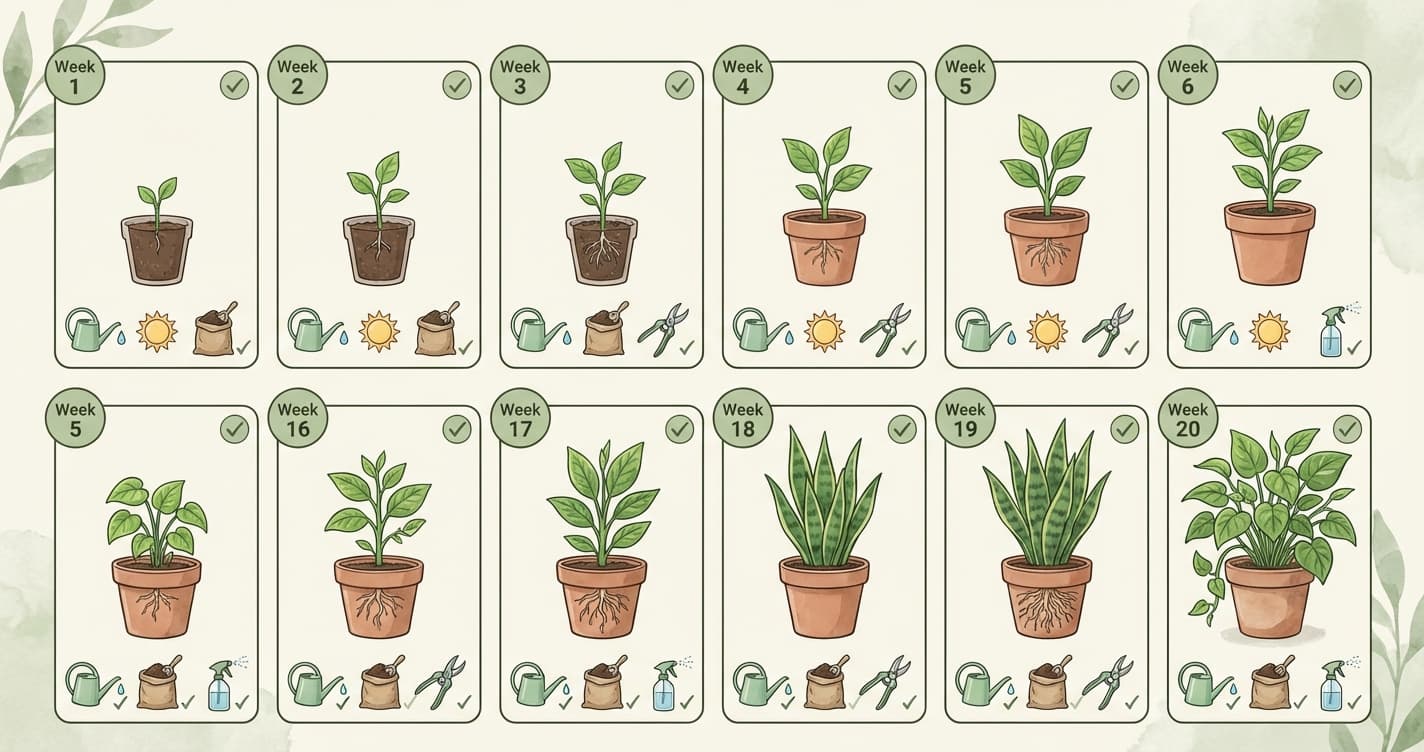
Weeks 5-6: First Growth Signs
You might see new growth. If your plant is established and conditions are good, new leaves may start emerging. This is exciting validation.
What New Growth Looks Like
Pothos: New leaves unfurl at the end of vines—often lighter green initially.
Snake Plant: New leaves (called pups) emerge from the soil at the base.
ZZ Plant: New stems emerge from the soil—bright green, curled at first.
Monstera: New leaves emerge rolled up, gradually unfurling over days.
Peace Lily: New leaves push up from the center; flower spathes emerge similarly.
No Growth Yet?
Don't panic. Growth depends on:
- Season: Plants grow mainly in spring/summer; winter growth is slow or stopped
- Light: Low light = slower growth (but the plant may still be healthy)
- Establishment: Some plants focus on roots before visible growth
Maintenance Tasks
- Continue weekly soil checks and watering as needed
- Rotate plant quarterly for even growth (if near a window)
- Wipe dust from leaves with a damp cloth (improves photosynthesis)
Weeks 7-8: Steady State
You've probably developed a routine. You know roughly when your plant needs water, you've learned its "normal" appearance, and panic has subsided.
Signs of Success
- Plant looks stable or improved
- You've watered multiple times without incident
- You can predict approximately when it'll need water
- No pest issues or disease symptoms
Fine-Tuning
Now that you understand your plant, you can make small adjustments:
- If growth seems slow but plant is healthy, consider slightly brighter location
- If leaf tips are browning, evaluate humidity (see humidity guide)
- If leaves are reaching dramatically toward light, the plant wants more
Common Questions at This Stage
"My plant hasn't grown much." Normal if: it's winter, it's a slow grower (Snake Plant, ZZ), or light is limited. Concerning if: accompanied by yellowing, dropping leaves, or other decline.
"Some lower leaves are yellowing." Normal if: just 1-2 old leaves, and new growth continues. Concerning if: multiple leaves, or yellowing is moving upward.
"It droops before watering day." Normal if: it perks up after watering. Check if: drooping persists after watering (could indicate root issues).
Weeks 9-10: Two-Month Milestone
Congratulations—you've kept a plant alive for two months. You're past the most common failure window.
Assess Your Progress
Ask yourself:
- Do I understand when my plant needs water?
- Has it maintained or improved its appearance?
- Am I confident I'd notice a problem?
If yes to all three, you're ready to consider expanding.
Looking Ahead
Start thinking about fertilizing:
- Plants in the same pot for 2-3+ months benefit from feeding during growing season
- Use balanced liquid fertilizer at half strength
- Feed monthly during spring/summer only
- Never fertilize a stressed or struggling plant
Optional: Planning Your Second Plant
If your first plant is thriving, you might be ready to add another. See your second houseplant guide for recommendations on what to try next.
Weeks 11-12: Established Plant Parent
You've developed real skills. The patterns you've learned apply to almost any houseplant. You know how to check moisture, recognize distress signals, and resist the urge to overcare.
Your Ongoing Routine
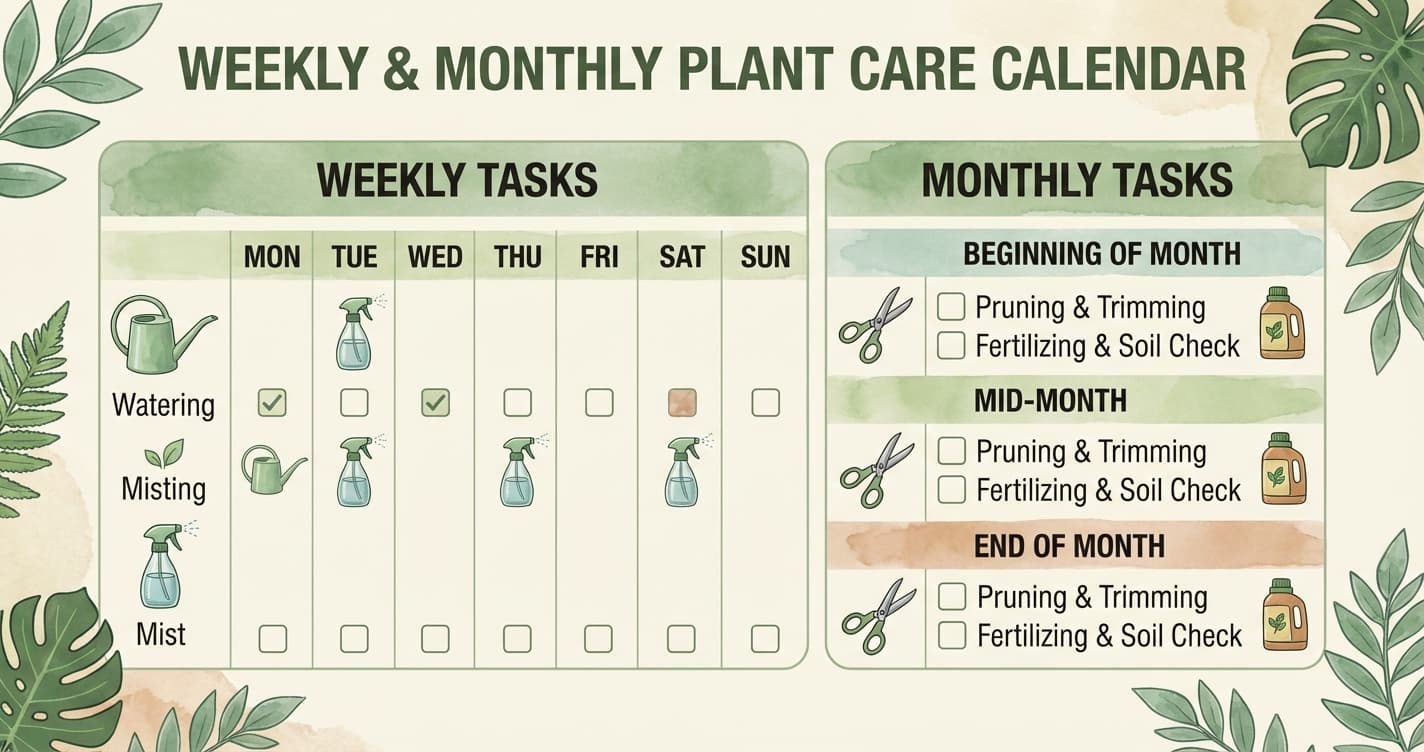
Weekly:
- Check soil moisture on all plants
- Water as needed (not on a schedule)
- Quick visual inspection
Monthly:
- Wipe dust from leaves
- Check for pests more thoroughly
- Rotate plants for even growth
Seasonally:
- Adjust watering frequency (less in winter, more in summer)
- Start/stop fertilizing (growing season only)
- Evaluate if any plants need repotting
For a printable schedule, see our houseplant care schedule template.
What You've Learned
After 12 weeks, you understand:
- Your specific environment's effect on plants
- How to read soil moisture
- What "normal" looks like for your plant
- When to act vs. when to wait
- That most problems come from overcare
Troubleshooting Common 12-Week Problems
Yellowing Leaves
Possible causes:
- Overwatering (most common)
- Underwatering
- Natural aging (lower leaves only)
- Low light over time
Solution: Check soil moisture first. If wet, let dry before watering. If bone dry, water thoroughly. For more, see why houseplants keep dying.
Brown Leaf Tips
Possible causes:
- Low humidity
- Inconsistent watering
- Water quality (fluoride/chlorine)
Solution: Increase humidity with grouping or pebble trays. Water more consistently. Try letting tap water sit overnight before using.
No New Growth
Possible causes:
- Winter dormancy (normal)
- Insufficient light
- Root-bound plant
- Just being a slow grower
Solution: Evaluate light levels. If it's winter, wait for spring. If roots circle drainage holes, consider repotting (see repotting guide).
Leggy, Stretched Growth
Cause: Insufficient light—plant is reaching for whatever light exists.
Solution: Move to brighter location or add grow lights. Trim leggy growth to encourage bushier habit.
Beyond Week 12
You're no longer a beginner. You're a plant parent with experience, intuition, and a living plant to prove it.
Next steps:
- Consider your second houseplant
- Build toward a collection (one plant at a time)
- Try propagation (see propagation guide)
- Share what you've learned with friends
Remember: Every experienced plant person started exactly where you are. The skills you've developed transfer to every plant you'll ever own.
For ongoing care organization, see our houseplant care schedule.
Find your next plant at a local nursery—you know what you're doing now.