This guide contains affiliate links. We may earn a small commission if you purchase through our links, at no extra cost to you.
After helping hundreds of new plant parents, we've noticed the same mistakes appearing over and over. These aren't obscure problems—they're predictable errors that claim otherwise healthy plants weekly.
The good news? Every mistake on this list is preventable. Once you understand why plants fail, you can avoid becoming another cautionary tale.
For a complete guide to getting started right, see our complete beginner's guide to houseplants.
Mistake #1: Overwatering
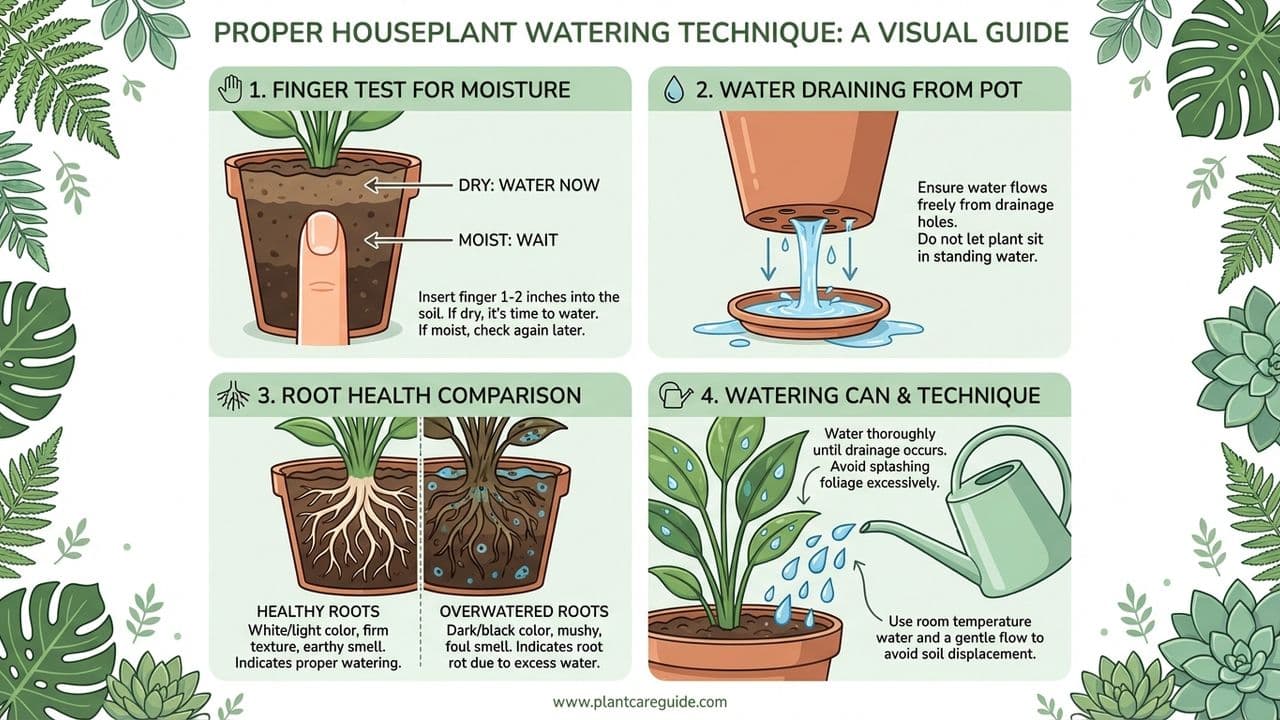
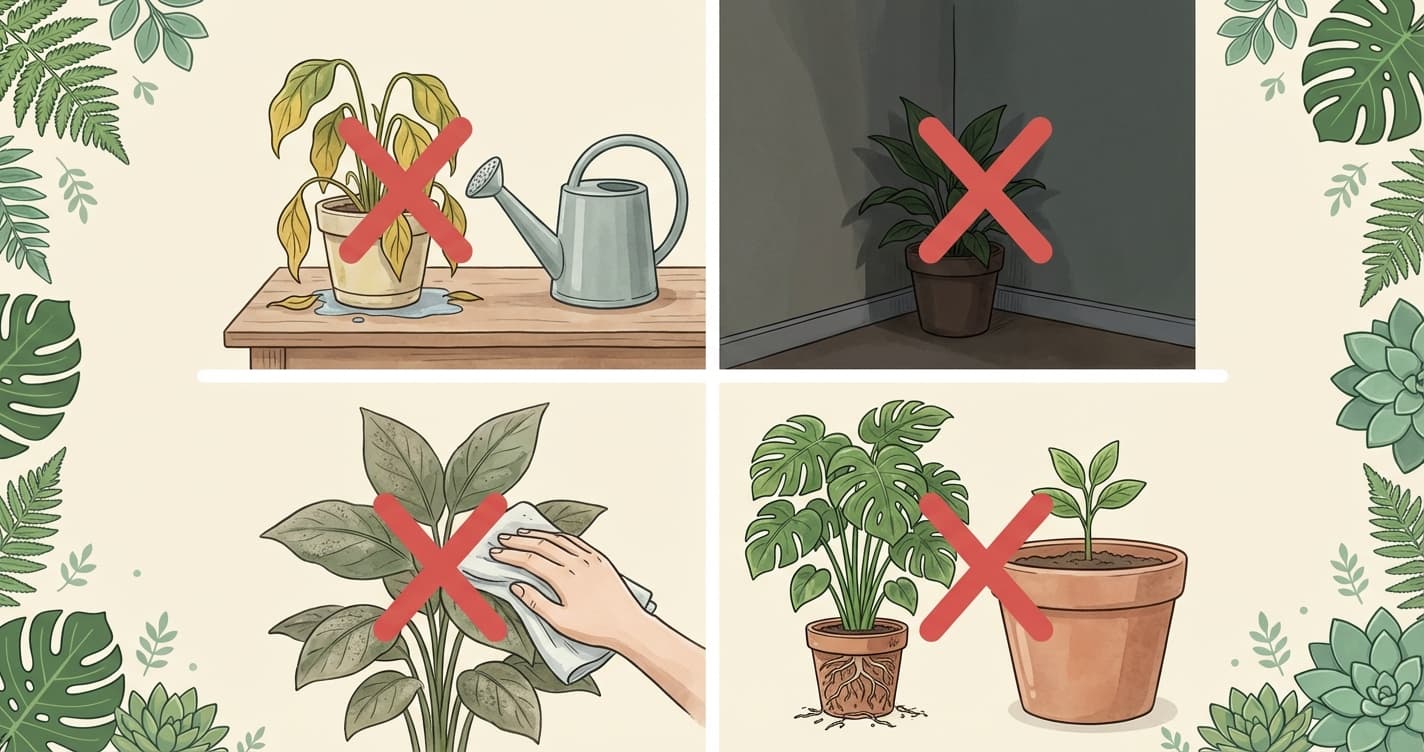
The problem: New plant parents water on a schedule ("every Sunday") or whenever they pass by with a watering can. They see a plant looking sad and assume it needs water. But here's the truth: roots need oxygen as much as water. When soil stays constantly wet, roots suffocate and begin to rot.
Root rot is the #1 killer of houseplants.
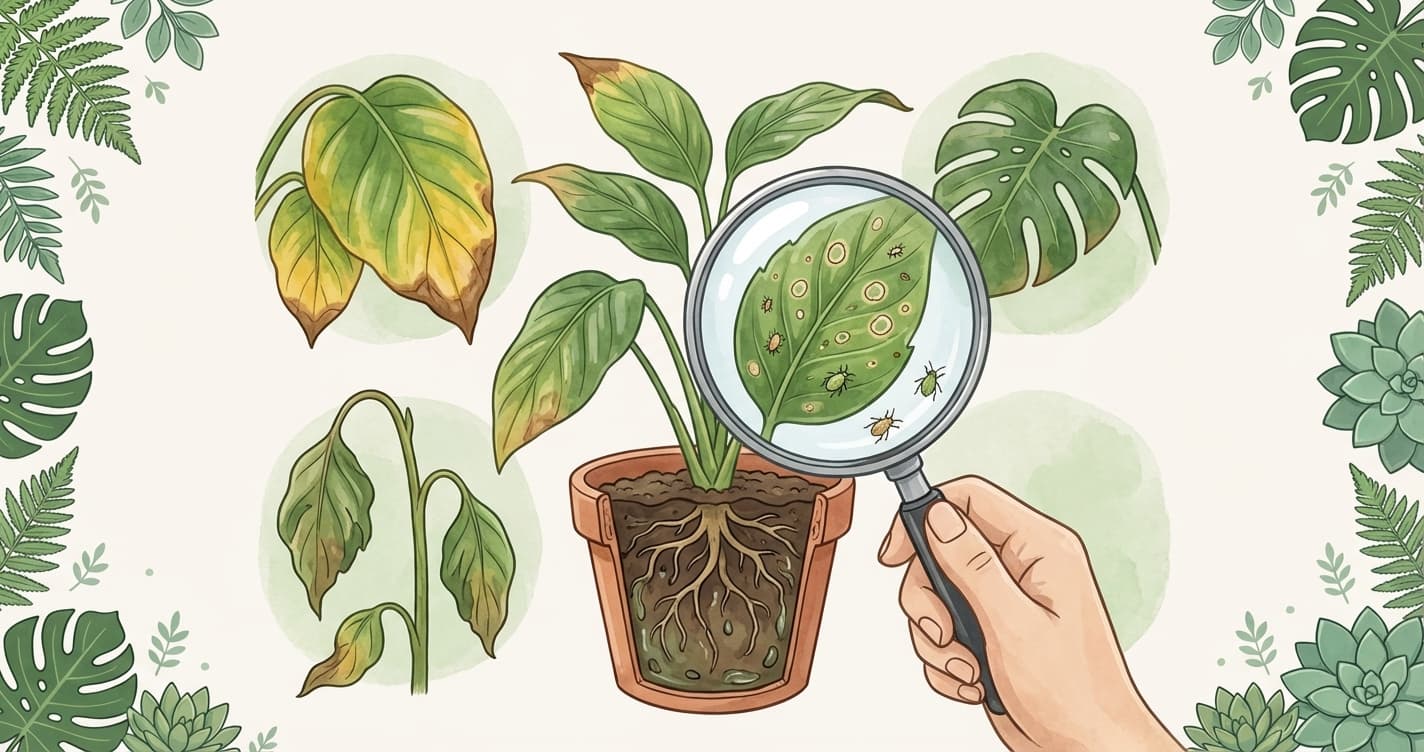
What happens: Roots decay. The plant can no longer absorb water or nutrients. Ironically, overwatered plants often look underwatered—droopy, yellowing, struggling—because their damaged roots can't function. The well-meaning owner waters more, accelerating the death spiral.
How to avoid it:
- Never water on a schedule. Plants don't follow calendars.
- Check soil moisture before watering. Stick your finger 1-2 inches into the soil. If it's moist, wait.
- Use a moisture meter while you're learning—they remove guesswork.
- When in doubt, wait. Most plants recover from mild underwatering. Few recover from root rot.
Signs you're overwatering:
- Yellow leaves (especially lower leaves)
- Soft, mushy stems near the soil
- Soil that stays wet for more than a week
- Musty smell from the pot
- Fungus gnats flying around
For detailed watering techniques, see our watering 101 guide.
Mistake #2: Choosing the Wrong Plant for Your Light
The problem: You fall in love with a beautiful Fiddle Leaf Fig or Bird of Paradise, bring it home to your north-facing apartment with one small window, and watch it slowly decline. No amount of care compensates for inadequate light.
Plants photosynthesize—they convert light into energy. Without sufficient light, they can't sustain themselves, no matter how perfectly you water and fertilize.
What happens: Plants stretch toward whatever light exists, becoming leggy and sparse. Growth slows or stops. Variegated leaves may revert to solid green (variegation requires extra energy). Eventually, the plant weakens enough that minor stresses kill it.
How to avoid it:
- Assess your light honestly. Stand where the plant would live. Can you comfortably read a book without artificial light? That's minimum medium light.
- Choose plants that match your actual conditions—not the conditions you wish you had.
- Low light spaces need low light plants: Snake Plant, ZZ Plant, Pothos, Peace Lily.
- If you want high-light plants in a dim space, invest in grow lights—don't expect the plant to adapt.
Light levels explained:
- Low light: Far from windows, north-facing rooms, interior spaces
- Medium light: Near east windows, few feet from south/west windows
- Bright indirect: Close to south/west windows but not in direct sun
- Direct light: Sun rays actually hitting leaves
For apartment dwellers, see best houseplants for low light apartments.
Mistake #3: Repotting Too Soon or Too Large
The problem: New plant parents assume plants need bigger pots—more room must be better, right? So they repot their new plant into a pot three sizes larger and wonder why it suddenly starts struggling.
What happens: Large pots hold more soil. More soil holds more water. More water than the plant can use creates soggy conditions around small root systems. The result? Root rot from a well-intentioned "upgrade."
Additionally, many plants actually prefer being slightly root-bound. They direct energy to foliage growth rather than root expansion.
How to avoid it:
- Don't repot just because you bought a new plant. Most plants are fine in their nursery pots for months.
- Only repot when necessary: Roots circling drainage holes, water running straight through, or significantly slowed growth despite good care.
- Go up only 1-2 inches in pot diameter when you do repot.
- Time it right: Early spring (start of growing season) is ideal.
Signs you actually need to repot:
- Roots growing out of drainage holes
- Roots visibly circling at soil surface
- Plant dries out within 1-2 days of watering
- Growth has stalled despite good light and water
For step-by-step instructions, see our repotting guide.
Mistake #4: Neglecting Humidity
The problem: Most popular houseplants are tropical. In their native habitats, they experience 60-80% humidity. In our homes—especially in winter with heating—humidity often drops to 20-30%. Some plants tolerate this; many don't.
What happens: Leaf edges and tips turn brown and crispy. New leaves may emerge damaged. Growth slows. Plants like Calathea, ferns, and Alocasia may drop leaves or decline rapidly.
How to avoid it:
- Know your humidity. A $10 hygrometer tells you exactly what you're working with.
- Choose humidity-tolerant plants for dry homes: Pothos, Snake Plant, ZZ Plant, Spider Plant all handle typical household humidity.
- Group plants together. They create a humid microclimate through transpiration.
- Use a pebble tray. Fill a tray with pebbles and water; set pots on top (above water level).
- Run a humidifier if you're growing humidity-demanding species.
Misting myth: Misting provides temporary humidity that evaporates within minutes. It doesn't significantly raise ambient humidity. It can, however, promote fungal issues if leaves stay wet.
For detailed humidity strategies, see our humidity management guide.
Mistake #5: Placing Plants in Drafts
The problem: That perfect spot by the sunny window might also be next to a heating vent. That elegant corner might catch cold drafts from a poorly sealed door. Plants prefer stable conditions—temperature swings stress them.
What happens: Exposure to hot or cold drafts causes leaf drop, browning, and general decline. Tropical plants are especially sensitive to cold drafts. Consistent temperature fluctuations weaken the plant over time.
How to avoid it:
- Scout your plant's location before placing it. Is there a heating/cooling vent nearby? Does cold air seep from windows in winter?
- Keep plants away from:
- Heating vents and radiators
- Air conditioning units
- Drafty windows
- Exterior doors that open frequently
- Maintain temperatures between 65-80°F for most houseplants.
- In winter, move plants away from cold windows or add insulation.
Most sensitive to drafts: Tropical plants like Fiddle Leaf Fig, Calathea, and Ficus varieties. Forgiving beginner plants tolerate more variation but still prefer stability.
Mistake #6: Ignoring Pests Until It's Too Late
The problem: You don't notice the few tiny insects on your plant—until suddenly there are hundreds. Small infestations are easy to treat. Large infestations can kill plants or spread to your entire collection.
What happens: Pests multiply exponentially when unchecked. By the time damage becomes obvious, the infestation is severe. Common houseplant pests include spider mites (tiny dots, fine webbing), mealybugs (white cottony masses), scale (brown bumps), fungus gnats (small flies), and thrips (tiny elongated insects).
How to avoid it:
- Inspect plants weekly. Look at leaf tops, undersides, and stems. Check where leaves meet stems.
- Quarantine new plants for 2-3 weeks before placing them near your collection.
- Act immediately when you spot anything suspicious. Early treatment is simple; late treatment is a battle.
- Keep plants healthy. Stressed plants are more susceptible to pest attacks.
Early pest treatment: For most pests, wiping leaves with diluted dish soap or neem oil solution handles small infestations. For severe cases, insecticidal soap or systemic treatments may be necessary.
Common pest signs:
- Sticky residue on leaves (honeydew from sap-sucking insects)
- Fine webbing (spider mites)
- White cottony spots (mealybugs)
- Yellowing leaves with no other explanation
- Small flies hovering around soil (fungus gnats)
Mistake #7: Expecting Instant Results
The problem: Plants operate on a different timeline than we do. A cutting might take months to root. A stressed plant might need weeks to show recovery. A plant adjusting to new conditions might drop leaves before stabilizing. Impatience leads to overcompensating—more water, more fertilizer, constant fiddling—which often makes things worse.
What happens: New plant parents see a problem and panic. They water more, move the plant repeatedly, add fertilizer, and generally stress an already stressed plant. Or they give up on plants that were actually on track to recover.
How to avoid it:
- Set realistic expectations. Most changes—positive or negative—take weeks to become visible.
- Give new plants time to adjust. Some leaf drop when moving to a new environment is normal.
- Don't confuse movement with progress. Moving a plant repeatedly doesn't help it; it creates stress.
- Learn your plant's growth cycle. Most grow actively in spring/summer and rest in winter. Slow winter growth isn't a problem.
- Trust the process. If care is correct, patience usually wins.
Normal adjustment signs (don't panic):
- Some leaf drop after bringing a plant home
- Slow growth in winter
- A few lower leaves yellowing on an otherwise healthy plant
- Brief drooping before watering day
Actual problems (take action):
- Rapid, progressive leaf drop
- Soft, mushy stems
- Visible pests
- Foul smell from soil
For diagnosing real problems, see why houseplants keep dying.
Summary: The 7 Mistakes and Their Fixes
| Mistake | Quick Fix |
|---|---|
| Overwatering | Check soil moisture before watering; never water on a schedule |
| Wrong light | Match plant to actual conditions; use grow lights if needed |
| Bad repotting | Only repot when necessary; go up 1-2 inches max |
| Ignoring humidity | Monitor with hygrometer; choose tolerant plants for dry homes |
| Drafts | Scout location for vents and drafts; maintain stable temps |
| Ignoring pests | Weekly inspections; quarantine new plants; act early |
| Impatience | Set realistic expectations; trust correct care; wait |
The Master Principle
If we had to distill successful plant care into one sentence:
Most beginners kill plants by caring too much, not too little.
Overwatering, overfertilizing, constant moving, anxious repotting—these all stem from well-meaning but misguided attention. The best thing you can do for most houseplants? Leave them alone more than you think you should.
This feels counterintuitive. You want to nurture, to help, to do something. But plants aren't pets requiring daily interaction. They're largely self-sufficient organisms that need the right conditions and then minimal interference.
Check on your plants weekly. Water when the soil tells you to. Beyond that? Admire them from a distance.
Next Steps
Ready to set yourself up for success? Here's where to go from here:
- Start with forgiving plants: Best first houseplants for beginners
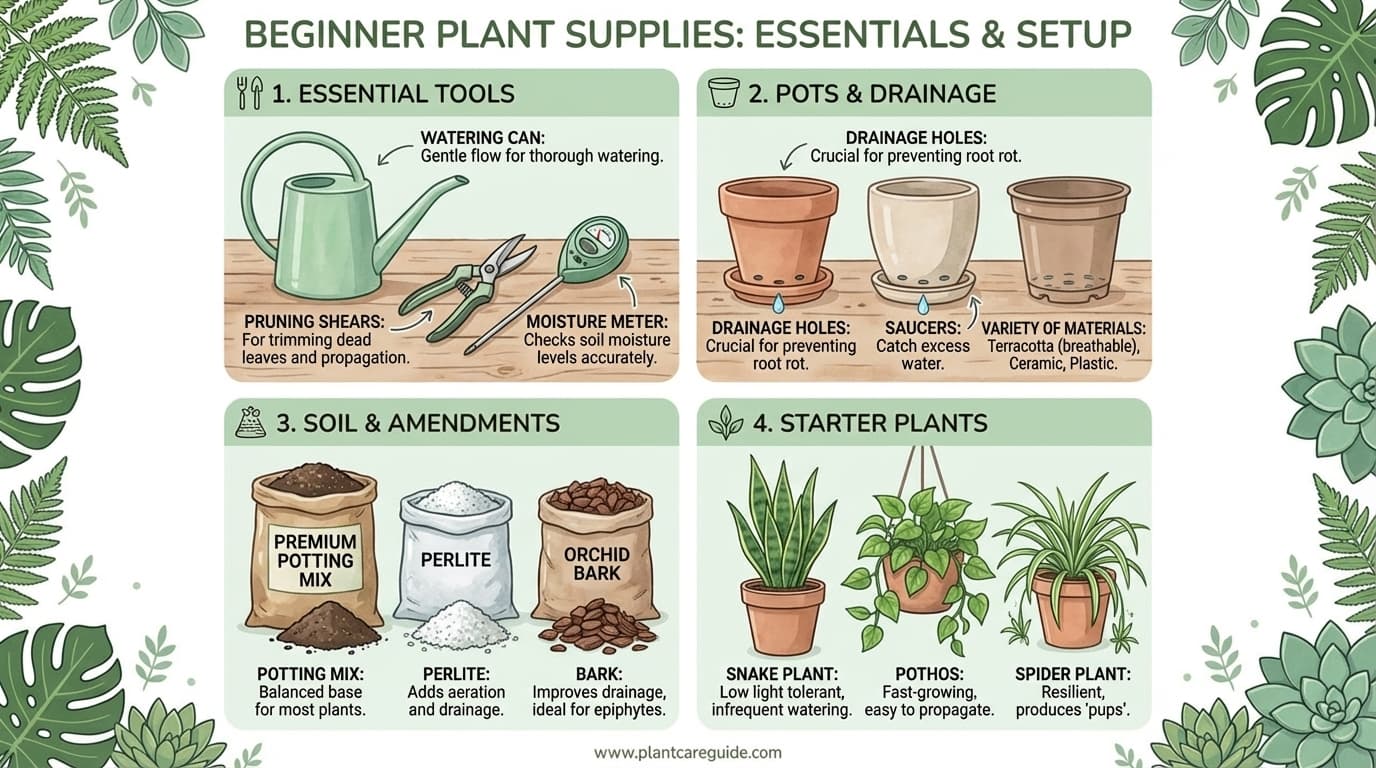
- Get the right supplies: Houseplant starter kit guide
- Master watering: Complete watering guide
- Create a care routine: Week-by-week care guide
- Find healthy plants: Visit a local nursery with knowledgeable staff
Every experienced plant parent has made these mistakes. The difference is learning from them—preferably before they cost you plants. You're already ahead by reading this. Now go put it into practice.