This guide contains affiliate links. We may earn a small commission if you purchase through our links, at no extra cost to you.
Walking into a nursery as a first-time plant buyer can be overwhelming. Dozens of beautiful options, each with different needs you don't yet understand. Most beginners either grab whatever looks prettiest or leave empty-handed from decision paralysis.
This guide gives you a framework for making a confident choice—one that matches your space, your schedule, and your likelihood of actually keeping it alive.
For complete guidance on starting your plant journey, see our complete beginner's guide to houseplants.
Step 1: Assess Your Light
Light is the single most important factor in plant selection. You can adjust watering habits; you can't change the physics of your windows.
How to Evaluate Your Space
The shadow test: On a sunny day around midday, hold your hand a foot above a white surface where you plan to place the plant.
- Sharp, dark shadow = Bright light
- Soft shadow with fuzzy edges = Medium light
- Barely visible shadow = Low light
The reading test: Can you comfortably read a book in that spot without turning on a lamp? If yes, you have at least medium light.
What Your Windows Tell You
| Window Direction | Light Level | Best Plants |
|---|---|---|
| North | Low | Snake Plant, ZZ Plant, Pothos |
| East | Medium (gentle morning sun) | Most beginner plants thrive here |
| West | Medium-Bright (intense afternoon sun) | Set plants back from window |
| South | Bright (direct sun much of day) | Succulents on sill; others set back |
Note: Obstructions like trees, buildings, or overhangs reduce light significantly.
Plant Picks by Light Level
Low Light (north windows, interior rooms):
- Snake Plant — Tolerates the dimmest conditions
- ZZ Plant — Thrives in shade
- Pothos — Adapts to anything except direct sun
- Peace Lily — Blooms even in low light
Medium Light (east windows, bright rooms):
- All beginner plants work here
- This is the sweet spot for most houseplants
Bright Indirect Light (near south/west windows):
- Monstera — Grows fastest in bright light
- Rubber Plant — Thrives with more light
- Variegated varieties maintain color better
For apartment dwellers with limited light, see best houseplants for low light apartments.
Step 2: Be Honest About Your Schedule
Some plants forgive irregular attention. Others demand consistency. Matching a plant to your actual lifestyle—not your aspirational one—prevents disappointment.
Questions to Ask Yourself
How often will you realistically check your plants?
- Daily → You can grow almost anything
- Weekly → Most beginner plants work
- Every 2+ weeks → Choose drought-tolerant species
Do you travel frequently?
- Rarely → Not a concern
- Monthly short trips → Choose forgiving plants
- Extended travel → Drought-tolerant plants only
Are you prone to overwatering or underwatering?
- Overwatering (you fuss) → Pothos tolerates wet soil best
- Underwatering (you forget) → Snake Plant, ZZ Plant thrive on neglect
Plant Picks by Care Frequency
I'll check every few days: Congratulations, you can grow virtually any beginner plant. Start with something visibly rewarding like Monstera or Pothos.
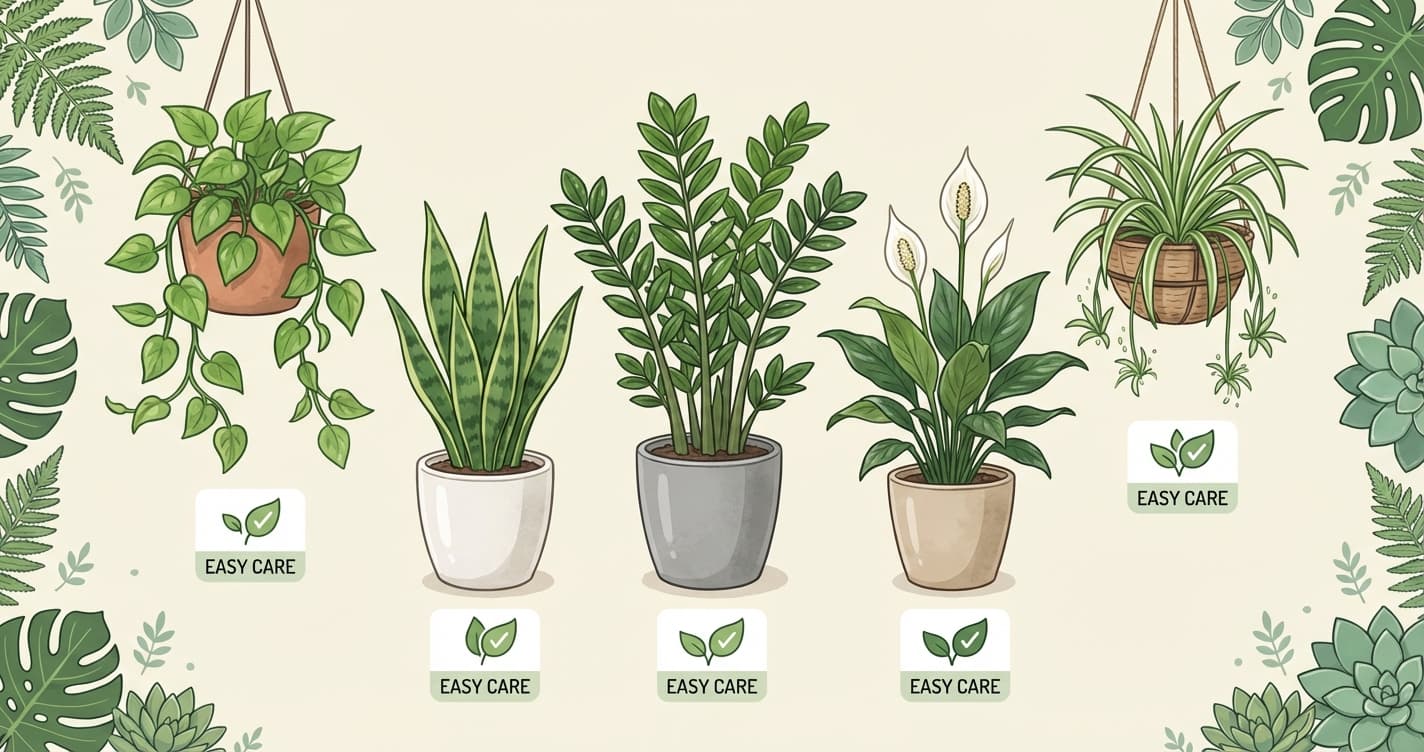
I'll check weekly: Most beginner plants work fine. Spider Plant, Peace Lily, and Pothos are excellent choices.
I'll check every 2-3 weeks: Choose drought-tolerant options:
- Snake Plant — Actually prefers to dry out completely
- ZZ Plant — Extreme drought tolerance
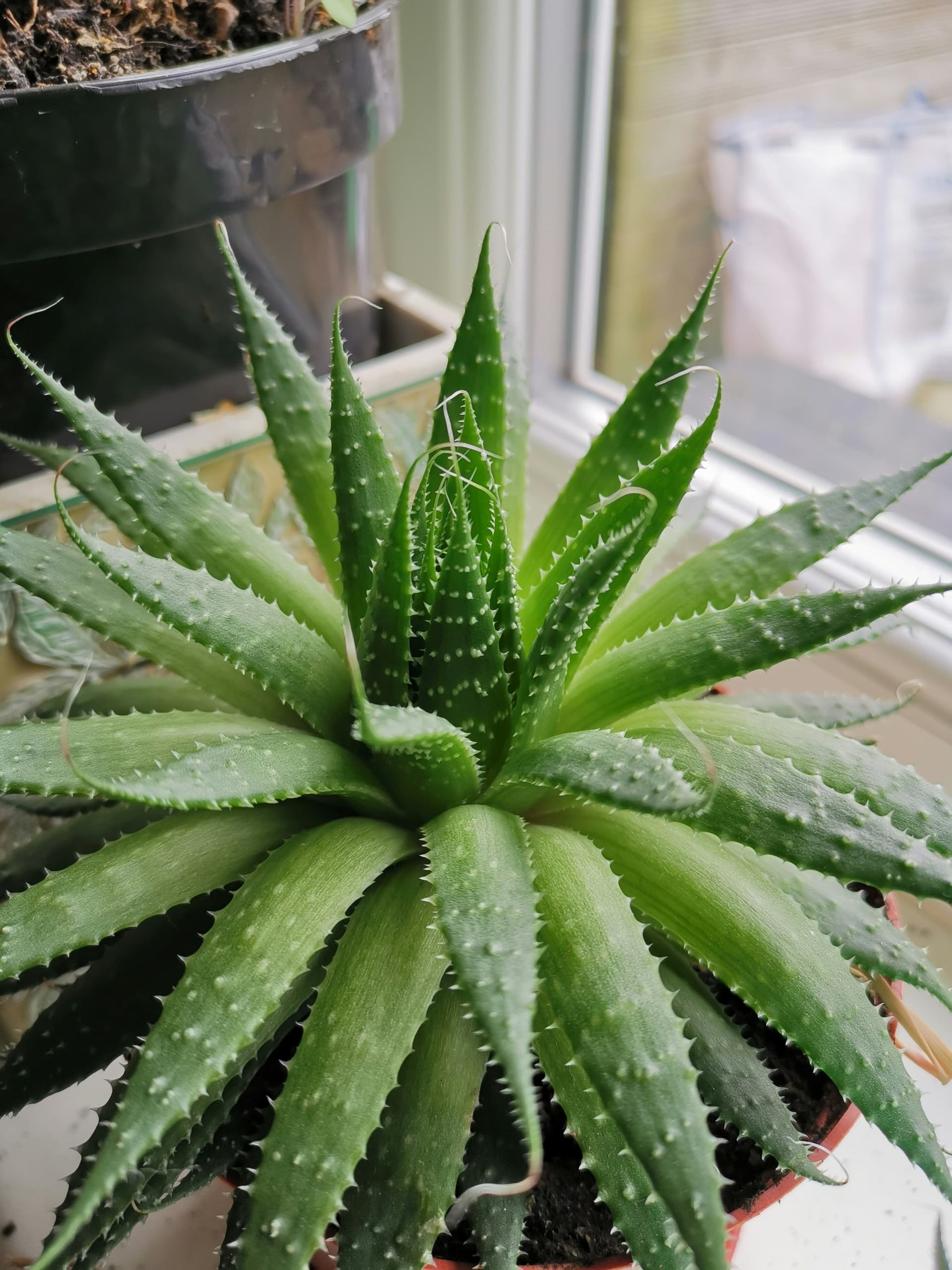
- Aloe Vera — Succulent storage means extended dry periods
I travel frequently: ZZ Plant handles month-long absences. Snake Plant comes close. Both store water internally.
Step 3: Consider Your Household
Certain factors in your home may rule out specific plants or make some choices better than others.
Do You Have Pets?
Many common houseplants are toxic to cats and dogs. If you have curious pets who might nibble:
Pet-safe options:
- Spider Plant — Safe for cats and dogs
Toxic plants to place out of reach:
For comprehensive safety information, see our pet safety guide.
Do You Have Children?
Young children may put things in their mouths. The same toxic plants that concern pet owners should be kept out of reach.
Is Your Home Humid or Dry?
Dry homes (desert climates, winter heating):
- Most beginner plants tolerate average humidity
- Snake Plant, ZZ Plant, and Aloe Vera handle dry air excellently
- Avoid humidity-loving plants like Calathea or ferns
Humid homes (coastal, bathroom placement):
- Almost any houseplant thrives
- Great opportunity for tropical species
For managing home humidity, see our humidity guide.
Step 4: Define Your Aesthetic Goals
Plants serve visual purposes beyond just "being green." Knowing what you want helps narrow choices.
What Growth Style Do You Want?
Trailing/Hanging:
- Pothos — Classic trailing vine
- Spider Plant — Cascading babies
- Philodendron — Various trailing varieties
Upright/Architectural:
- Snake Plant — Bold vertical lines
- ZZ Plant — Elegant arching stems
- Rubber Plant — Tree-like presence
Statement Piece:
- Monstera — Large, Instagram-famous leaves
- Rubber Plant — Dramatic burgundy or green foliage
What Size Works for Your Space?
Small spaces (desktop, shelf):
- Small Pothos in a 4" pot
- Snake Plant (dwarf varieties)
- Small ZZ Plant
Medium spaces (floor beside furniture):
- Medium Snake Plant
- Standard ZZ Plant
- Rubber Plant
Large statement space:
- Monstera (grows large over time)
- Tall Snake Plant varieties
- Mature Rubber Plant
Step 5: Set Your Budget
Houseplants range from $5 to $500+. Starting small and affordable reduces risk.
Budget-Friendly Options
Under $15:
- Pothos (4" pot) — $8-12
- Spider Plant — $8-15
- Small Snake Plant — $10-15
$15-30:
- Medium Snake Plant
- ZZ Plant
- Peace Lily
$30-50:
- Monstera
- Rubber Plant
- Larger specimen plants
For more affordable options, see best budget houseplants under $20.
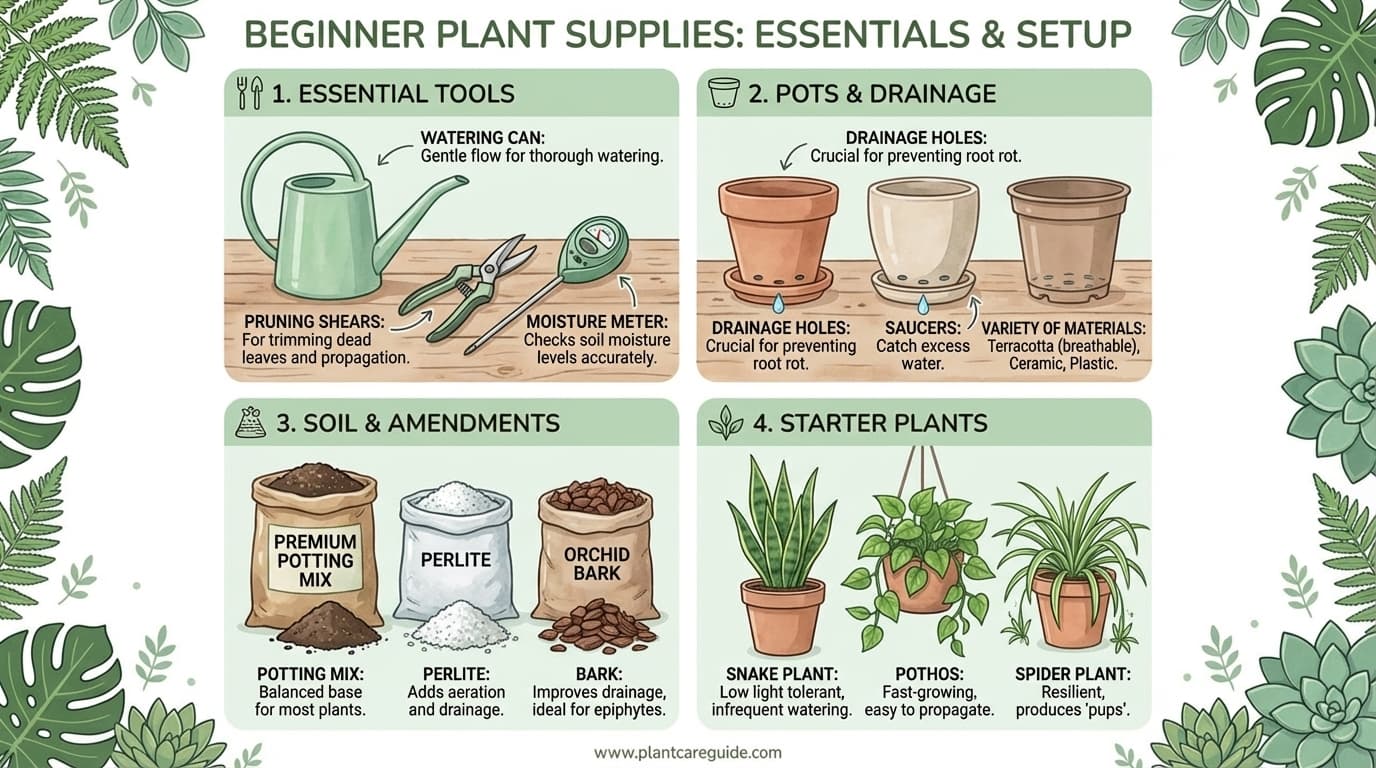
Don't Forget Supplies
Beyond the plant itself, budget for:
- Pot with drainage ($5-15)
- Potting mix ($8-15)
- Watering can ($10-20)
- Saucer ($5-10)
See our houseplant starter kit guide for a complete supply list.
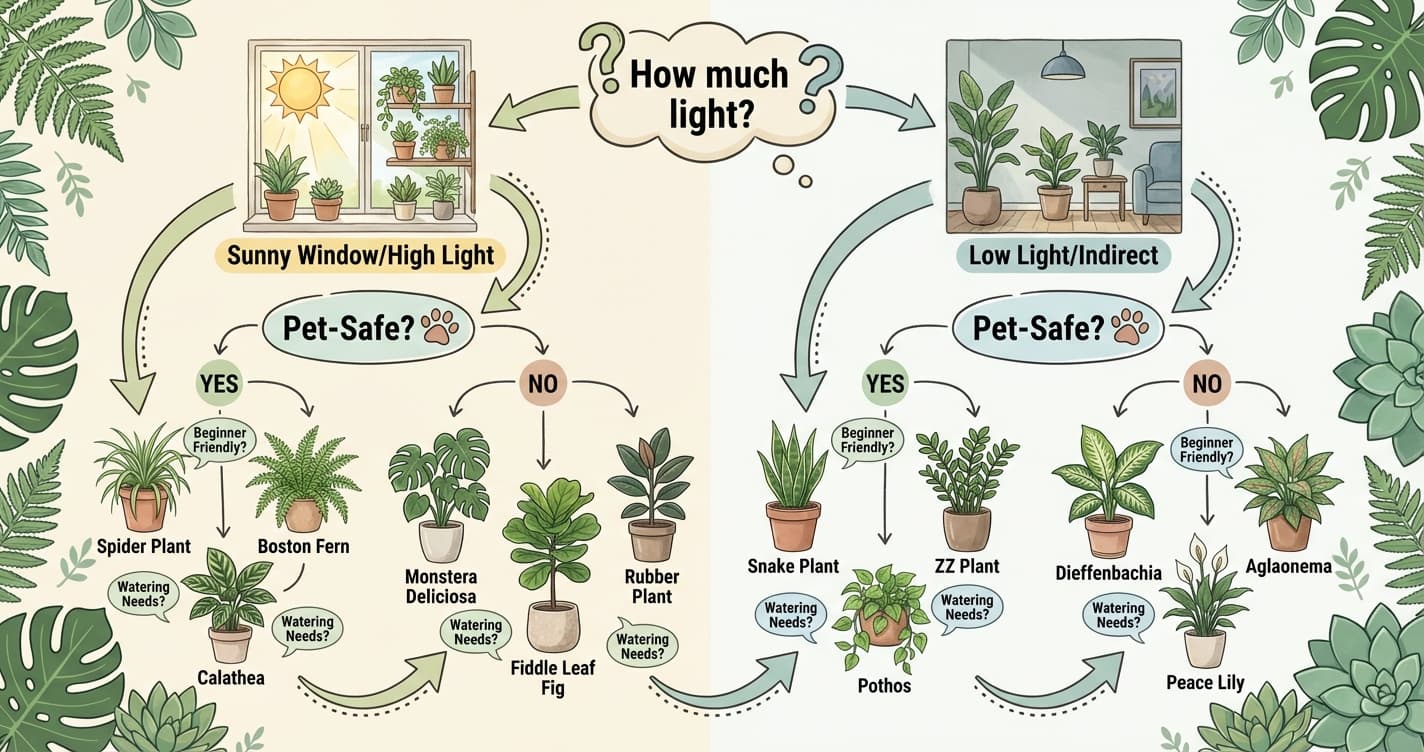
The Decision Framework
Use this flowchart to find your match:
Start Here: What's your light level?
Low Light: → Do you travel often?
- Yes → ZZ Plant (extreme drought tolerance)
- No → Do you have pets?
- Yes → Consider higher shelves for toxic plants, or Spider Plant in medium-light area
- No → Snake Plant (easiest overall) or Pothos (fastest growing)
Medium Light: → Do you want something trailing or upright?
- Trailing → Pothos (fastest growth, most forgiving)
- Upright → Do you have pets?
- Yes → Spider Plant (safe + produces babies)
- No → Snake Plant or ZZ Plant
Bright Light: → Do you want a statement plant?
- Yes → Monstera (iconic) or Rubber Plant (dramatic)
- No → Pothos or Spider Plant still thrive here
Our Top Pick for Most First-Timers
If you've read this far and still aren't sure: start with Pothos.
Here's why:
- Grows in almost any light condition
- Tells you clearly when it needs water (droops, then bounces back)
- Grows fast enough to keep you motivated
- Propagates easily, so you can make more plants
- Available everywhere for under $15
- Hard to kill without actively trying
If you know you'll forget to water, choose Snake Plant instead. It thrives on neglect.
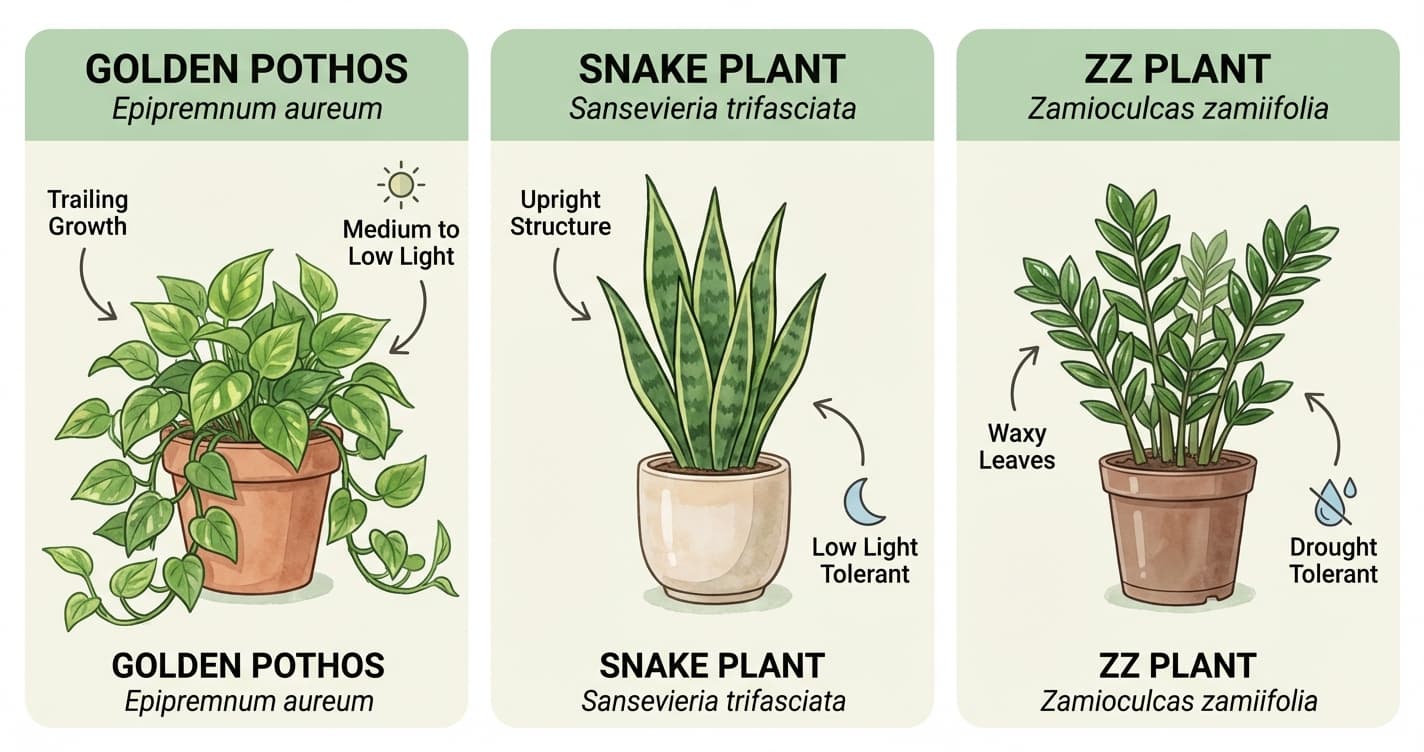
For a detailed comparison, see Pothos vs Snake Plant vs ZZ Plant.
Where to Buy
Local nurseries (best option):
- Healthier plants adapted to your region
- Expert staff who can advise
- Support local businesses
- Find one near you
Big box stores (acceptable):
- Wider availability
- Lower prices
- Variable quality—inspect carefully
Online retailers:
- Specialty plants not found locally
- Risk of shipping stress
- Research seller reviews
Next Steps
Ready to get your plant? Here's your action plan:
- Choose your plant based on the framework above
- Gather supplies using our starter kit guide
- Find a nursery using our local nursery finder
- Learn the basics with how to keep your first houseplant alive
- Avoid pitfalls by reading common beginner mistakes
You've done the research. Now go get your plant. The only mistake is not starting.