This guide contains affiliate links. We may earn a small commission if you purchase through our links, at no extra cost to you.
Winter is the most challenging season for indoor plants. Shorter days, heating systems, and temperature fluctuations create a hostile environment. Your Monstera that thrived in summer may struggle now. Here's how to adjust your care routine to keep plants healthy until spring.
Understanding Winter Dormancy
Most houseplants slow down or stop growing in winter due to reduced light. This isn't a problem—it's natural. Your Fiddle Leaf Fig isn't dying; it's resting. During this period, plants need less water and no fertilizer. Trying to force growth with extra feeding can damage roots.
Accept that your plants won't look their summer best. Some leaf loss is normal, especially on Rubber Plant and Fiddle Leaf Fig. New growth will be slower and smaller. Your job is to help them survive winter, not thrive—thriving comes again in spring.
Adjust Watering Dramatically
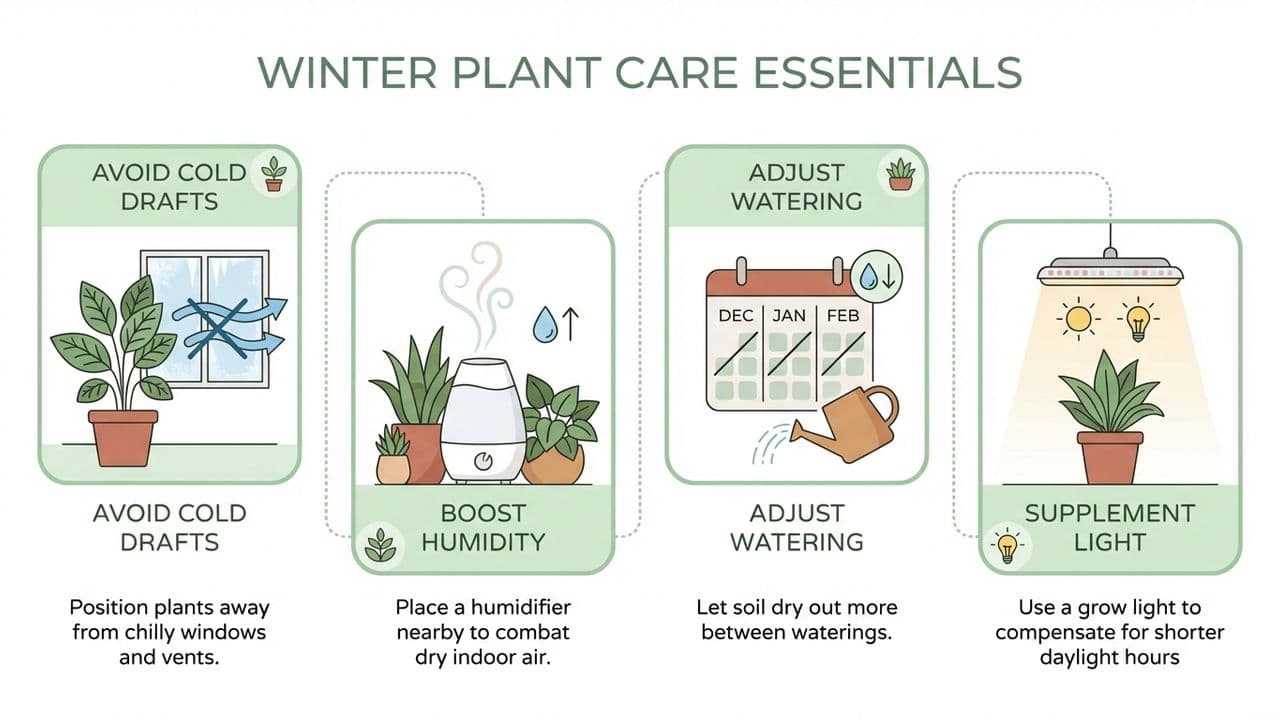
This is where most winter plant problems start. Plants are using far less water due to reduced growth and lower light. Soil stays wet longer in cooler conditions. A Pothos that needed weekly watering in summer may need water only every 2-3 weeks in winter.
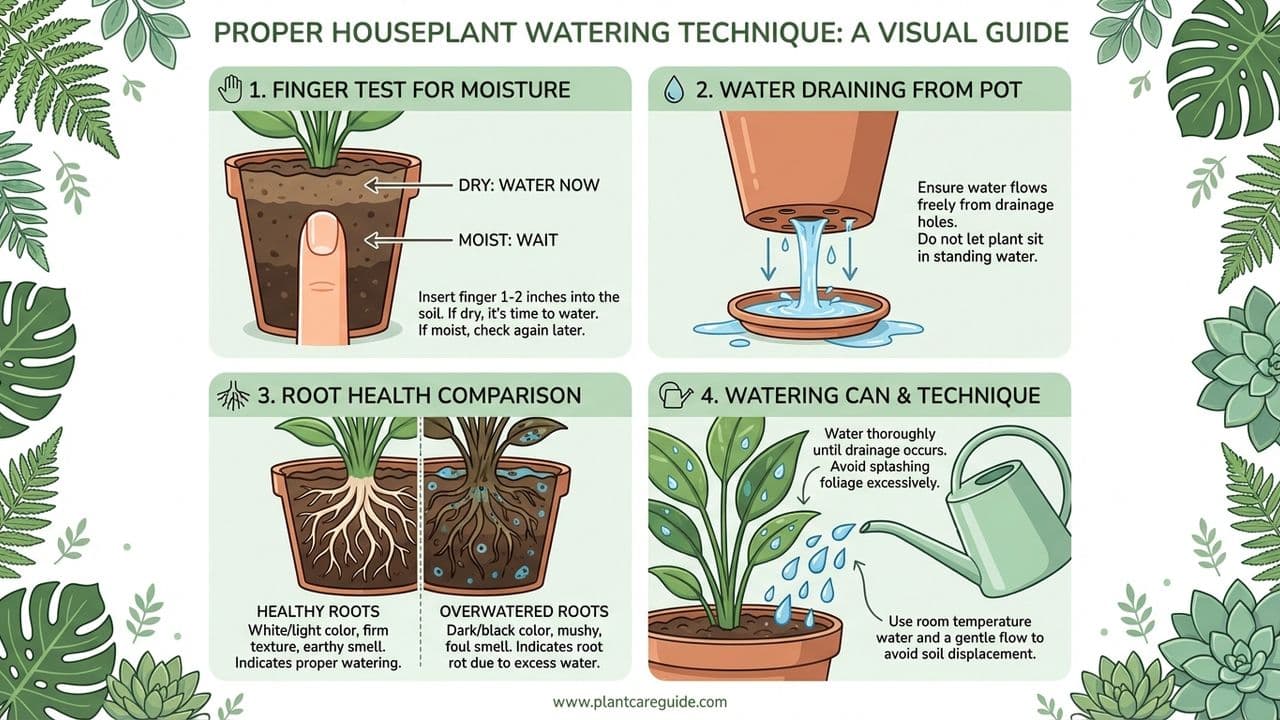
Always check soil moisture before watering—don't follow a calendar. The finger test is essential: wait until the top inch (or more, for succulents) is dry. Snake Plant and ZZ Plant may only need water once a month in winter. See our watering guide for proper technique.
Maximize Light
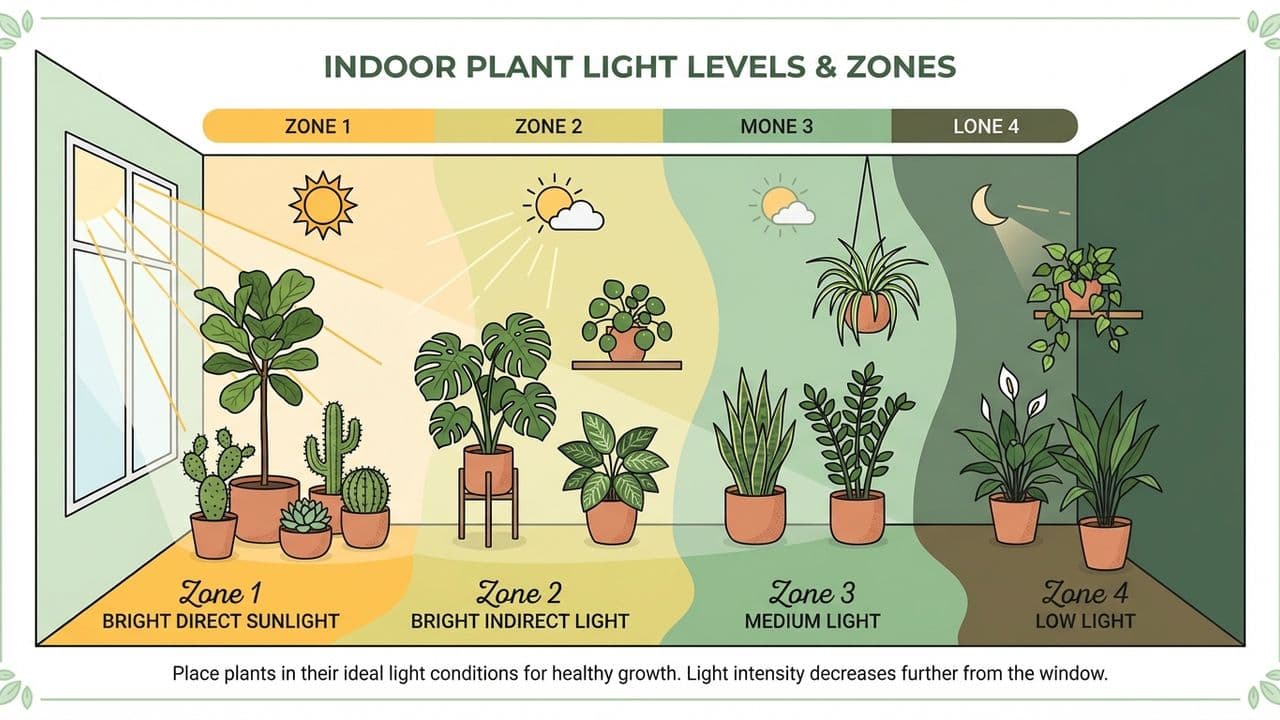
Winter light is dramatically reduced—shorter days and lower sun angle mean far less energy for your plants. Move plants closer to windows; a Monstera that lived 5 feet from a window may need to be right next to it in winter. South-facing windows become prime real estate.
Clean windows inside and out to maximize light transmission. Dust leaves so they can absorb every available photon. Consider grow lights for plants that show signs of light starvation (leggy growth, pale leaves). Even a few hours of supplemental light helps. See our light guide for more detail.
Manage Humidity
Heating systems slash indoor humidity to desert-like levels—often below 30%. Tropical plants evolved in 60-80% humidity and suffer in dry air. Spider Plant develops brown tips. Peace Lily edges turn crispy. Monstera leaves may yellow at the edges.
Group plants together—they create a humid microclimate through transpiration. Use pebble trays filled with water (but don't let pots sit in water). Run a humidifier nearby, especially in bedrooms where plants often live. A hygrometer helps you monitor humidity levels. Misting is temporary at best but doesn't hurt.
Protect from Temperature Extremes
Cold drafts from windows and doors can shock tropical plants. Move plants away from single-pane windows and exterior doors. A Peace Lily touching a cold window can suffer damage within hours. Pothos and most tropicals prefer temperatures above 55°F.
Heat is equally problematic. Plants placed near radiators or heating vents dry out rapidly and may show brown leaf edges or wilting. Keep plants away from direct heat sources. If you must place them near heat, increase watering frequency and local humidity.
Stop Fertilizing
Dormant plants don't need nutrients, and fertilizer salts can accumulate in soil, burning roots. Stop fertilizing entirely from November through February for most plants. Resume in early spring when you see new growth beginning.
If you fertilized recently, consider flushing soil with plain water to remove excess salts. Some plants, particularly Snake Plant and ZZ Plant, need even less feeding than tropical plants—they may not need any fertilizer until late spring. See our fertilizing guide.
Watch for Winter Pests
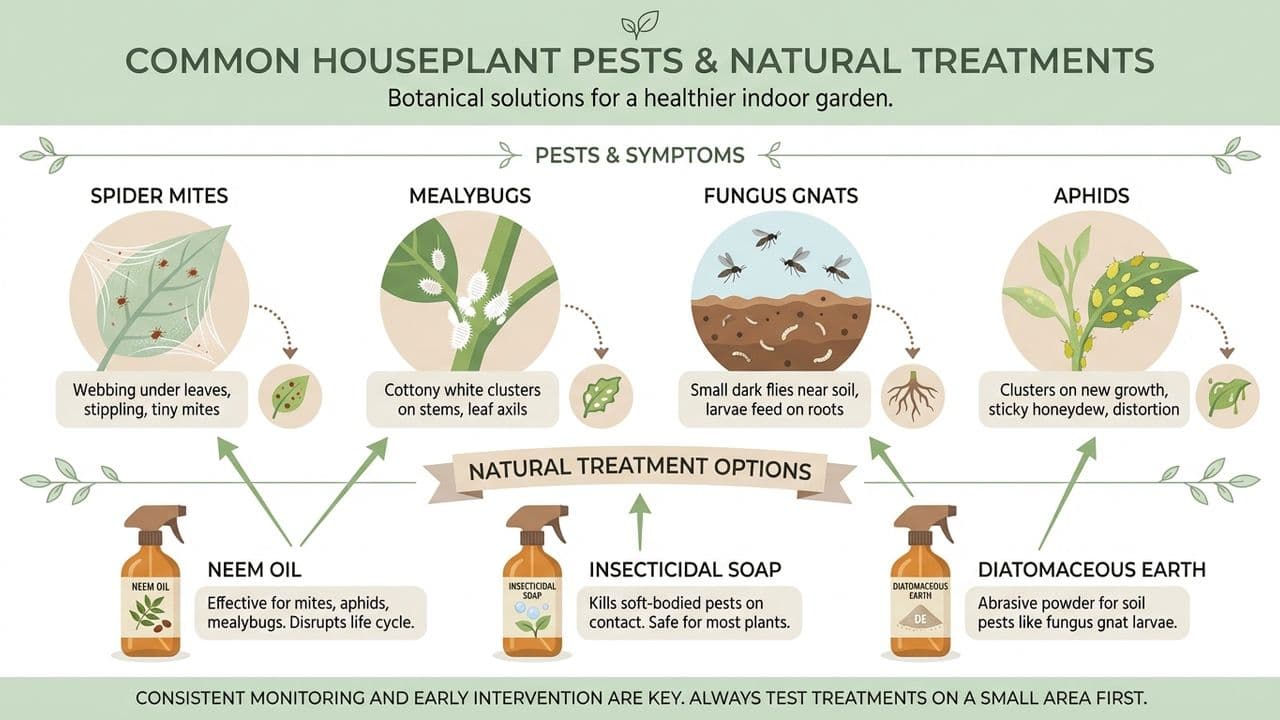
Dry indoor air creates perfect conditions for spider mites. Check leaf undersides regularly, especially on Fiddle Leaf Fig, Monstera, and palms. Stressed plants are more vulnerable to all pests. See our Houseplant Pest Mastery Guide for treatment strategies, and our seasonal pest management guide for winter-specific tips.
Fungus gnats may seem worse in winter if you're overwatering. They breed in consistently moist soil. If you see them, let soil dry out more between waterings. This also helps prevent root rot, which is more likely in winter when plants use less water.
Hardy Plants for Winter
Snake Plant and ZZ Plant are winter champions—they tolerate low light, infrequent watering, and dry air without complaint. Pothos adapts well to reduced conditions. Rubber Plant handles winter better than its cousin the Fiddle Leaf Fig.
If you struggle with winter plant care, choose more of these forgiving plants for challenging spots. Save demanding plants like Fiddle Leaf Fig and calatheas for bright, humid locations where you can provide extra attention through winter.