This guide contains affiliate links. We may earn a small commission if you purchase through our links, at no extra cost to you.
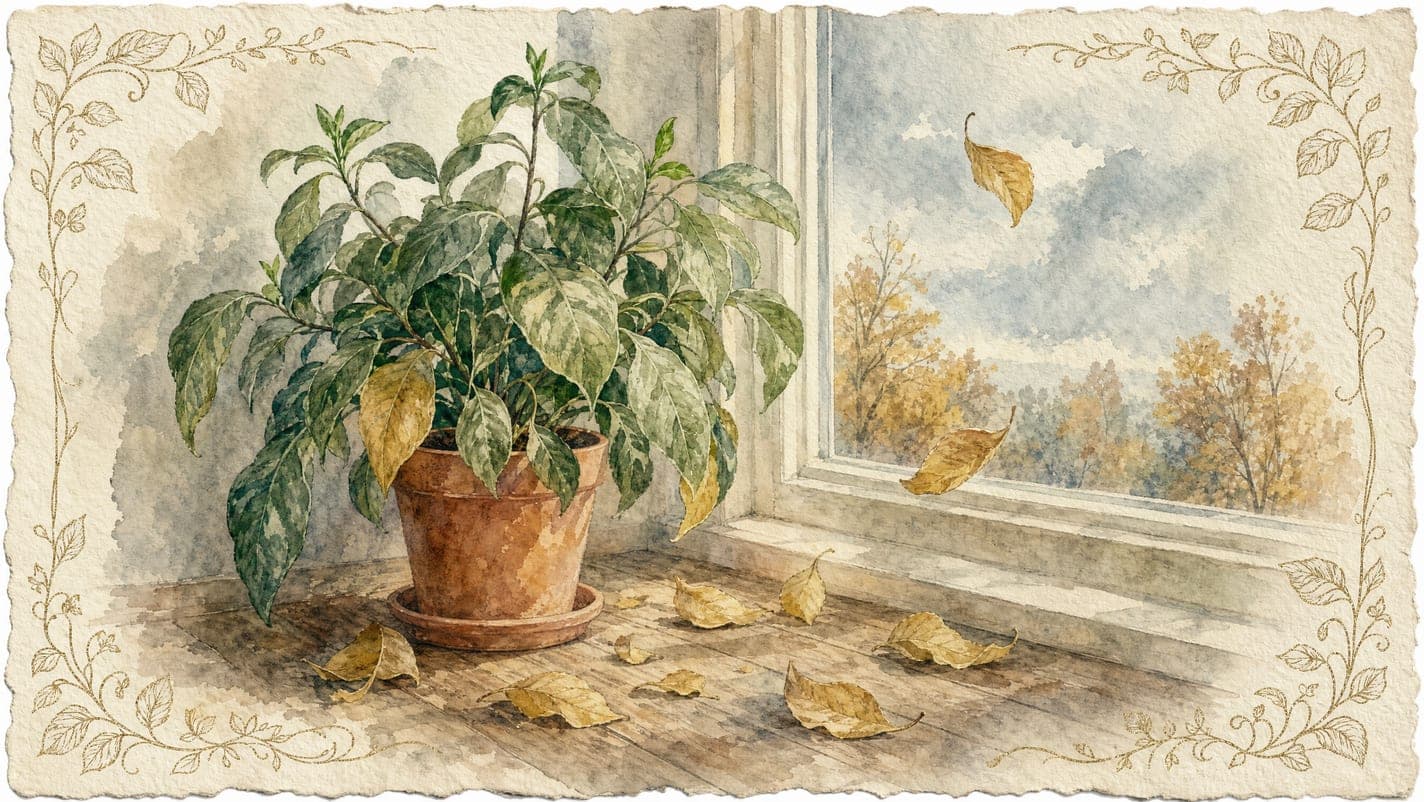
Most of the time, it is normal. A plant that summered outdoors built thick sun leaves it cannot run on indoor light, so it sheds the least efficient ones and grows a cheaper set. Normal looks like gradual yellowing of old interior leaves over a few weeks. Sudden collapse, blackened stems or soil still wet a week later is something else.
Iowa State University Extension states that "some houseplants, especially tropical hibiscus and weeping fig, will drop leaves in response to this change in light intensity" and that "new foliage will grow to replace the lost leaves." Virginia Cooperative Extension puts it from the stress angle: "quick changes in environment can result in yellow foliage and leaf drop."
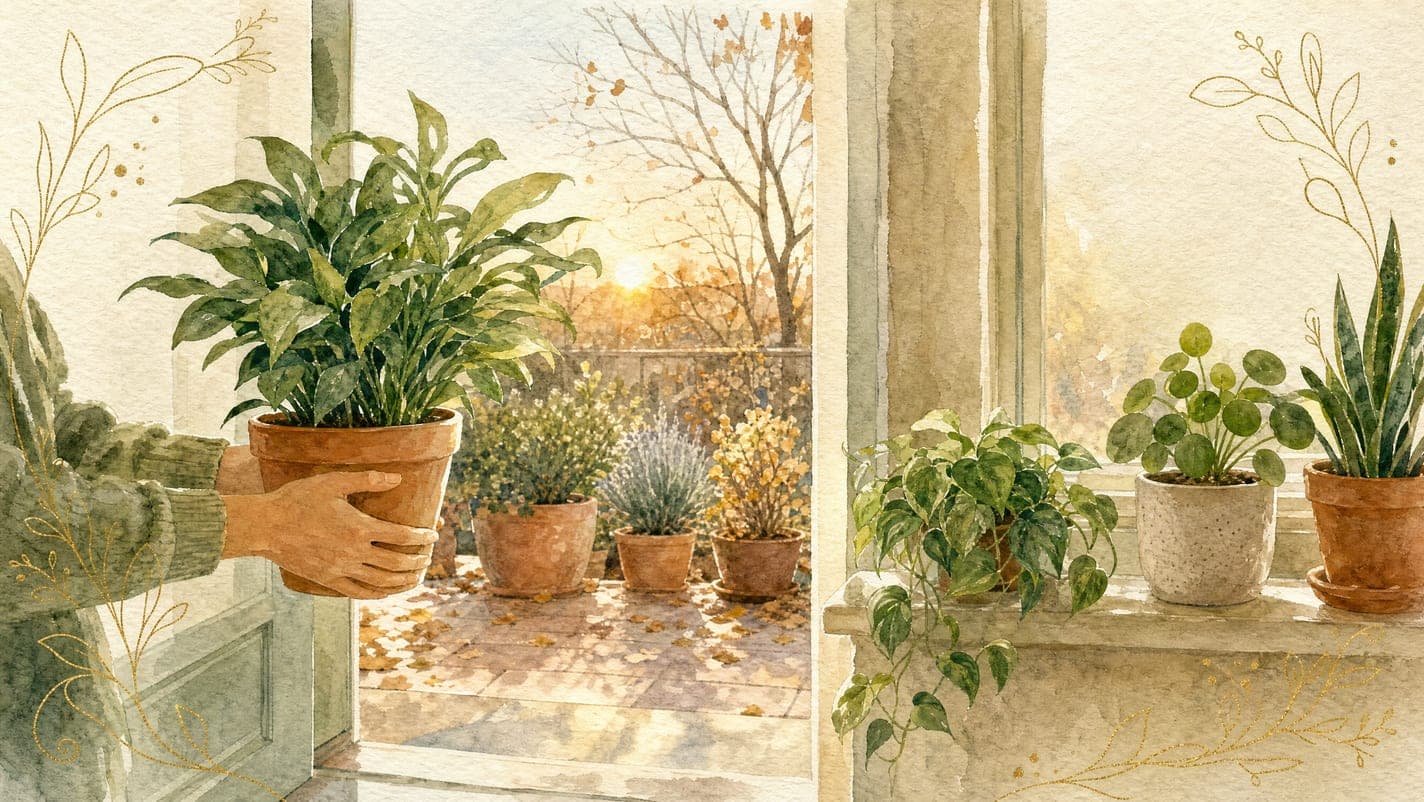
The job is telling adjustment apart from six impostors that are not self-limiting, then resisting the urge to do something. If you are mid-move, our guide to bringing plants indoors for winter covers the sequence; this one is for the plant already inside and already shedding.
The Timeline That Makes People Blame the Wrong Thing
Post-move leaf drop usually does not start when you move the plant.
According to David Trinklein of University of Missouri Plant Science and Technology, "the most obvious response occurs several weeks after a plant has been moved from an area of fairly bright light to poorer light." That lag produces the same story every autumn: the plant came in over Labor Day weekend, looked fine through September, then dumped a third of its leaves in late October — by which point the owner has bought a fertilizer, moved the pot twice, and blamed both.
Work backward from the move, not from last week. If the plant has been indoors two to eight weeks and nothing else changed, acclimation is the leading suspect. If it has been inside since May, it is not your answer.
One exception runs the other way: cold damage taken outdoors surfaces after the plant is safely inside.
Why a Healthy Plant Throws Away Working Leaves
Leaves are not free. Each costs sugar to maintain and only earns its keep if it photosynthesizes more than it respires. Trinklein defines the light compensation point as the level at which "the amount of sugars and carbohydrates (food) manufactured by the plant through the photosynthetic process equals the amount of the same materials used by the plant during respiration." Below that line a leaf is a liability, and the plant closes the account.
Outdoor leaves are especially expensive to run. Virginia Cooperative Extension states that "sun leaves have fewer chloroplasts, and thus less chlorophyll," while "shade leaves have greater numbers of chloroplasts and thus more chlorophyll, are thin, large, and few in number." Faced with a light drop, plants "must either change existing sun leaves into shade leaves or drop their sun leaves and grow a new set of shade leaves which are photosynthetically more efficient." Trinklein notes shade leaves have "lower light compensation points than do sun leaves" — the point of building them.
One correction, because the opposite appears everywhere: replacement leaves are not reliably smaller — both sources describe shade leaves as larger and thinner. The tell is thinner and deeper green.
Normal Acclimation, or Something Worse? A Seven-Way Check
Each has a tell you can verify in under a minute. Work down the list; the first match is usually the answer.
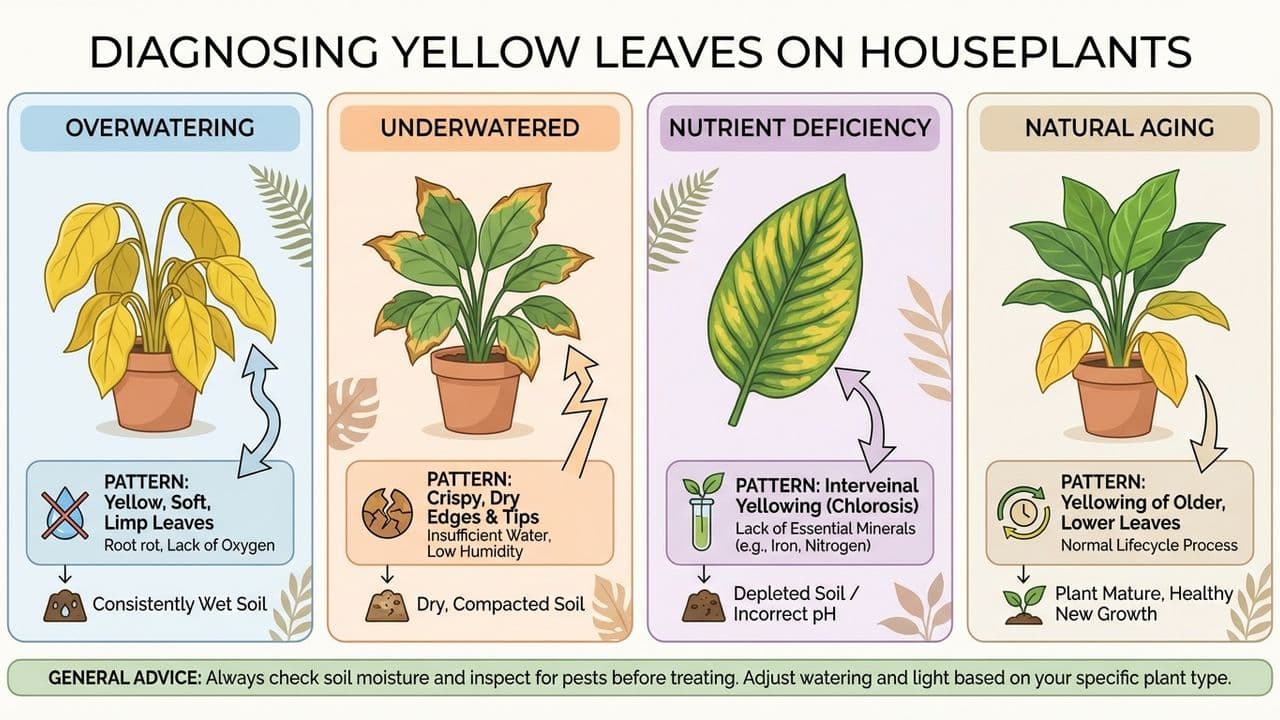
Normal acclimation. Oldest and innermost leaves go first, because the shaded interior ones sat closest to the compensation line. They yellow before falling rather than browning or going limp, and the pace is gradual — leaves over weeks, not a pile overnight. Replacement growth is thinner and darker. And critically, it stops. A drop still accelerating in week six is not this.
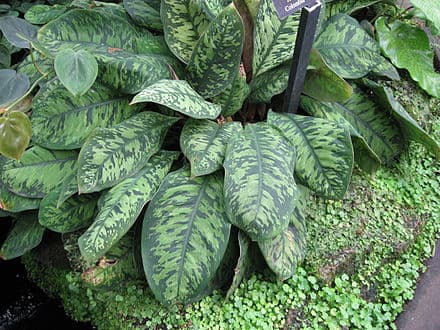
Cold damage taken outdoors. This happened before the move and reports late. UF/IFAS defines a chilling temperature as "any temperature that is cold enough to cause plant injury but not cold enough to freeze the plant," with temperatures that "usually range from just above 32°F to about 59°F" — so a 46°F night never registered as an event. In dieffenbachia, UF/IFAS lists "yellowing (chlorosis)," "water-soaked patches" and "wilted leaves," with patches appearing in two days and shoots collapsing ten days after chilling in the most sensitive cultivar. The tell: blackened or water-soaked patches and sudden collapse rather than tidy yellowing. Virginia Cooperative Extension's rule is to "bring plants indoors before temperatures dip below 55°F, do not wait for frost warnings." Our guide to when to bring plants inside is the prevention; tissue already injured does not recover, so there is no treatment for damage taken.
Overwatering and root rot. The common way normal leaf drop becomes a dead plant. Trinklein writes that "it is generally agreed that more houseplants die from overwatering than from any other cause." Iowa State lists "yellowing or browning of leaves, leaf drop, wilting (due to a damaged root system), crown rot, fungus gnats, and death." The tell is the pattern and the pot. Virginia Tech notes that "overwatered plants tend to drop their leaves, old or young" — so drop that hits new growth is a red flag, since acclimation does not. Leaves feel limp rather than crisp, the stem base may be mushy, and growers commonly report a sour smell. If soil is still damp five to seven days after watering, stop and read our watering guide. A soil moisture meter settles it at root depth, where a fingertip cannot reach.
Underwatering. Genuinely possible, because people who heard "water less indoors" sometimes stop entirely. Virginia Tech reports that "the first symptom of drought is wilting or flagging," followed by leaf margins dying back so that "leaves become brittle and brown." The tell: leaves crisp at the edges first and come off dry rather than yellow and soft. In our experience the mix also shrinks from the pot rim, and water runs straight down the gap. Virginia Tech separates the two by roots: drought-stressed roots "appear thin or frail," overwatered ones "appear mushy, brown/black, or may not even be visible at all."
Pests that came in with the plant. Heated air suits spider mites, and a summer outdoors supplies them. University of Minnesota Extension says mite "feeding creates a stippled appearance on the leaves" and advises watching "for presence of fine webbing," plus "honeydew, a shiny, sticky substance made by aphids, mealybugs and scale insects." The tell: speckled damage rather than whole-leaf, plus anything sticky on the shelf below. Minnesota says to "inspect tops and undersides of leaves for insects, webbing, holes and eggs." Our pest identification guide covers what each looks like.
Dry air and heat vents. Nebraska Extension is specific: "avoid placing plants on or near outside doors, radiators, heat vents and ducts." The symptom arrives before the leaves do — Nebraska notes that "drying and browning around leaf edges or tips is a common symptom of low humidity." The tell: brown crispy margins and tips preceding the drop, worst on the vent side. Stand where the plant stands and see if you can feel the furnace. A hygrometer beats guessing, because heated rooms are drier than they feel; our humidity guide covers the fix.
Drafts and cold glass. Easy to miss, because the plant looks well-placed. Leaves pressed against a single-pane window on a 20°F night can sit in the chilling band UF/IFAS describes, all night, every night. The tell: damage confined to the leaves touching the glass, or the side facing a door that opens. Move the pot two or three inches back.
What to Actually Do About Normal Leaf Drop: Mostly Less
If the check above pointed to acclimation, the correct response is restraint — worth stating plainly, because it is counterintuitive.
Stop fertilizing. Iowa State University Extension is direct: "fertilization is generally not necessary during the winter months as most houseplants are not growing during this time." Feeding a plant that cannot pay for its leaves does not give it energy; it adds salt to the root zone of a plant drinking less. Trinklein's advice: "extending the interval between watering and reducing the amount of fertilizer supplied to the plant can help in the adjustment process."
Extend the watering interval and check the soil, not the calendar. Nebraska Extension makes the scale plain: a plant needing daily water outdoors in July and August may need it only weekly or less indoors in winter. Keeping the August rhythm is how acclimation becomes root rot.
Do not repot. Root disturbance on top of a large light drop gives the plant two problems at once, and fresh mix holds more water than a plant with fewer leaves can use.
Do not move it again. Every relocation restarts a weeks-long process.
Do not prune bare stems yet. Wood that looks finished often pushes new growth once the plant reaches equilibrium, and cutting early removes buds it was about to use. Give it a month, then cut only what has gone brittle and brown through.
The Species That Do This Worst — and the Ones That Barely Notice
Ficus is the famous offender, and the reputation is earned. Clemson Cooperative Extension says of weeping fig that "overwatering, under-watering, drafts, lack of nitrogen, and low light are all causes of leaf drop," and that these plants "often shed leaves when moved to a new location or repotted." Ficus benjamina and the fiddle leaf fig treat a doorway as an injury. The reassuring half: "if growth conditions are adequate, the weeping fig will adjust to its new location, stop dropping leaves, and healthy new growth will appear." Clemson adds a placement rule — "do not place the plant near a heat vent or draft, as this will cause excessive leaf drop."
Iowa State names tropical hibiscus alongside weeping fig among the shedders. Thin-leaved tropicals feel it hardest; a Boston fern moving from a shaded, humid patio into heated air is reacting to humidity as much as light. Our guide to overwintering tropical plants indoors covers that group.
Plenty of plants barely register the move: a pothos, snake plant or ZZ plant will typically yellow one or two old leaves and carry on. A tough plant shedding hard is evidence against simple acclimation.
How Long It Lasts, and What Recovery Looks Like
Shedding ends when the plant hits its light compensation point — when the leaves it has left pay for themselves at the light it now gets. That is a threshold, not a date, which is why nobody publishes a reliable number.
Trinklein places the onset "several weeks" after the light drop, and Virginia Cooperative Extension's acclimatization procedure gradually moves a plant to its "permanent, darker location over a period of 4 to 8 weeks." So a drop beginning a few weeks after the move and tapering over the following month or two is normal. We will not pretend to a tighter window, and any source giving an exact number of days is guessing.
Signs it is finishing: the rate slows week over week, and new growth appears. Iowa State's version is shortest — "new foliage will grow to replace the lost leaves." A plant that stabilises at 60 percent of its September leaves and starts pushing new ones has done this correctly, even if it looks worse than it did in August.
When Leaf Drop Is Actually an Emergency
Three patterns mean stop diagnosing from the outside and check the roots:
- Every leaf failing at once, rather than oldest-first over weeks.
- Mushy or blackened stems, especially at the soil line.
- Soil still wet a week after watering.
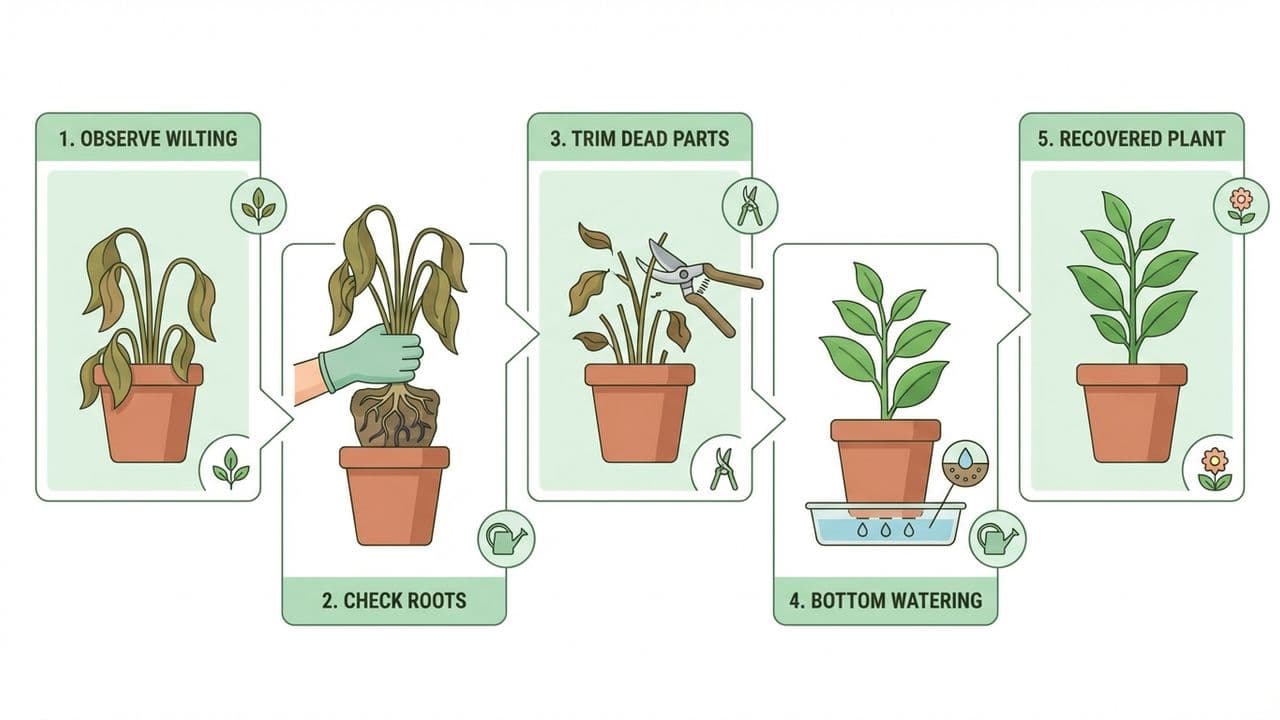
Slide the plant out of its pot and look. Virginia Tech's overwatered roots — "mushy, brown/black, or may not even be visible at all" — are what you check against, versus firm pale roots. Our root health guide covers what to cut and what to keep, and our plant revival guide covers triage.
Preventing This Next September
Move plants before nights reach the low 50s, not before frost, so no cold damage is banked when the plant comes in.
Step each one down through outdoor shade, then your brightest indoor window, then its real spot — the staged version is in our guide to acclimating plants from outdoor to indoor light.
And decide where each plant is going before you pick it up. The ones that drop hardest are the ones relocated three times in November.
Common Questions About Leaf Drop After Moving Plants Indoors
Will bringing plants indoors for winter hurt them?
It will set them back, and that is usually worth it. A plant coming inside loses a large fraction of its light and sheds leaves accordingly — the response Iowa State describes, along with new foliage replacing what is lost. Left outside through nights in the 40s it risks chilling injury instead, which UF/IFAS documents progressing to necrosis and, in sensitive material, shoot collapse. Leaf drop is the cheaper outcome. The caveat: a plant going into a genuinely dark room may not recover its size until spring.
My plant is dropping leaves after repotting indoors. Is that the same thing?
Overlapping, not identical. Clemson notes that weeping figs shed "when moved to a new location or repotted," so root disturbance is its own trigger, and stacking it on a light change gives two stresses at once. That is why we suggest not repotting during the indoor transition. If you already have: stable light, water only when the mix has dried down, no fertilizer.
Why is my plant losing leaves indoors in winter when it came in months ago?
Probably not acclimation, since Trinklein places that response several weeks after the light drop. Look at the heating system first — Nebraska Extension warns against placing plants near "outside doors, radiators, heat vents and ducts," and the furnace coming on in November changes the air around a plant that had been fine. Then check for spider mites, and whether your watering interval still matches a darker, cooler month.
The One-Line Version
If your plant is dropping leaves after bringing it inside, the first question is not what to add but whether anything is wrong — and for old leaves shedding gradually a few weeks after the move, the answer is usually no. Check the soil, check the undersides, move it off the vent, and leave it alone.
For the rest of the move, see our guide to moving plants inside for winter.