This guide contains affiliate links. We may earn a small commission if you purchase through our links, at no extra cost to you.
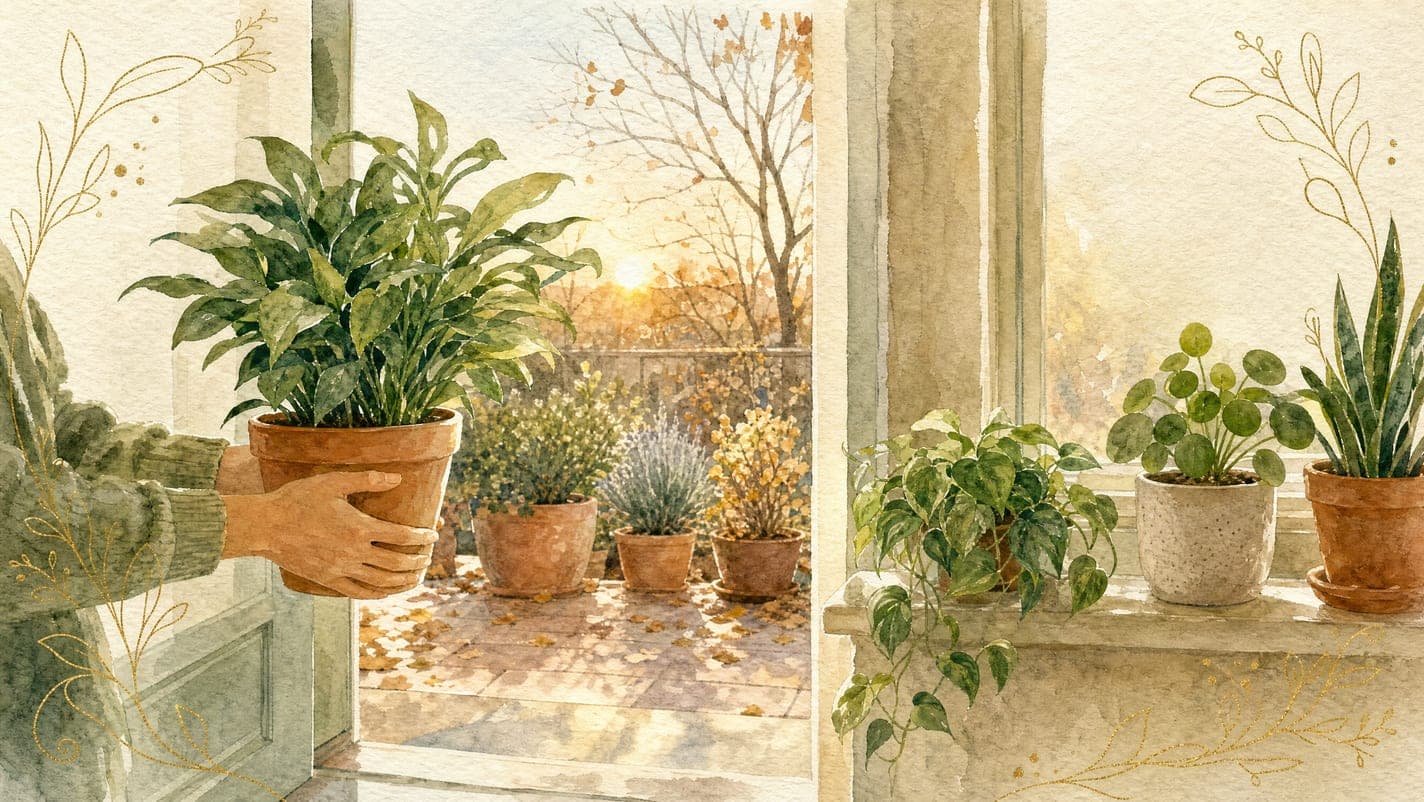
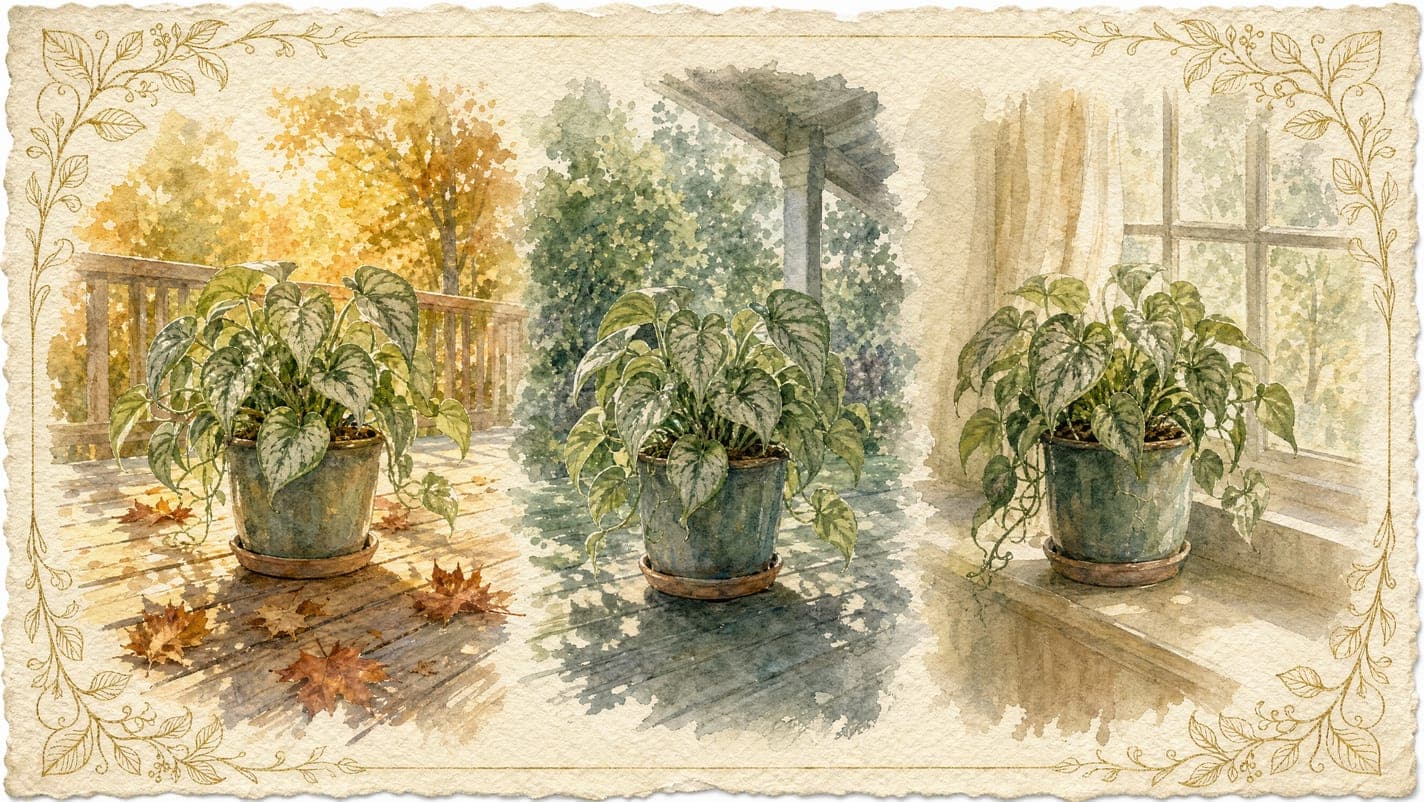
To acclimate plants from outdoor to indoor light, move each one into outdoor shade for one to two weeks first, bring it to your brightest window second, and only then step it toward its final position over the following weeks. Two to six weeks in total, and almost all of that is waiting rather than working.
The reason it takes that long is arithmetic. According to Illinois Extension, outdoor sunlight may be 10,000 to 12,000 foot-candles, while the same page rates a bright indoor spot at about 300. That is not an adjustment, it is a change of scale, and making it in one afternoon is why a healthy plant sheds half its leaves in October. This guide covers the light half of moving plants indoors for the season; the hub covers the rest.
The Light Gap Is Two Orders of Magnitude
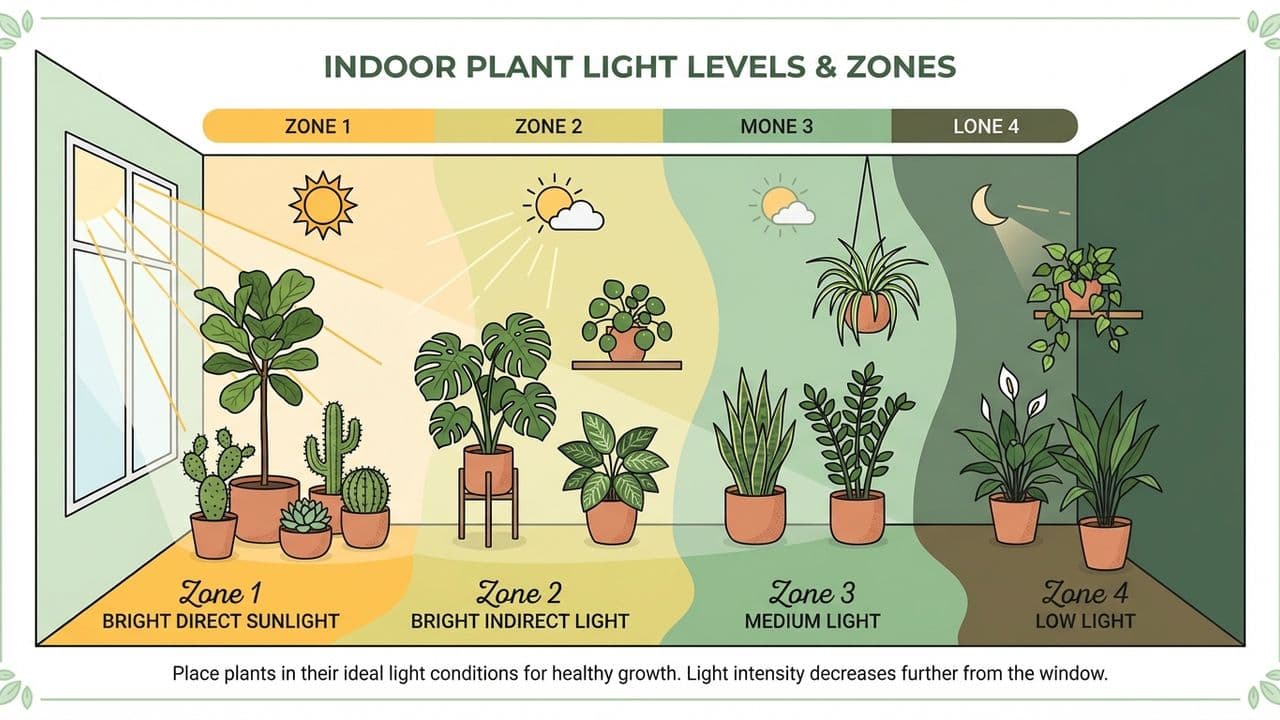
Illinois Extension publishes four indoor categories in foot-candles, with the window positions that produce them.
| Illinois Extension category | Foot-candles | Where that actually is |
|---|---|---|
| Direct | 1,500 | South window, directly in front |
| High or bright | 300 | East or west window directly in front; up to 5 feet from a south window |
| Medium (average) | 150 | North window directly in front; 3 to 10 feet from a south window |
| Low | 75 | A few feet from a north window; 15 to 20 feet from a south window |
Set the outdoor figure beside those. The best spot in a typical home, pressed against south glass, is roughly an eightfold drop. What most people mean by "bright window" is thirty- to fortyfold. Directly in front of a north window, which Illinois Extension rates at 150 foot-candles, is closer to eightyfold, and a few feet back from that glass — Illinois Extension's 75-foot-candle low-light category — is over a hundredfold. Iowa State University Extension makes the point without numbers: "Even the brightest locations indoors are a fraction of the light intensity found in shade or part-shade locations outside."
A plant that summered in outdoor shade still faces a large drop, because outdoor shade is far brighter than indoor bright. Our light requirements guide covers reading a window honestly, and Illinois Extension notes that intensity can be evaluated using a light meter or photographic exposure meter. A foot-candle light meter settles whether a corner is 300 or 80. It is usually 80.
Why a Plant Cannot Simply Cope
A leaf is built for the light it grew in, and the build is physical. Virginia Cooperative Extension, citing research conducted in Florida in the late 1970s: "Sun leaves have fewer chloroplasts, and thus less chlorophyll," and are "thick, small, and large in number," while shade leaves "have greater numbers of chloroplasts and thus more chlorophyll, are thin, large, and few in number."
A summer on a deck builds sun leaves. Virginia Extension continues that when those plants go into low light, "they must either change existing sun leaves into shade leaves or drop their sun leaves and grow a new set of shade leaves which are photosynthetically more efficient."
Either or. Conversion takes weeks; shedding can take only days. Staging works because it buys time for the first option, and a one-step move does not. David Trinklein of University of Missouri Plant Science and Technology adds the functional half: "shade leaves have lower light compensation points than do sun leaves."
The Light Compensation Point Explains Everything Else
Trinklein defines it as "the point where the amount of sugars and carbohydrates (food) manufactured by the plant through the photosynthetic process equals the amount of the same materials used by the plant during respiration."
Every leaf is a small business: it earns sugar by photosynthesis and spends sugar staying alive. Above the compensation point it turns a profit; below it, it runs at a loss, and plants do not subsidise unprofitable leaves. Trinklein on what follows: when respiration exceeds photosynthesis, "the plant stops growing and loses leaves," and "the latter usually ceases when the light compensation point is reached."
Leaf drop is a balance sheet, not a tantrum. The schedule below exists to lower the plant's compensation point, by growing shade leaves, faster than the light falls.
The Schedule: How to Transition Plants Indoors in Three Stages
1. Outdoor shade first, one to two weeks
Move the pot out of direct sun into the shadiest outdoor spot you have: under a porch, or the north side of the house. This is the highest-value step, because it is the biggest single drop in the sequence and the only one the plant makes while it still has sky light. Published durations differ:
- Clemson Cooperative Extension: "For about a week, gradually reduce light levels by moving plants from sun to light shade to heavy shade and finally indoors."
- University of Minnesota Extension, on container citrus: "Get them used to lower light at the end of the summer by keeping them in a shady place for a week or so before bringing them back indoors."
- Chicago Botanic Garden, also on citrus: "In early September, move your plants from the sunny patio to a shaded outdoor spot for several weeks."
One week to several weeks, then. We use one to two for most plants and lean long for anything large or slow-growing. Nobody has published a controlled trial on a patio monstera, so treat any single figure, ours included, as a reasonable middle rather than a measured optimum. Weather sets the ceiling here, not patience: Iowa State advises that "when nighttime temperatures start to dip consistently to around 50°F, it's time to bring plants back indoors." Our guide to when to bring plants inside works that date backwards.
2. Your brightest indoor spot second, two to four weeks
Not the plant's final home. The brightest glass in the house, however inconvenient. Iowa State is direct: "Place plants brought back inside in bright, indirect light." University of Minnesota Extension gives it as a two-step: "temporarily put it in a very sunny window and gradually reduce its sun exposure before moving it to a less sunny location." This is the stage people skip, and skipping it wastes the shade week.
3. The final position, gradually
Move the plant toward its winter home a few feet at a time, a week or so between moves, watching foliage rather than the clock. Virginia Cooperative Extension's acclimatization instructions, written for plants bought out of high-light production, describe the same path: start in "a high-light (southern exposure) area of your home" and move gradually to "their permanent, darker location over a period of 4 to 8 weeks."
What is well-sourced and what is not. The direction is unanimous across every source we read: reduce light in steps, never in one. Total elapsed time has backing too, in Virginia's four-to-eight-week figure. The number of days at each stop does not, and we treat it as sensible practice rather than settled fact. If the plant looks fine, move it along; if it yellows, hold it another week.
Reverse Hardening Off Is This Move, Backwards
Gardeners search for "reverse hardening off." The phrase is rare in extension literature; the idea is not. Virginia Cooperative Extension writes: "The gardener should acclimatize plants when placing them outdoors in summer by gradually increasing light intensities, and reverse the process again before plants are brought indoors in the fall." University of Minnesota Extension draws the analogy outright: "Just like hardening off your new seedlings, your houseplants may undergo shock if abruptly brought from outdoor conditions to indoors."
It appears to run slower in this direction than in spring, and building shade leaves may take longer than toughening sun leaves — Virginia Cooperative Extension allows 4 to 8 weeks for the step-down to a permanent darker location.
Less Light Means Less Water and No Fertilizer
This is where a normal acclimation becomes a dead plant, and it is almost always the watering can. A plant that has shed a quarter of its leaves, in a room with a fortieth of the light, at a lower temperature, uses dramatically less water than it did on the patio in August. Keep the August schedule and the mix stays wet for a week at a time. Trinklein: "It is generally agreed that more houseplants die from overwatering than from any other cause." His acclimation guidance runs the other way: "extending the interval between watering and reducing the amount of fertilizer supplied to the plant can help in the adjustment process," and applying less water "also helps harden the plant's foliage so it will be less sensitive to the low humidity typical of indoor settings."
Our sources sit apart on fertilizer. Trinklein would cut rates to "about one-half of that supplied under normal production in bright light" through the acclimation window; Iowa State, looking at the season ahead, says to "stop fertilizing plants in the fall and winter months as they are not actively growing this time of year." For a plant coming in for winter we follow Iowa State and stop. See our watering guide for checking soil instead of dates and our fertilizing guide for when to resume.
Expect some leaf loss even when you do all of this correctly. Clemson Cooperative Extension says as much of a properly staged move: "Once indoors, the plant may develop leaf yellowing or drop as it adjusts to lower light." Our guide to leaf drop after bringing plants inside separates that from the versions needing intervention. And one timing note saves a lot of panic: according to Trinklein, "the most obvious response occurs several weeks after a plant has been moved from an area of fairly bright light to poorer light." A plant that looked untouched through October and then dumped leaves in November is not reacting to November.
When There Is No Time to Stage It
Sometimes the forecast hands you a freeze in three days and a full patio.
- Skip the shade week and go straight to your brightest window. Not the final spot, and leave it there a month before moving it anywhere.
- Expect more leaf drop. Virginia Cooperative Extension puts the unstaged outcome plainly: "Quick changes in environment can result in yellow foliage and leaf drop."
- Do not compensate with extra water. Wet mix on top of light stress is how acclimation turns into root rot.
- Do not repot, prune hard or fertilize. One large stress at a time.
This is not as good as doing it properly. Virginia Extension's standing advice: "Houseplants that have been outside all summer should be allowed to make a fairly slow transition to indoor conditions." A rushed move costs leaves the plant would otherwise have kept. An established plant usually rebuilds by spring; one already struggling may not.
Grow Lights Fix a Dim Final Position, Within Limits
If the honest answer about your plant's winter home is 75 foot-candles, no amount of careful staging changes that. Staging controls the rate of the drop; a grow light changes the destination. We would rather see one decent fixture over one shelf than four plants quietly declining in a hallway.
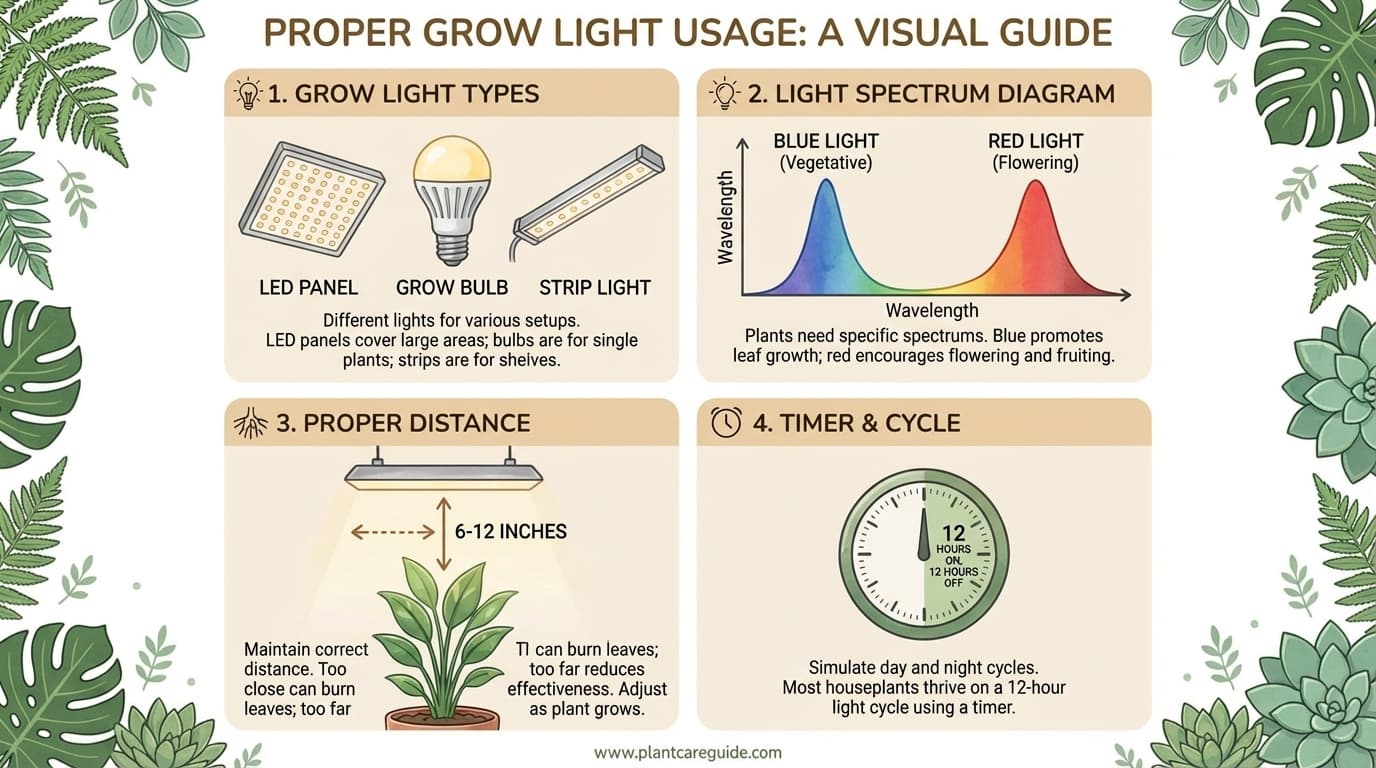
Duration matters as much as the fixture. Illinois Extension writes that in low light conditions plants can benefit from increasing the duration of light: "Duration of 14 - 16 hours is sufficient. Do not expose plants to more than 16 hours of light since they need a rest period too." Put it on a timer. Our grow lights guide covers fixture types and mounting distances, and a grow light for indoor plants over a single shelf is the version that usually works.
Which Plants Need This Most, and Which Barely Notice
Most: anything that spent the summer in full sun, because that is where the sun leaves are.
- Ficus benjamina is the classic dramatic responder. Iowa State names weeping fig, along with tropical hibiscus, among the plants that "will drop leaves in response to this change in light intensity," adding that "New foliage will grow to replace the lost leaves." Stage it if you stage nothing else, choose its final spot before you carry it in, then leave it alone.
- Fiddle leaf fig behaves similarly, and its leaves are large and few, so losing four is alarming even when it is normal.
- Tropical foliage plants sit in the middle: they notice, shed older leaves, and recover. Our guide to overwintering tropical plants indoors covers the season after the move.
Least: the plants whose published minimum is already low. Illinois Extension lists snake plant and heartleaf philodendron among houseplants whose minimum requirement is low light, and pothos among those whose minimum is medium light. Nothing in that group was running sun leaves at full tilt, so the drop costs them less. A ZZ plant behaves the same way in our experience, though we found no extension light-category listing for it.
Frequently Asked Questions
How long does it take to acclimate plants to indoor light?
Two to six weeks. Clemson Cooperative Extension describes the outdoor reduction as "about a week"; Virginia Cooperative Extension allows "4 to 8 weeks" for the full step-down to a permanent darker location. Longer is safer; the constraint is your first 50°F night.
What is reverse hardening off?
The same staircase as spring hardening off, walked down instead of up. Virginia Cooperative Extension describes acclimatizing plants outdoors in summer "by gradually increasing light intensities," then says to "reverse the process again before plants are brought indoors in the fall."
My plant is dropping leaves after coming in from outdoors. Did I do it wrong?
Probably not. Iowa State University Extension notes that some houseplants "will drop leaves in response to this change in light intensity" and that "New foliage will grow to replace the lost leaves." Gradual loss of older, interior leaves that yellow before falling is expected. Mushy stems, every leaf failing at once, webbing or week-long wet soil are different problems.
The Short Version
Shade outdoors for a week or two. Brightest window for a few weeks after that. Final position last, a few feet at a time. Cut the water as the leaves go, skip the fertilizer until spring, and judge progress by foliage rather than by calendar. The physiology fits in one line: sun leaves cannot earn a living at 300 foot-candles and shade leaves can, so the schedule gives the plant time to swap one for the other instead of throwing the first set away.
For the rest of the move, including timing, pests and what each plant type needs once it is inside, start at our Indoor Move hub.