This guide contains affiliate links. We may earn a small commission if you purchase through our links, at no extra cost to you.
Yellow leaves are the universal plant distress signal—but they're also frustratingly vague. Overwatering, underwatering, light issues, and nutrient deficiencies can all cause yellowing. This guide will help you become a plant detective and identify exactly what's wrong.
Overwatering: The Most Common Cause
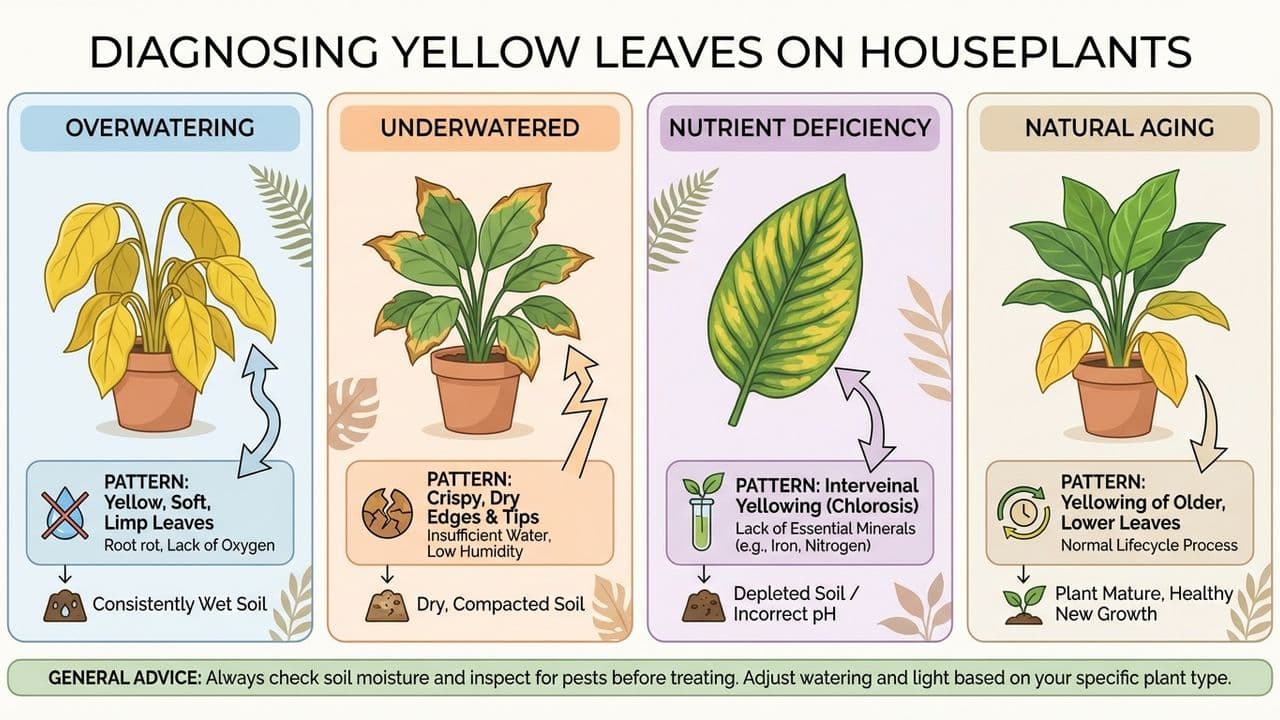
If multiple leaves are yellowing, especially lower ones, and the soil feels moist or soggy, overwatering is likely. Yellow leaves from overwatering often feel soft or mushy. The ZZ Plant, Snake Plant, and other drought-tolerant plants are especially susceptible—they store water and need the soil to dry significantly between waterings.
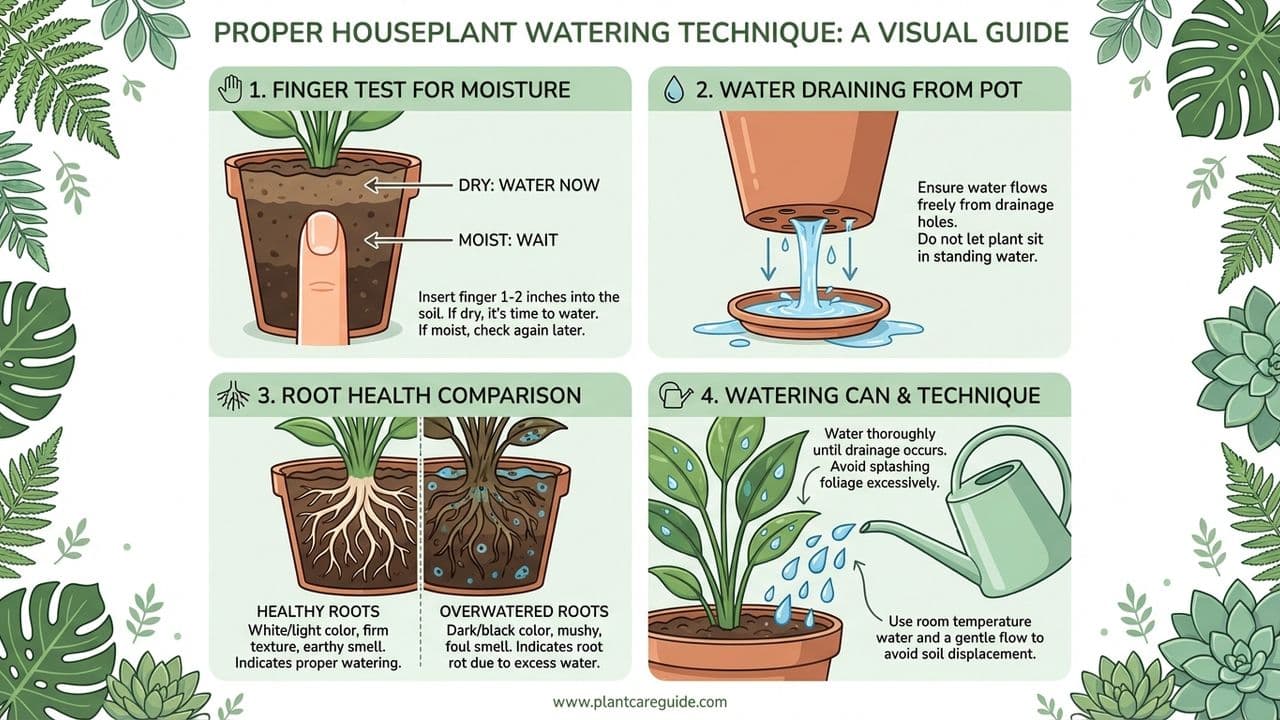
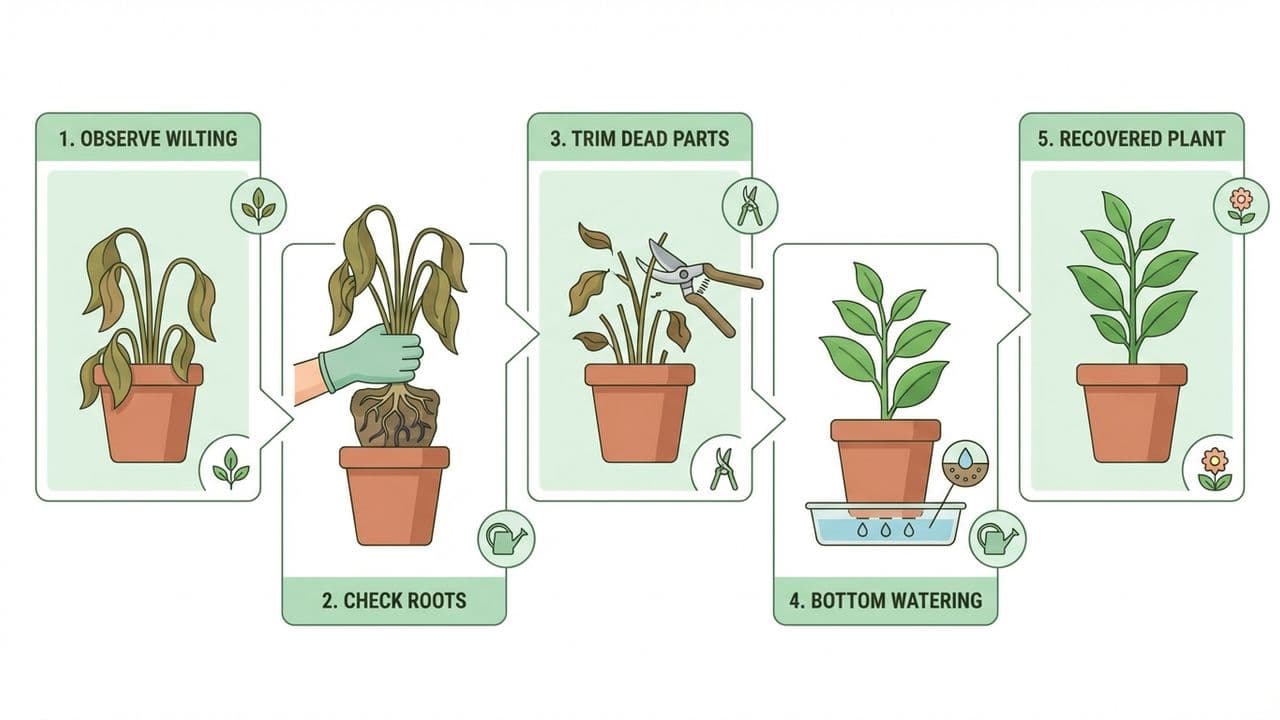
Solution: Check if roots are rotting (black and mushy). If so, remove the plant, trim affected roots, let them dry slightly, and repot in fresh, well-draining soil. Adjust your watering schedule—see our watering guide for proper technique.
Underwatering
Underwatered plants show yellow leaves with dry, crispy edges or tips. The soil may have pulled away from the pot edges. Leaves often droop before yellowing. Peace Lily dramatically wilts when thirsty, giving you a clear signal. Pothos leaves become limp and yellow when severely underwatered.
Solution: Water thoroughly until it runs out the drainage holes. If the soil is extremely dry and hydrophobic, bottom water by placing the pot in a tray of water for 20-30 minutes. Once hydrated, establish a more consistent watering routine. The plant should recover within a few days.
Light Issues
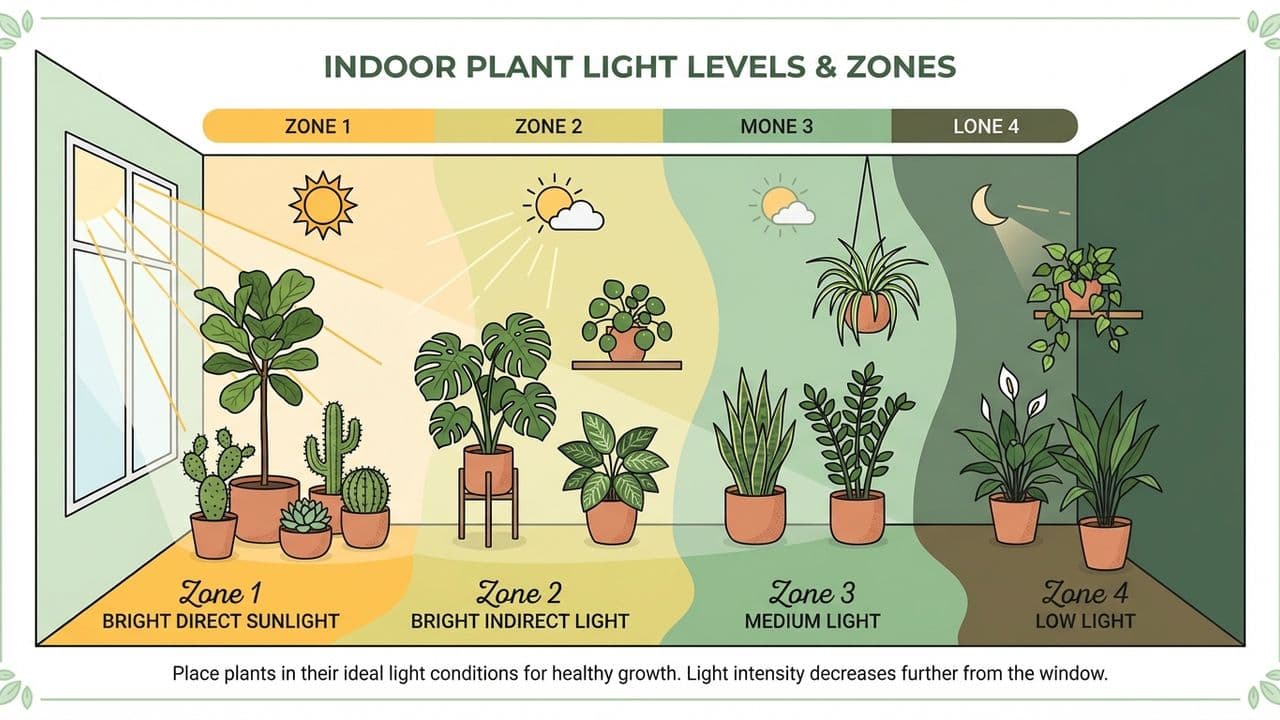
Too little light causes pale, yellowing leaves, leggy growth, and leaves turning toward light sources. This is common with Monstera Deliciosa and Fiddle Leaf Fig placed too far from windows. New leaves may be smaller and less developed than previous growth.
Too much direct sun causes scorching—yellow or brown patches on leaves facing the light source, or overall leaf bleaching. Even sun-tolerant Aloe Vera can burn if suddenly moved from shade to intense sun. Move affected plants away from direct light or add a sheer curtain. See our light guide for optimal placement.
Nutrient Deficiencies
Nitrogen deficiency causes older, lower leaves to turn uniformly yellow while newer leaves stay green—the plant is redirecting limited nutrients to new growth. This is common in plants that haven't been fertilized or repotted in years. Monstera and Pothos are heavy feeders that show this clearly.
Iron deficiency shows as yellowing between leaf veins while veins remain green (called interveinal chlorosis), typically affecting newer leaves first. Solution: Resume regular fertilizing during the growing season. If chlorosis persists, check your soil pH—iron becomes unavailable in alkaline soil. See our fertilizing guide for proper feeding.
Natural Aging
If only the oldest, lowest leaves are yellowing while the rest of the plant looks healthy, it's likely normal aging. Plants shed old leaves to redirect energy to new growth. Monstera Deliciosa commonly loses lower leaves as it matures. Rubber Plant drops bottom leaves while growing taller.
This is nothing to worry about—simply remove yellowed leaves cleanly at the base. If leaf loss seems excessive or is happening at the top of the plant, investigate other causes. One or two yellow leaves a month on an otherwise healthy plant is normal.
Temperature and Humidity Stress
Cold drafts from windows or air conditioning can cause sudden yellowing, especially on tropical plants like Peace Lily and Pothos. Temperatures below 55°F stress most houseplants. Conversely, heat vents can dry out leaves, causing yellowing and crispy edges.
Low humidity affects tropical plants that evolved in humid environments. Spider Plant shows brown tips; Monstera leaves may yellow at edges. Move plants away from drafts and heating vents. Group plants to increase local humidity, or use a humidifier during dry winter months. See our winter care guide.
Pests and Disease
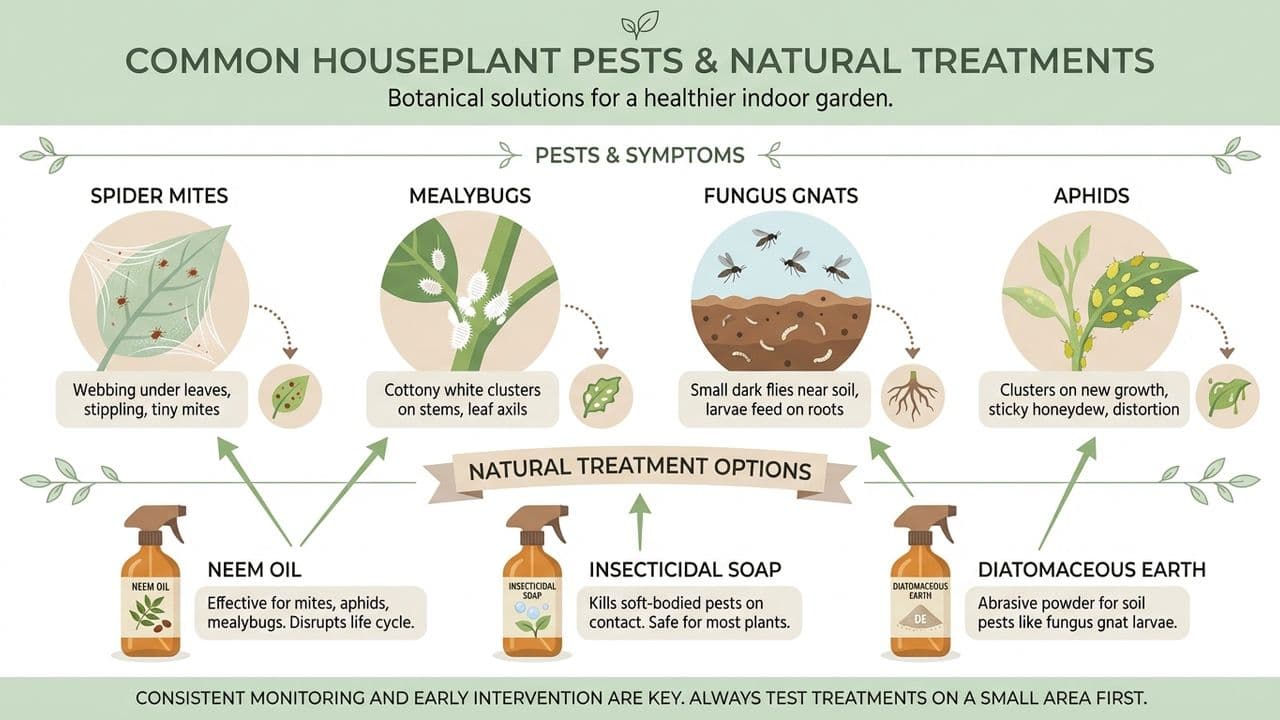
Spider mites, aphids, and other pests can cause yellowing as they suck plant juices. Check leaf undersides and stem joints for tiny insects, webbing, or sticky residue. Root problems from overwatering can lead to fungal diseases that cause yellowing.
If you spot pests, treat immediately—see our Houseplant Pest Mastery Guide for comprehensive treatment strategies, or our pest identification guide if you're unsure what you're dealing with. For root issues, check the roots when you next water. Healthy roots are white or tan; rotted roots are dark and mushy. Trim any rotten roots, repot in fresh soil, and adjust your watering.
Quick Diagnosis Checklist
Check the soil: Is it soggy (overwatering) or bone dry (underwatering)? Check location: Has light or temperature changed recently? Check the pattern: Which leaves are yellowing—old or new, one side or all over? Check for pests: Use a magnifying glass to inspect leaf undersides. Check your routine: When did you last water, fertilize, or repot?
Once you identify the cause, most plants recover well with corrected care. Remove yellow leaves to help the plant redirect energy. Be patient—it takes weeks to see improvement. If a plant continues declining despite corrections, see our plant revival guide for more intensive intervention.