This guide contains affiliate links. We may earn a small commission if you purchase through our links, at no extra cost to you.
Bring tender tropical houseplants inside when nighttime lows start settling around 50°F, not when frost appears in the forecast. According to Iowa State University Extension, "when nighttime temperatures start to dip consistently to around 50°F, it's time to bring plants back indoors." Succulents and a few tough foliage plants can wait longer. Basil and alocasia cannot.
That one number gets you most of the way there, but treating it as a single rule for a whole collection is how people lose plants in a mild October. This guide covers the timing decision only: your cutoff temperature, how to find your own date, and which plants go last. For everything that comes after the decision, see our guide to bringing plants indoors for winter.
The Short Answer: Nights in the Low 50s, Consistently
Four extension services land in the same band, and the spread between them is the useful part.
- Around 50°F, consistently. Iowa State University Extension sets the trigger at nights dipping "consistently to around 50°F," and warns that "many indoor plants will see damage when temperatures drop to the mid-to-lower 40s°F, and nearly all will die if exposed to temperatures below freezing."
- 45 to 50°F is already the damage zone. According to University of Minnesota Extension, "depending on the species, temperatures dipping below 45-50°F can cause damage." Minnesota also gives a calendar cue: start "when fall nighttime temperatures begin to cool in late September."
- Below 50°F for tropicals. NC State Extension states that "many houseplants, which are tropical plants, can be damaged when the temperature drops below 50°F."
- Mid-to-low 50s for tender perennials. University of Maryland Extension wants an overwintering plan in place "when nighttime temperatures regularly drop into the mid-to-low 50s."
Our working rule: 50°F for the collection, 55°F for anything genuinely tender. The word doing the work in all four sources is consistently. One 48°F night in early September is not the signal; four or five sub-50°F nights in the next ten days is. And the forecast low is measured in an open, standard location about five feet off the ground, so on a clear, calm night a pot on an exposed balcony rail can sit colder than the number you read.
Why "Before First Frost" Is the Wrong Rule
Most search results say to bring plants in before the first frost. That advice is not wrong so much as roughly 20 degrees too late for a tropical.
Cold damage above freezing has a name. According to the UC Statewide IPM Program, "damage to plants from cold temperatures above freezing (32°F) is called chilling injury," and it "commonly kills flowers, injures fruit, and causes leaves and shoots to wilt or discolor purplish to red."
The University of Florida IFAS Extension puts a range on it, defining a chilling temperature as "any temperature that is cold enough to cause injury but not cold enough to freeze the plant, usually ranging from just above 32°F to 59°F." Fifty-nine degrees is the top of the injury band. Frost is nowhere near it.
The IFAS peace lily trials are worth reading twice. According to IFAS, "visible injury ranging from necrotic lesions to complete plant death occurred when plants were exposed to 38°F or 45°F for 5 days," and prolonged exposure caused more injury than a shorter one. Even at 52°F, where no visible injury appeared, IFAS reports that "plant growth was actually affected by chilling exposure."
That last finding is what matters for timing. A plant can bank weeks of cool-night damage, look fine on the day you carry it in, then stall all winter. If a healthy monstera has ever done nothing from November to March, a chilly October is a plausible suspect.
Cultivar matters too. Across eight dieffenbachia cultivars, IFAS found most uninjured at 45°F and 55°F while the most sensitive was injured at 45°F within six hours.
Temperature Thresholds by Plant Type
Read the night-low column as a "get it inside this week" trigger, not a survival minimum. Each number is a comfort line; survival sits well underneath it.
| Plant group | Examples | Bring in when nights reach | Why |
|---|---|---|---|
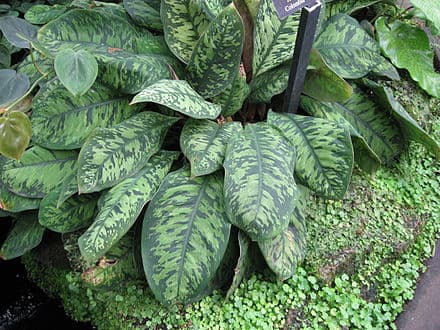
| Tender tropical foliage | Alocasia, begonia, peace lily, weeping fig, calathea | 55°F | Already inside the IFAS chilling band of 32°F to 59°F |
| Standard tropical houseplants | Monstera, heartleaf philodendron, rubber plant, fiddle leaf fig, Boston fern | 50°F | Iowa State's consistent-50°F trigger; NC State reports damage below 50°F |
| Tougher foliage plants | Pothos, spider plant, dracaena, snake plant, ZZ plant | 48 to 50°F | Tropical in origin; Minnesota's 45 to 50°F damage range applies |
| Succulents and cacti | Jade, aloe, echeveria, desert cacti | 45°F | Iowa State: ideal 55 to 75°F; some tolerate 45°F |
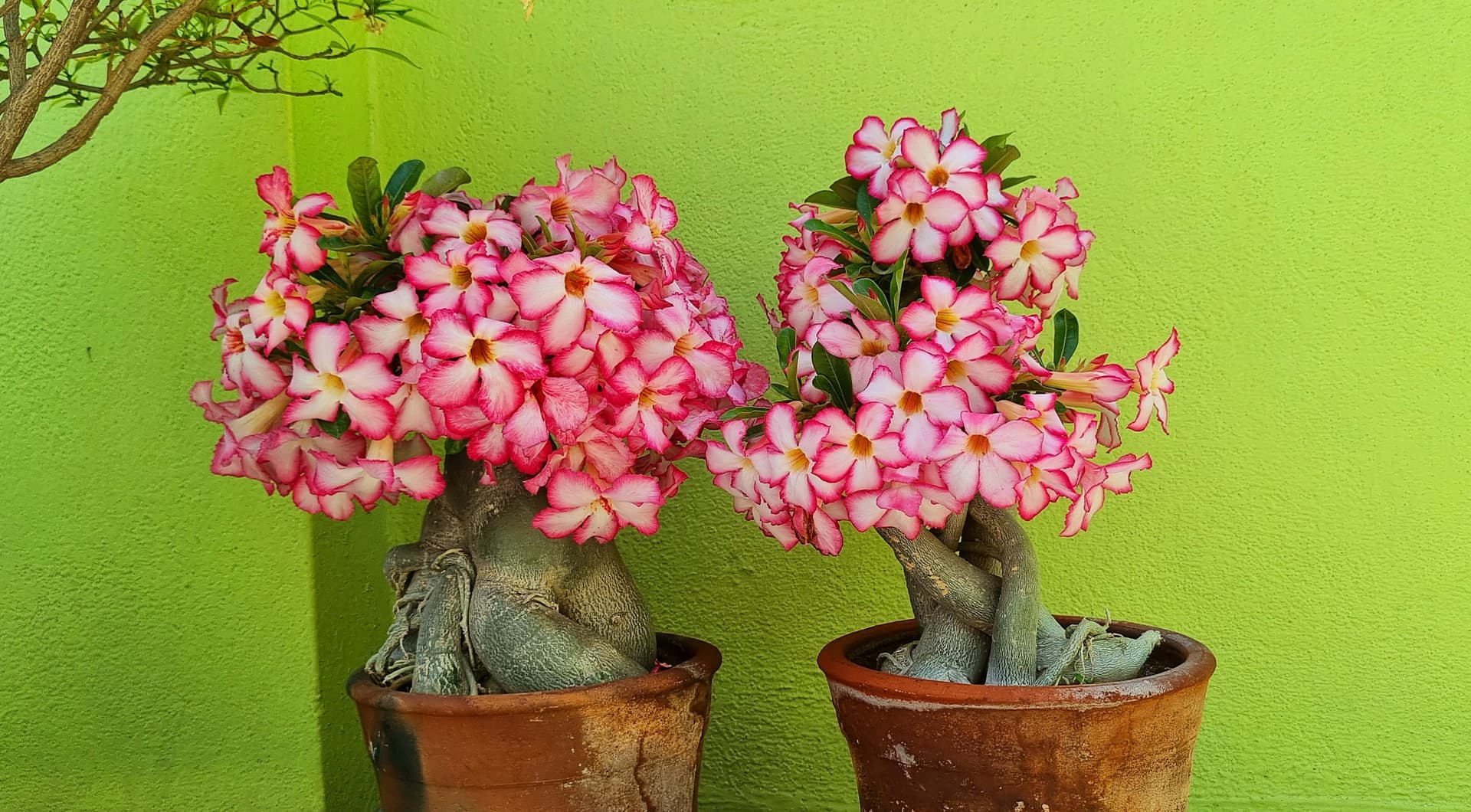
| Tender perennials | Geranium, hibiscus, mandevilla, coleus | 55°F | Maryland's mid-to-low 50s rule; Illinois says geraniums must move before first frost |
| Tender annual herbs | Basil | 50°F | Illinois Extension reports damage and blackened leaves at 50 degrees |
| Citrus | Lemon, lime, calamondin | Contested, see below | No extension figure found; treat as tender until you know the cultivar |
Alocasia and begonia go first. Both have thin leaves and no cold margin, and alocasia tends to drop leaves and retreat to its corm after a cold spell. Move them when nights first touch the mid-50s.
Geraniums are a frost rule, not a chilling rule. According to Illinois Extension, "geraniums must be dug or moved indoors before the first frost, so don't wait until the last minute." That is a floor, not a comfort zone: Illinois adds that geraniums kept as houseplants do best at daytime temperatures "around 65°F, with nighttime temperatures slightly cooler."
Basil is the most cold-sensitive thing on most patios. According to Illinois Extension, "cold soil and air temperatures can stunt basil growth and can even cause damage and blackened leaves at 50 degrees." Woody Mediterranean herbs such as rosemary, sage and thyme sit at the other end of the range, but their hardiness varies enough by cultivar and zone that we will not publish one number for them.
Citrus is genuinely contested. Published cutoffs for container citrus run from the upper 30s to 50°F depending on who is writing, and we found no extension figure we were willing to table. What we can source is the indoor target: according to University of Minnesota Extension, "citrus plants grow best indoors with 65 degrees Fahrenheit days, dropping five to ten degrees at night." If you do not know your cultivar, move the tree with the 55°F group.
The succulent exception
Succulents are the one group where waiting has an upside. According to Iowa State University Extension, 55°F to 75°F is ideal, with some tolerating as low as 45°F. And according to University of Minnesota Extension, "you may be able to bring your cacti and succulents into bloom indoors if you can create their native winter conditions. This involves a combination of good light, dry soil and cool nights."
Cool and dry, though, not cool and wet. A pot that stays cold and saturated through an October rain week is a rot problem, not a dormancy trigger. Our succulent care in winter guide covers the rest of the season.
How to Find Your Own Date
The 50°F trigger is a forecast rule. The frost date is a planning rule, and you want both.
- Look up freeze probabilities, not an average date. According to NC State Extension, the NOAA tables give probable dates for "the first frost, freeze, and hard freeze in fall" across nine probability levels from 10 to 90 percent, defining a freeze as air temperature below 32°F and a hard freeze as below 28°F.
- Pick your risk level deliberately. NC State calls the 10 percent date "high precision, low risk" and suited to "risk-averse/conservative decision-making." For a collection you cannot replace, plan to that date.
- Work backwards two to four weeks. Because chilling starts as high as 59°F, the damaging nights arrive well before any frost probability does.
- Do not use your USDA zone for this. The 2023 USDA Plant Hardiness Zone Map, the first update since 2012, is built on 1991 to 2020 data and describes 30-year averages of the lowest annual winter temperatures. That is what a perennial in the ground must survive in January. It says nothing about the September night your monstera starts sulking.
Zone 5 in practice. Minnesota's late-September cue is a zone 3 to 5 cue, and the arithmetic points the same way: many zone 5 locations see a first frost in early to mid October, which puts the tender group in the third week of September and the succulents in the first week of October. Look your own freeze probabilities up rather than assuming, though, because the zone map is not a frost-date map.
Then measure the spot the plants actually live in. An indoor outdoor min max thermometer left outside overnight records the pre-dawn low nobody is awake to see, usually several degrees below the evening reading you checked before bed.
Move in Stages: Most Tender First, Toughest Last
You do not have to move 30 pots in one afternoon. Spreading it across two or three weeks gives each plant a gentler transition, and you time to deal with what you find under the leaves.
- Nights heading toward the mid-50s. Alocasia, begonia, basil, peace lily, weeping fig, and any tender perennial you plan to keep growing.
- Nights approaching 50°F. Monstera, philodendron, rubber plant, fiddle leaf fig, ferns, and the rest of the standard tropicals.
- Nights in the upper 40s. Pothos, spider plant, dracaena, snake plant, ZZ plant. These will forgive a slow week.
- Nights approaching 45°F, dry. Succulents and cacti, last, and only after the mix has dried out.
Stage them in shade first. According to NC State Extension, "a few days before moving plants inside, I typically move mine close to the house under the porch where it is slightly warmer and receives less light." Minnesota gives the same advice for citrus: keep them "in a shady place for a week or so before bringing them back indoors." Acclimating plants from outdoor to indoor light is its own job, and it matters: Minnesota warns that plants "may undergo shock if abruptly brought from outdoor conditions to indoors," which "may result in yellow leaves, wilt, dieback or even death."
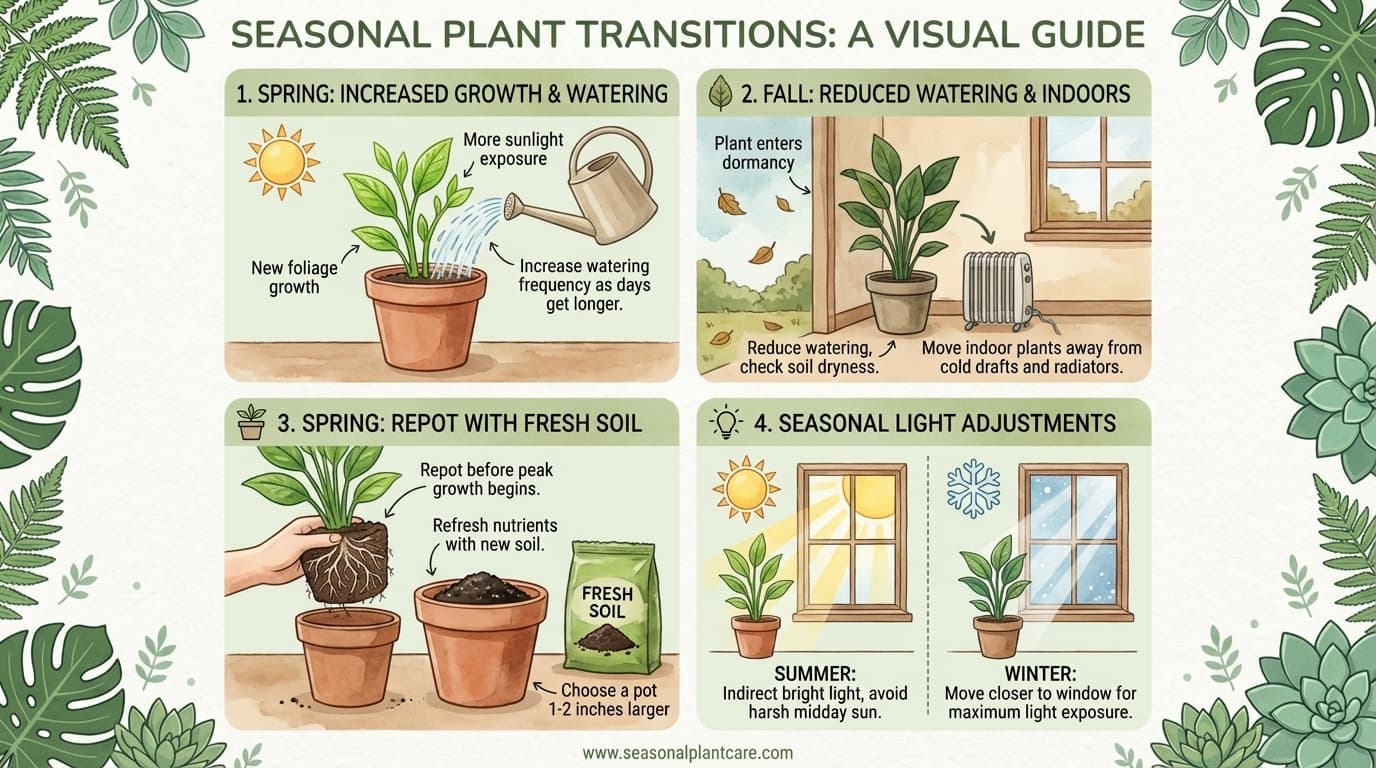
Nothing crosses the threshold untreated. A summer outside means hitchhikers, and an infested plant in a heated room in November is a far worse problem than it was on the patio in August. Work through our guide to debugging plants before bringing inside as the second half of each stage. Decide where each plant is going before you carry it in, too; if your one bright window is already full, our grow lights guide covers what actually works. In spring, our spring and fall transitions guide runs the same logic in reverse.
What Cold Damage Looks Like If You Were Late
Chilling damage does not always announce itself on the night it happens.
- Leaf tips and edges first. In its peace lily trials, IFAS reports that "chilling injury initiated from leaf tips and edges and progressed inwardly, with injured leaf areas becoming necrotic, then turning black, and, finally, drying up completely." Symptoms appeared within 24 hours for one cultivar ('Mini') exposed to 38°F, and took five days for another ('5598').
- Water-soaked patches and sudden yellowing. In dieffenbachia, IFAS describes young leaves showing "yellowing (chlorosis), water-soaked patches, and wilted leaves," with stem injury appearing "as a reddish-brown color" at the base before advancing to "stem collapse and plant death" in susceptible varieties.
- Discoloration rather than crisping. According to UC IPM, chilling "causes leaves and shoots to wilt or discolor purplish to red," a different look from the dry brown of underwatering.
- Nothing visible at all. In those same peace lily trials, IFAS found that at 52°F growth was affected even though no visible injury showed.
Whether a chilled plant recovers depends on how cold it got, how long it stayed there, and whether the growing point survived. IFAS found that prolonged exposure caused more injury than a short one, but that its most sensitive dieffenbachia cultivar was killed at 35°F regardless of duration. We do not cut anything back for at least two weeks. Damaged tissue keeps declaring itself for days, and a plant that looks ruined can push from the base once it is warm again. Our plant revival guide covers triage, and our winter houseplant care guide the four months that follow.
Frequently Asked Questions
How cold is too cold to bring plants inside?
Anything below 50°F is already too cold for a tropical houseplant. According to NC State Extension, "many houseplants, which are tropical plants, can be damaged when the temperature drops below 50°F," and Iowa State University Extension reports damage "when temperatures drop to the mid-to-lower 40s°F." The practical cutoff is a run of sub-50°F nights, not one.
When should I bring plants inside for winter in zone 5?
Plan on the second half of September for tropicals. University of Minnesota Extension, writing for a zone 3 to 5 audience, says to start "when fall nighttime temperatures begin to cool in late September." Look up your own freeze probability dates in the NOAA tables NC State describes, then work back two to four weeks. Succulents can wait until early October.
When should I bring outdoor plants inside if I have no room for all of them?
Triage by replaceability and threshold. The 55°F group (alocasia, begonia, tender perennials, basil) either comes in or dies, so it gets the window space. Pothos, spider plants and snake plants tolerate a dim corner for one winter, and anything you would happily re-buy in spring is better given away.
Do I have to bring plants in for one cold night?
If the forecast low is in the 40s and the rest of the week is mild, moving the tender plants in overnight and back out in the morning is reasonable. If it is the third cold night in ten days, stop shuttling and finish the move: IFAS found prolonged chilling caused more injury than a brief one.
The One-Line Version
Watch the ten-day forecast, not the frost warning. When overnight lows start living in the low 50s, the tender half of your collection is already losing ground, and everything the sources say about chilling injury points one way: early costs you nothing, late costs you the winter.
Once the timing is settled, the rest of the move is a sequence, and we have written it out step by step in our complete Indoor Move guide.