This guide contains affiliate links. We may earn a small commission if you purchase through our links, at no extra cost to you.
Your plant looks terrible. Leaves are dropping, stems are drooping, and you're ready to give up. Before you toss it, try these revival techniques. I've brought back plants that looked completely dead, and you might be surprised what's possible with patience and the right approach.
Assess the Damage
First, check if there's anything to save. Look for any green stems, new growth, or firm roots. If the main stem is still firm and green inside (scratch the surface to check), there's hope. Even a Snake Plant or ZZ Plant that appears completely dead may be alive underground in its rhizomes.
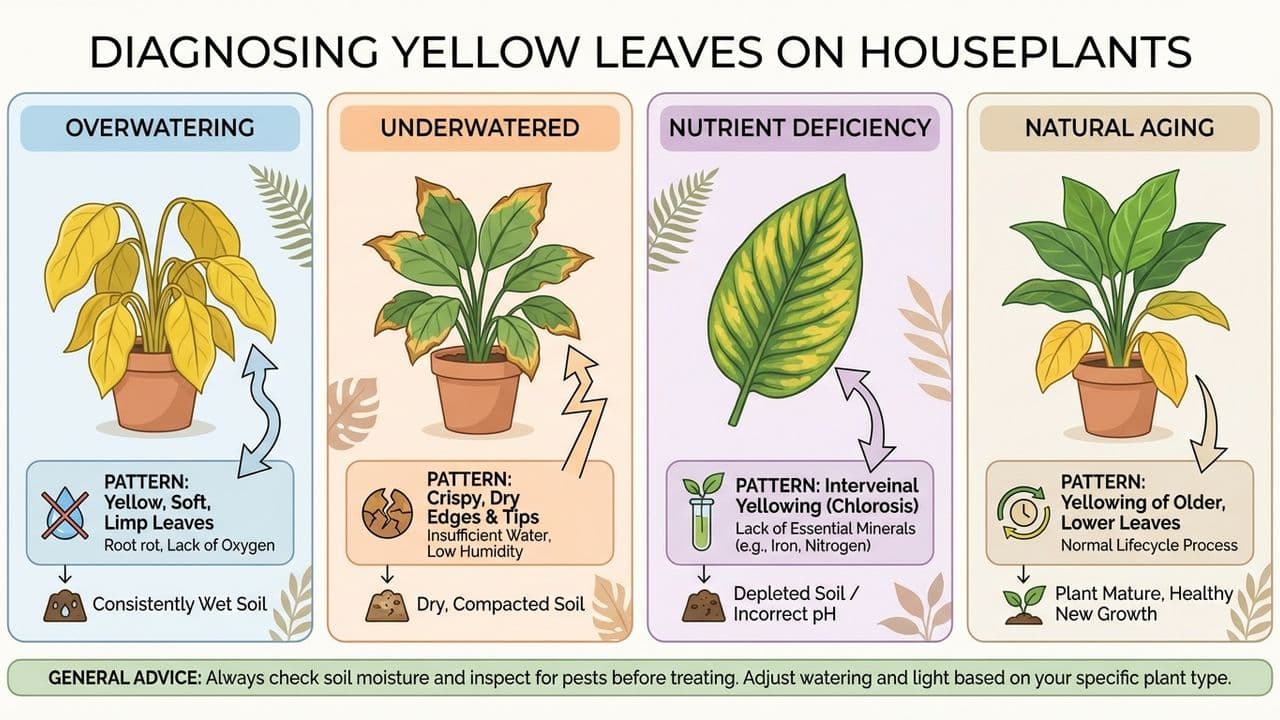
Identify what went wrong. Is the soil bone dry or waterlogged? Are there signs of pests? Has the plant been in very low light or cold drafts? The revival strategy depends on the diagnosis. For yellowing leaves specifically, see our yellow leaves guide.
Reviving an Overwatered Plant
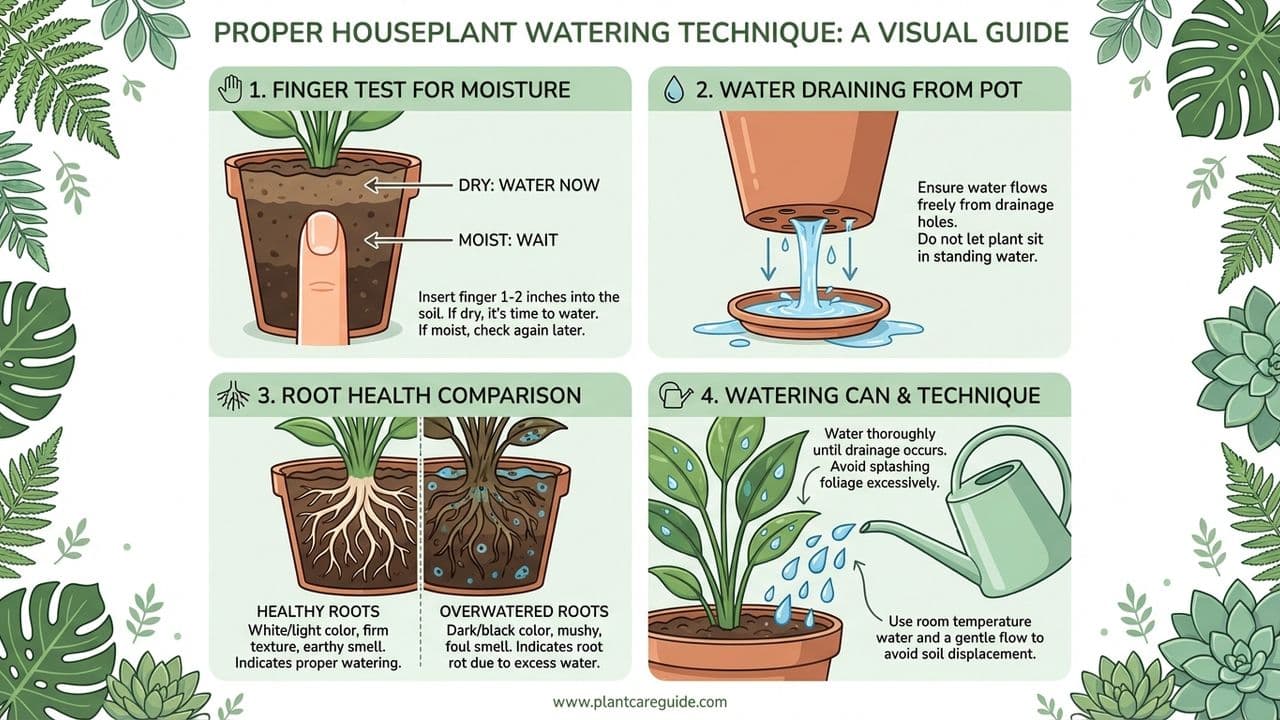
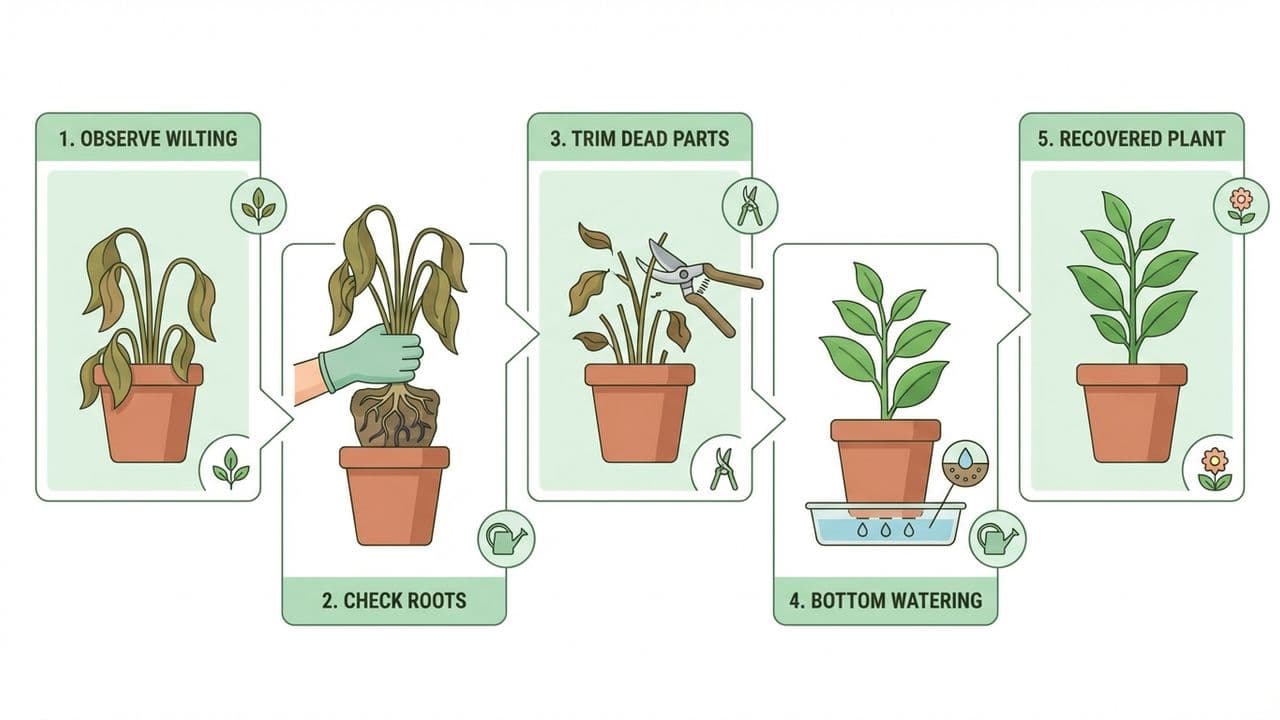
Overwatering is the most common killer. Signs include yellowing leaves, mushy stems, and soil that stays wet for days. If the pot has no drainage holes, that's likely the problem. Remove the plant from its pot immediately and inspect the roots.
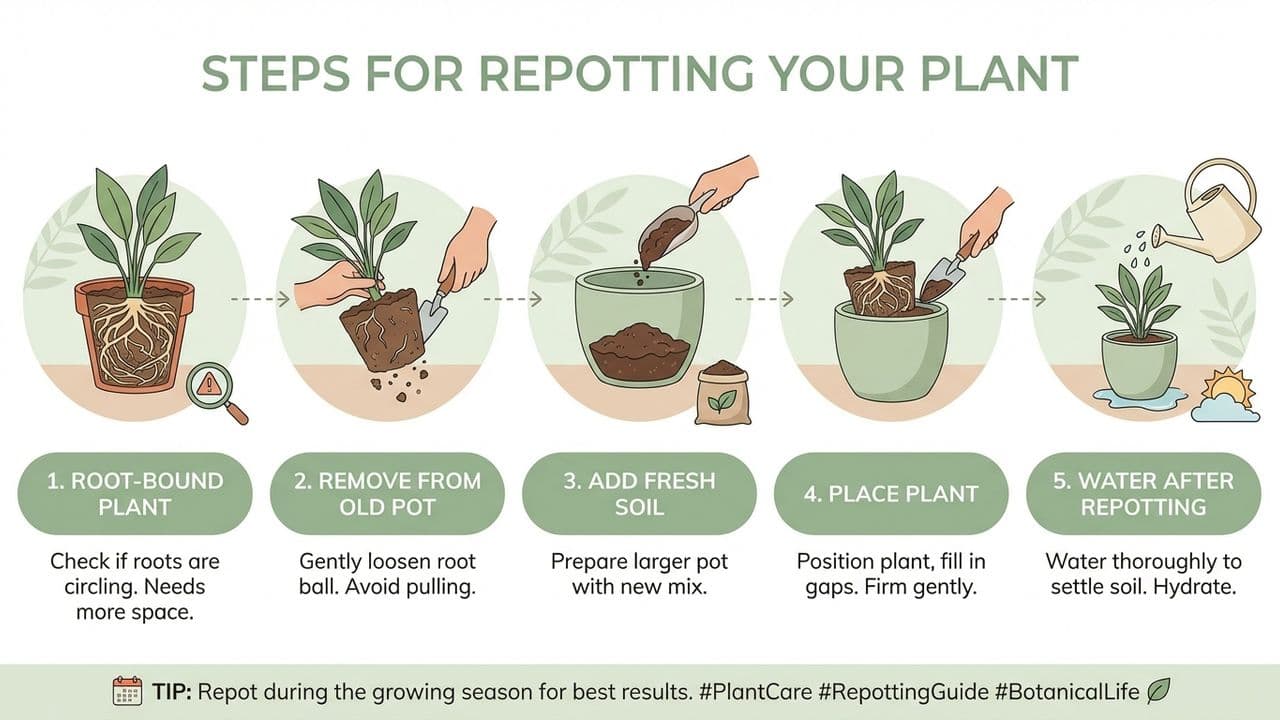
Healthy roots are white or light tan. Rotted roots are brown, black, and mushy with a foul smell. Trim all dead roots with sterile scissors, removing everything that's not firm and white. Let the root ball dry slightly, then repot in fresh, well-draining soil (see our soil guide) in a pot with drainage holes. Wait a few days before watering.
Reviving an Underwatered Plant
Underwatered plants droop dramatically and have crispy, brown leaf edges. The soil may have shrunk away from pot edges and be completely dry throughout. Peace Lily is particularly dramatic, looking near death but bouncing back quickly. Pothos leaves become limp and pale.
Don't just dump water on dry soil—it will run straight through without absorbing. Instead, bottom water by placing the pot in a tray of water for 30-60 minutes, allowing the soil to slowly rehydrate from below. Once saturated, let excess drain and resume proper watering. Most plants perk up within hours to a day.
Reviving a Light-Starved Plant
Plants in too little light become leggy, pale, and may drop leaves. They're alive but barely surviving. Move them gradually to brighter locations—sudden changes can shock already-stressed plants. A Monstera or Fiddle Leaf Fig in a dark corner won't recover until light improves.
For severely etiolated (stretched) plants, consider pruning to encourage bushier growth once the plant is in better light. See our light guide for understanding what your plant needs. Supplement with grow lights in winter or in windowless rooms.
Emergency Pruning
Remove all dead, yellowing, or badly damaged leaves—they're draining energy the plant needs for recovery. Cut stems back to healthy growth if they're dying from the tips. Don't be afraid to prune aggressively; a Pothos cut back to the soil can regrow from the roots.
For plants with mostly dead stems but healthy roots (like ZZ Plant and Snake Plant), cut everything back to soil level. New growth will emerge from underground rhizomes if they're healthy. This drastic approach often works better than trying to save damaged growth.
Creating Recovery Conditions
After initial treatment, place recovering plants in bright, indirect light—not direct sun, which stresses damaged plants further. Maintain consistent moisture without overwatering. High humidity helps; consider a plastic bag tent or grouping plants together. Keep temperatures stable and warm (65-75°F).
Don't fertilize recovering plants—they can't absorb nutrients efficiently when stressed, and fertilizer can burn damaged roots. Wait until you see healthy new growth, then resume feeding at half strength. Focus on basic care: appropriate water, light, and temperature.
Signs of Recovery
New growth is the best sign. Look for unfurling leaves, new stems from the base, or root tips when checking the soil. Remaining leaves may perk up, showing improved color or firmness. Recovery takes time—weeks to months depending on the damage. Peace Lily bounces back quickly; Fiddle Leaf Fig may take months.
If no improvement shows after 4-6 weeks despite corrected care, the plant may be too far gone. But don't give up too quickly—ZZ Plant and Snake Plant can stay dormant for months before suddenly sending up new growth. Keep providing basic care as long as any root structure remains alive.
When to Let Go
If the stem is completely mushy, if all roots are rotted, or if no new growth appears after months of good care, it may be time to accept the loss. But before you discard, check for any viable pieces to propagate—see our propagation guide. Even a few healthy leaves or stem sections can become a new plant.
Use the experience to improve. What went wrong? Adjust your care routine, check your light conditions, or reconsider plant choices for your space. Some plants are simply unsuited to certain environments, and choosing more appropriate species (like Snake Plant or ZZ Plant for low-light spaces) sets you up for success.