This guide contains affiliate links. We may earn a small commission if you purchase through our links, at no extra cost to you.
What happens underground determines what happens above. Healthy roots mean healthy plants—yet most plant owners never see their plant's root system until something goes wrong. Understanding root health is the key to preventing problems before they show up in your leaves.
Healthy vs Unhealthy Roots: A Visual Guide
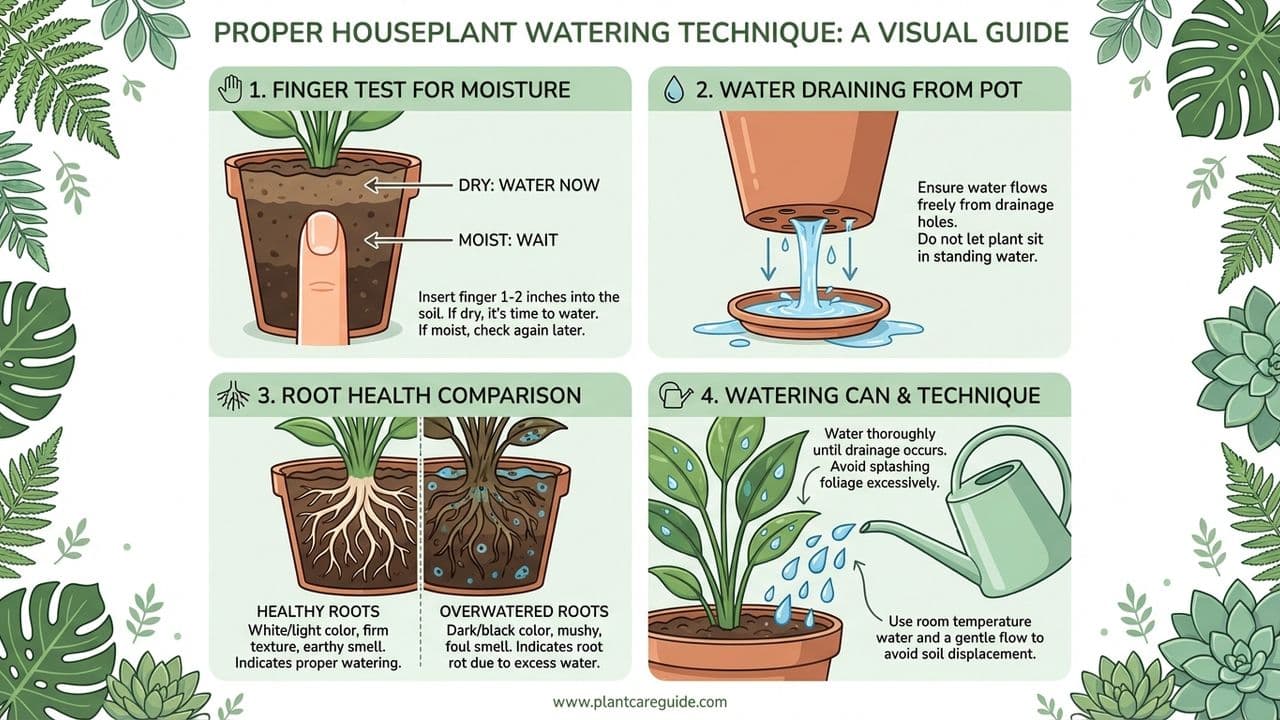
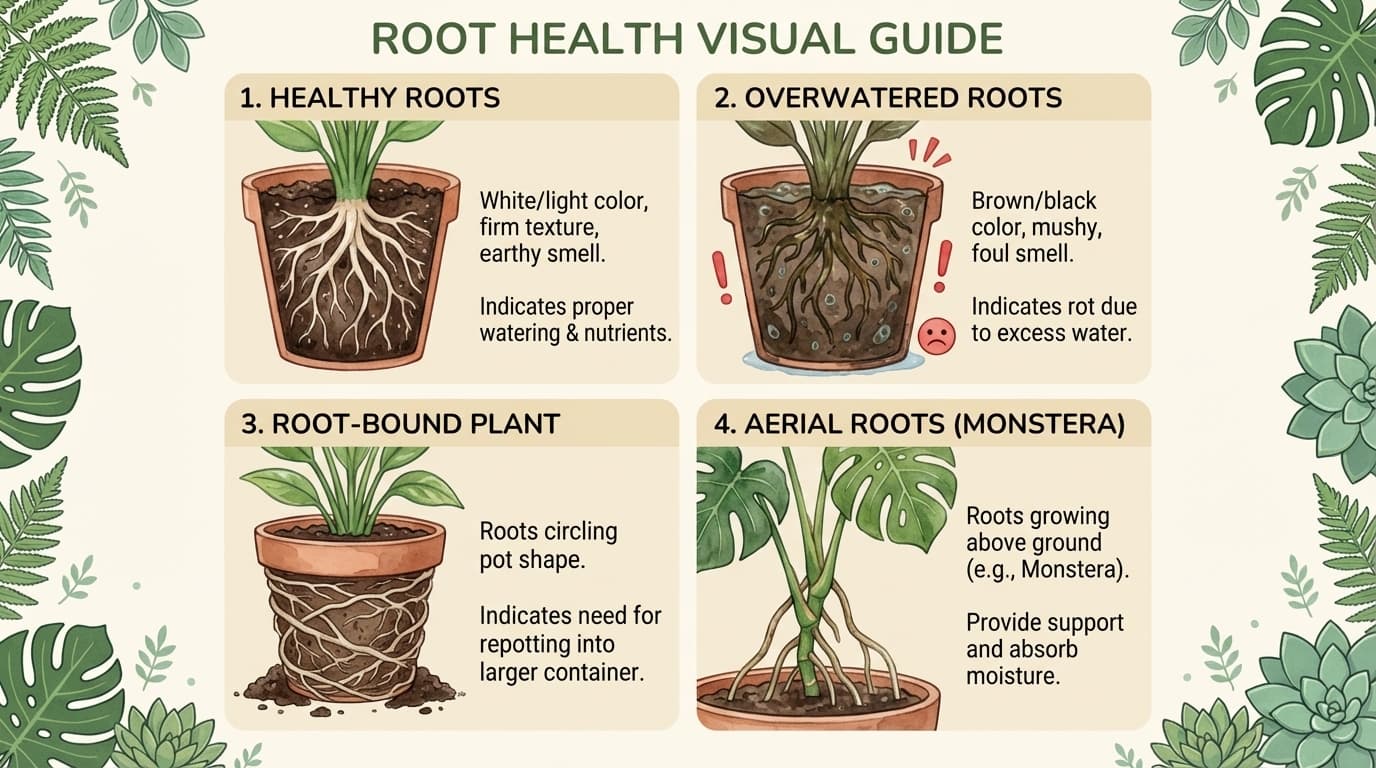
Signs of Healthy Roots
- Color: White or light tan (some plants have naturally darker roots)
- Texture: Firm but flexible—they should spring back when touched
- Smell: Earthy, like fresh soil
- Growth pattern: Evenly distributed throughout the pot
Signs of Unhealthy Roots
- Brown or black color: Often indicates rot from overwatering
- Mushy texture: Roots that fall apart when touched are dead
- Foul smell: Rotting roots smell sour or sulfurous
- Sparse growth: Few roots despite years in the same pot
Root Rot: The Silent Killer
Root rot is the #1 cause of houseplant death. It starts invisibly underground and by the time leaves show symptoms, significant damage has occurred.
Causes:
- Overwatering (the most common culprit)
- Poor drainage—pots without holes trap moisture
- Compacted soil that doesn't aerate roots
- Too-large pots that stay wet too long
Early warning signs:
- Yellow lower leaves (often mistaken for other issues)
- Slow or stunted growth
- Soil that stays wet for weeks
- Musty smell from the soil
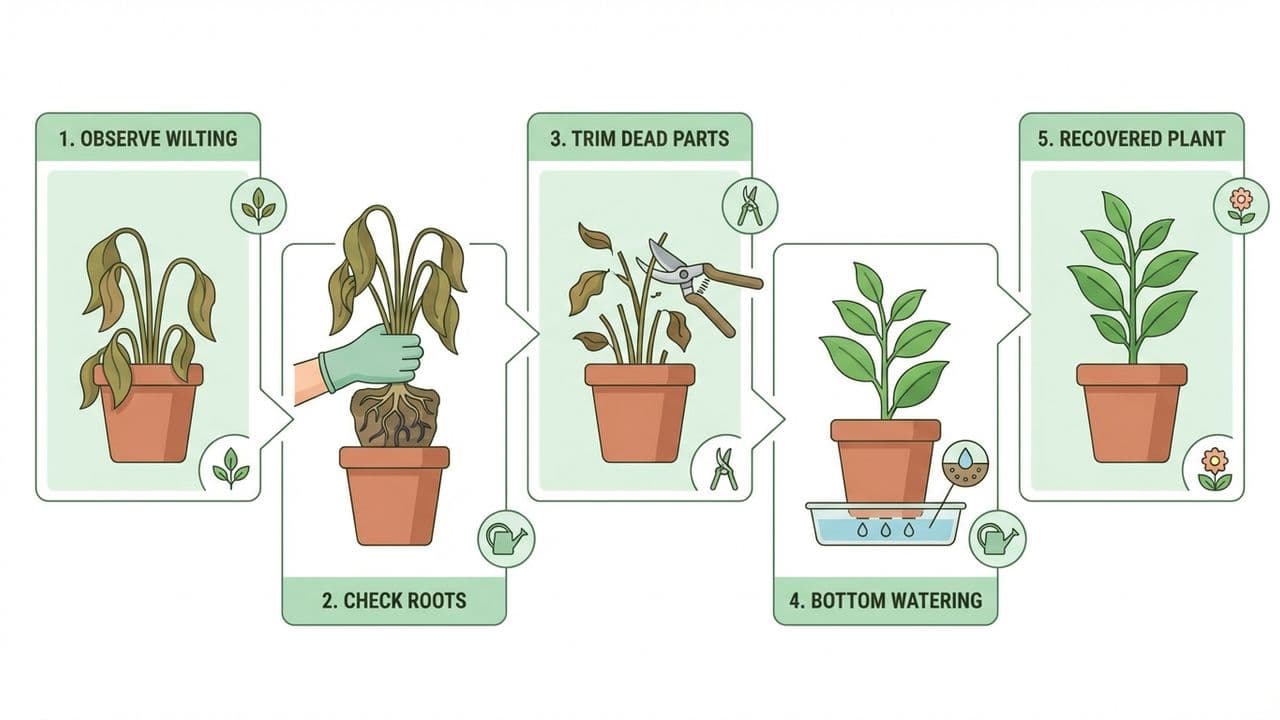
Treatment: If caught early, root rot is treatable. See our plant revival guide for step-by-step rescue instructions.
Is Your Plant Root-Bound?
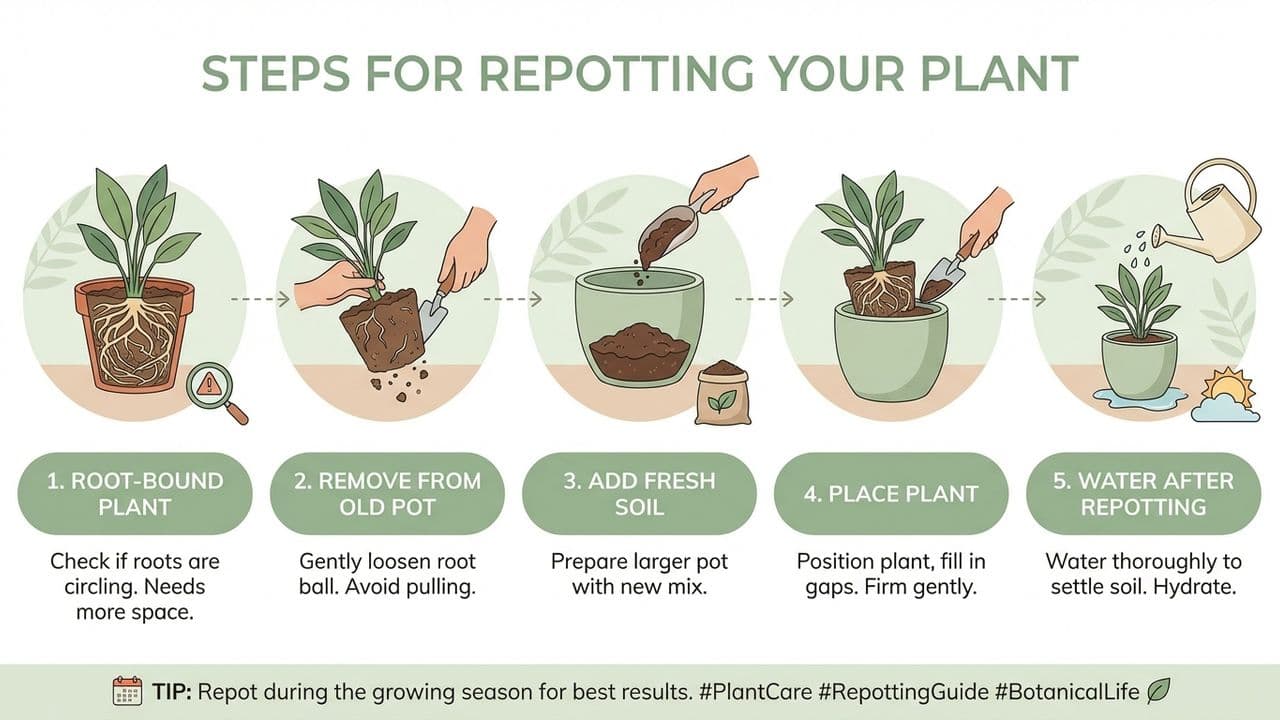
Root-bound plants have outgrown their containers. Roots circle the pot's interior, competing for limited space and resources.
Signs your plant needs repotting:
- Roots growing out of drainage holes
- Roots visible on the soil surface
- Water runs straight through without absorbing
- Stunted growth during growing season
- Plant tips over easily (root-heavy)
- Soil dries out within 1-2 days
What to do: Time to repot. Our repotting guide walks you through the process step by step.
Understanding Aerial Roots
Some plants—especially Monstera, Philodendron, and Pothos—produce aerial roots that grow above the soil line.
What aerial roots mean:
- Normal behavior for climbing plants
- Searching for moisture and support in natural habitat
- Not a sign of problems
What to do with them:
- Leave them alone (completely fine)
- Direct into soil for extra support
- Train them onto a moss pole
- Trim if they become unruly (won't harm the plant)
Water Propagation and Root Development
When propagating in water, roots develop differently than soil roots. Water roots are adapted to aquatic conditions and need careful transition to soil.
Transplanting water roots to soil:
- Wait until roots are 2-3 inches long
- Use well-draining, airy potting mix
- Keep soil consistently moist (not wet) for 2-3 weeks
- Gradually reduce watering as roots adapt
- Expect some transplant stress—it's normal
The Watering-Root Connection
Your watering habits directly impact root health:
| Watering Pattern | Root Effect |
|---|---|
| Consistent, appropriate | Healthy, even root development |
| Overwatering | Root rot, oxygen deprivation |
| Underwatering | Dried, shriveled roots |
| Inconsistent extremes | Stressed, shallow root systems |
Pro tip: Water thoroughly until it drains from the bottom. This encourages roots to grow deep rather than staying near the surface.
Seasonal Root Considerations
Spring/Summer: Active growth period. Roots need adequate moisture and nutrients.
Fall/Winter: Reduced growth. Roots are vulnerable to rot from overwatering. Reduce watering frequency as detailed in our winter care guide.
When to Check Roots
Make root inspection part of your annual plant care:
- Annual check-up: Slide the plant out to assess root health each spring
- Problem diagnosis: When leaves show unexplained symptoms
- Post-purchase: Check nursery plants within a few weeks of bringing them home
Root-Friendly Practices
- Choose pots with drainage holes—always
- Use appropriate soil—most houseplants need well-draining mixes
- Size up gradually—only move to pots 1-2 inches larger
- Water properly—consistent, thorough, with complete drainage
- Don't disturb unnecessarily—only repot when needed
Find quality pots with proper drainage at your local nurseries. Investing in the right container makes root health maintenance much easier.