This guide contains affiliate links. We may earn a small commission if you purchase through our links, at no extra cost to you.
This guide is part of our comprehensive Houseplant Pest Mastery Guide.
You've spotted something wrong with your plant. Is it pests? Which pest? Or is it something else entirely—nutrient deficiency, sunburn, or normal aging?
Fast, accurate identification is critical. The wrong diagnosis wastes time and resources while the actual problem continues. This guide will help you quickly narrow down what you're dealing with and point you toward the right solution.
Table of Contents
- Quick Symptom Flowchart
- Flying Pests
- Crawling Pests (Visible)
- Barely Visible Pests
- Soil Pests
- Damage Pattern Recognition
- What It's NOT: Common Misidentifications
- Identification Tools
Quick Symptom Flowchart
Start here. Follow the path that matches your observations:
"I see flying insects"
Small flies near SOIL surface → Fungus Gnats
- Tiny (2-3mm), mosquito-like
- Weak, erratic flight
- Mostly annoying, not dangerous
- See: Watering guide for prevention
Small WHITE flies near FOLIAGE → Whiteflies
- Rise in clouds when disturbed
- Moth-like appearance
- Check leaf undersides for nymphs
- See: Whiteflies guide
Tiny insects on new growth/flowers → Thrips
- Slender, barely visible (1-2mm)
- Jump when disturbed
- Look for silver damage, black feces
- See: Thrips guide
"I see crawling insects or bumps"
White cottony masses → Mealybugs
- Found in crevices, leaf joints
- Slow-moving when disturbed
- Leave sticky residue
Brown bumps on stems/veins → Scale
- Don't move when touched
- Hard or waxy covering
- Often along stems and leaf veins
Small clusters on new growth → Aphids
- Pear-shaped, soft-bodied
- Green, black, brown, or red
- Visible without magnification
"I see damage but no insects"
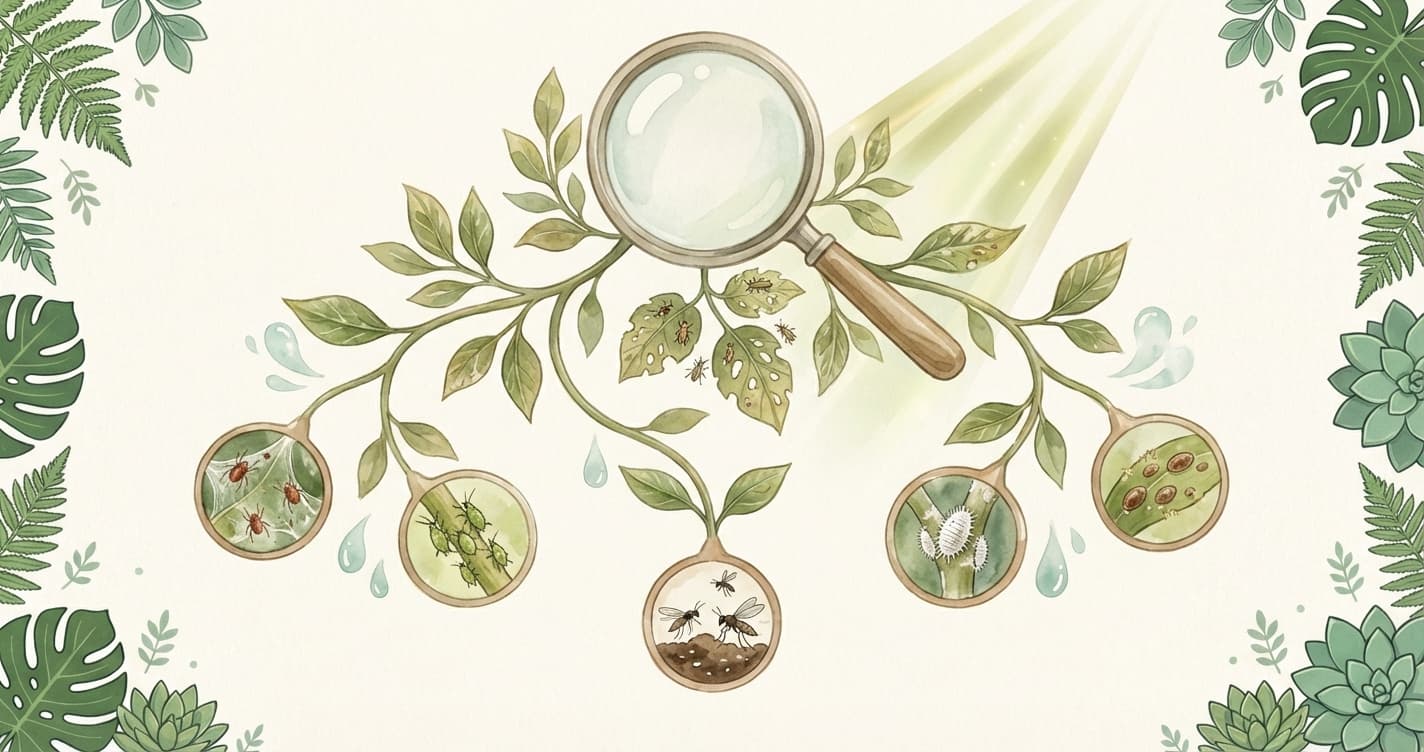
Stippling + fine webbing → Spider Mites
- Use magnifying glass—they're tiny
- Webbing between leaves/stems
- Worse in dry conditions
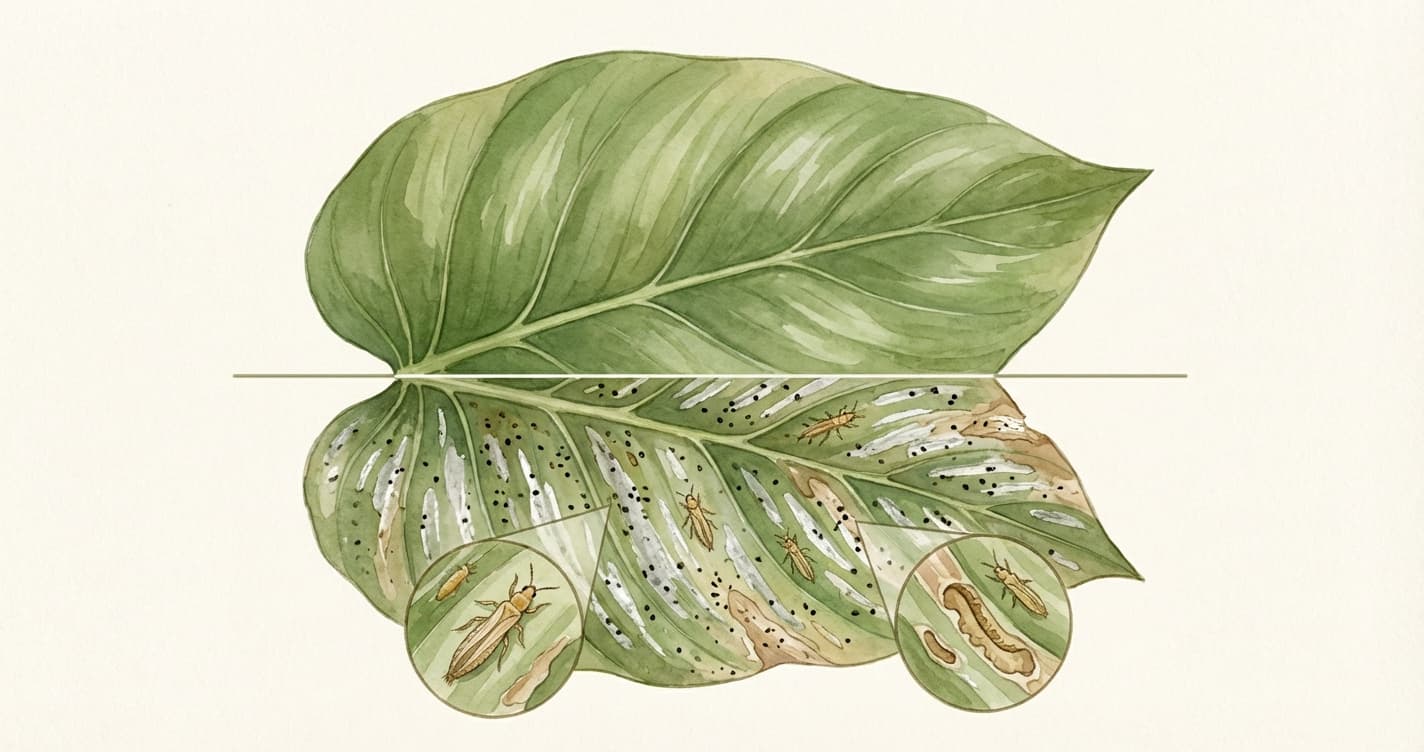
Silver streaks + black dots → Thrips
- Damage appears before insects noticed
- Black feces specks on leaves
- See: Thrips guide
Yellow leaves only → Probably NOT pests
- Check watering, light, nutrients
- See: Yellow leaves guide
Flying Pests
Fungus Gnats
Appearance: Small (2-3mm) dark flies resembling tiny mosquitoes. Weak fliers with a slow, erratic flight pattern. Often seen hovering just above soil surface.
Where to look: Near soil surface, especially after watering. May fly toward light sources.
Confirmation: Yellow sticky traps placed near soil catch many adults. Gently disturbing soil surface causes adults to take flight.
Larvae: White, translucent with black heads. Live in top inch of moist soil. Dig gently in soil to spot them.
Damage level: Mostly a nuisance. Heavy infestations can damage roots of seedlings and sensitive plants.
Whiteflies
Appearance: Small (1-2mm) white, moth-like insects. Hold wings roof-like over body when at rest. Weak fliers.
Where to look: Leaf undersides, especially on lower leaves and shaded areas.
Confirmation: Gently shake or brush plant—whiteflies rise in a cloud, flutter, then resettle. This behavior is unique to whiteflies.
Nymphs: Flat, oval, translucent to yellowish-green. Attached to leaf undersides. Easily mistaken for scale.
Damage signs: Yellowing leaves, sticky honeydew, sooty mold on lower leaves.
See our complete whiteflies guide.
Adult Thrips
Appearance: Slender, elongated insects (1-2mm). Tan, brown, or black depending on species. Fast-moving—will jump when disturbed.
Where to look: Flowers first (they love pollen). New growth and tender leaves. Along leaf veins.
Confirmation: Hold white paper under foliage and tap sharply. Thrips fall onto paper and appear as tiny moving lines. Blue sticky traps catch more thrips than yellow.
Damage signs: Silver streaking on leaves, black feces dots, distorted new growth.
See our complete thrips guide.
Crawling Pests (Visible)
These pests are visible to the naked eye without magnification.
Mealybugs
Appearance: White, cottony masses in leaf joints, stem crevices, and leaf undersides. Individual mealybugs are oval, segmented, and covered in waxy white filaments. Size varies (1-5mm).
Where to look:
- Leaf axils (where leaf meets stem)
- Under leaves along veins
- At growing tips
- On roots (root mealybugs)
Confirmation: Touch the cottony mass—mealybugs are slow-moving but will crawl when disturbed. Sticky honeydew nearby confirms their presence.
Similar to: Sometimes confused with woolly aphids or fungal growth. Mealybugs are distinctly segmented under the wax.
Scale Insects
Appearance: Brown, tan, or gray bumps attached to stems and leaf veins. Hard scale has a shell-like covering; soft scale is more waxy. Size: 2-6mm.
Where to look:
- Along stems, especially woody portions
- On leaf veins, particularly undersides
- Branch crotches
Confirmation: Try to scrape with fingernail. Scale lifts off (leaving a wet spot from the insect underneath). If it's actually part of the plant, it won't scrape off cleanly.
Similar to: Sometimes mistaken for bark or leaf features. Scale always appears as discrete bumps, often in clusters.
Aphids
Appearance: Small (1-3mm), pear-shaped, soft-bodied insects. Color varies: green, black, brown, red, yellow, or white depending on species. Some have wings.
Where to look:
- Clustered on new growth
- Leaf undersides
- Around flower buds
- On stems near growing tips
Confirmation: Visible clustering without magnification. Sticky honeydew on leaves below. May see cast skins (white, papery) as they molt.
Similar to: Thrips are more elongated and move faster. Aphids are rounded and cluster densely.
Barely Visible Pests
These pests require magnification or indirect observation methods to identify.
Spider Mites
Appearance: Extremely small (< 0.5mm), round to oval. Color varies: red, brown, green, or yellow. Eight legs (they're arachnids, not insects).
Where to look:
- Leaf undersides, especially along midrib
- In webbing between leaves and stems
- On lower, older leaves first
Confirmation methods:
- Webbing: Fine, silky webbing between leaves or stems. Hold plant up to light to see it better.
- Tap test: Hold white paper under leaves and tap. Tiny dots that move indicate mites.
- Magnifying loupe: 10x or higher reveals oval mites with eight legs.
Damage pattern: Stippling (tiny dots) that creates a dusty or bronzed appearance. Yellowing. Fine webbing in advanced infestations.
Thrips Nymphs
Appearance: Pale yellow to white, slender, wingless. Smaller than adults (< 1mm).
Where to look: Same locations as adults—new growth, flowers, along leaf veins.
Confirmation: Look for silvery damage and black feces first. Use magnification to spot nymphs in damaged areas.
Soil Pests
Pests that live in or on the growing medium.
Fungus Gnat Larvae
Appearance: White or translucent with shiny black heads. Legless, worm-like. 3-5mm long.
Where to look: Top 1-2 inches of moist soil. Gently dig or look at soil surface.
Confirmation: More visible when soil is moist. Adult gnats flying nearby confirm their presence.
Root Aphids
Appearance: White, gray, or brown aphids clustered on roots. Some have waxy coating. Slow-moving.
Where to look: On roots during repotting. At drainage holes. Sometimes visible at soil surface near stem base.
Signs above soil: Unexplained plant decline. Yellowing leaves. Wilting despite adequate water. Ants (which farm root aphids for honeydew).
Springtails
Appearance: Tiny (1-2mm), white or gray, jump when disturbed (using tail-like appendage).
Where to look: Soil surface, especially after watering.
Important: Springtails are NOT harmful. They feed on decaying organic matter and fungi. Many people treat them unnecessarily. If your plant is healthy and you see tiny jumping insects on soil, it's probably springtails—leave them alone.
Damage Pattern Recognition
When you can't find insects, damage patterns help identify the culprit.
| Damage Pattern | Most Likely Cause |
|---|---|
| Stippling (tiny dots) + bronzing | Spider mites |
| Silvery streaks + black dots | Thrips |
| Yellow mottling + honeydew | Whiteflies, aphids |
| Cottony deposits + sticky residue | Mealybugs |
| Brown bumps + honeydew | Scale |
| Random holes in leaves | Caterpillars, slugs (rare indoors) |
| Tunnels within leaves | Leaf miners (rare on houseplants) |
| Declining plant + root damage | Root aphids, severe fungus gnats |
What It's NOT: Common Misidentifications
Many plant problems look like pest damage but have other causes.
Yellowing Leaves
Pest causes: Heavy infestations of most pests can cause yellowing from sustained feeding.
Non-pest causes (more common):
- Overwatering (most frequent)
- Underwatering
- Natural aging of lower leaves
- Nutrient deficiency
- Low light
How to tell: Pest-related yellowing usually accompanies other signs—honeydew, visible insects, stippling. If leaves are yellowing without these signs, investigate watering and light first.
Brown Leaf Tips and Edges
Pest causes: Thrips cause silvery-brown marks. Heavy mite infestations cause browning.
Non-pest causes (more common):
- Low humidity
- Water quality (fluoride, salt buildup)
- Underwatering
- Fertilizer burn
- Sun scorch
How to tell: Pest damage is irregular and accompanies other pest signs. Humidity/water issues cause uniform browning at all leaf edges.
Spots on Leaves
Pest causes: Mite or thrips feeding creates spotted patterns.
Non-pest causes:
- Fungal or bacterial disease
- Sunburn (irregular bleached spots)
- Cold damage
- Chemical damage from treatments
How to tell: Pest damage shows stippling pattern. Disease spots often have distinct margins, sometimes with halos. Sunburn appears on sun-facing sides only.
Wilting
Pest causes: Root pests (root aphids, severe fungus gnats) or overwhelming foliar pest infestation.
Non-pest causes (more common):
- Underwatering
- Root rot from overwatering
- Temperature stress
- Transplant shock
How to tell: Check roots. Healthy white roots suggest above-ground issues. Brown mushy roots indicate rot. White clusters on roots indicate root pests.
Sticky Residue
Pest causes: Honeydew from aphids, scale, mealybugs, or whiteflies.
Non-pest cause: Some plants naturally exude substances (extrafloral nectaries). If no pests are visible after careful inspection, the plant may produce this itself.
White Deposits
Pest cause: Mealybug cottony masses.
Non-pest causes:
- Mineral deposits from hard water
- Fertilizer salts
- White mold on soil (usually harmless)
How to tell: Mealybug masses are distinctly cottony and found in crevices. Mineral deposits are crusty and appear on pot edges or soil surface.
Identification Tools
These tools make pest identification faster and more accurate:
Essential
Magnifying loupe (10-30x): A $10 investment that pays off constantly. Essential for spotting spider mites, thrips, and eggs.
White paper: For tap tests. Pests show clearly against white background.
Good lighting: Bright light reveals webbing, tiny insects, and subtle damage.
Helpful
Phone macro lens: Attach to phone camera for close-up photos. Helpful for identification and documenting changes.
Sticky traps: Yellow for most flying pests, blue for thrips. Captured pests are easier to identify than moving ones.
When You're Still Unsure
If you've worked through this guide and remain uncertain:
- Take photos: Close-ups of damage and any visible insects
- Isolate the plant: Better safe than sorry while you investigate
- Monitor with sticky traps: They may catch what you can't see
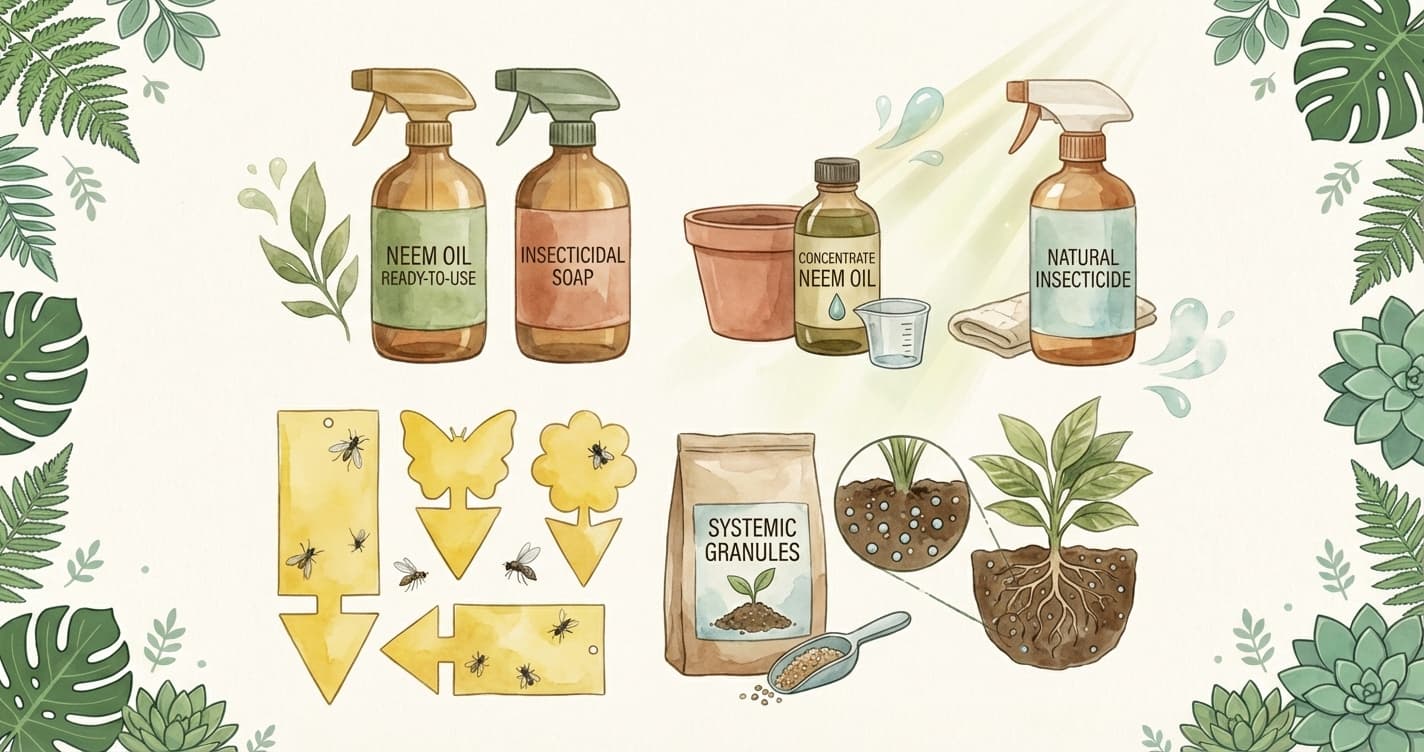
- Consider a broad treatment: Insecticidal soap is effective against most common pests and won't harm the plant
- Check again in a few days: Some pests become more visible as populations grow
For treatment options once you've identified the pest, see our pest treatment comparison guide.
For the complete pest management framework, return to our Houseplant Pest Mastery Guide.