The Pest Season Survival Guide (Your Plants Need This Now)
Spring means new growth — and new pests. Here's how to identify the 4 most common spring invaders, stop them fast, and protect your collection before things get out of hand.
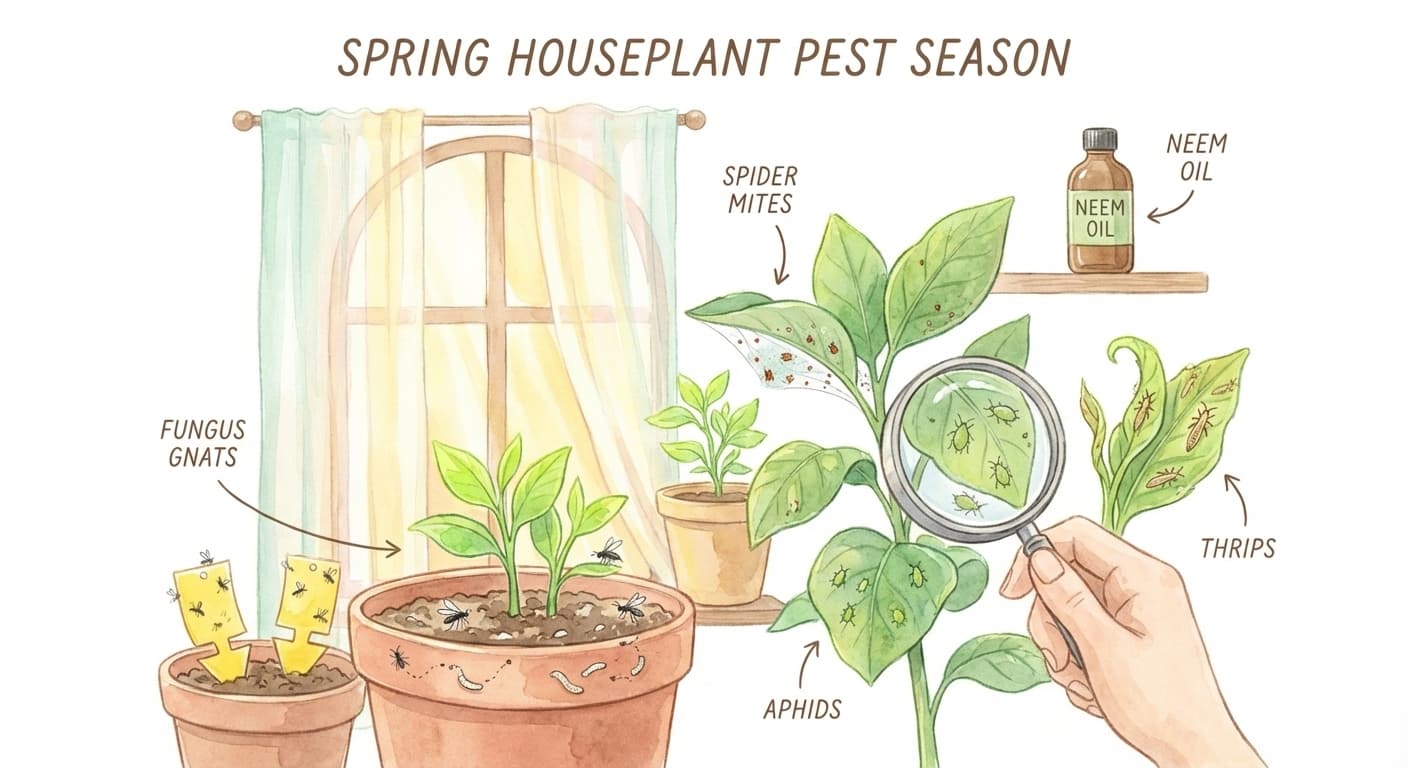
The Pest Season Survival Guide
You opened a window last week, didn't you? Maybe brought home a new plant from the garden center? Or just noticed your collection pushing out gorgeous new spring growth and thought, finally, the easy season.
Here's the thing nobody warns you about: everything that makes spring great for your plants makes it great for pests too. Warmer temps, fresh sap flowing through tender new growth, more moisture in the soil from increased watering — it's a buffet, and the bugs know it.
The good news? Ten minutes of inspection this weekend can save you months of frustration. Here are the four pests most likely to crash your spring growing party, and exactly what to do about each one.
1. Fungus Gnats — The Annoying Ones
Those tiny flies hovering around your soil every time you water? Fungus gnats. They're the most common spring pest for a simple reason: you started watering more, and they breed in moist topsoil.
Here's what most people get wrong — the adults are basically harmless. They don't eat your plants. The real damage happens underground, where their larvae munch on roots and root hairs. A single female lays up to 200 eggs in moist soil, and the full lifecycle completes in just 3 weeks. That's how a few flies become a cloud.
The fix:
- Let soil dry out between waterings — at least the top 1-2 inches. Bottom watering helps keep the topsoil dry where eggs are laid.
- Yellow sticky traps near your pots catch adults and break the reproductive cycle. Houseplant sticky stakes are designed to sit right in the pot.
- The secret weapon: Mosquito Bits. This is BTI (a natural bacteria) marketed for mosquitoes, but fungus gnats are close relatives of mosquitoes — same family — so it works beautifully. Soak 4 tablespoons in a gallon of water for 30 minutes, strain, and water your plants with it weekly for 3 weeks. Done.
Get the full fungus gnat battle plan →
2. Aphids — The Fast Ones
Aphids are nature's most absurdly efficient reproducers. They don't need to mate — females give live birth to clones, and here's the wild part: those babies are born already pregnant with the next generation. It's called telescoping generations. One aphid becomes 100 in a week.
They show up on new spring growth — the tender stems and unfurling leaves where sap flows fastest. Look for clusters of tiny pear-shaped bugs (green, black, or white) on leaf undersides and growing tips. The first sign is often sticky residue (honeydew) on leaves or the surface below the plant.
The fix:
- Blast with water — put the plant in the shower and spray the undersides of leaves. Simple, surprisingly effective.
- Insecticidal soap dissolves their waxy coating on contact. Safer Brand Insect Killing Soap is the go-to.
- Neem oil spray for ongoing prevention — the azadirachtin disrupts their hormones and stops reproduction.
- Spot an ant highway heading to a plant? The ants might be farming aphids — they carry them to plants and protect them in exchange for honeydew. Dealing with the ants helps deal with the aphids.
Identify what's on your plant fast →
3. Spider Mites — The Sneaky Ones
Spider mites are the reason experienced plant people develop a twitch when they see dusty-looking leaves. These aren't insects — they're arachnids, tiny eight-legged relatives of spiders and ticks. That matters because many standard insecticides don't work on them.
They thrive in warm, dry conditions. Your heating system may be off, but indoor humidity takes weeks to recover from winter. That lingering dryness is exactly what spider mites love — low humidity lets plant sap evaporate faster at their feeding sites, so they can feed more efficiently and reproduce like crazy. A female lays up to 300 eggs, and populations can double every two weeks.
The early warning signs (before you see webs):
- Tiny yellow or white flecks (stippling) on upper leaf surfaces
- Leaves looking dull, dusty, or slightly bronzed
- The paper test: hold white paper under a suspect leaf and tap it. See pepper-like specks that move? That's mites. By the time you see webbing, the population is already severe.
The fix:
- Shower the plant — strong water stream on leaf undersides, repeat every few days
- Boost humidity above 60% around susceptible plants — mist, pebble trays, or group plants together. Spider mites genuinely struggle in humid conditions.
- Neem oil or insecticidal soap applied to leaf undersides every 5-7 days for at least 3 rounds
Compare every treatment option side-by-side →
4. Thrips — The Invisible Ones
Thrips are tiny (1-2mm), fast, and they do something uniquely diabolical: they lay eggs inside your plant's tissue. The female uses a saw-like appendage to cut into leaves and embed eggs within the cells. That means contact sprays can't reach the eggs — you need repeat treatments over multiple weeks to catch each generation as it hatches.
They love tender new growth and leave behind silver or bronze streaks on leaves with tiny black dots (frass). One of the most common — and most overlooked — ways thrips enter your home? Cut flowers. That grocery store bouquet on your kitchen counter? It's a Trojan horse sitting 3 feet from your houseplants.
The fix:
- Keep cut flowers away from houseplants — different room if possible
- Blue sticky traps — thrips are actually more attracted to blue than yellow (though yellow works too)
- Spinosad (Captain Jack's Dead Bug Brew) is extremely effective against thrips and organic-approved
- For persistent infestations, systemic granules absorbed through roots provide 8 weeks of protection
Deep dive on thrips treatment →
The 30-Second Spring Inspection Habit
Pests win when you don't notice them. Build this into your weekly watering routine and you'll catch problems before they spread:
- Flip three leaves — check the undersides, especially new growth
- Check the nodes — where leaves meet stems is a favorite hiding spot
- Glance at the soil — tiny flies when you water = fungus gnats
- Look for sticky residue — on leaves or surfaces near the plant
- Do the paper test on anything that looks dusty or dull
Takes 30 seconds per plant. Saves weeks of treatment.
Build a complete quarantine protocol for new plants →
The Spring Shopping Warning
April is peak plant shopping season. Garden centers are overflowing with new stock shipped from greenhouses across the country, and the sheer volume means pest screening isn't always thorough. This is the riskiest time of year to introduce pests to your collection.
Quarantine every new plant for 3-4 weeks minimum. Separate room, not just a different shelf. Inspect weekly. A preventive neem oil spray during quarantine is cheap insurance.
Your future self — and your existing plants — will thank you.
Plant of the Week: ZZ Plant (Zamioculcas zamiifolia)
After talking about pests all issue, let's end with some good news. The ZZ plant is one of the most pest-resistant houseplants you can own.
Its thick, waxy leaves are naturally unappealing to most sap-sucking insects — the coating makes it harder for pests to feed. ZZ plants also tolerate lower humidity (no spider mite problems) and prefer drier soil (no fungus gnat breeding ground). They're essentially the opposite of everything pests look for.
Why we love them:
- Tolerates low light, irregular watering, and general neglect
- Thick rhizomes store water underground, so they survive drought conditions that would kill pests' favorite host plants
- New spring growth emerges as bright lime-green shoots that darken over time — one of the most satisfying things to watch
- Virtually bulletproof in office and apartment environments
One caveat: ZZ plants are toxic to cats and dogs if ingested (causes mouth irritation and GI upset), so keep them out of reach of curious pets.
Check if your plants are pet-safe → | Low-maintenance care systems →
Your Pest Season Action List
This week:
- Do the 30-second inspection on every plant
- Set up yellow sticky traps near your most-watered plants
- Quarantine any plants you bought in the last month
- Grab a bottle of neem oil if you don't have one
That's it. Four steps, and you're ahead of 90% of plant owners this spring.
Spotted something suspicious? Reply to this email with a photo — we'll help you ID it and suggest treatment. We read every reply.
Happy (pest-free) growing, The Better Indoor Houseplants Team
You're receiving this because you subscribed at betterindoorhouseplants.com. Browse all plant care guides →
More Newsletters
Your Plants Are Waking Up — Here's What They Need Right Now
It's the first day of spring and your houseplants can feel it. Here's your 4-step spring care checklist: when to fertilize, how to repot, light adjustments, and pest prevention.
Issue #3The Winter Humidity Crisis (And How to Fix It)
Your heating system is slowly killing your tropical plants. Here's how to spot humidity stress and 5 ways to save your Calathea, ferns, and other humidity-lovers.
Issue #25 Houseplant Resolutions That Actually Stick
Skip the vague 'take better care of my plants' resolution. Here are five specific, actionable habits that will make a real difference for your indoor jungle in 2026.
Issue #1Welcome to Better Indoor Houseplants
Our first newsletter! Learn what to expect, get a quick winter care tip, and discover our favorite low-light plants for dark winter days.