Your Plants Are Waking Up — Here's What They Need Right Now
It's the first day of spring and your houseplants can feel it. Here's your 4-step spring care checklist: when to fertilize, how to repot, light adjustments, and pest prevention.
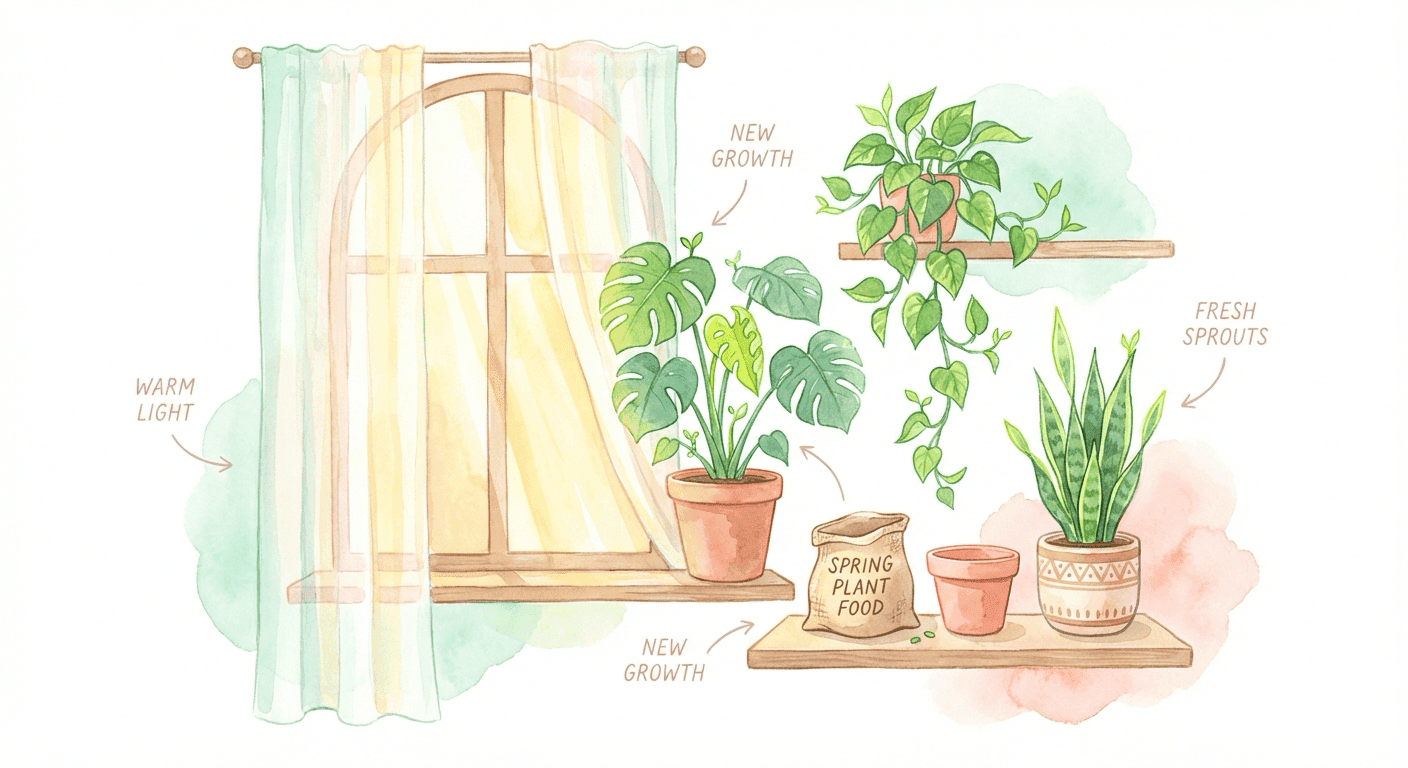
Your Plants Are Waking Up — Here's What They Need Right Now
Happy first day of spring! And here's a fun fact to kick things off: your plants already know it's spring. They have internal circadian rhythms — biological clocks that track day length — and they've been quietly sensing the extra minutes of sunlight creeping in since February.
After months of near-dormancy, your houseplants are shifting into growth mode. New leaves are forming. Roots are stretching. And your plants are hungry.
Here's your spring wake-up checklist — four things to do this week that'll set your plants up for their best growing season yet.
1. The Fertilizer Wake-Up Call
Your plants haven't eaten since fall (or shouldn't have — winter fertilizing is a common mistake that leads to leggy, weak growth). Now it's time to feed them again.
But here's the catch: start at half strength.
After months of dormancy, roots are tender. Hitting them with full-strength fertilizer is like eating a five-course meal after a three-day fast — too much, too fast. A balanced liquid fertilizer (look for a 10-10-10 or similar ratio) diluted to half the label's recommendation every 2-4 weeks is the sweet spot.
A balanced indoor plant fertilizer is the easiest way to get started. Liquid formulas mix right into your watering routine — no extra steps.
Get the full watering + feeding breakdown →
2. The Repotting Window Is Open (But Not for Long)
Early spring is the golden window for repotting. Your plant is just waking up, roots are about to explode with growth, and a fresh pot with new soil gives them the best runway for the season.
Signs it's time to repot:
- Roots circling the inside of the pot or poking through drainage holes
- Soil dries out in less than two days after watering
- The plant looks top-heavy or is literally pushing itself out of the pot
- You haven't repotted in 2+ years
The one-size-up rule: Always go just one pot size larger (1-2 inches in diameter). A pot that's too big holds too much moisture around the roots and — you guessed it — leads to root rot. And here's a sobering stat: overwatering accounts for roughly 45% of houseplant deaths. Fresh, well-draining soil in a properly sized pot is your best defense.
One more thing: wait 2-4 weeks after repotting before you fertilize. Freshly disturbed roots are vulnerable to fertilizer burn. Let them settle in first.
Pick up a set of nursery pots with drainage holes and a bag of quality indoor potting mix and you're ready to go.
Choose the right soil for your plant → | Healthy roots vs. root rot: how to tell →
3. Light Check: Your Windows Changed
Here's something most people miss: the sun doesn't hit your windows the same way it did three months ago. The sun angle has shifted dramatically since winter, which means spots that were safely dim might now be getting direct afternoon rays.
This matters because plants can sunburn. Especially ones that have been living in low winter light. If you're moving plants to brighter spots (and you should — more light means more growth), do it gradually. Shift them a foot or two closer to the window each week over 1-2 weeks.
While you're at it, wipe down those leaves. Months of winter dust have been quietly coating your plants, and that layer blocks a surprising amount of light. A quick pass with a damp cloth lets your plants photosynthesize more efficiently — think of it as cleaning their solar panels.
Here's a bonus: studies show indoor plants can boost focus and productivity by up to 15%. So that newly cleaned, well-lit Monstera on your desk? It's literally helping you work better.
Seeing yellow leaves after moving plants? Here's why →
4. Spring Pest Watch
Your plants aren't the only things waking up. Pests have been quietly overwintering in your soil and on your windowsills, and warming temperatures are their alarm clock.
This week, do a quick inspection:
- Check the undersides of leaves (especially new growth)
- Look at the nodes where leaves meet stems
- Inspect the soil surface for tiny white flies when you water
A preventive spray of neem oil now — before you see any bugs — is the single best thing you can do. It's cheap, organic, and it makes your plants taste terrible to pests. Think of it as bug repellent for your plant collection.
Get the complete pest prevention playbook →
Quick Tip
Run your finger two inches into the soil. Dry? Water. Damp? Wait another day or two. This 5-second test is the most reliable watering method on the planet, and mastering it prevents the #1 killer of houseplants.
Why overwatering kills and how to stop →
Plant of the Week: Monstera Deliciosa
If there's one plant that celebrates spring harder than any other, it's the Monstera deliciosa. This thing goes absolutely wild when the days get longer — in ideal conditions, it can push out a new leaf every one to two weeks during spring and summer.
A few Monstera facts you might not know:
- Those iconic splits and holes (called fenestrations) only develop on mature leaves. More light = more splits. A Monstera in a dark corner might never develop them.
- Indoors, Monstera can grow 10-15 feet tall with proper support. They're climbers in the wild, scaling trees in Central American rainforests.
- Those aerial roots dangling from the stem? They're not just for show — they absorb moisture and nutrients from the air, which is part of why Monsteras grow so fast.
Spring care for your Monstera:
- Repot now if it's root-bound (check those drainage holes)
- Start biweekly feeding with a balanced fertilizer
- Give it a moss pole to climb — supported Monsteras produce bigger leaves with more fenestrations
Master root health for faster growth →
Spring Is Your Season
Here's the truth about spring: it's the most forgiving season for plant parents. Your plants want to grow right now. They're primed for it. You don't need to be perfect — just give them the basics (food, space, light, and a quick bug check) and get out of their way.
We want to see your spring growth! Reply to this email with a photo of your plants' new leaves. We'll feature the best ones in a future issue.
Happy growing, The Better Indoor Houseplants Team
You're receiving this because you subscribed at betterindoorhouseplants.com. Browse all plant care guides →
More Newsletters
The Pest Season Survival Guide (Your Plants Need This Now)
Spring means new growth — and new pests. Here's how to identify the 4 most common spring invaders, stop them fast, and protect your collection before things get out of hand.
Issue #3The Winter Humidity Crisis (And How to Fix It)
Your heating system is slowly killing your tropical plants. Here's how to spot humidity stress and 5 ways to save your Calathea, ferns, and other humidity-lovers.
Issue #25 Houseplant Resolutions That Actually Stick
Skip the vague 'take better care of my plants' resolution. Here are five specific, actionable habits that will make a real difference for your indoor jungle in 2026.
Issue #1Welcome to Better Indoor Houseplants
Our first newsletter! Learn what to expect, get a quick winter care tip, and discover our favorite low-light plants for dark winter days.