This guide contains affiliate links. We may earn a small commission if you purchase through our links, at no extra cost to you.
This guide is part of our comprehensive Houseplant Pest Mastery Guide.
The silver streaks appeared first on your Monstera's newest leaf. Then the black specks. Then a subtle distortion on emerging growth that didn't look quite right. By the time you Googled "silver marks on houseplant leaves" and landed on the answer—thrips—the infestation had already spread to three other plants.
Thrips are among the most frustrating houseplant pests. They're nearly invisible, their damage mimics other problems, and they resist many common treatments. But they're not invincible. Understanding their biology and using the right strategies will help you eliminate them—and prevent future infestations.
Table of Contents
- What Are Thrips?
- Identifying Thrips
- Recognizing Thrips Damage
- The Thrips Life Cycle
- Why Thrips Are Hard to Control
- Treatment Strategy
- Prevention
- Thrips on Specific Plants
- Frequently Asked Questions
What Are Thrips?
Thrips (order Thysanoptera) are tiny insects that feed by puncturing plant cells and consuming the contents. Unlike aphids or mealybugs that suck sap, thrips essentially scrape and rasp plant tissue, leaving characteristic damage patterns.
Over 6,000 thrips species exist worldwide, but a handful cause most houseplant problems:
Western flower thrips (Frankliniella occidentalis): The most common indoor pest thrips. Attacks a wide range of plants, especially flowering ones. Adults are tan to yellowish-brown.
Onion thrips (Thrips tabaci): Brownish-yellow, targets many ornamental plants. Common in greenhouses and can enter homes.
Greenhouse thrips (Heliothrips haemorrhoidalis): Dark brown to black with lighter legs. Prefers shade and attacks a broad range of tropical foliage.
All share the same basic biology and respond to similar treatments.
Identifying Thrips
Thrips identification is challenging because they're incredibly small—adults measure just 1-2mm long (about the width of a nickel's edge). Most people never see the insects themselves; they see only the damage.
What Thrips Look Like
Adults: Slender, elongated bodies with fringed wings. Color varies from pale yellow to tan to dark brown depending on species. Fast-moving—they'll run or jump when disturbed.
Nymphs: Smaller, wingless versions of adults. Usually pale yellow or whitish. Often found feeding alongside adults.
Eggs: Microscopic, inserted into plant tissue. You won't see these without magnification.
How to Spot Them
Because thrips are so small, use these techniques:
Tap test: Hold white paper under suspected foliage and tap the leaves sharply. Thrips will fall onto the paper where they're easier to see against the white background. Watch for tiny elongated shapes that move quickly.
Blue sticky traps: Thrips are particularly attracted to blue. Blue sticky traps catch more thrips than yellow traps and can confirm their presence when you're not sure.
Magnification: A magnifying loupe or phone macro lens helps identify these tiny pests. Look in flowers, on new growth, and along leaf veins.
Check flowers first: Thrips often congregate in flowers where pollen is available. If you have flowering plants, inspect blooms first.
Recognizing Thrips Damage
Often you'll identify thrips by damage rather than by spotting the insects themselves.
Classic Thrips Damage Signs
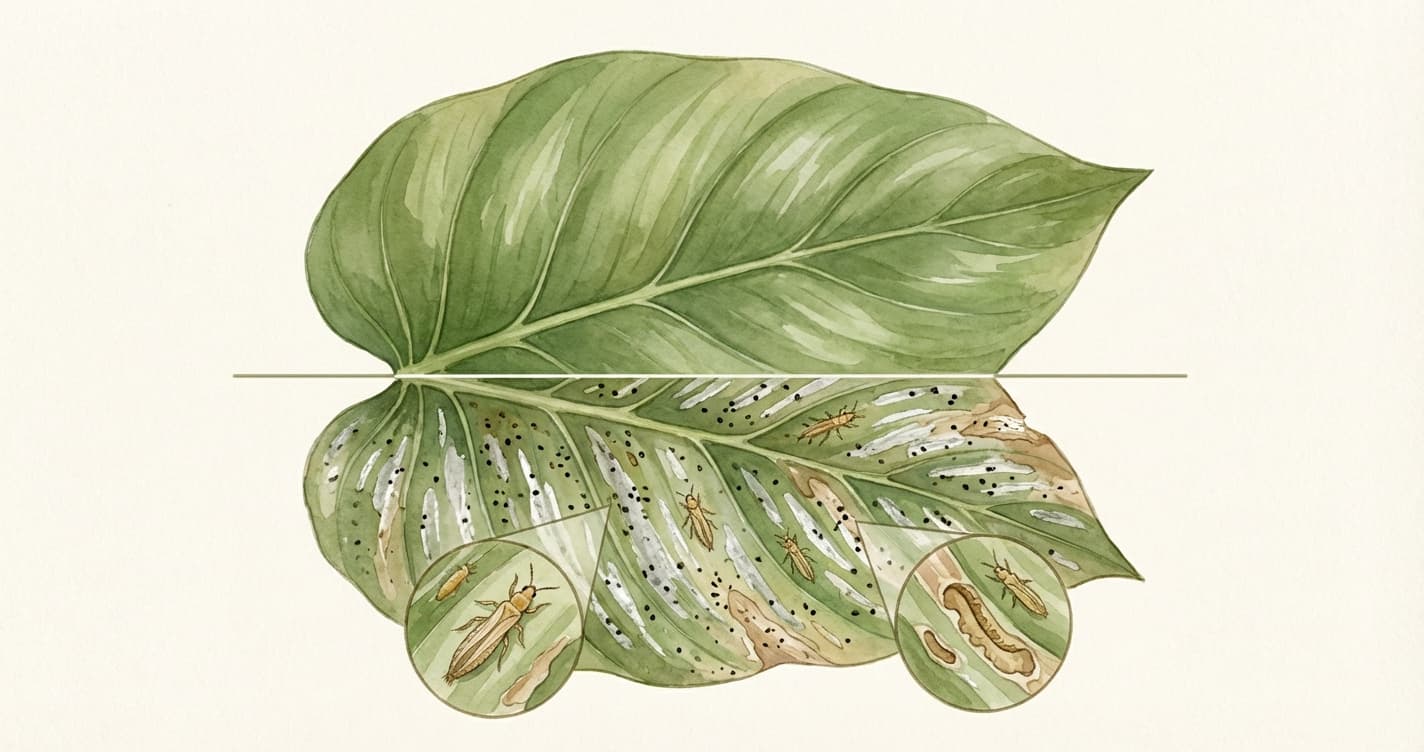
Silvery or bronze streaks: As thrips scrape plant cells, air enters the damaged areas, creating silvery or bronze patches. This "silvering" is the hallmark of thrips damage.
Black specks (feces): Thrips leave small black dots of excrement on leaf surfaces. These tiny specks among silvery damage strongly indicate thrips.
Stippling: Fine dots where individual cells have been destroyed. Similar to spider mite damage but often accompanied by silver streaking.
Distorted new growth: Thrips prefer tender new growth. Emerging leaves may be twisted, curled, or stunted. This damage is permanent—the leaf won't grow out of it.
Scarred fruit or flowers: On flowering plants, blooms may show streaking, scarring, or fail to open properly. Pollen-feeding thrips particularly damage flowers.
What Thrips Damage Is NOT
Spider mite damage looks similar (stippling) but lacks the silver streaking and black feces. Spider mites also produce visible webbing.
Mechanical damage from physical impact causes irregular brown areas, not silvery streaking.
Nutrient deficiency can cause pale leaves but not the stippled, silvery pattern thrips create.
Edema (cellular water imbalance) creates blisters, not silver streaks.
If you're uncertain, see our pest identification guide for visual comparison.
The Thrips Life Cycle
Understanding the thrips life cycle explains why they're difficult to control—and reveals vulnerabilities to target.
Stages
-
Egg (2-7 days): Female inserts eggs into plant tissue, hiding them from contact sprays. A single female can lay 150-300 eggs.
-
First instar larva (2-4 days): Tiny, pale, wingless. Actively feeds on plant tissue.
-
Second instar larva (2-4 days): Larger, still feeding. This is when most visible damage occurs.
-
Prepupa (1-2 days): Stops feeding, drops to soil to pupate. Some species pupate on plant.
-
Pupa (2-5 days): In soil or on plant. Non-feeding, hidden from most treatments.
-
Adult (30-45 days): Winged, mobile, feeds and reproduces. Can fly to spread infestation.
Why This Matters
Complete cycle: 2-3 weeks under warm conditions. This means populations can explode rapidly—and why single treatments never work.
Hidden stages: Eggs inside plant tissue and pupae in soil are protected from contact sprays. You must treat repeatedly to catch newly emerged adults.
Continuous generations: Unlike some pests with seasonal cycles, thrips reproduce year-round indoors. There's no dormant period to exploit.
Why Thrips Are Hard to Control
Thrips have earned their reputation as one of the most challenging houseplant pests:
Size and Speed
At 1-2mm, thrips are nearly invisible without magnification. They move quickly and can fly short distances, making them hard to catch and easy to miss during inspection. By the time damage is obvious, populations are established.
Protected Life Stages
Eggs embedded in plant tissue and pupae in soil survive contact sprays. You can kill every visible thrip and still face a new wave from protected eggs and pupae emerging days later.
Pesticide Resistance
Western flower thrips have developed resistance to many common insecticides, including some pyrethroids and organophosphates. Populations that survived previous treatments may be harder to kill.
Rapid Reproduction
Two-week life cycles mean populations recover quickly from incomplete treatments. Skip one application and you're back to square one.
Feeding Behavior
Thrips feed on cell contents, not sap. Systemic insecticides that work through sap are less effective than against aphids or mealybugs. Contact sprays require direct hits on insects that are tiny and fast.
Treatment Strategy
Successful thrips elimination requires a multi-pronged approach over multiple weeks. No single treatment will work alone.
Step 1: Isolate Infested Plants
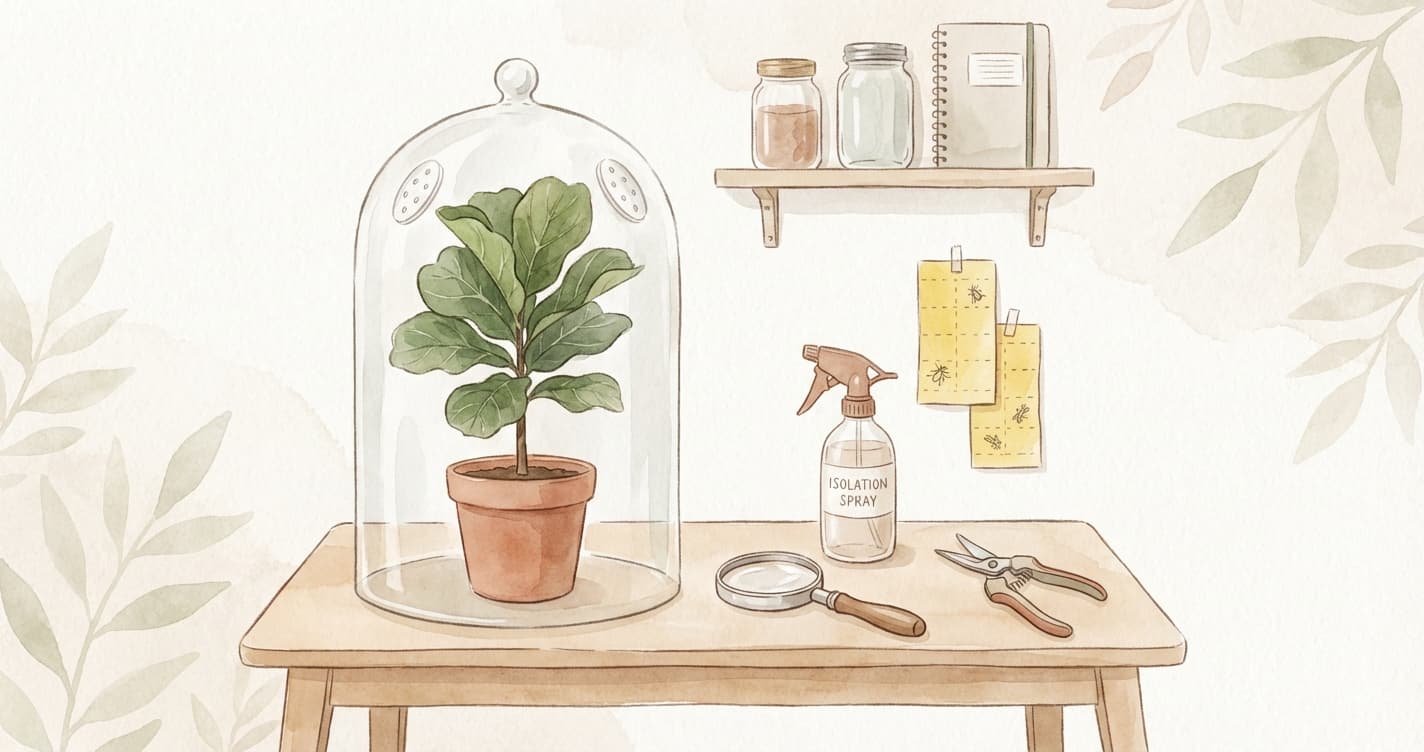
Immediately separate any plant showing thrips damage. Thrips can fly and will spread to neighboring plants. Quarantine at least 10 feet away from your collection—a separate room is ideal.
Step 2: Physical Controls
Shower plants: A strong spray of water dislodges thrips from foliage. Take plants to a shower or use a hose attachment to spray all surfaces, especially undersides. Repeat every few days.
Remove damaged growth: Prune heavily damaged leaves and flowers. They harbor eggs and larvae. Seal pruned material in bags before disposal.
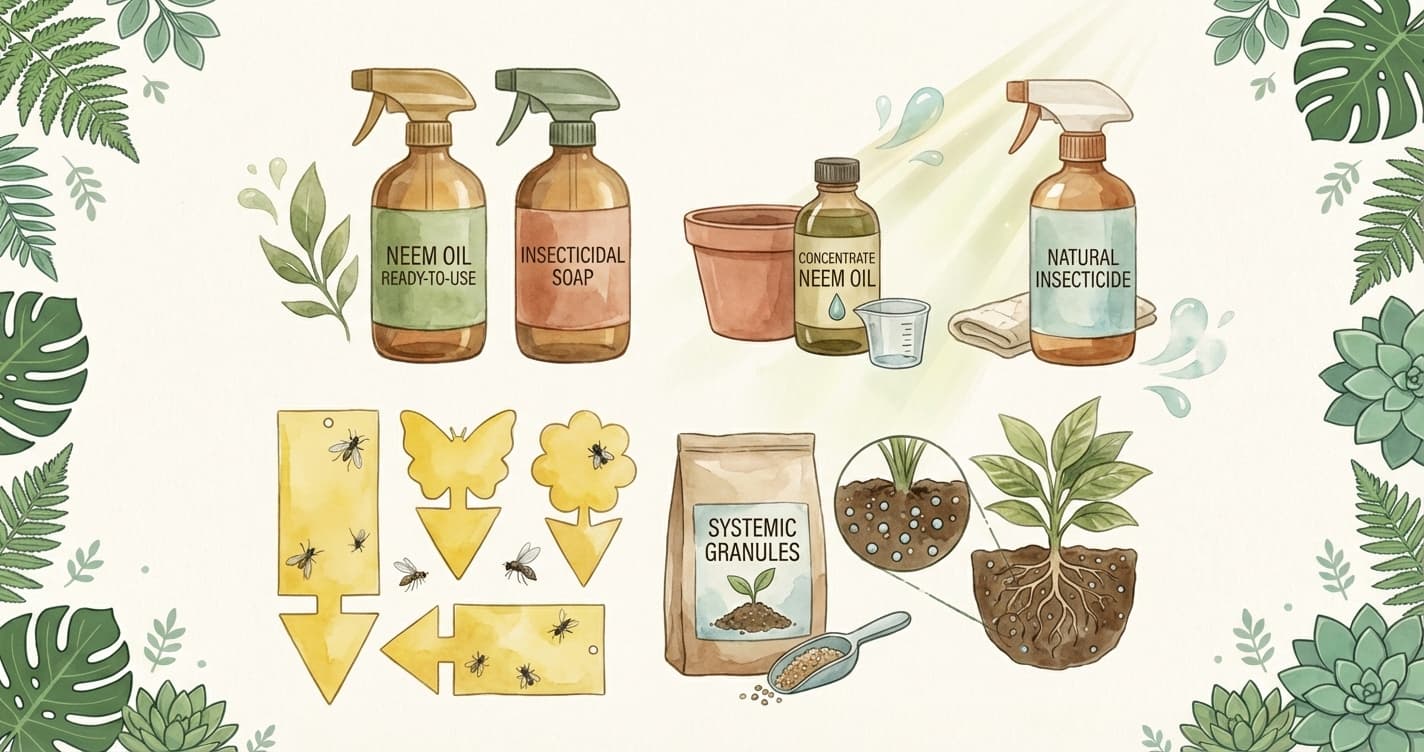
Deploy blue sticky traps: Blue traps catch adult thrips and help monitor population levels. Place near affected plants. Note how many you catch weekly—declining numbers indicate your treatment is working.
Step 3: Spinosad Treatment
Spinosad is the most effective treatment for thrips. Derived from naturally occurring soil bacteria, it works both through contact and ingestion.
Why spinosad works: Thrips ingest spinosad as they feed, and the compound disrupts their nervous system. It's far more effective than neem oil or insecticidal soap for thrips.
Application: Spray all plant surfaces thoroughly—tops and undersides of leaves, stems, and into leaf axils. Apply in the evening (spinosad breaks down in direct sunlight) or to plants that won't receive direct sun for several hours.
Frequency: Apply every 5-7 days for a minimum of 3 applications. Continue for 2 applications after you stop seeing live thrips to catch emerging adults.
Products: Look for Captain Jack's Dead Bug Brew or other spinosad products labeled for indoor use.
Step 4: Systemic Backup
For severe or persistent infestations, add a systemic insecticide:
Imidacloprid granules: Apply to soil per package directions. The plant absorbs the insecticide and thrips ingest it while feeding. Less effective than for sap-feeding insects but provides additional pressure.
Acephate-based systemic sprays: Some formulations work on thrips. Check labels for thrips control.
Systemics work best as supplements to spinosad, not replacements.
Step 5: Soil Treatment
Because thrips pupate in soil, treating the growing medium helps break the cycle:
Allow soil to dry: Slightly drier soil is less hospitable to thrips pupae.
Apply beneficial nematodes: Steinernema feltiae nematodes attack thrips pupae in soil. Apply as a soil drench following package instructions.
Top dress with sand: A layer of coarse sand or diatomaceous earth on the soil surface can discourage larvae dropping to pupate.
Alternative Treatments
Insecticidal soap: Works on contact but has no residual effect. Must hit thrips directly. Less effective than spinosad but useful as a supplemental spray.
Neem oil: Disrupts feeding and reproduction but works slowly. Better for prevention than elimination. Cold-pressed neem contains more active azadirachtin.
Pyrethrin: Quick knockdown for visible adults. Breaks down rapidly. Useful for immediate population reduction before starting spinosad program.
For detailed treatment comparisons, see our pest treatment comparison guide.
Treatment Timeline
| Week | Action |
|---|---|
| 1 | Isolate plants, shower thoroughly, prune damaged growth, deploy blue sticky traps, apply spinosad |
| 2 | Second spinosad application, continue monitoring traps |
| 3 | Third spinosad application, assess progress |
| 4 | Fourth spinosad if still seeing thrips; if clear, continue monitoring |
| 5-6 | Observation period—watch for any re-emergence |
| 7+ | If clear for 2+ weeks, plant can return to collection |
Prevention
Prevention is easier than elimination. Incorporate these practices:
Quarantine New Plants
All new plants—regardless of source—need quarantine. A minimum of 2 weeks, preferably 4. Inspect regularly and treat any issues before the plant joins your collection.
Thrips commonly arrive on:
- Nursery plants (high-density growing = pest pressure)
- Cut flowers (often carry thrips)
- Plants summered outdoors
Monitor with Blue Traps
Keep blue sticky traps deployed near your plants year-round. They serve as an early warning system. A sudden increase in trapped thrips alerts you to an emerging problem.
Regular Inspection
Weekly plant inspection catches problems early. Focus on:
- New growth (thrips' preferred feeding site)
- Flowers and buds
- Leaf undersides along veins
Use a magnifying loupe to spot tiny pests.
Keep Cut Flowers Separate
Fresh flowers frequently harbor thrips. Keep cut flower arrangements away from houseplants, or avoid bringing cut flowers into your home during active infestations.
Window Screens
Thrips can enter through open windows. Ensure screens are intact and fit tightly. This is especially important in summer when outdoor thrips populations peak.
Seasonal Awareness
Thrips pressure varies by season. See our seasonal pest management guide for month-by-month strategies.
Thrips on Specific Plants
Some plants are thrips magnets while others rarely have problems.
High-Risk Plants
Monstera deliciosa: The large, thin leaves of Monstera seem to attract thrips. New leaves are especially vulnerable, and damage to unfurling leaves causes permanent scarring.
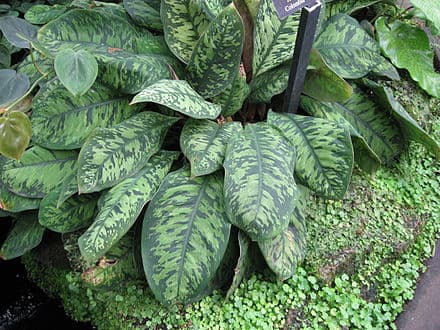
Calathea and Prayer Plants: These humidity-loving plants' tender foliage is thrips-susceptible. Thrips damage compounds the stress these sensitive plants already face.
Orchids: Thrips love orchid flowers and can devastate blooms. Check new flower spikes carefully.
Hibiscus: Indoor hibiscus frequently suffer thrips infestations, especially during flowering.
Fiddle Leaf Fig: The fleshy new growth attracts thrips, and damage shows clearly on the large leaves.
Plants That Rarely Get Thrips
Snake Plant: Tough, thick leaves aren't thrips' preferred target.
ZZ Plant: Similar—the waxy, thick foliage seems less attractive.
Pothos: While not immune, pothos seems less susceptible than many tropicals.
Treatment Considerations by Plant
Thin-leaved tropicals: More susceptible to damage and may show phytotoxicity (leaf burn) from some treatments. Test spray on a small area first. Avoid applying in direct sun.
Flowering plants: Remove and dispose of infested flowers to reduce population. Treat foliage thoroughly.
Large plants: May require more aggressive treatment—larger surface area means more hiding spots.
Frequently Asked Questions
How do I know if it's thrips or spider mites?
Both cause stippling damage, but thrips leave silvery/bronze streaking and black feces dots. Spider mites produce visible webbing and don't cause silver coloring. The tap test can reveal spider mites (tiny red/brown dots) versus thrips (elongated, faster-moving).
Can thrips spread to all my plants?
Yes. Thrips can fly short distances and will spread to nearby plants, especially if those plants offer preferred conditions (tender growth, flowers). Isolate infested plants immediately.
Will neem oil kill thrips?
Neem oil can help but isn't the most effective option. It works slowly by disrupting feeding and reproduction. For active infestations, spinosad is significantly more effective. Use neem as a preventive or alongside spinosad.
How long does thrips treatment take?
Expect a minimum of 3-4 weeks of active treatment, followed by 2+ weeks of monitoring. Thrips' 2-3 week life cycle and protected life stages mean quick fixes don't exist.
Can I use the same spray on all my plants?
Test on a small area first, especially for sensitive plants like Calathea or delicate ferns. Some plants show phytotoxicity from treatments that are fine on others. Avoid applying during heat of day or in direct sun.
Should I throw away plants with thrips?
Not usually. Most thrips infestations are treatable with persistence. Consider discarding only if: the plant was inexpensive, treatment has failed after 6+ weeks, or the plant poses significant risk to valuable specimens.
Do thrips live in soil?
Thrips pupate in soil but don't live there permanently. The pupal stage lasts 2-5 days before adults emerge and return to foliage. Treating soil helps break the cycle but won't eliminate an infestation alone.
Can thrips come from potting soil?
Possible but uncommon. Thrips are more likely to arrive on plants themselves, through windows, or on cut flowers. However, any organic material (including bagged soil) could potentially harbor pests.
What if thrips keep coming back?
Re-infestation usually means: new plants weren't quarantined, a plant still has a hidden population, or thrips are entering from outside. Tighten quarantine protocols, re-treat any previously infested plants thoroughly, and check window screens.
Next Steps
Thrips are challenging, but they're beatable with the right approach. Focus on:
- Early detection: Blue sticky traps and weekly inspection
- Proper treatment: Spinosad applied repeatedly over several weeks
- Prevention: Rigorous quarantine for all new plants
For broader pest management context, return to our Houseplant Pest Mastery Guide. For quarantine procedures, see our quarantine protocols guide.
Your plants are counting on you to be persistent. Now you have the knowledge to win.