This guide contains affiliate links. We may earn a small commission if you purchase through our links, at no extra cost to you.
Looking for comprehensive pest management? Check out our in-depth Houseplant Pest Mastery Guide for integrated pest management strategies, quarantine protocols, and detailed treatment comparisons.
You spot something moving on your Monstera. Your heart sinks. Don't panic—pests happen to every plant parent, and most infestations are treatable without resorting to harsh chemicals. Here's how to identify, treat, and prevent the most common houseplant pests.
Spider Mites
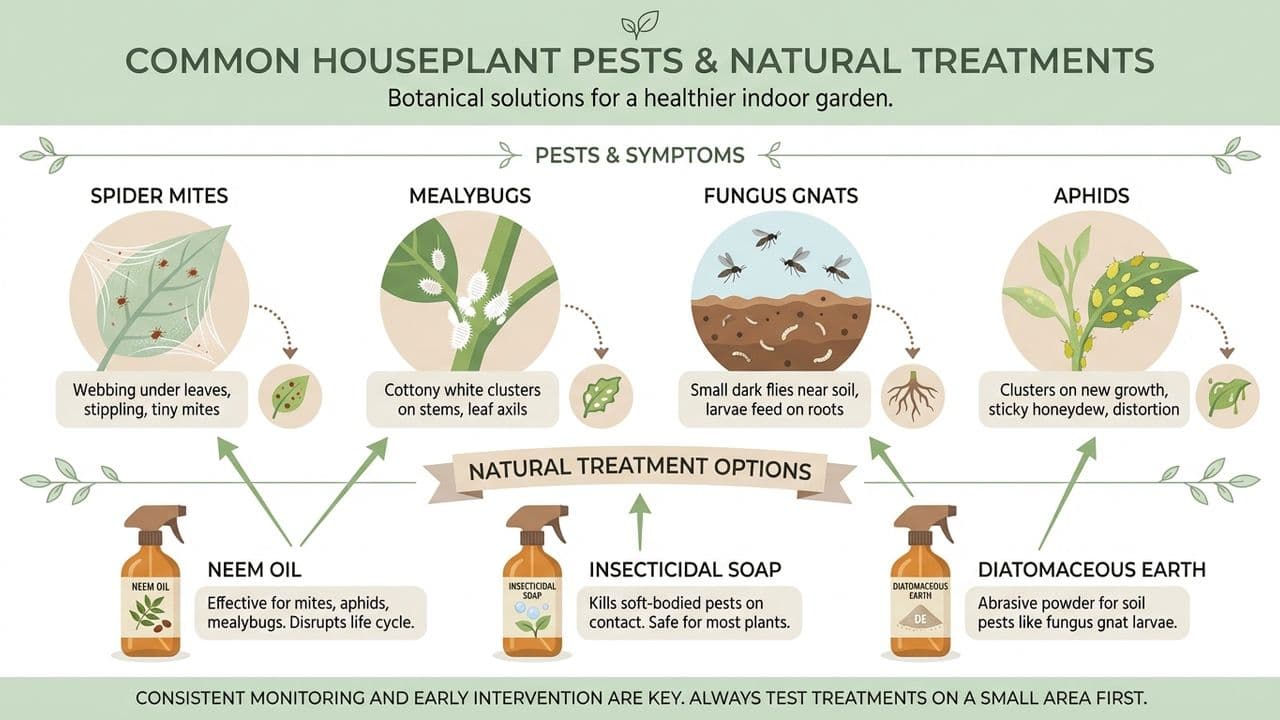
These tiny arachnids create fine webbing on leaf undersides and between stems. Leaves develop a stippled, dusty appearance and may yellow and drop. Spider mites thrive in dry conditions and spread rapidly. They commonly attack Fiddle Leaf Fig, Monstera, and most tropical plants.
Treatment: Spray leaves thoroughly with water to knock off mites and remove webbing. Apply insecticidal soap or neem oil every 5-7 days for 2-3 weeks to break the reproduction cycle. Increase humidity around affected plants, as mites hate moisture. Isolate infected plants immediately.
Fungus Gnats
Those tiny flies hovering around your soil aren't fruit flies—they're fungus gnats. Adults are harmless nuisances, but larvae feed on roots, potentially damaging young plants. They breed in consistently moist soil, making overwatered plants prime targets. Refer to our watering guide to adjust your routine.
Treatment: Let the top 1-2 inches of soil dry completely between waterings—this kills larvae. Use yellow sticky traps to catch adults. Top soil with a layer of sand or gravel to discourage egg-laying. For severe infestations, drench soil with Mosquito Bits (Bacillus thuringiensis), which kills larvae naturally.
Mealybugs
Mealybugs look like tiny cotton balls clustered in leaf joints, stem crevices, and leaf undersides. They suck plant sap and excrete sticky honeydew that attracts mold. Peace Lily, Pothos, and other soft-stemmed plants are common targets.
Treatment: Dab individual bugs with rubbing alcohol using a cotton swab—this kills them on contact. For larger infestations, spray with insecticidal soap or neem oil. Repeat weekly for several weeks, as eggs can hatch over time. Check closely in crevices where mealybugs hide.
Scale Insects
Scale appears as brown or tan bumps along stems and leaf veins. These immobile insects hide under protective shells, making them tricky to eradicate. They're common on woody plants like Fiddle Leaf Fig, Rubber Plant, and ZZ Plant.
Treatment: Scrape off visible scale with a fingernail or soft brush. Spray with neem oil or horticultural oil, which suffocates them under their shells. Rubbing alcohol applied directly to scale also works. Treatment takes persistence—continue weekly applications for at least a month.
Aphids
Aphids are small, pear-shaped insects that cluster on new growth and leaf undersides. They're often green but can be black, brown, or red. Like mealybugs, they produce honeydew and distort new growth. They reproduce rapidly—a small infestation can explode within days.
Treatment: Strong water spray dislodges aphids from plants. Insecticidal soap or neem oil kills them on contact. For severe cases, introduce ladybugs if growing conditions allow. Remove heavily infested parts of the plant to reduce population quickly.
Prevention Strategies
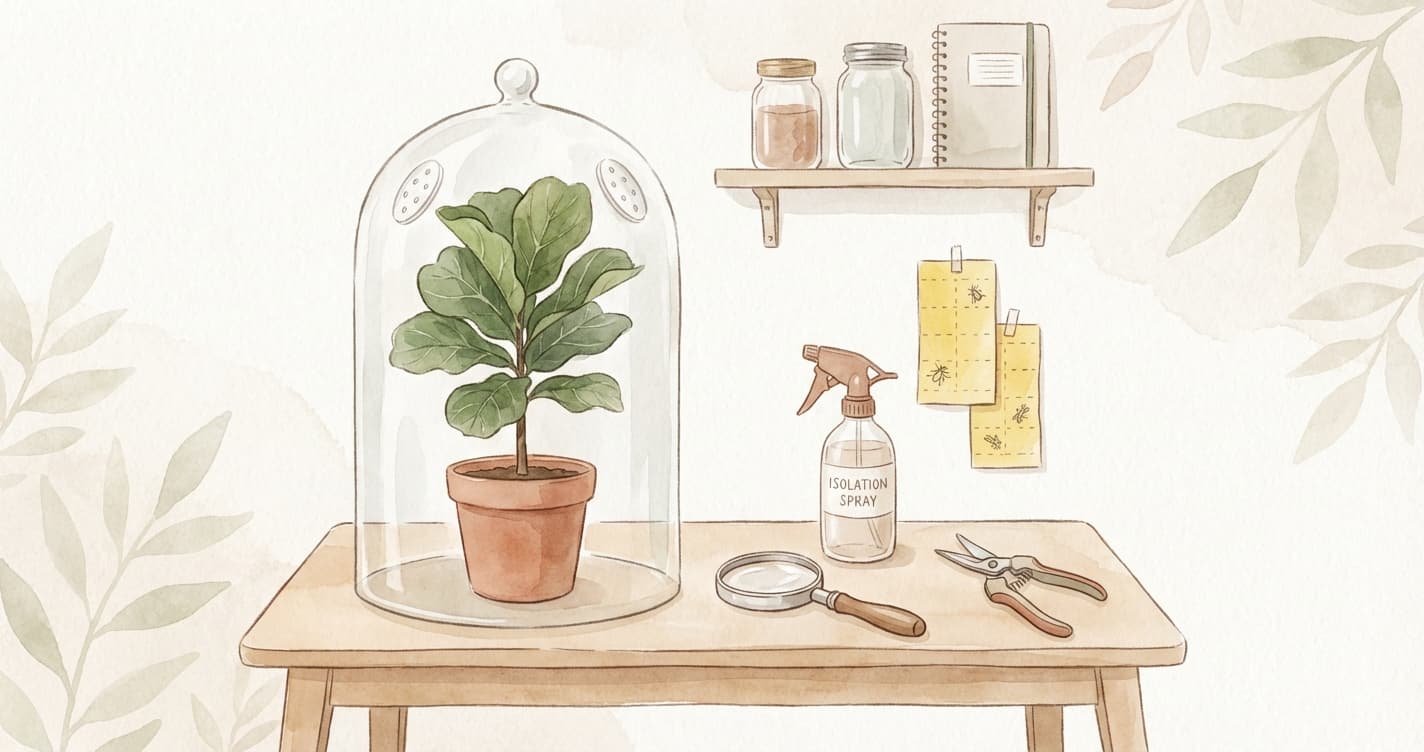
Quarantine new plants for 2-4 weeks before placing them near your collection. Inspect regularly—catching problems early makes treatment much easier. Wipe leaves monthly with a damp cloth to remove dust and dislodge any hitchhikers. Healthy plants resist pests better, so maintain proper watering (see our watering guide) and light conditions.
Keep humidity appropriate for your plants—spider mites love dry air. Good air circulation prevents many problems. Avoid over-fertilizing, which produces soft, pest-attracting new growth. If a plant is severely infested and not responding to treatment, it may be better to discard it than risk your entire collection.
Natural Treatment Options
Neem oil is a broad-spectrum natural insecticide that disrupts pest life cycles. Dilute according to package directions and spray thoroughly, covering all surfaces. Insecticidal soap works on contact, so complete coverage is essential. Rubbing alcohol (70%) kills most soft-bodied pests on contact.
For soil pests, allow soil to dry more between waterings and consider repotting with fresh, sterile potting mix (see our soil guide). Diatomaceous earth sprinkled on soil kills crawling pests. If natural methods fail, systemic insecticides can be used as a last resort, but follow directions carefully.