This guide contains affiliate links. We may earn a small commission if you purchase through our links, at no extra cost to you.
This guide is part of our comprehensive Houseplant Pest Mastery Guide.
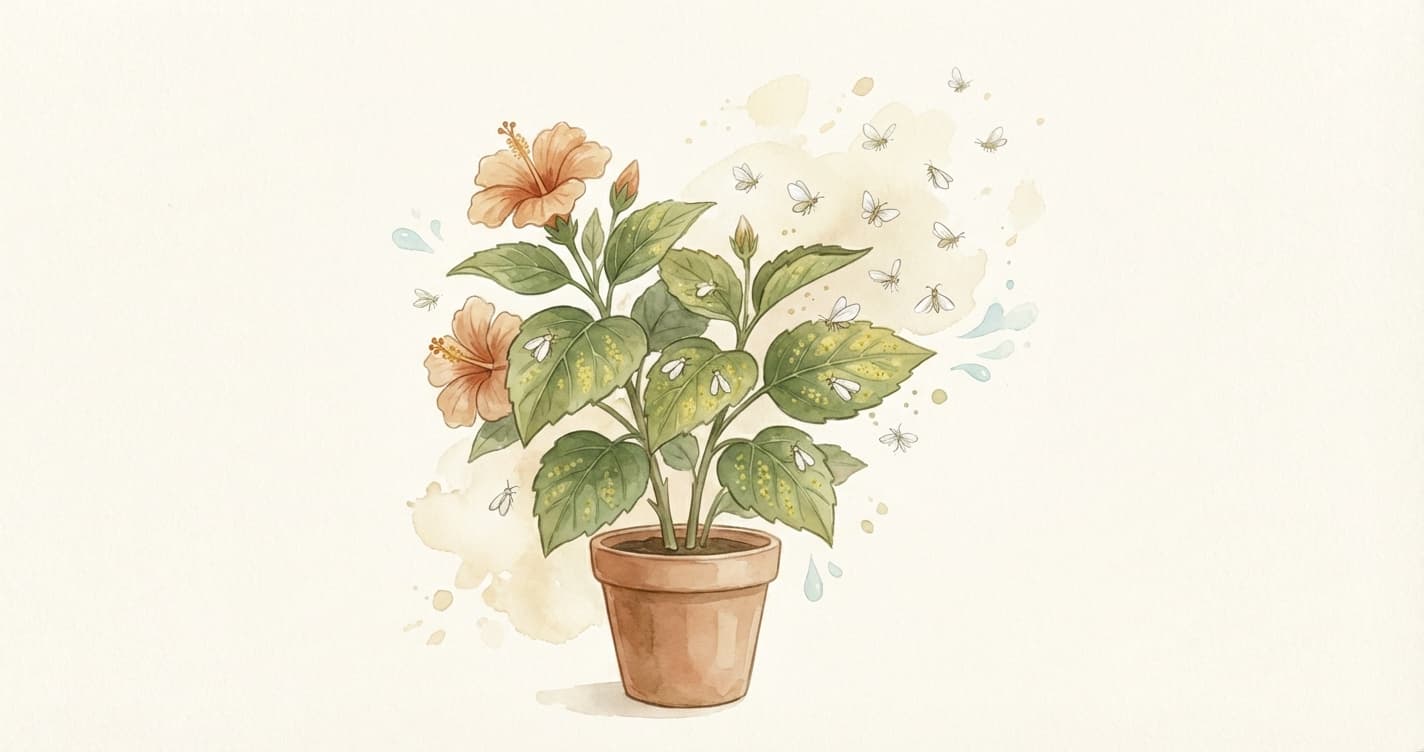
You brushed against your hibiscus and a cloud of tiny white insects erupted from the leaves. That cloud of whiteflies is more than unsettling—it signals a well-established infestation that's been building for weeks.
Whiteflies are common greenhouse pests that readily adapt to indoor conditions. They reproduce rapidly, weaken plants through constant feeding, and produce sticky honeydew that promotes sooty mold. But with the right approach, you can eliminate them and protect your plants.
Table of Contents
- What Are Whiteflies?
- Identifying Whiteflies
- Whitefly Damage
- The Whitefly Life Cycle
- Susceptible Plants
- Treatment Strategies
- Biological Controls
- Prevention
- Frequently Asked Questions
What Are Whiteflies?
Despite their name, whiteflies aren't true flies. They're more closely related to aphids, mealybugs, and scale insects—all sap-feeding pests that weaken plants through sustained feeding.
Several whitefly species infest houseplants:
Greenhouse whitefly (Trialeurodes vaporariorum): The most common indoor species. White-winged adults with slightly yellowish bodies. Found on a wide variety of plants.
Silverleaf whitefly (Bemisia tabaci): Smaller than greenhouse whitefly, holds wings more roof-like against body. Particularly troublesome on poinsettias and hibiscus.
Giant whitefly (Aleurodicus dugesii): Larger species that produces distinctive waxy spirals on leaf undersides. Less common indoors but occasionally imported on plants.
All species share similar biology and respond to the same treatment approaches.
Identifying Whiteflies
Whitefly identification is relatively straightforward compared to other houseplant pests.
Adult Appearance
Adults are small (1-2mm), moth-like insects with white, powdery wings. They're weak fliers and typically stay near host plants. The most distinctive behavior: when you disturb infested foliage, adults rise in a cloud before settling back down.
Adults congregate on leaf undersides where they feed and lay eggs. You'll often see a dozen or more clustered on a single leaf.
Nymphs
Juvenile whiteflies look nothing like adults. They're:
- Flat and oval-shaped
- Translucent to pale yellowish-green
- Scale-like in appearance
- Immobile once they settle to feed
Nymphs attach to leaf undersides and are easily overlooked. They resemble scale insects but are smaller and more translucent.
Eggs
Tiny, yellowish eggs laid in circles or arcs on leaf undersides. A single female can lay 200-400 eggs over her lifetime.
How to Confirm Whiteflies
The shake test: Gently shake or brush against suspected foliage. Whiteflies rise in a small cloud, flutter briefly, then return to the plant. This behavior is unique to whiteflies.
Check leaf undersides: Look for clusters of white-winged adults and flat, translucent nymphs attached to leaves.
Yellow sticky traps: Whiteflies are strongly attracted to yellow. Traps placed near plants will catch adults and help quantify infestation severity.
Whitefly Damage
Whiteflies damage plants through feeding and the secondary problems their presence creates.
Direct Feeding Damage
Whiteflies pierce leaf tissue and consume plant sap, causing:
- Yellowing leaves: Especially on heavily infested growth
- Wilting: Despite adequate water, severe infestations cause wilting
- Stunted growth: Drained of nutrients, plants grow slowly
- Leaf drop: Stressed plants may drop leaves prematurely
Honeydew and Sooty Mold
Like aphids and mealybugs, whiteflies excrete honeydew—a sticky, sugary waste product. Honeydew causes:
Sticky residue: Leaves, stems, and surfaces below infested plants become tacky with honeydew. You might notice the stickiness before you see the insects.
Sooty mold: A black fungus grows on honeydew, coating leaves in dark residue. While the mold itself doesn't directly harm plants, it blocks light and looks unsightly.
Ant attraction: Honeydew attracts ants, which may "farm" whiteflies by protecting them from predators.
Disease Transmission
Whiteflies can transmit plant viruses between hosts. This is more problematic in agriculture than in home settings, but it's another reason to control infestations quickly.
The Whitefly Life Cycle
Understanding the whitefly life cycle reveals why they're persistent pests—and when treatments are most effective.
Stages
-
Egg (5-10 days): Laid in circular patterns on leaf undersides. Eggs are yellowish and stand on tiny stalks.
-
First instar (crawler) (2-3 days): Mobile for a few hours after hatching, then settles and becomes immobile. Flat, translucent, and scale-like.
-
Second and third instar (5-7 days each): Still immobile, continues feeding. Grows larger, may become greenish.
-
Fourth instar (pupa) (5-7 days): Final immature stage. Develops adult features beneath a waxy covering.
-
Adult (1-2 months): Emerges to feed, mate, and reproduce. Can fly short distances.
Why This Matters
Complete cycle: 3-5 weeks depending on temperature. Warmer conditions accelerate development.
Overlapping generations: Eggs, nymphs, and adults often present simultaneously. A single treatment won't catch all life stages.
Protected nymphs: The flat, immobile nymphs are protected by their waxy coating. Contact sprays must thoroughly cover leaf undersides.
Continuous reproduction: Adults live 1-2 months and lay eggs throughout their lives. Populations grow exponentially without intervention.
Susceptible Plants
Some houseplants attract whiteflies more than others.
High-Risk Plants
Hibiscus: Perhaps the most whitefly-prone houseplant. Indoor hibiscus frequently suffer infestations, especially during flowering.
Poinsettia: Commonly arrives infested. Check carefully before bringing poinsettias into your home.
Fuchsia: Another whitefly favorite, especially when flowering.
Lantana: Highly susceptible to whitefly colonization.
Begonia: Particularly rex begonias and other fancy-leafed varieties.
Herbs: Basil, mint, and other herbs grown indoors can attract whiteflies.
Lower-Risk Plants
Thick-leaved plants and those with waxy or fuzzy foliage tend to be less attractive to whiteflies:
- Snake Plant
- ZZ Plant
- Succulents
- Plants with hairy leaves
However, no plant is immune if whiteflies are present and options are limited.
Treatment Strategies
Whitefly elimination requires persistence and multiple approaches. Because all life stages are present simultaneously, you'll need repeated treatments over several weeks.
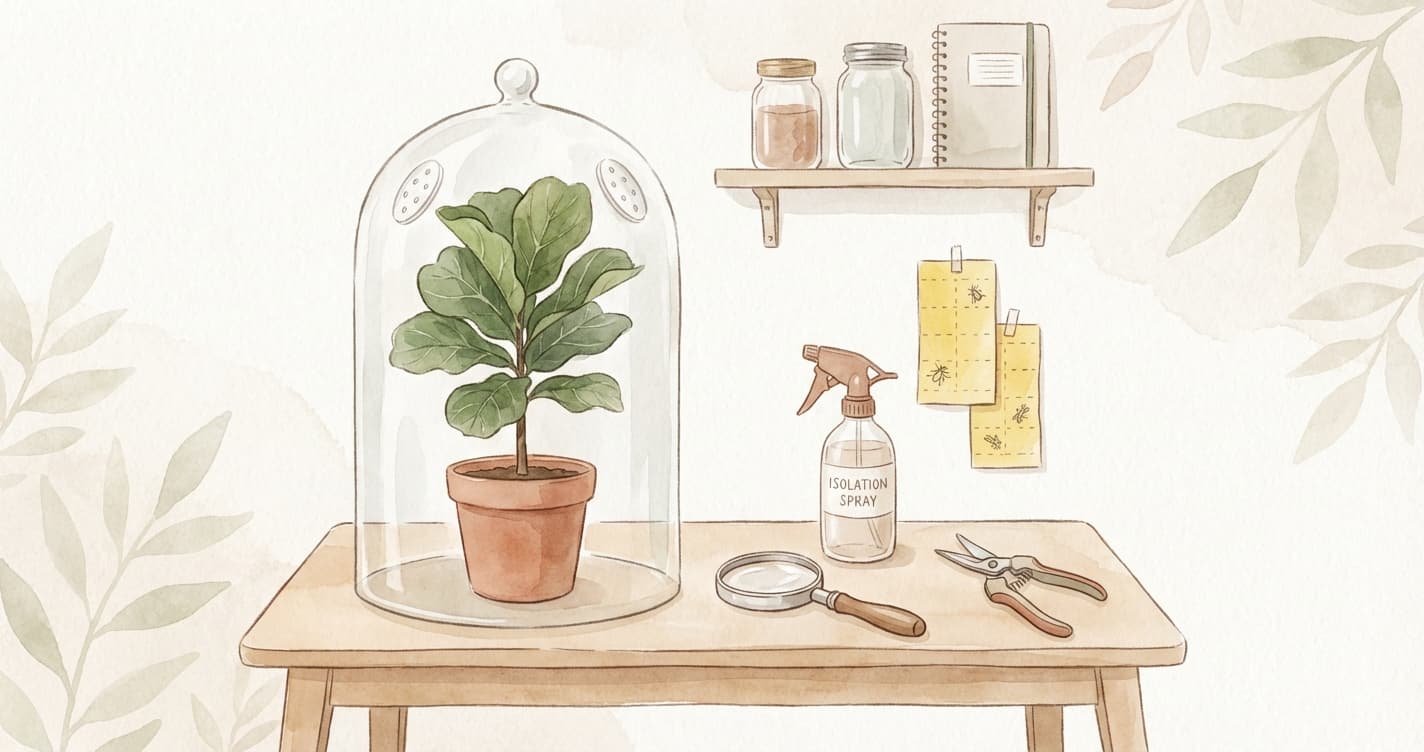
Step 1: Isolation
Remove infested plants from your collection immediately. Whiteflies fly readily and will colonize nearby plants. Place isolated plants where escaping whiteflies won't reach other houseplants.
Step 2: Physical Controls
Vacuum adults: Use a small handheld vacuum to suck up adult whiteflies. Do this in the early morning when they're less active. Immediately dispose of vacuum contents in a sealed bag outside.
Water spray: A strong spray of water dislodges adults and nymphs. Take plants to a shower and thoroughly spray all surfaces, especially leaf undersides. Repeat every few days.
Yellow sticky traps: Deploy traps near infested plants. They won't eliminate the infestation alone but reduce adult populations and help monitor progress.
Prune heavily infested leaves: Remove leaves covered with nymphs. This immediately reduces the population. Seal pruned material in bags before disposal.
Step 3: Insecticidal Soap
Insecticidal soap is effective against whiteflies when applied thoroughly and repeatedly.
How it works: Soap disrupts the waxy coating on soft-bodied insects, causing dehydration. It must contact the pest directly—there's no residual effect.
Application: Spray all plant surfaces thoroughly, paying special attention to leaf undersides where nymphs attach. Complete coverage is essential.
Frequency: Apply every 3-5 days for at least 3 weeks. This catches newly hatched nymphs and emerging adults throughout their overlapping generations.
Step 4: Neem Oil
Neem oil works against whiteflies through multiple mechanisms: suffocating adults on contact, disrupting feeding, and interfering with development.
Application: Mix according to package directions (usually 1-2 tablespoons per gallon of water). Spray thoroughly in evening or when plants won't receive direct sun for several hours.
Frequency: Apply weekly, alternating with insecticidal soap to prevent resistance.
Step 5: Systemic Options
For persistent infestations, systemic insecticides provide additional control:
Imidacloprid granules: Applied to soil, absorbed by roots, circulates through plant tissue. Whiteflies ingest the insecticide while feeding. Effective but takes 1-2 weeks to begin working.
Caution: Don't use systemics on edible plants. Keep treated plants away from pets that might chew leaves.
Treatment Timeline
| Week | Action |
|---|---|
| 1 | Isolate plant, vacuum adults, spray with insecticidal soap, deploy yellow sticky traps |
| 2 | Spray with neem oil, continue trapping |
| 3 | Spray with insecticidal soap, assess trap catches |
| 4 | Spray with neem oil if still seeing whiteflies |
| 5-6 | Continue treatment if needed; observe if population declining |
| 7+ | If clear for 2 weeks, plant can return to collection |
For detailed treatment comparisons, see our pest treatment comparison guide.
Biological Controls
For those preferring biological solutions, several options target whiteflies:
Parasitic Wasps
Encarsia formosa: Tiny parasitic wasps that lay eggs inside whitefly nymphs. Parasitized nymphs turn black and die as wasp larvae develop inside. Effective for greenhouse-scale problems and serious collections.
How to use: Purchase Encarsia from biological control suppliers. Release according to instructions, typically hanging cards with parasitized whitefly scales near infested plants.
Limitations: Works best in enclosed spaces. Requires maintaining a small whitefly population to sustain the wasps. Not practical for eliminating a single plant's infestation.
Predatory Insects
Delphastus catalinae: Small beetle that feeds on whitefly eggs and nymphs. Requires warm temperatures (above 65°F) and relatively high populations of whiteflies to sustain.
Lacewing larvae: General predators that consume whiteflies among other pests. Available at some garden centers.
When Biological Controls Make Sense
Biological controls work best when:
- You have an enclosed growing space (greenhouse, cabinet)
- You want to avoid all chemical treatments
- You have ongoing pest pressure and accept some damage
- You're managing many plants (scale makes biologicals cost-effective)
For most houseplant owners with a single infestation, soap and neem treatments are more practical.
Prevention
Preventing whiteflies is far easier than eliminating established populations.
Quarantine New Plants
Whiteflies commonly arrive on new plants, especially from greenhouses. Quarantine all new arrivals for 2-4 weeks, inspecting regularly for whitefly signs.
Pay extra attention to:
- Poinsettias and holiday plants
- Hibiscus and other flowering tropicals
- Any plant from a greenhouse or big-box store
Screening and Physical Barriers
Whiteflies can enter through windows and doors. Ensure window screens are intact and fit tightly. This is especially important in warm seasons when outdoor whitefly populations peak.
Yellow Trap Monitoring
Keep yellow sticky traps deployed near your plant collection year-round. They serve as early warning systems—catching whiteflies before you notice other signs.
Regular Inspection
Weekly inspection catches problems early:
- Check leaf undersides for nymphs and adults
- Look for yellowing or sticky leaves
- Note any plants that seem stressed
Avoid Cross-Contamination
If you've handled infested plants, wash your hands and change clothes before tending healthy plants. Whiteflies can hitchhike on clothing.
For seasonal prevention strategies, see our seasonal pest management guide.
Frequently Asked Questions
Are whiteflies the same as fungus gnats?
No. Fungus gnats are small dark flies that hover near soil. Whiteflies are white, moth-like insects that cluster on leaf undersides and fly up when disturbed. They're unrelated and require different treatments.
Can whiteflies kill my plant?
Severe infestations can kill plants through sustained sap loss, but this typically requires prolonged heavy infestation. Most plants will recover once whiteflies are controlled, though they may drop damaged leaves.
Why do whiteflies keep coming back?
Usually because: eggs and nymphs survived treatment (they're protected by waxy coatings), new plants weren't properly quarantined, or whiteflies are entering from outside. Ensure thorough, repeated treatments and tighten your quarantine protocol.
Can I use dish soap instead of insecticidal soap?
Not recommended. Dish soap can damage plant tissue, especially on sensitive plants. Insecticidal soaps are formulated specifically for plant use and are safer while still effective.
Will neem oil alone get rid of whiteflies?
Neem oil helps but works slowly. For faster results, combine neem with insecticidal soap, using them on alternating applications. Physical removal (vacuuming, water spray) speeds the process.
Do whiteflies live in soil?
No. All life stages occur on plant foliage—eggs, nymphs, and adults stay on leaves. Soil treatments aren't necessary for whiteflies (unlike fungus gnats or thrips).
How long until I know whiteflies are gone?
Wait until you've seen no adult whiteflies for at least 2 weeks and traps remain clean. Because nymphs are immobile and easily missed, extended observation confirms elimination.
Can whiteflies spread to my other plants?
Yes. Adult whiteflies fly readily and will colonize nearby plants. Isolate infested plants immediately and increase monitoring of plants that were nearby.
Are whiteflies harmful to humans or pets?
No. Whiteflies don't bite, sting, or spread human diseases. They're plant pests only. The sticky honeydew they produce is a nuisance but not harmful.
Next Steps
Whiteflies are manageable with consistent effort. Key points:
- Act quickly when you see flying adults—the population is larger than it appears
- Treat thoroughly and repeatedly—cover all leaf surfaces, especially undersides
- Monitor with yellow traps—track your progress and catch early re-infestations
For broader pest management strategies, return to our Houseplant Pest Mastery Guide. For quarantine procedures that prevent whitefly introduction, see our quarantine protocols guide.
You've got this. Stay persistent, and your plants will be whitefly-free.