This guide contains affiliate links. We may earn a small commission if you purchase through our links, at no extra cost to you.
This guide is part of our comprehensive Houseplant Pest Mastery Guide.
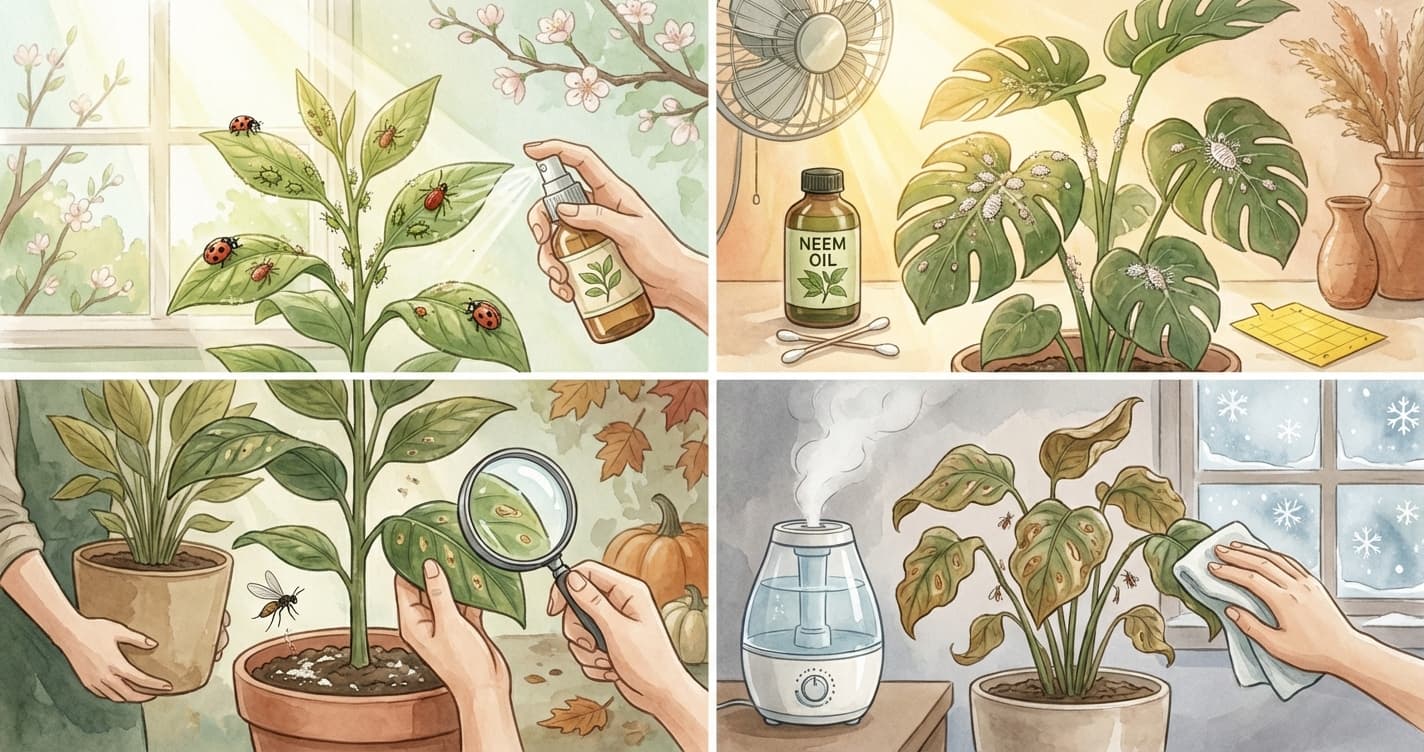
Your pest management strategy shouldn't be the same year-round. Spider mites thrive in winter's dry heat while fungus gnats love spring's increased watering. Fall brings the critical challenge of plants returning from outdoor summer vacations.
Understanding seasonal pest patterns lets you anticipate problems rather than react to them. Here's how to adjust your integrated pest management approach throughout the year.
Table of Contents
- Spring: Awakening Threats
- Summer: Peak Pest Season
- Fall: The Critical Transition
- Winter: Survival Mode
- Monthly Task Calendar
- Environmental Factors by Season
- Emergency Response by Season
- Frequently Asked Questions
Spring: Awakening Threats
March - May
As days lengthen and temperatures rise, both plants and pests wake up. Spring marks the beginning of the primary growing season—and the primary pest season.
What Happens in Spring
Plants resume active growth: New leaves emerge, roots grow, and plants use more water. This tender new growth is exactly what pests prefer.
Overwintered pests become active: Spider mites, scale, and mealybugs that survived winter at low populations begin reproducing as conditions warm.
Watering increases: Higher plant metabolism means more frequent watering, which can encourage fungus gnats.
Spring Pest Priorities
Spider mites: Populations that survived winter on plant undersides start reproducing rapidly. The stippled damage you notice now may have begun weeks ago.
Aphids: These reproduce incredibly fast in mild conditions. One aphid becomes hundreds within a couple weeks.
Scale insects: Overwintered scale produce crawlers (mobile juveniles) that spread to new growth.
Fungus gnats: Increased watering creates the moist soil conditions gnats love.
Spring Management Actions
✓ Thorough inspection of all plants: Examine every plant carefully, especially those that seemed fine during winter. Look for any overwintered pests now multiplying.
✓ Deploy fresh sticky traps: Replace any traps from winter. Yellow traps catch fungus gnats and aphids; blue traps catch thrips.
✓ Consider preventive neem application: A precautionary neem oil spray on susceptible plants can suppress pest emergence.
✓ Resume fertilizing carefully: Over-fertilizing creates soft, pest-attracting new growth. Start at half strength.
✓ Prepare for outdoor season: If you plan to move plants outside for summer, ensure they're healthy and pest-free first.
Summer: Peak Pest Season
June - August
Summer brings maximum pest pressure. Warm temperatures accelerate reproduction, open windows allow pest entry, and plants summering outdoors encounter all manner of insects.
What Happens in Summer
Maximum reproduction rates: Pest life cycles complete in 2-3 weeks at summer temperatures. Populations explode rapidly.
Outdoor pest invasion: Thrips, whiteflies, and aphids can enter through open windows and doors. Screens don't stop the smallest pests.
Indoor conditions favor spider mites: Air conditioning reduces humidity, creating the dry conditions spider mites love.
Plants outdoors accumulate pests: Every plant spending summer outside will encounter pests. This creates fall's critical challenge.
Summer Pest Priorities
Spider mites: Hot, dry conditions (especially from AC) are ideal for spider mites. Infestations can establish rapidly.
Thrips: These enter through windows and multiply on tender summer growth. Peak populations occur in mid-summer.
Whiteflies: Common on plants near windows or those summering outside.
Scale at maximum: Summer's warmth accelerates scale reproduction. Heavy infestations develop quickly.
Summer Management Actions
✓ Increase inspection frequency: Check plants twice weekly during summer's peak.
✓ Maintain humidity for spider mite prevention: Keep humidity above 50% despite AC. A hygrometer helps monitor.
✓ Check window screens: Ensure screens fit tightly with no holes. This reduces flying pest entry.
✓ Monitor plants outside: If plants are summering outdoors, inspect weekly for pest activity.
✓ Begin treating outdoor plants: Start pest treatments on outdoor plants 2-3 weeks before you plan to bring them inside.
✓ Keep sticky traps fresh: Summer heat degrades adhesive faster. Replace traps monthly.
Fall: The Critical Transition
September - November
Fall is the most dangerous season for pest management. Plants returning from summer outdoors bring hitchhikers, and stressed plants transitioning to winter are vulnerable.
Why Fall Is Critical
The outdoor return: Every plant summered outside has encountered pests. Bringing them in without treatment introduces those pests to your indoor collection.
Whiteflies flee cold: As outdoor temperatures drop, whiteflies seek indoor refuge. They actively migrate toward warmth and will enter through any opening.
Plants transition to lower light: This stress reduces plant vigor, making them more susceptible to pest damage.
Decreasing growth: Plants slow down but pests don't immediately. This imbalance favors pest populations.
Fall Pest Priorities
Everything on returning plants: Spider mites, aphids, whiteflies, thrips, scale—any or all may be present on plants that spent summer outside.
Whiteflies entering from outside: Even if your indoor plants are clean, whiteflies from outdoor populations will try to enter.
Scale and mealybugs: These slower-reproducing pests may have quietly built populations on outdoor plants all summer.
Fall Management Actions
✓ CRITICAL: Treat all outdoor plants before bringing inside:
- Spray thoroughly with insecticidal soap AND neem oil
- Apply systemic insecticide 2-3 weeks before move
- Inspect meticulously
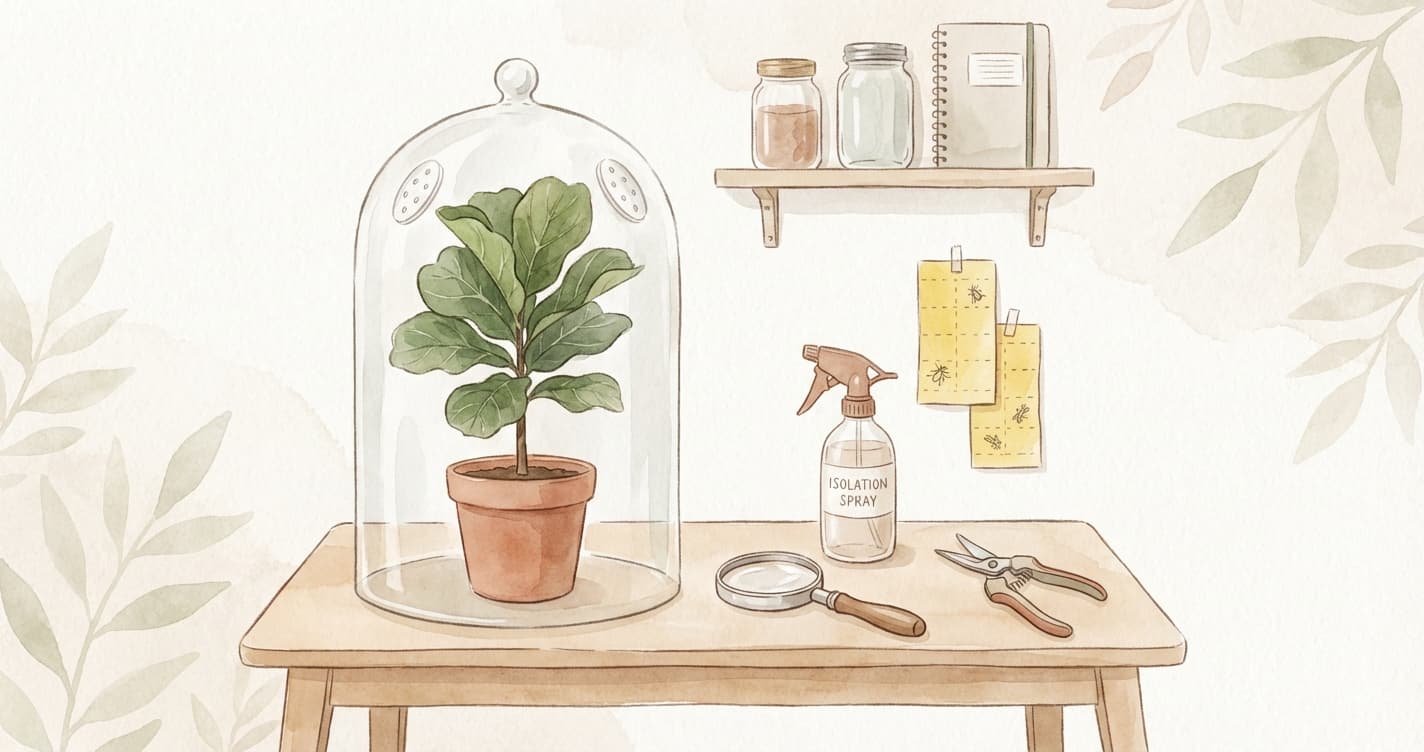
- Quarantine returning plants as if they were new purchases
✓ Full collection inspection: Check every plant carefully. Pests that entered in early fall may now be visible.
✓ Seal potential entry points: Check window and door seals. Whiteflies find even small gaps.
✓ Clean and reorganize: As you bring plants in, clean pots, saucers, and shelves. Remove debris where pests hide.
✓ Prepare for winter conditions: As humidity drops with heating season, increase humidity management to discourage spider mites.
The Fall Return Protocol
This process is so important it deserves emphasis:
| Timeline | Action |
|---|---|
| 3 weeks before move | Apply systemic insecticide to soil |
| 2 weeks before move | Spray with insecticidal soap |
| 1 week before move | Spray with neem oil |
| Day of move | Final inspection; clean pot exteriors |
| After move | Quarantine separately from collection for 4 weeks |
Winter: Survival Mode
December - February
Winter brings lower pest pressure overall, but the pests that thrive indoors—especially spider mites—take advantage of heated, dry conditions.
What Happens in Winter
Heating reduces humidity: Indoor humidity often drops below 30% with heating systems running. This is ideal for spider mites.
Plants are stressed: Low light, dry air, and reduced growth leave plants vulnerable.
Pest reproduction slows: Cooler temperatures (even indoors) slow most pest reproduction. But they don't stop.
Reduced watering reduces fungus gnats: The one silver lining—less frequent watering means fewer fungus gnats.
Winter Pest Priorities
Spider mites: THE winter pest. They thrive in dry heated air while plants are stressed and vulnerable.
Mealybugs: Slow-reproducing but persistent. Infestations that started earlier may become noticeable as populations build.
Scale: Similar to mealybugs—slow but steady populations may reach damaging levels.
Winter Management Actions
✓ Boost humidity: Run humidifiers, group plants together, and use pebble trays. Target 50%+ humidity.
✓ Continue inspections: Weekly checks even in winter. Pests don't hibernate.
✓ Treat problems promptly: Treatments work more slowly in winter—plants grow slowly and can't recover quickly. But delaying makes things worse.
✓ Don't overwater: The temptation to compensate for dry air with extra water leads to fungus gnats and root problems.
✓ Reduce fertilizer: Most plants need no fertilizer in winter. Soft new growth from fertilizing is pest-vulnerable.
✓ Watch for stress signs: Yellowing, dropping leaves, or other stress symptoms indicate plants are weakened and pest-vulnerable.
Monthly Task Calendar
Use this calendar to stay ahead of seasonal pest pressure:
| Month | Primary Tasks | Watch For |
|---|---|---|
| January | Maintain humidity; inspect weekly; refresh sticky traps | Spider mites on dry-stressed plants |
| February | Continue winter protocols; plan spring inspection | Early signs of scale/mealybug population growth |
| March | Thorough spring inspection; fresh sticky traps | Overwintered pests awakening; early aphids |
| April | Begin preventive neem if needed; watch new growth | Aphid explosions; fungus gnats from increased watering |
| May | Pre-treatment if moving plants outside; quarantine new purchases | Thrips on new growth; scale crawlers |
| June | Increase inspection frequency; maintain humidity | Spider mites from AC; thrips entering through windows |
| July | Peak monitoring; check outdoor plants weekly | Maximum pest pressure; prepare for fall treatments |
| August | Begin treating outdoor plants for fall return | Whitefly buildup; scale and mealybug populations |
| September | Execute fall return protocol; aggressive quarantine | Everything on returning plants; entering whiteflies |
| October | Final outdoor plant integration; full inspection | Escaped pests from returned plants |
| November | Transition to winter protocols; boost humidity | Spider mites as heating begins |
| December | Winter humidity and inspection routine | Spider mites; slow-building mealybug/scale |
Environmental Factors by Season
Your pest management success depends heavily on environmental conditions you can control:
Humidity
| Season | Typical Indoor Humidity | Target for Pest Prevention | Action |
|---|---|---|---|
| Spring | 40-50% | 50%+ | May need light humidification |
| Summer | 50-60% (but lower with AC) | 50%+ | Combat AC with humidifier |
| Fall | 40-50% | 50%+ | Begin humidity boosting |
| Winter | 20-35% | 50%+ | Active humidification essential |
Spider mites reproduce significantly slower above 50% humidity. This single environmental factor can prevent most spider mite problems.
Temperature
Pest reproduction rates increase with temperature:
- Spider mites: optimal 80-90°F; slow below 65°F
- Thrips: optimal 75-85°F; slow below 60°F
- Whiteflies: optimal 70-80°F; slow below 60°F
- Fungus gnats: optimal 70-75°F; slow below 65°F
Cooler indoor temperatures (65-70°F) slow pest reproduction while remaining comfortable for most houseplants.
Light
Stressed plants attract pests. Ensure adequate light year-round:
- Winter: Move plants closer to windows; consider grow lights
- Summer: Protect from excessive direct sun that can stress plants
Emergency Response by Season
When pests appear despite prevention, adjust your response to seasonal conditions:
Spring Emergencies
Situation: Rapid aphid explosion on new growth
Response: Act fast—spring's mild conditions allow rapid reproduction. Spray immediately with insecticidal soap. Follow up with neem oil in 5 days. Repeat weekly until controlled.
Summer Emergencies
Situation: Spider mite outbreak in hot, dry conditions
Response: Boost humidity immediately. Shower plants thoroughly with water to knock off mites. Treat with miticide or insecticidal soap every 5-7 days. Increase humidity to 60%+ to slow reproduction.
Fall Emergencies
Situation: Multiple pests discovered on plants just brought inside
Response: Re-isolate immediately. Treat aggressively with both insecticidal soap and systemic insecticides. Extend quarantine to 6 weeks. Inspect your existing collection for any spread.
Winter Emergencies
Situation: Spider mites spreading across collection
Response: Humidity is your primary weapon. Increase to 60%+ if possible. Treat with insecticidal soap every 5 days. Group plants together to increase local humidity. Be patient—treatments and plant recovery are slower in winter.
Frequently Asked Questions
Which season has the worst pest problems?
Summer has the highest overall pest pressure due to warm temperatures and flying pests entering from outside. However, fall's plant transitions and winter's spider mite conditions each create significant challenges.
Should I do anything differently for pests in winter?
Yes. Expect slower treatment effectiveness—plants grow slowly and can't replace damaged tissue quickly. Focus heavily on humidity (spider mites are the primary winter threat). Reduce watering to prevent fungus gnats in the slower-metabolism winter season.
When should I start treating plants before bringing them inside in fall?
Begin 2-3 weeks before the move. Apply systemic insecticide 3 weeks out, insecticidal soap 2 weeks out, and neem oil 1 week out. This layered approach catches pests at multiple life stages.
Do I need sticky traps year-round?
Yes. They serve as early warning systems regardless of season. In winter, they confirm low pest pressure. In summer, they catch the first signs of problems. Replace them monthly or when full.
How do I know if humidity is helping with spider mites?
Monitor with a hygrometer. At 50%+ humidity, spider mite reproduction slows significantly. At 60%+, populations often decline without additional treatment. If you're treating for mites and humidity stays below 40%, expect slower progress.
What's the most important seasonal transition?
Fall, when plants return from outdoors. This single event causes more collection-wide infestations than any other. Treat the fall return protocol as non-negotiable.
Can I take breaks from pest monitoring?
Not really. Even in winter's lower-pressure season, spider mites and other pests persist. Weekly inspection should be a year-round habit. It takes only a few minutes and catches problems when they're still manageable.
Building Your Year-Round Routine
Effective seasonal pest management isn't complicated, but it requires consistency:
Year-round habits:
- Weekly inspection
- Active sticky traps
- Quarantine for new plants
Seasonal adjustments:
- Spring: Thorough collection assessment after winter
- Summer: Increased monitoring; humidity despite AC
- Fall: Aggressive treatment of returning outdoor plants
- Winter: Humidity focus; continued vigilance
The goal isn't perfection—it's catching problems early and adjusting to seasonal conditions. Every pest you prevent or catch early is weeks of treatment you don't need.
For the complete pest management framework, return to our Houseplant Pest Mastery Guide. For quarantine procedures, see our quarantine protocols guide.