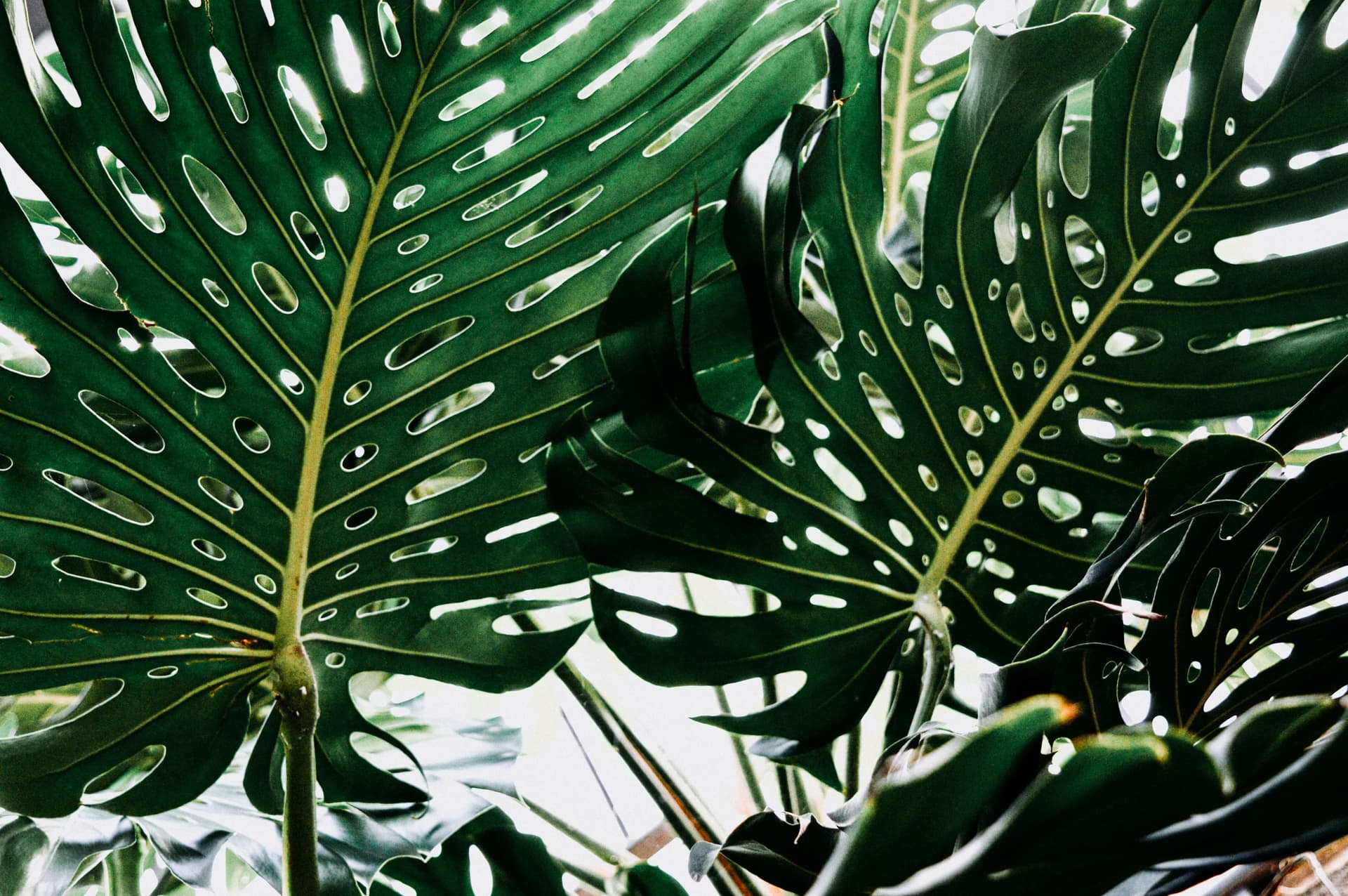
Monstera acuminata image • Photo: Author Annika Lindqvist• CC BY 4.0
Monstera acuminata is a hemiepiphytic flowering plant with distinct growth phases. Juvenile plants grow horizontally as low prostrate herbs with thick, waxy, heart-shaped leaves arranged in two overlapping ranks. Mature plants develop ageotropic anchoring roots to climb vertically, achieving dimorphism with leaves resembling Monstera deliciosa when reaching 15 feet tall. Adult specimens feature smooth or papillose stems (2-3.5 cm thick) with elongated internodes (6-11 cm) and asymmetric leaves that lose soil connection as the base stem decays.
Plant Care Overview
Buy this plant online:
Ad
Care Guide
Essential requirements for your Monstera acuminata
Light Requirements
bright indirect light
Light conditions can affect leaf color and growth rate. Adjust placement as needed based on your plant's response.
Watering Schedule
when top 2-3 inches of soil dry out
Humidity Needs
high humidity
Always check soil moisture before watering. Adjust frequency based on your home's conditions.
Temperature Range
18°C to 27°C (64°F to 81°F)
Native Climate
Native to Mexico to Central America (particularly abundant in central Petén and San Luis Potosí)
Keep away from drafts, heaters, and air conditioners which can stress your plant.
Soil Type
Well-draining, aerated mix with organic matter
Fertilizer
Balanced houseplant fertilizer during growing season
Consider repotting every 1-2 years to refresh soil nutrients and accommodate growth.
Propagation
Methods to grow more Monstera acuminata plants
Stem cuttings with aerial roots or nodes
Plant Info
Characteristics and background information
Mexico to Central America (particularly abundant in central Petén and San Luis Potosí)
moderate
Up to 4.5 meters (15 feet) when climbing
Perennial
Symptoms: Oral irritation, intense burning of mouth, tongue and lips, excessive drooling, vomiting, difficulty swallowing. Reactions occur within 30 seconds of ingestion.
Toxic parts: All parts contain insoluble calcium oxalate crystals
Fun Fact
The plant's base stem intentionally dies after climbing to become fully epiphytic, surviving solely through its aerial roots.
Troubleshooting
Solutions for typical issues with your Monstera acuminata
Yellowing leaves, mushy stems, foul soil odor
Fine webbing on leaves, yellow speckling, leaf drop
Leaves curling inward or upward
Community Tips
Advice shared by other plant enthusiasts
No tips shared yet. Be the first to share your experience!
(Coming soon)
Ad
Care Guides
Detailed guides for caring for your Monstera acuminata
Ad
Related Plants
Similar plants that might interest you
Nurseries Near You
Find Where to Buy Monstera acuminata
Discover local nurseries near you that may carry this plant. We'll show you store ratings, hours, and directions.
Ad
Ad