This guide contains affiliate links. We may earn a small commission if you purchase through our links, at no extra cost to you.
The first step in how to care for an indoor cactus is working out which kind you own. Desert cacti want the brightest window in the house, a deep soak only when the mix is bone dry, and a cool, nearly waterless winter. Jungle cacti want filtered light, steadier moisture and no dry rest at all. Same family, opposite instructions.
Almost every article on indoor cactus care silently assumes the first group. Then someone brings home a Christmas cactus, follows that advice, and watches it shrivel. They did nothing wrong. They read a desert manual for a rainforest plant.
Plenty of this overlaps with caring for succulents indoors. But cacti add two wrinkles nothing else on your shelf has: a light demand most homes cannot meet, and a winter rest almost nobody does.
Desert Cactus or Jungle Cactus? Look at the Stem
Ribbed, globular or columnar with spines in tidy clusters means desert. Flat, strappy, segmented or trailing stems mean jungle.
The New York Botanical Garden describes tropical forest cacti as plants that "typically originate as epiphytes or lithophytes, growing in a pocket of moss or debris in the crook of a tree branch or a rock" — canopy conditions, not desert ones.
| Desert cacti | Jungle cacti | |
|---|---|---|
| Examples | Mammillaria, Echinopsis, Opuntia | Schlumbergera, Rhipsalis, Disocactus |
| Light | Direct sun, south window | Filtered or morning sun |
| Water in growth | Soak, then dry out fully | Evenly moist, never soggy |
| Winter | Cool and nearly dry | Normal room, less water |
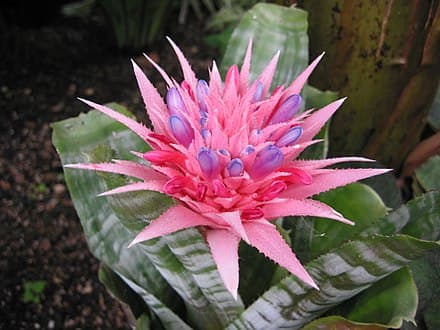
Disocactus phyllanthoides shows the split cleanly. It is a real cactus by every botanical measure, and it will sulk in a south window. NYBG says this group will "die if exposed to prolonged, direct, summer sun."
Holiday cactus care is its own topic. The short version from University of Minnesota Extension: although they are true cacti, they are native to rainforests and want "high humidity, bright but filtered light, and relatively moist soil for most of the year."
Everything below is for desert cacti unless we say otherwise.
Light: More Than You Think, and More Than You Have
Desert cacti are the highest-light plants most people will ever bring indoors. NYBG puts it plainly: cacti "need strong, extended light exposure," meaning "the sunniest possible place in your home."
Our baseline is an unobstructed south-facing window — glass within a foot or two, no sheer curtain. East works for smaller species. West is survivable. North is not a cactus window, whatever the plant tag says.
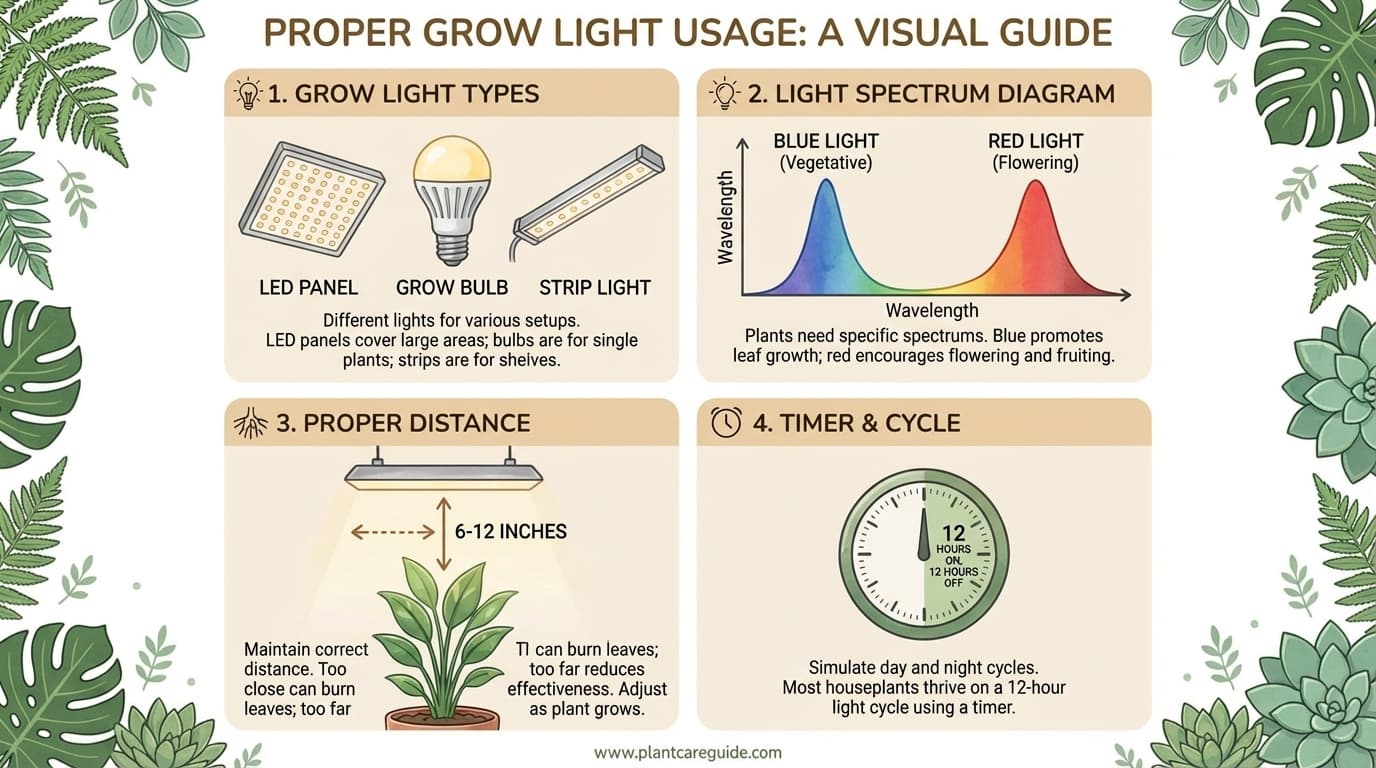
If you do not have that, be honest early. A grow light is not a nice-to-have here; it is the whole plan. Our grow lights guide covers wattage and distance, and the light requirements guide helps you judge what you already have. If neither is realistic, buy something else: Sansevieria tolerates conditions that would leave a cactus pale and stretched within a season.
A cactus short on light etiolates — new growth comes in narrower and paler, and a globe pushes a thin, asparagus-like column out of its top. Growth returns to normal width once light improves, but the pinched section stays pinched forever.
Acclimate to Direct Sun, or It Will Scorch
Your cactus came from a shop lit by fluorescent tubes. Put it straight into a south window in July and it can burn. University of Arizona Cooperative Extension notes cacti sunburn when moved "from a shady site to a sunnier site," or "even if a plant grown in a container is rotated to a different orientation towards the sun," and that the "danger of sunburn is highest when changes occur in summer."
The same source separates two grades, and the difference matters: "light sunburn is shown as a pale yellowing of the epidermis. It may be reversed if noticed early and shading is applied," while "severe sunburn will cause death of the outer epidermis, which will brown and may crack, resulting in a bark-like scarring" that can let bacteria in. Shade a pale patch straight away; a browned, cracked scar is what you do not get back.
Ramp it up over two to three weeks instead:
- Days 1–5: bright indirect light near the window, out of the direct beam.
- Days 6–10: one to two hours of direct morning sun, then move it back.
- Days 11–18: three to four hours of direct sun.
- After that: full exposure, watching for pale patches.
The same ramp applies to a plant leaving a dim winter corner for a March sun angle.
Watering: Soak Deeply, Then Leave It Alone
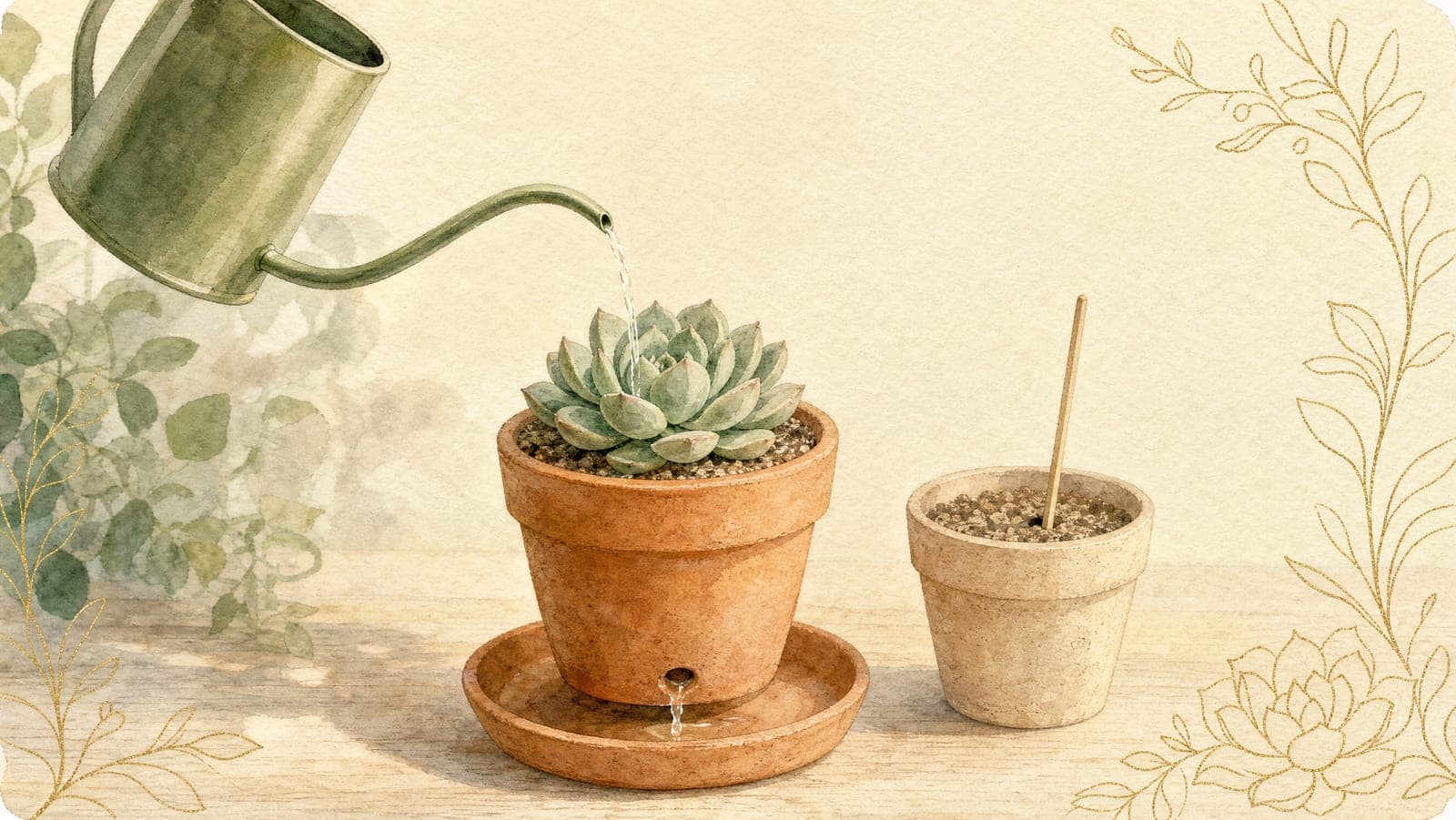
Cacti are watered thoroughly and rarely. Take the pot to the sink, water until it runs out the drainage hole, drain completely, then do nothing until the mix is dry through.
NYBG's rule is to "water thoroughly once the top inch of potting mixture has gotten dry," which "could be as often as once a week in hot, dry home or only every few weeks in a more humid, cool house." That range is the honest answer to how often you should water — it depends on your pot, light and air, not the calendar.
Weigh the pot rather than poking it: lift it after a soak and again a week later. Gritty mixes dry at the surface while staying damp underneath, and unglazed clay dries faster than plastic — Penn State Extension notes that porous clay "tends to pull water and soluble salts from the potting mix," so "plants in clay containers will need to be watered more often than plants in plastic containers." Changing pot material means throwing out your old interval.
The same logic governs the rest of the shelf, so if you also keep Aloe vera, jade or Sedum morganianum, our guide to how often to water succulents indoors works the intervals out in detail. Thin-stemmed trailers like string of pearls dry faster and forgive less.
The Cool, Dry Winter Rest — The Thing Nobody Does
This is often why your cactus has never flowered.
NYBG is unambiguous that the rest is part of the cycle, not an extra: "From October through February, most desert cacti need reduced water, food and temperature." Their recommended conditions are strong light and a room at 40 to 45°F.
Forty degrees. In a heated apartment. You can see the problem.
In practice:
- Stop or nearly stop watering from October to February. Some growers give nothing; we give a splash monthly, and nothing if the room is genuinely cold.
- Keep the light on it. This is a cool rest, not a dark one.
- Find the cold room. An unheated spare bedroom, an enclosed porch above freezing, a garage window.
- Restart gradually, with one normal soak when growth resumes.
Does this actually produce flowers? Here we want to be careful. Botanic gardens prescribe the rest as a growth requirement, and growers widely report that the plants which bloom are the ones that got a real winter. The rigorously documented case is on the jungle side: University of Minnesota Extension states holiday cacti need roughly six weeks of short days with nights at 55 to 65°F, or 12 hours of complete darkness nightly for about six weeks if nights sit at 60 to 65°F. Nobody has published that protocol for every desert genus in a living room.
So, straight: a cool dry winter is your best lever and not a guarantee. No cold bright room means a perfectly nice cactus that will probably never bloom. Plenty of people keep them for the architecture.
Soil and Pot: Gritty, Shallow, Unglazed
Drainage is the whole game, and NYBG's standard is usefully concrete: "A proper cactus soil should drain in less than a minute after watering," and "it is essential that the cactus is kept in a pot with a drain hole."
Most bagged mixes are too peaty for that, so we cut a commercial mix with mineral grit, roughly one part grit to two parts mix. Hoffman's Organic Cactus and Succulent Soil Mix is about $11.49 as of August 2026; Hoffman's own listing copy calls it "professionally formulated for jungle AND desert cacti," which is a fair reflection of how similar the drainage requirement is on both sides of the split even though the schedules are not.
Pumice is our default grit; it does not float or crumble the way perlite does. A 14-quart bag of horticultural pumice is about $34.89 as of August 2026, described by the seller as screened to 3/8 by 1/4 inch. That is a bulk quantity, only worth it across several plants — for one cactus, a small bag of coarse sand does fine.
Pot shape matters more than size. The National Park Service notes a saguaro sends a taproot down "to a depth of about 5 feet" but also puts out "a massive maze-like array of roots close to the surface" to catch shallow rain. In a container, a deep pot mostly holds a wet, unused column of soil. Wide, shallow and unglazed with a drain hole is the right shape — this 6-inch shallow terracotta planter is about $22.99 as of August 2026, and its maker states the unglazed walls draw water out of the soil so it dries faster. Our repotting guide covers technique.
Handling a Spiny Plant Without Bleeding
Repot in spring, into dry soil, and do not water for a week afterward so torn roots can callus.
- Fold newspaper into a band, wrap it round the plant like a collar, hold both ends. Best trick there is, and it costs nothing.
- Use kitchen tongs for smaller globes, with a folded cloth over the jaws.
- Wear gloves with reach. GLOSAV's elbow-length cactus gloves are about $17.99 as of August 2026, with a full-grain cowhide palm and a pigskin cuff covering the forearm; the maker claims ANSI-level puncture resistance. Treat that as a marketing claim, not a tested guarantee. Gloves reduce injuries; nothing makes handling a spiny plant risk-free.
Glochids deserve their own warning. These are the tiny barbed bristles on Opuntia and relatives — fuzzy-looking patches that look harmless and are far worse than the big spines. A 2019 case report in Case Reports in Emergency Medicine notes such injuries "are seldom amenable to conventional removal with tweezers due to their miniscule size," and that adhesive tape "has only been shown to remove 28%–30% of spines." Glochids go straight through cloth gloves. Use the newspaper collar and treat the pads as untouchable.
Corking or Rot? The Distinction That Saves Plants
An older cactus browning at the base usually means nothing is wrong.
Corking is normal ageing: the green epidermis at the base converts to a woody, bark-like layer that supports the growing stem. The Arizona-Sonora Desert Museum describes old saguaros losing their spines and developing dark, corky bark on the lower trunk.
| Corking | Rot | |
|---|---|---|
| Texture | Firm, dry, rigid | Soft, gives under a thumb |
| Colour | Tan or grey-brown | Dark brown to black, wet-looking |
| Spread | Months to years, base upward | Days to weeks |
| Location | Base, moving evenly up | Anywhere, especially wounds |
Press it. Firm and dry means leave it alone. Soft and wet means act now: unpot, cut back to clean white tissue with a sterilised blade, callus the cut in dry air for several days, replant in fresh dry mix. Rot does not reverse on its own.
Common Indoor Cactus Problems
- Stretched, pale new growth. Etiolation. More light; the stretched section never thickens back up.
- Bleached patch on one side. Sunburn. Per UA Cooperative Extension, a light pale-yellow burn may reverse if you shade the plant early; once the tissue browns and cracks, the scarring stays. Prevent it with the ramp above.
- White cottony specks in the areoles. Mealybugs, hiding where the spines make them hard to reach. UC IPM advises that on small houseplant infestations "a 70% or less solution of isopropyl (rubbing) alcohol in water may be dabbed directly on mealybugs with a cotton swab," after testing a small area first for leaf burn. Recheck weekly for a month, and use our pest identification guide to confirm first.
- Alive but never flowers. Too little light, no winter rest, or simply too young.
Not Everything Spiny Is a Cactus
Euphorbia trigona, the African milk tree, is sold beside cacti, looks like one, and is not. It is a Euphorbia, and cut stems bleed a caustic white latex.
That is a genuine safety issue, not a technicality. The ASPCA lists the close relative pencil cactus (Euphorbia tirucalli) as toxic to dogs, cats and horses, with the toxic principle given as "irritant sap (latex)." The eye risk is sharper for people: a case series in the Indian Journal of Ophthalmology reports Euphorbia latex is a strong ocular irritant, with burning, pain, light sensitivity and watering starting immediately on contact and sometimes worsening over hours even after thorough irrigation.
So: gloves and eye protection when you cut one, never rub your eyes while pruning, and if sap reaches an eye, irrigate and seek medical care rather than waiting. The ASPCA does list Christmas cactus (Schlumbergera bridgesii) as non-toxic to dogs, cats and horses — one more reason the jungle group suits households with animals.
What to Do Next
Identify your plant's camp before you set any schedule — desert or jungle decides the light, the water and the winter. Then:
- Move it to the brightest window you have, acclimating over two to three weeks if it has been anywhere dim.
- Switch to soak-and-dry, judged by pot weight rather than a calendar.
- Repot into a wide, shallow, unglazed pot with a mix that drains in under a minute.
- This October, find somewhere bright and cold, and give it a real winter.
Number four is what separates a cactus that survives from one that eventually flowers, and it is the step most people skip.
For the wider picture — including how much light succulents need, and how this system applies across a whole shelf — see our complete succulent and cactus care guide.
Frequently Asked Questions
How often should I water an indoor cactus? Soak thoroughly, then wait until the mix is dry through. NYBG puts that at anywhere from once a week in a hot, dry home to only every few weeks in a more humid, cool one. At winter rest, cut to nearly nothing.
Can I grow a cactus without a sunny window? Not a desert cactus, not well. Under a decent grow light, yes. In natural light alone, anything less than a bright south or east window produces etiolated growth within a season.
Why won't my cactus flower? Usually insufficient light, no cool dry winter rest, or youth — many species must reach a certain size first. The rest period is the lever most people have never pulled.
Is my cactus safe around pets? The spines are the obvious hazard; beyond that it depends on species. The ASPCA lists Christmas cactus as non-toxic to dogs, cats and horses, while Euphorbias sold as cacti, such as the pencil cactus, are listed as toxic due to irritant latex sap. Check the specific plant rather than assuming, and call your vet if an animal has chewed one.