This guide contains affiliate links. We may earn a small commission if you purchase through our links, at no extra cost to you.
Peace lily and pothos are two of the most recommended houseplants for beginners—and for good reason. Both tolerate low light, both are resilient, and both have earned spots on every "easy houseplants" list.
But they offer very different experiences: one gives you elegant flowers and a clumping form; the other provides trailing vines and varieties galore. This guide helps you decide which fits your life better.
Quick Answer: Which Should You Choose?
Choose Peace Lily if you:
- Want flowers (elegant white spathes)
- Prefer an upright, contained shape
- Like dramatic feedback (it droops visibly when thirsty)
- Want strong air-purifying properties
- Have low to medium light
Choose Pothos if you:
- Want trailing or climbing vines
- Prefer more variety in leaf patterns
- Want to propagate and share easily
- Need maximum flexibility in light conditions
- Like watching visible, fast growth
Both are excellent choices—this comes down to growth habit and whether you want flowers.
Plant Profiles
Peace Lily (Spathiphyllum)
Peace Lily, native to tropical Americas and Southeast Asia, is one of the few low-light plants that actually flowers indoors. Its elegant white blooms (technically modified leaves called spathes) appear most in spring and summer but can occur year-round with good care.
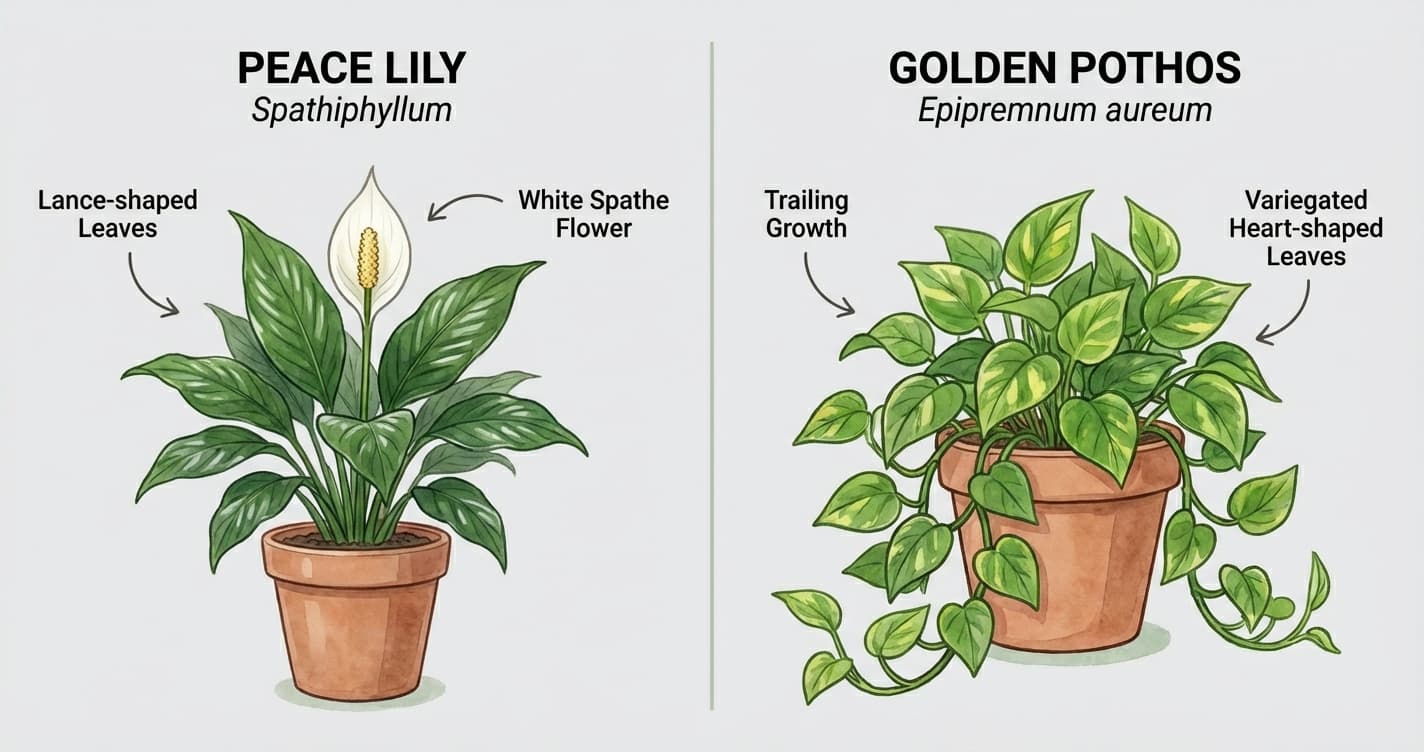
Appearance: Glossy, dark green lance-shaped leaves growing from a central crown. White flower-like spathes rise above the foliage on tall stems.
Popular varieties:
- Spathiphyllum 'Sensation' – Giant variety with massive leaves
- Spathiphyllum 'Domino' – Variegated white-streaked leaves
- Spathiphyllum 'Petite' – Compact variety for small spaces
- Spathiphyllum wallisii – Classic, commonly sold type
Growth habit: Upright clump. Spreads slowly via rhizomes. Self-contained and doesn't trail.
Size range: Most varieties reach 1-4 feet tall and wide.
Pothos (Epipremnum aureum)
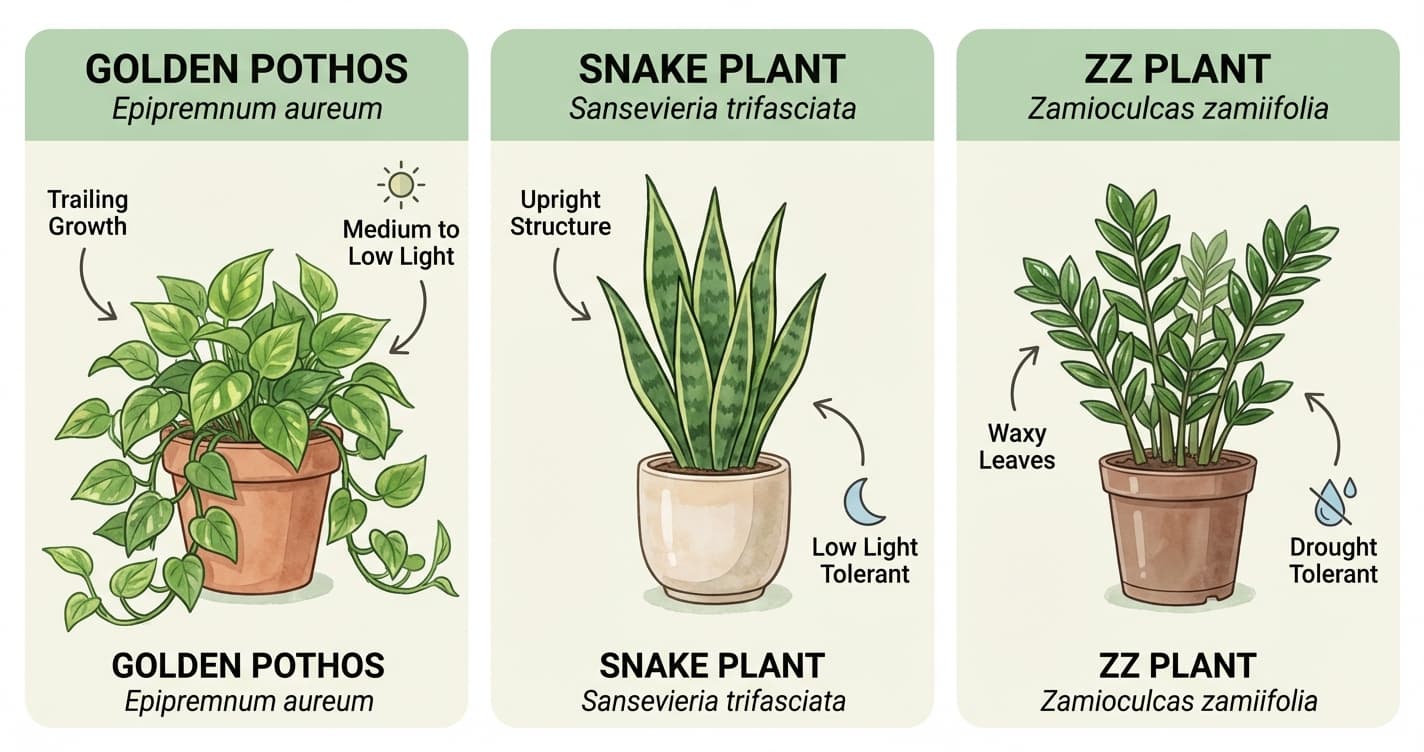
Pothos, nicknamed Devil's Ivy for its near-indestructibility, is a tropical vine from Southeast Asia. It's perhaps the world's most popular beginner houseplant, found in homes, offices, and malls worldwide.
Appearance: Heart-shaped leaves on long trailing vines. Available in numerous color patterns.
Popular varieties:
- Golden Pothos – Green with gold variegation
- Marble Queen – White and green marbled
- Neon Pothos – Bright chartreuse-yellow
- Jade Pothos – Solid deep green
- N'Joy – Compact with cream variegation
- Manjula – Wavy leaves with cream and silver
Growth habit: Vining/trailing. Can trail 10+ feet or climb on supports.
Size range: Vines can reach 10-30 feet with time. Easily controlled with pruning.
Visual Comparison
| Feature | Peace Lily | Pothos |
|---|---|---|
| Growth form | Upright clump | Trailing vine |
| Leaf shape | Lance-shaped, pointed | Heart-shaped |
| Leaf texture | Glossy, thin | Waxy, thick |
| Flowers | Yes (white spathes) | Rarely (almost never indoors) |
| Color varieties | Limited | Extensive |
| Containment | Self-contained | Needs pruning or space to trail |
Care Comparison
Light Requirements
| Plant | Minimum Light | Ideal Light | Direct Sun |
|---|---|---|---|
| Peace Lily | Low | Medium indirect | Avoid |
| Pothos | Low | Medium to bright indirect | Avoid |
Tie for low light tolerance: Both handle low light exceptionally well, surviving in conditions that kill most plants.
For flowers: Peace lily needs medium light (bright indirect) to produce flowers reliably. In low light, it survives but rarely blooms.
For variegation: Pothos varieties with white or yellow variegation need more light to maintain their patterns. In low light, they may revert toward solid green.
Use our light level guide to assess your space.
Water Requirements
| Plant | Frequency | Drought Tolerance | Overwatering Risk |
|---|---|---|---|
| Peace Lily | When droopy | Low-moderate | Medium |
| Pothos | Weekly | Moderate | Medium |
Winner for clear communication: Peace Lily, by a dramatic margin. When thirsty, peace lilies droop spectacularly—leaves hang down like they're dying. Water, and within hours they're upright again. This drama makes them nearly impossible to underwater.
Winner for drought tolerance: Pothos. It wilts when thirsty too but tolerates being forgotten slightly longer before showing damage.
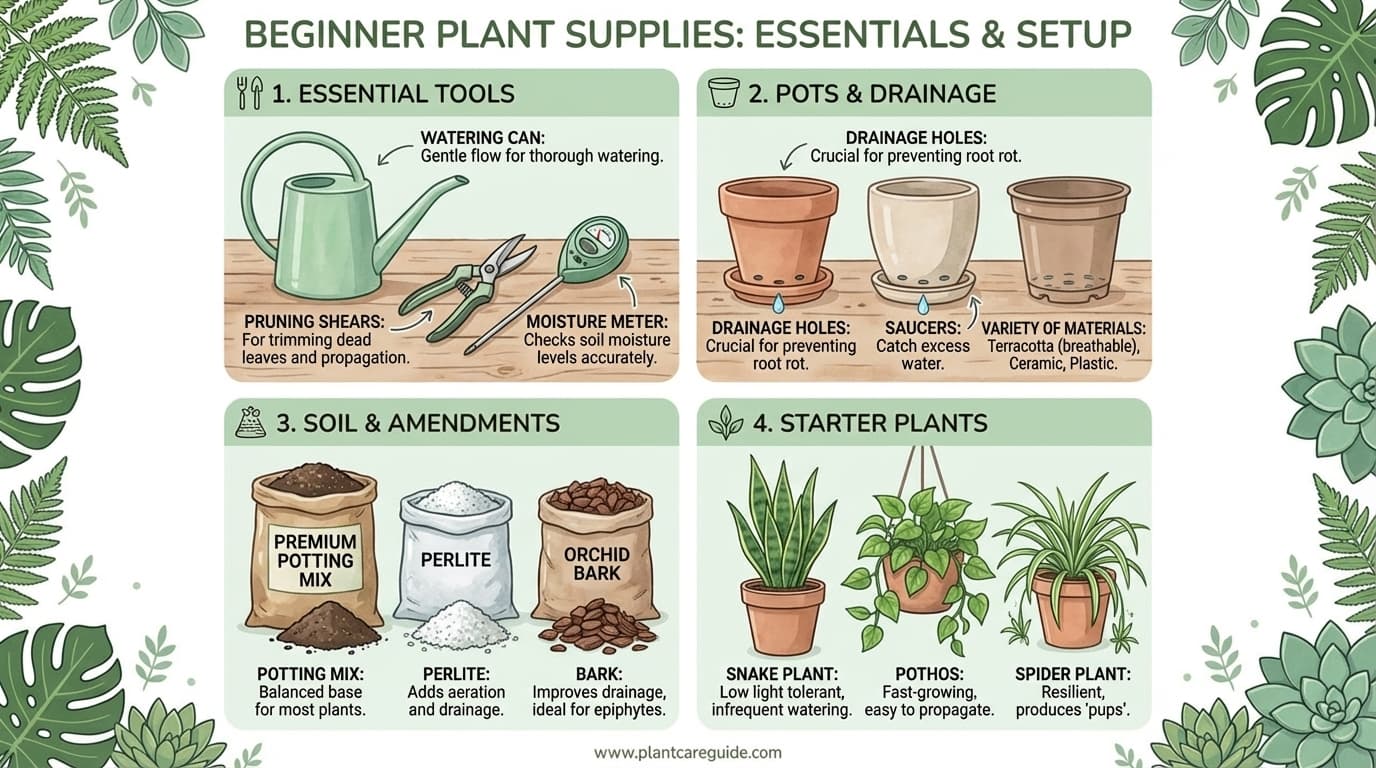
Both hate: Sitting in soggy soil. Always use well-draining soil and pots with drainage holes.
Humidity Requirements
| Plant | Minimum Humidity | Ideal Humidity | Low Humidity Signs |
|---|---|---|---|
| Peace Lily | 40% | 50-70% | Brown leaf tips |
| Pothos | 30% | 50-70% | Brown leaf tips (less common) |
Winner for dry homes: Pothos. It tolerates low humidity without complaint.
Peace Lily sensitivity: Brown leaf tips are common in dry conditions, especially with forced-air heating or AC. A humidity tray or occasional misting helps.
Growth Rate
| Plant | Speed | Annual Growth | New Growth Style |
|---|---|---|---|
| Peace Lily | Moderate | 2-4 new leaves | New leaves from center |
| Pothos | Fast | 12-18 inches of vine | Continuous along vines |
Winner for visible progress: Pothos. You'll see vines extending week after week, providing constant positive feedback.
Peace Lily rewards: While slower, peace lily produces flowers—a reward pothos never offers indoors.
Air Purification
| Plant | NASA Study | Key Toxins Removed | Reputation |
|---|---|---|---|
| Peace Lily | Top performer | Benzene, formaldehyde, ammonia, more | Strongest |
| Pothos | Included | Formaldehyde, benzene, xylene | Strong |
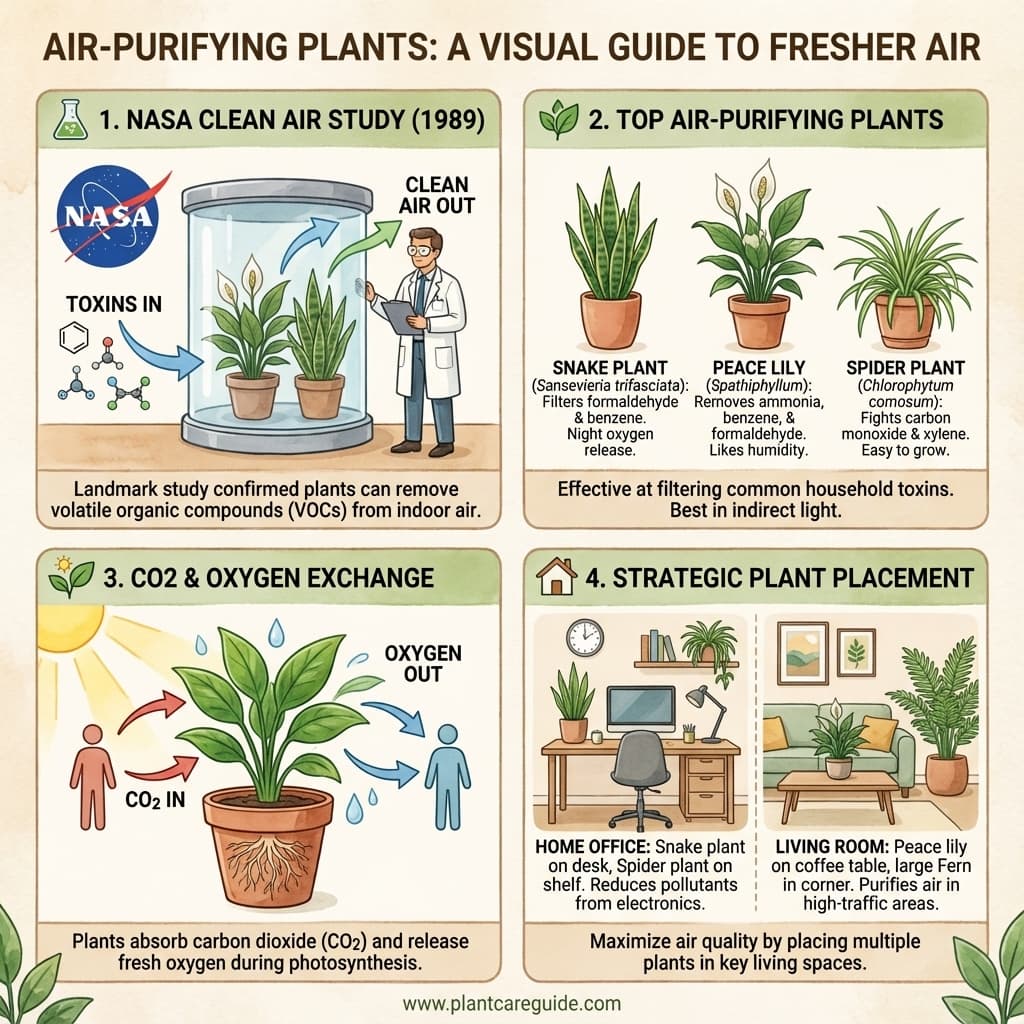
Winner for air purification claims: Peace Lily. It topped NASA's famous clean air study and removes more types of toxins than most plants tested.
Reality check: You'd need many plants to meaningfully affect air quality, but if this benefit matters to you, peace lily has the edge.
Learn more in our air-purifying plants guide.
Pet Safety
| Plant | Toxic to Cats | Toxic to Dogs | Severity |
|---|---|---|---|
| Peace Lily | Yes | Yes | Mild-moderate |
| Pothos | Yes | Yes | Mild-moderate |
Both are toxic to pets, containing calcium oxalate crystals that cause mouth irritation and GI upset if chewed.
For pet-safe alternatives, see our pet safety guide.
Propagation
| Plant | Difficulty | Methods | Time to New Plant |
|---|---|---|---|
| Peace Lily | Easy | Division at repotting | Immediate |
| Pothos | Very easy | Water or soil cuttings | 2-4 weeks |
Winner for propagation sharing: Pothos. Snip a vine, put it in water, share with friends. It's one of the easiest plants to multiply.
Peace Lily method: Division works well but requires a mature plant that's developed multiple crowns. You're not trimming pieces off—you're separating established sections.
Side-by-Side Summary
| Factor | Peace Lily | Pothos |
|---|---|---|
| Growth form | Upright clump | Trailing vine |
| Flowers | Yes | No |
| Light needs | Low to medium | Low to bright |
| Water needs | Dramatic communication | Weekly |
| Humidity preference | Higher | Tolerates low |
| Growth rate | Moderate | Fast |
| Variety options | Limited | Extensive |
| Air purification | Top performer | Strong |
| Pet-safe | No | No |
| Best for | Compact spaces, flowers | Trailing greenery, variety |
Scenarios: Which Plant Wins?
Scenario 1: "I want flowers"
Winner: Peace Lily
It's one of the only low-light plants that reliably blooms indoors. Pothos almost never flowers as a houseplant.
Scenario 2: "I want trailing vines for a shelf or hanging basket"
Winner: Pothos
Its natural vining habit is perfect for trailing. Peace lily doesn't trail at all.
Scenario 3: "I'm terrible at remembering to water"
Winner: Peace Lily (surprisingly)
Its dramatic drooping makes underwatering obvious before any damage occurs. It's almost impossible to accidentally kill through underwatering—you'll see the warning.
Scenario 4: "I have a dark corner"
Winner: Tie
Both tolerate low light. Peace lily won't flower in deep shade; pothos may lose variegation. Both will survive.
Scenario 5: "I want lots of variety and colors"
Winner: Pothos
From golden yellow to marble white to neon chartreuse, pothos offers endless variety. Peace lily varieties mostly differ in size.
Scenario 6: "I have limited space"
Winner: Peace Lily
Its upright, clumping habit stays contained. Pothos vines can overtake a space (though pruning helps).
Scenario 7: "I want to propagate and share plants"
Winner: Pothos
Snip, water, share. Pothos propagation is nearly foolproof and creates shareable plants quickly.
Common Mistakes to Avoid
Peace Lily Mistakes:
- Expecting constant flowers – Blooming is seasonal and light-dependent
- Ignoring brown tips – Usually indicates low humidity; not harmful but unattractive
- Direct sunlight – Burns leaves quickly
- Letting it stay drooped too long – Occasional drama is fine; chronic underwatering damages roots
Pothos Mistakes:
- Ignoring leggy growth – Prune regularly for fuller plants
- Low light for variegated varieties – They'll lose their patterns
- Never fertilizing – Growth slows without occasional feeding during growing season
- Overwatering – Let soil dry between waterings
Frequently Asked Questions
Why doesn't my peace lily flower?
Most common cause: insufficient light. Peace lilies need medium light (bright indirect) to bloom. Low light = survival, no flowers. Also ensure you're fertilizing during growing season.
Why are my peace lily's leaf tips brown?
Low humidity is the usual culprit. Try misting, a humidity tray, or grouping plants together. It's cosmetic and doesn't harm the plant.
Can I grow pothos and peace lily together?
In the same room, absolutely. In the same pot, not recommended—their root systems and water preferences differ slightly, making joint care tricky.
Which one grows faster?
Pothos, significantly. You'll see weekly progress on vines during growing season. Peace lily growth is slower and less visually dramatic.
Can either bloom indoors?
Peace lily blooms readily with adequate light. Pothos almost never flowers indoors—you'd need jungle-like conditions.
Our Recommendation
For beginners who want flowers: Choose Peace Lily. Its clear watering signals and elegant blooms offer unique rewards no other low-light plant provides.
For beginners who want maximum flexibility: Choose Pothos. Its variety of colors, vining habit, and ultra-forgiving nature make it the Swiss Army knife of houseplants.
Can't decide? Get both—they complement each other beautifully. Peace lily provides upright form and occasional flowers; pothos adds trailing greenery and color variety. Together, they create visual interest while sharing similar (though not identical) care needs.
Next Steps
Ready to bring home an easy-care classic?
- Assess your light: Use our light level guide to find the best spot
- Find a healthy plant: Visit a local nursery to select a specimen
- Prepare proper drainage: Both need pots with drainage holes
- Learn the basics: Complete beginner's guide
- Avoid common mistakes: 7 mistakes new plant parents make
Both peace lily and pothos have earned their reputations as foolproof starter plants. Either choice sets you up for success in your houseplant journey.