This guide contains affiliate links. We may earn a small commission if you purchase through our links, at no extra cost to you.
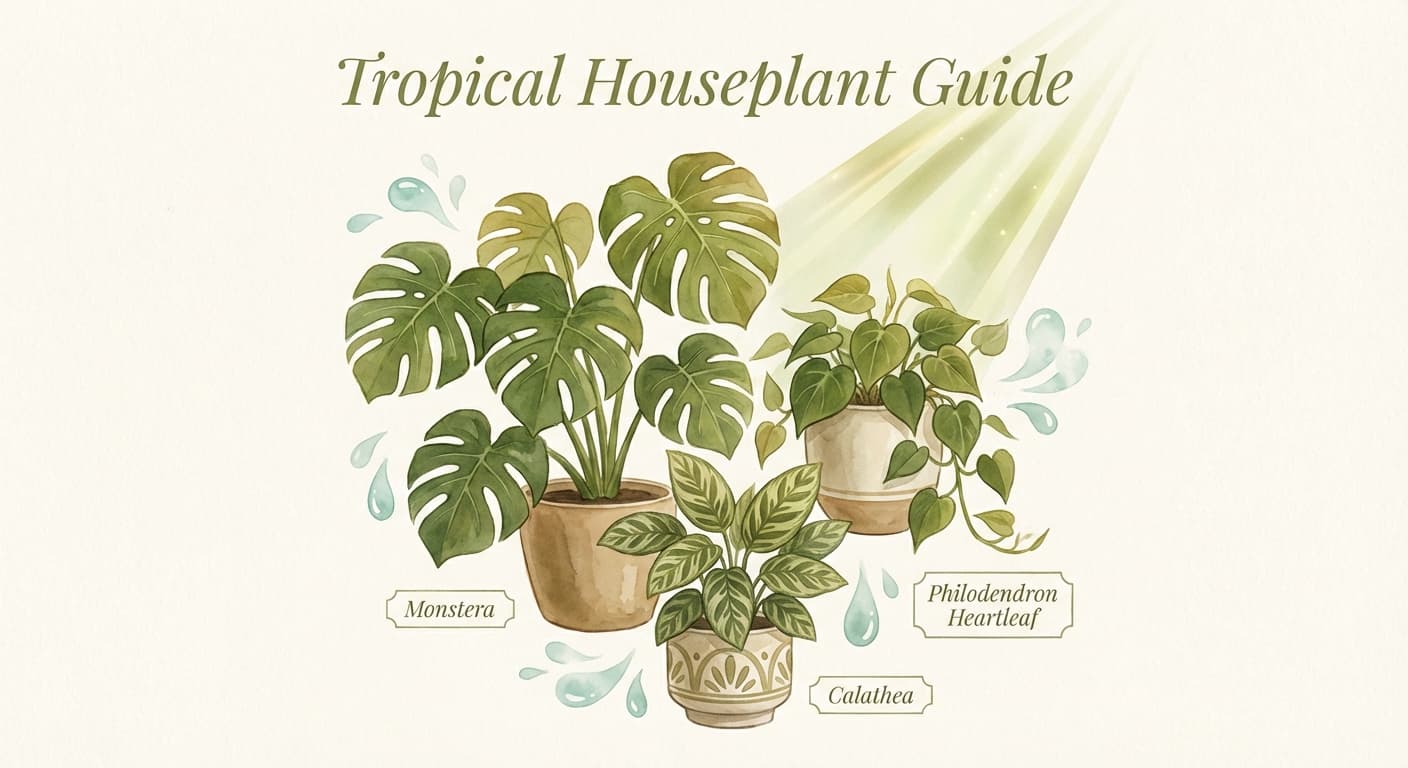
This guide is part of our comprehensive Tropical Houseplant Guide.
Tropical plants evolved near the equator, where seasons barely exist. But in our homes, they experience dramatic seasonal changes: winter heating that dries the air, summer's longer days, shifting light angles, and temperature fluctuations throughout the year.
Understanding these seasonal impacts—and adjusting care accordingly—separates thriving tropical collections from struggling ones.
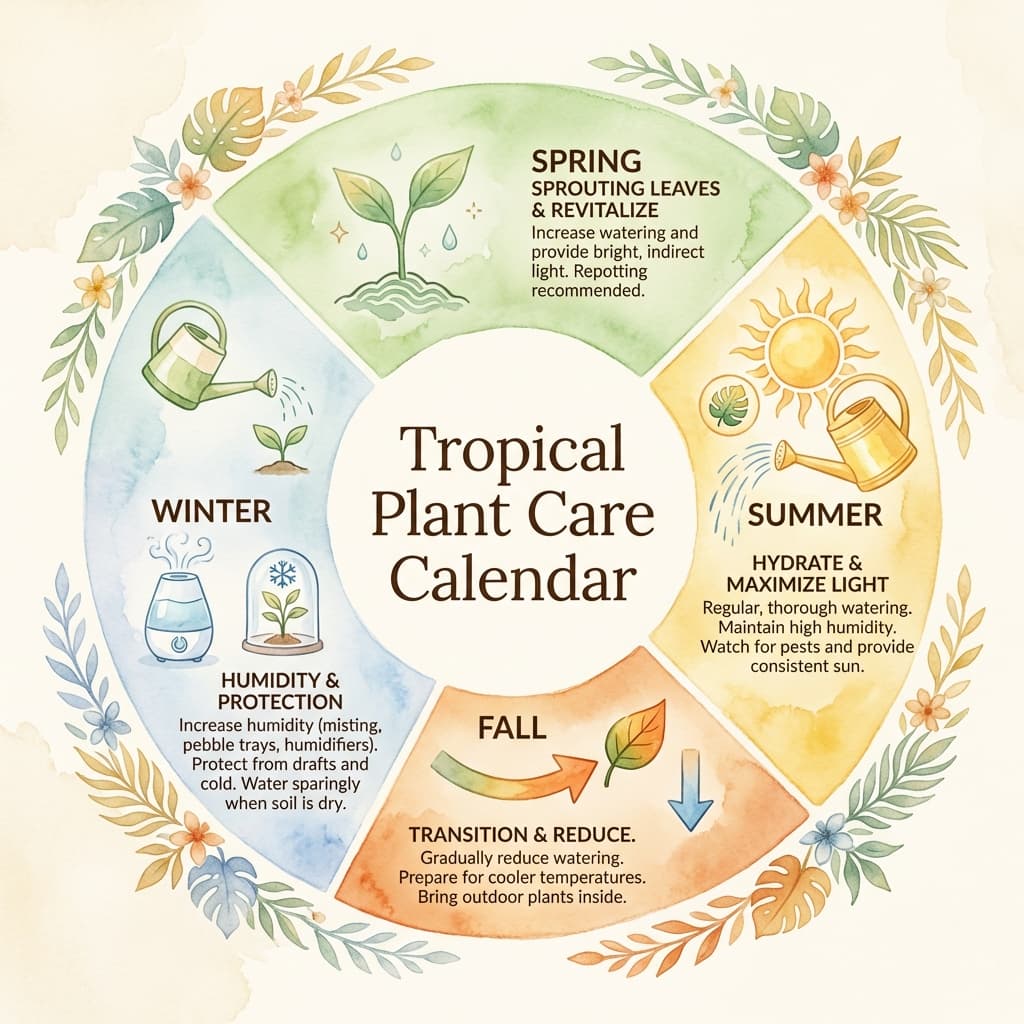
This calendar guides you through each season, helping you anticipate what your plants need before problems develop.
Table of Contents
- Understanding Seasonal Changes
- Winter Care (December-February)
- Spring Care (March-May)
- Summer Care (June-August)
- Fall Care (September-November)
- Care Routines by Collection Size
- Regional Considerations
- Frequently Asked Questions
Understanding Seasonal Changes
While tropical plants don't experience true dormancy like temperate species, they respond to changes in your home environment:
What Changes Seasonally
Light duration and intensity: Days shorten dramatically in winter (8-9 hours) compared to summer (14-15 hours). Even indoor light levels drop.
Humidity: Winter heating dries air to 20-30%. Summer humidity often reaches 50%+ naturally.
Temperature stability: Heating and cooling cycles create fluctuations. Drafts from windows and doors are worse in winter.
Your behavior: You might water less consistently during busy holiday seasons or summer vacations.
How Plants Respond
Winter: Growth slows or stops. Water uptake decreases. Stress from dry air increases.
Summer: Active growth resumes. Water needs increase. Plants are more resilient.
Transitions: Spring and fall are adjustment periods where care routines need updating.
Winter Care (December-February)
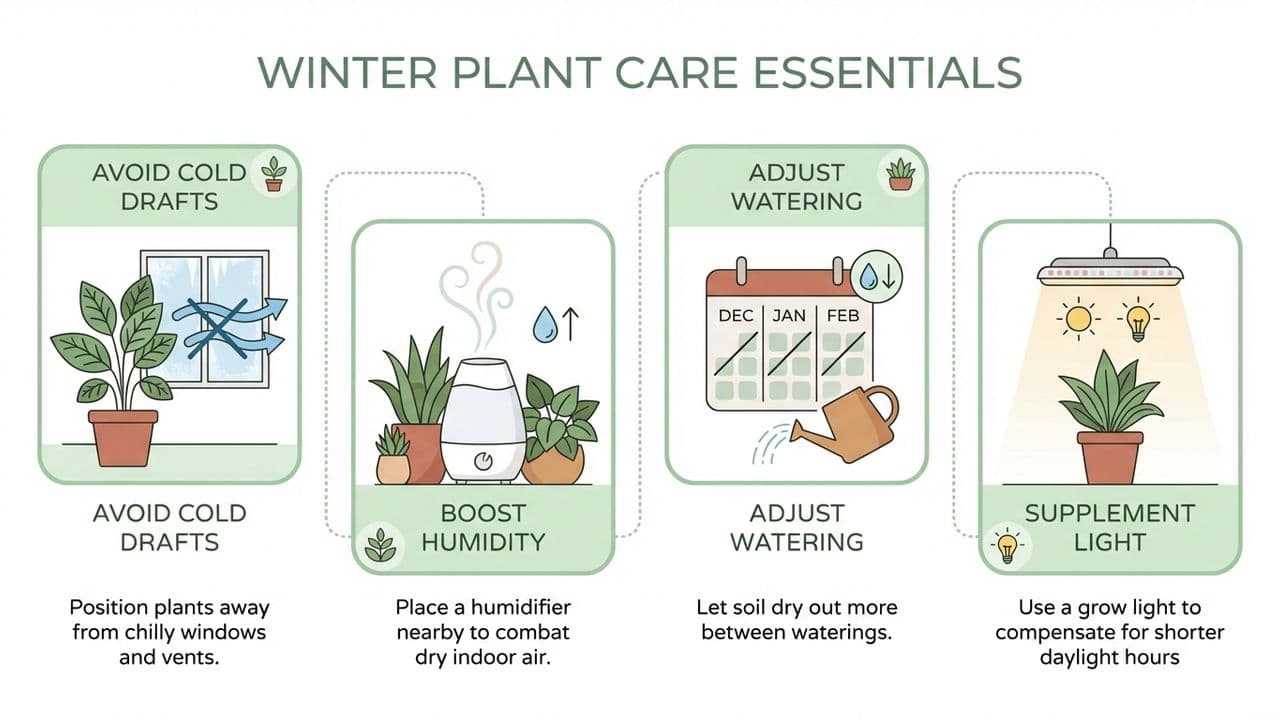
The most challenging season for tropical plants. Low humidity, reduced light, and heating create stress.
Key Winter Challenges
- Humidity drops to 20-30% in heated homes
- Days are shortest, reducing light energy
- Heating creates drafts and temperature swings
- Cold windows can damage nearby plants
Winter Care Adjustments
Watering: Reduce Significantly
Plants use much less water in winter due to:
- Slower growth (less water for cell expansion)
- Lower light (less photosynthesis, less transpiration)
- Shorter days
Adjust by: Checking soil moisture more carefully. Many plants need water half as often (or less) compared to summer. A Monstera watered weekly in summer might need water every 2-3 weeks in winter.
Watch for: Overwatering is the biggest winter danger. Yellow leaves and root rot spike during this season.
Humidity: Increase Efforts
This is when your humidifier earns its keep:
- Run humidifiers more frequently or at higher settings
- Consider adding a second humidifier to plant areas
- Group plants more closely (shared transpiration)
- Move sensitive plants to naturally humid rooms (bathrooms)
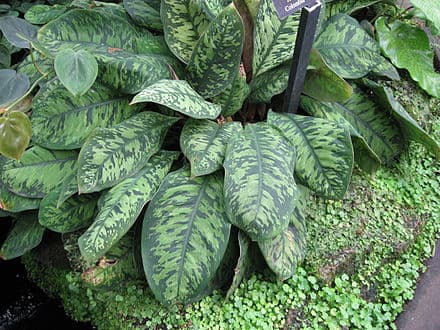
Target: 50%+ for most tropicals, 60%+ for Calathea and other demanding species.
Light: Maximize Available Light
Shorter days mean less energy for plants:
- Move plants closer to windows
- Clean windows to maximize light transmission
- Consider supplemental grow lights, especially for high-light plants
- Rotate plants so all sides get light exposure
Watch for: Leggy growth, pale colors, and variegation reverting to green all indicate light stress.
Temperature: Avoid Cold Spots
- Keep plants away from cold windows (especially single-pane)
- Avoid placement near exterior doors
- Watch for drafts from window seals
- Don't place plants where heating vents blow directly on them
Fertilizing: Stop or Minimize
With growth slowed, plants can't use fertilizer effectively:
- Stop fertilizing most plants from November through February
- Excess fertilizer builds up as salts and damages roots
- Resume in spring when growth restarts
Winter Checklist
- Increase humidifier runtime
- Reduce watering frequency—check soil before watering
- Stop fertilizing
- Move plants closer to light sources
- Check for cold drafts
- Expect slower (or no) growth—this is normal
Spring Care (March-May)
Plants awaken as days lengthen. The transition from winter care to active growth care.
Key Spring Opportunities
- Increasing light stimulates new growth
- Rising humidity (in most climates) reduces plant stress
- Warm temperatures support root development
- Best time for repotting, propagation, and major care tasks
Spring Care Adjustments
Watering: Gradually Increase
As growth resumes, water needs rise:
- Check soil more frequently—it will dry faster
- Increase watering gradually as you see new growth
- Plants coming out of dormancy (like Alocasia) will suddenly need more water
Humidity: Begin Transitioning
If your climate's natural humidity rises in spring:
- You may reduce humidifier use
- Continue monitoring—spring weather can be variable
- Maintain higher humidity for demanding species
Light: Adjust for Angle Changes
The sun's angle shifts significantly in spring:
- Plants in winter light spots may now get direct sun
- Check for potential sunburn as sun intensity increases
- This is a good time to evaluate and adjust plant placement
Fertilizing: Resume
Active growth means plants can use nutrients:
- Begin fertilizing in early to mid-spring (March-April)
- Start with half-strength to ease plants back into feeding
- Feed every 2-4 weeks during active growth
Repotting: Prime Season
Spring is the best time for repotting:
- Plants have energy to recover
- Root growth is active
- Check if any plants have become rootbound over winter
- Repot before summer's heat arrives
Propagation: Optimal Window
Take cuttings in spring for best success:
- Plants are gearing up for growth
- Cuttings root faster
- Warmer temperatures support root development
Pest Inspection: Critical
Pests that were dormant over winter become active:
- Inspect plants carefully as temperatures warm
- Spider mites, mealybugs, and thrips may appear
- Catch infestations early before they explode
Spring Checklist
- Inspect all plants for pests
- Check for rootbound plants, repot as needed
- Resume fertilizing
- Take propagation cuttings
- Adjust plant placement for changing sun angles
- Increase watering frequency as growth appears
Summer Care (June-August)
Peak growing season. Plants are most active and resilient, but heat and vacations present challenges.
Key Summer Characteristics
- Maximum daylight drives strong growth
- Higher natural humidity in most climates
- Vacations may disrupt care routines
- Heat can stress plants near windows
Summer Care Adjustments
Watering: Most Frequent
Summer's heat and active growth mean highest water needs:
- Check plants more frequently—possibly twice weekly for smaller pots
- Don't let moisture-loving plants dry out
- Morning watering is better than evening (reduces fungal risk)
Heat warning: Plants near windows may need extra water as soil dries faster from conducted heat.
Humidity: Often Adequate Naturally
Summer humidity often reaches 50%+ without intervention:
- You may reduce or stop humidifier use
- Monitor humidity-loving plants—AC can dry air significantly
- Air conditioning creates dry indoor microclimates
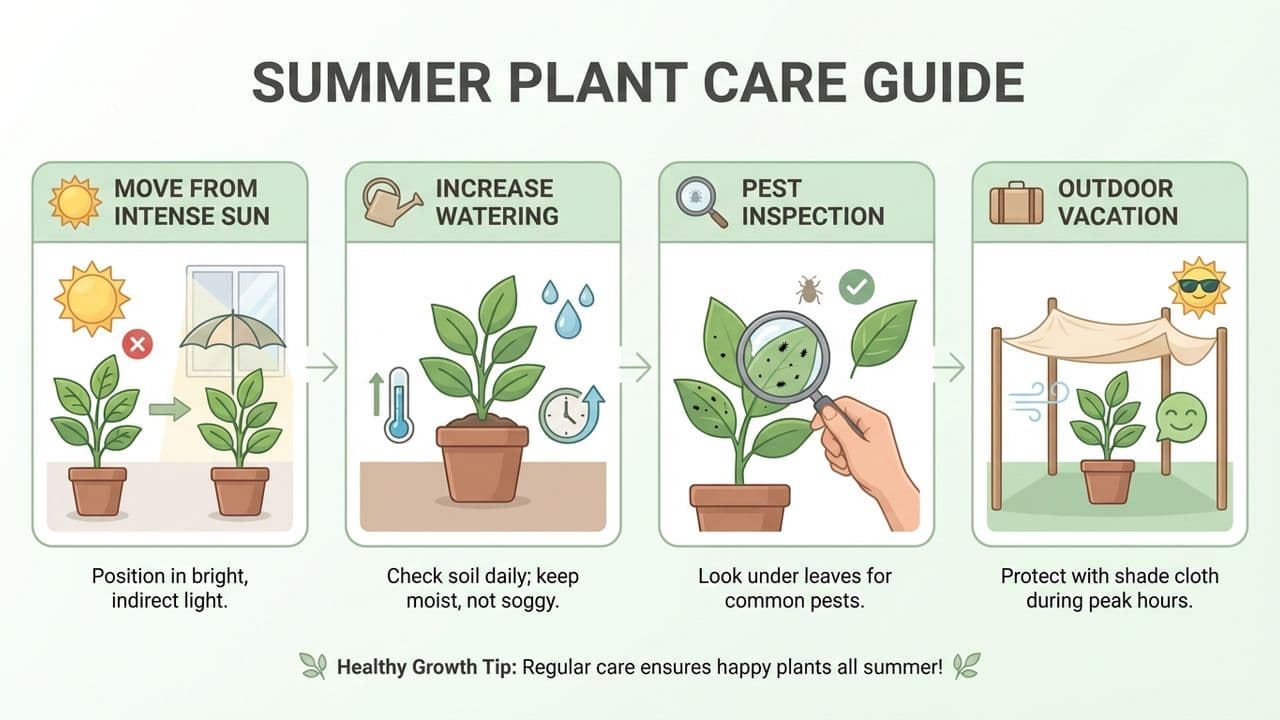
Light: Manage Intensity
Summer sun is strongest:
- Watch for sunburn, especially on plants moved closer to windows for winter
- Sheer curtains may be needed to filter intense afternoon sun
- This is when high-light plants thrive—don't overprotect them
Fertilizing: Full Schedule
Continue regular feeding:
- Every 2-4 weeks with balanced fertilizer
- Water-soluble or slow-release both work
- Don't over-fertilize in enthusiasm—follow product directions
Outdoor Growing: An Option
Many tropical plants can spend summer outdoors:
- Acclimate gradually (a week of increasing outdoor exposure)
- Choose shaded spots—full outdoor sun will burn houseplants
- Monitor for pests before bringing back inside
- Bring indoors before nighttime temperatures drop below 55°F
Vacation Care: Plan Ahead
Summer vacations disrupt care routines:
- Water thoroughly before leaving
- Group plants in cooler, shadier spots (slower drying)
- Consider self-watering solutions for trips over a week
- Ask a plant-savvy friend to check on demanding species
Summer Checklist
- Check watering needs frequently
- Watch for sunburn on plants near windows
- Continue regular fertilizing
- Consider outdoor time for sturdy plants
- Plan for vacation care
- Monitor for pest outbreaks
Fall Care (September-November)
Transition from peak growth to winter preparation. Adjust care before problems develop.
Key Fall Transitions
- Days shorten rapidly, reducing light
- Heating begins (drying air again)
- Growth slows as light decreases
- Outdoor plants must come inside before frost
Fall Care Adjustments
Watering: Begin Reducing
As growth slows, water needs decrease:
- Extend time between waterings
- Always check soil before watering—don't follow summer schedules
- Watch for overwatering signs (yellowing, fungus gnats)
Humidity: Prepare for Winter
When heating starts, humidity plummets:
- Clean and prepare humidifiers
- Start running humidifiers as soon as heating begins
- Don't wait for plant stress—prevent it
Light: Maximize as Days Shorten
- Move plants closer to windows as days shorten
- Clean windows (interior and exterior) to maximize light transmission
- Evaluate grow light needs—set up before plants start stretching
Fertilizing: Taper Off
- Reduce fertilizer frequency in September-October
- Stop completely by November
- Plants can't use fertilizer effectively with reduced light
Bringing Plants Indoors
If you summered plants outside:
- Bring inside before nighttime temperatures drop below 55°F (usually September-October depending on location)
- Inspect thoroughly for pests—treat any issues before bringing inside
- Expect some adjustment stress (leaf drop, slower growth)
- Quarantine outdoor plants away from indoor collection for 2-4 weeks
Pre-Winter Plant Inspection
Before winter sets in:
- Check all plants for pests
- Prune any leggy or overgrown growth (do this now, not in winter)
- Address any drainage issues
- Ensure all pots have proper drainage
Fall Checklist
- Reduce watering frequency
- Prepare humidifiers for winter
- Bring outdoor plants inside
- Inspect and treat for pests
- Taper off fertilizing
- Move plants to maximize winter light
Care Routines by Collection Size
Small Collection (1-5 Plants)
Weekly:
- Check each plant's soil moisture
- Water as needed (may not be all plants)
- Quick visual inspection for pests/problems
Monthly:
- Wipe dust from leaves
- Rotate plants 1/4 turn
- Fertilize during growing season
Seasonally:
- Adjust care for seasonal changes
- Repot as needed (spring)
Medium Collection (6-20 Plants)
Twice Weekly:
- Check soil moisture on all plants
- Water those that need it
Weekly:
- Detailed inspection for pests/problems
- Refill humidifiers
Monthly:
- Clean leaves
- Fertilize during growing season
- Rotate plants
Seasonally:
- Major seasonal adjustments
- Batch repotting (spring)
- Propagation projects
Large Collection (20+ Plants)
Daily:
- Quick environmental check (humidity, temperature)
- Refill humidifiers
- Visual scan for obvious problems
Twice Weekly:
- Systematic soil moisture checks
- Watering rounds
Weekly:
- Detailed inspection of a portion of collection (rotate through)
- Record-keeping (growth notes, issues)
Monthly:
- Full collection inspection
- Fertilizing
- Cleaning and maintenance
Seasonally:
- Major care transitions
- Collection assessment
- Culling or gifting plants that aren't thriving
Regional Considerations
Your climate affects seasonal care:
Northern/Cold Climates
- Winter is longer and harsher—prioritize humidity
- Summer outdoor time is shorter
- Indoor growing season is primary season
- Consider grow lights as standard equipment
Southern/Warm Climates
- Shorter, milder winter—less dramatic care shifts
- Summer heat can stress plants (even indoors)
- Outdoor growing may be year-round
- Air conditioning is the main humidity challenge
Dry Climates (Desert, High Altitude)
- Humidity is a year-round challenge
- Humidifiers may run constantly
- Focus on humidity-tolerant tropicals, or invest in enclosed setups
- Evaporative coolers in summer actually help humidity
Humid Climates (Coastal, Tropical)
- Natural humidity makes tropical growing easier
- Summer may bring too much humidity (fungal risk)
- Air circulation becomes more important
- Drainage is critical—avoid soggy conditions
Frequently Asked Questions
Why are my plants struggling more in winter?
Low humidity, reduced light, and overwatering (not adjusting for slower growth) are the winter trifecta of problems. Address humidity first, then light, then check your watering habits.
When should I start fertilizing in spring?
When you see new growth emerging—typically March or April in most regions. Start at half-strength to ease plants back into active feeding.
Can tropical plants go outside in summer?
Many can, but acclimate gradually and choose shaded spots. Direct outdoor sun burns houseplants. Bring them back inside before temperatures drop below 55°F.
How much should I reduce watering in winter?
Often by half or more. A plant watered weekly in summer might need water every 2-3 weeks in winter. Always check soil moisture rather than following a schedule.
Should I still water plants during winter dormancy?
Yes, but sparingly. Even dormant plants need some water—just much less. Check soil and water when quite dry.
When should I repot?
Spring is ideal—March through May for most regions. Plants have energy to recover and establish before winter stress.
How do I know if my plant is dormant vs. dying?
Dormant plants have firm stems and may lose leaves but remain structurally sound. Dying plants have soft, mushy stems or completely desiccated tissue. When in doubt, check roots—healthy roots indicate dormancy; rotted or dead roots indicate serious problems.
Key Takeaways
- Anticipate seasonal changes: Adjust care before problems develop
- Winter is the challenge: Humidity and reduced watering are critical
- Spring is action season: Repotting, propagation, and fertilizing resume
- Summer is easy: Active growth makes plants resilient
- Fall is preparation: Get ready for winter before it arrives
Understanding seasonal care transforms reactive problem-solving into proactive plant success. Your tropical plants may come from climates without seasons, but they'll thrive when you help them navigate the seasons in your home.
For complete tropical plant care, return to our Complete Guide to Tropical Houseplants.