This guide contains affiliate links. We may earn a small commission if you purchase through our links, at no extra cost to you.
This guide is part of our comprehensive Tropical Houseplant Guide.
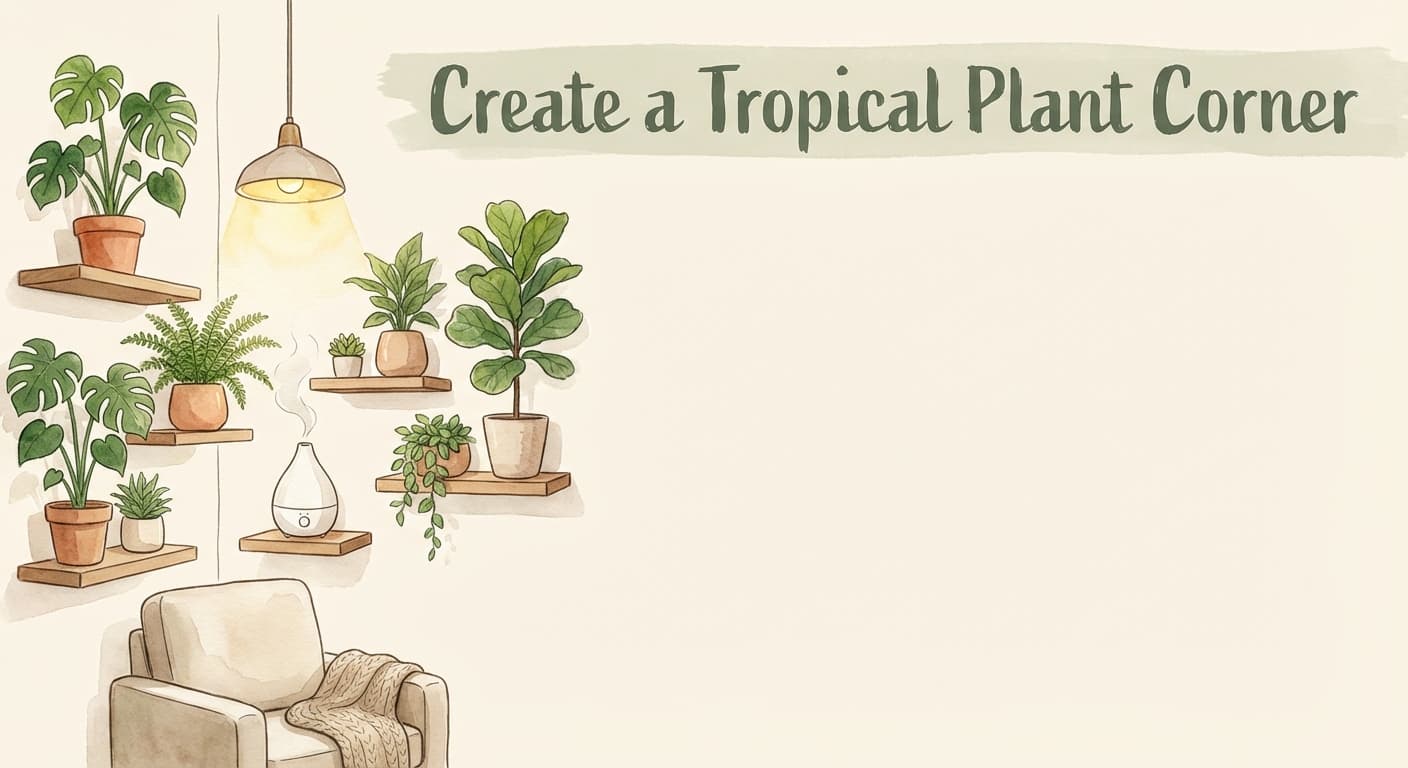
Scattered houseplants around your home look nice. A dedicated tropical plant corner looks like you've brought the rainforest indoors. The visual impact is incomparable—layers of green, dramatic leaves at different heights, that lush jungle atmosphere that makes every Instagram plant account envious.
But a tropical corner isn't just about aesthetics. Grouping plants creates a humidity microclimate, makes care more efficient, and lets you optimize one area for tropical plant success rather than fighting conditions throughout your home.
Here's how to create your own.
Table of Contents
- Choosing the Right Location
- Essential Equipment
- Plant Selection and Arrangement
- Setting Up Your Humidity System
- Lighting Your Tropical Corner
- Maintenance Routine
- Budget vs. Premium Setups
- Common Setup Mistakes
- Frequently Asked Questions
Choosing the Right Location
The success of your tropical corner starts with choosing the right spot.
Light Considerations
Your tropical corner needs adequate light. Look for locations that offer:
- Near windows: Within 3-5 feet of medium to bright windows
- East or south-facing walls: Best natural light in the Northern Hemisphere
- Multiple light sources: Corner between two windows can work beautifully
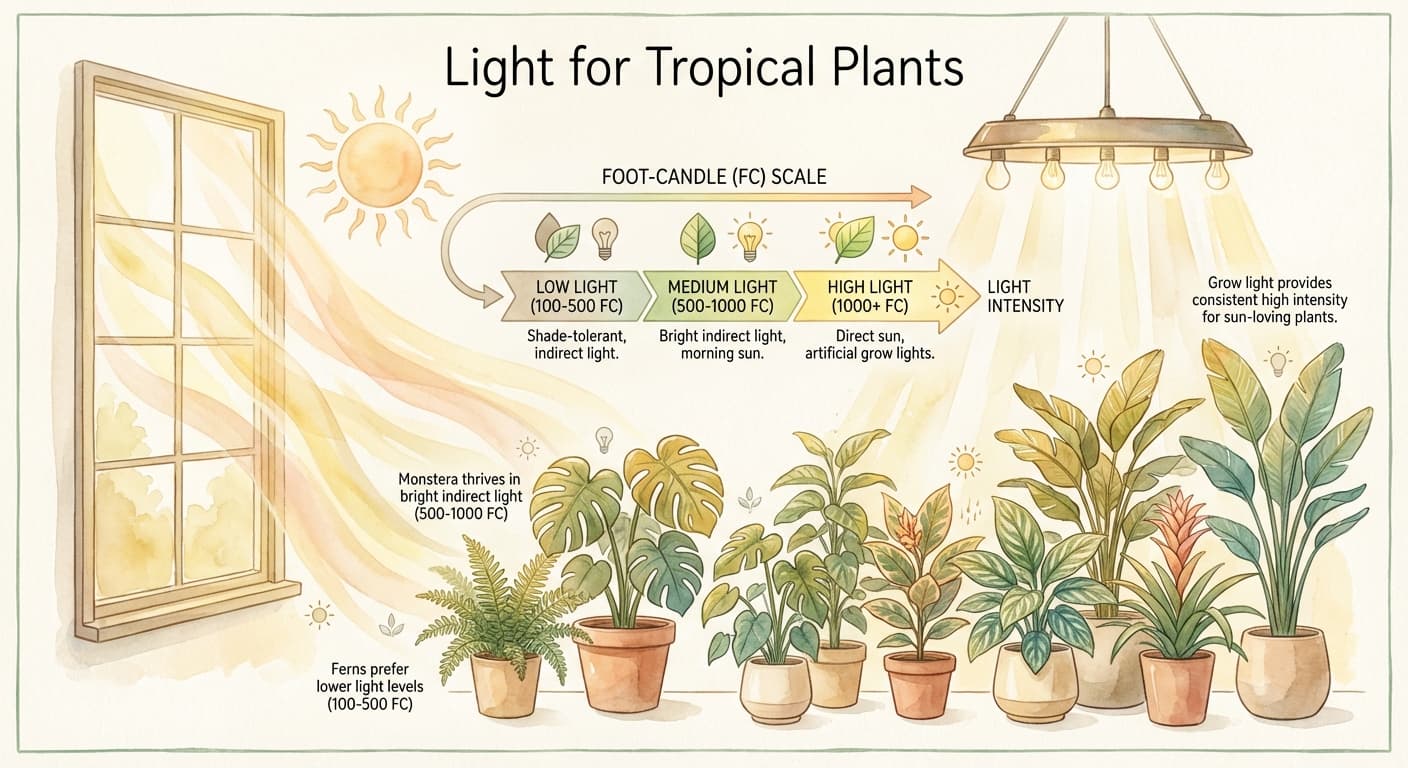
If the best visual spot in your home doesn't have great light, plan for supplemental grow lights from the start. See our lighting guide for details.
Space Requirements
Plan for more space than your current plants need:
- Floor footprint: At least 4x4 feet for a substantial corner, though you can start smaller
- Height clearance: Consider tall plants and hanging options—8+ feet of ceiling height is ideal
- Access: Leave room to reach plants for watering and maintenance
Environmental Factors
Check for:
Heating/cooling vents: Avoid locations directly in front of HVAC vents. The dry air and temperature fluctuations stress tropical plants.
Drafts: Doorways, frequently opened windows, and exterior walls in winter can create cold drafts.
Traffic patterns: Heavy foot traffic can damage trailing plants and knock over pots. Choose a corner that's visible but not in the main walkway.
Best Rooms
Living rooms: Usually have the best light and most space. Your corner becomes a focal point.
Bedrooms: If you run a humidifier for sleep anyway, your tropicals benefit. Requires adequate light.
Home offices: You'll see your plants constantly. A plant corner improves air quality and reduces stress.
Dining rooms: Often have good light and enough wall space for dramatic arrangements.
Essential Equipment
Here's what you need to set up a successful tropical corner.
Must-Haves
Humidifier ($30-80) The single most important investment. Choose one rated for your room size. Cool mist models are popular for plant use.
For tropical corners, you want:
- At least 1.5 gallon tank (larger = less frequent refilling)
- Adjustable output
- Easy to clean
- Quiet operation
Hygrometer ($10-20) You can't manage what you don't measure. Place at plant level to monitor actual humidity around your plants.
Waterproof tray or mat ($10-30) Protects floors from water damage during watering and from humidifier condensation. Large boot trays, plastic utility mats, or waterproof plant mats all work.
Watering can with narrow spout ($15-25) Makes accurate watering easier when plants are grouped closely.
Nice-to-Haves
Plant stands and risers ($20-100+) Creating height variation makes your corner visually interesting and ensures light reaches lower plants.
Grow light ($30-100+) Essential if natural light is insufficient. Options range from clip-on bulbs to stylish floor lamps. See our grow lights guide for recommendations.
Moss poles and supports ($10-30) For climbing tropicals like Monstera and Philodendron. Help plants grow upward rather than sprawling.
Rolling plant caddy ($15-25) For heavy pots. Makes rotating and moving plants for cleaning much easier.
Moisture meter ($10-15) Helpful when plants are grouped closely and reaching soil is awkward.
Plant Selection and Arrangement
Creating a visually stunning corner requires thoughtful plant selection and arrangement.
The Layering Principle
Professional interior plant designs use layers:
Tall background plants (4-6+ feet) These form the backdrop and create drama:
- Bird of Paradise
- Fiddle Leaf Fig
- Large Monstera
- Tall Dracaena
- Majesty Palm
Medium statement plants (2-4 feet) Fill the middle layer with substantial plants:
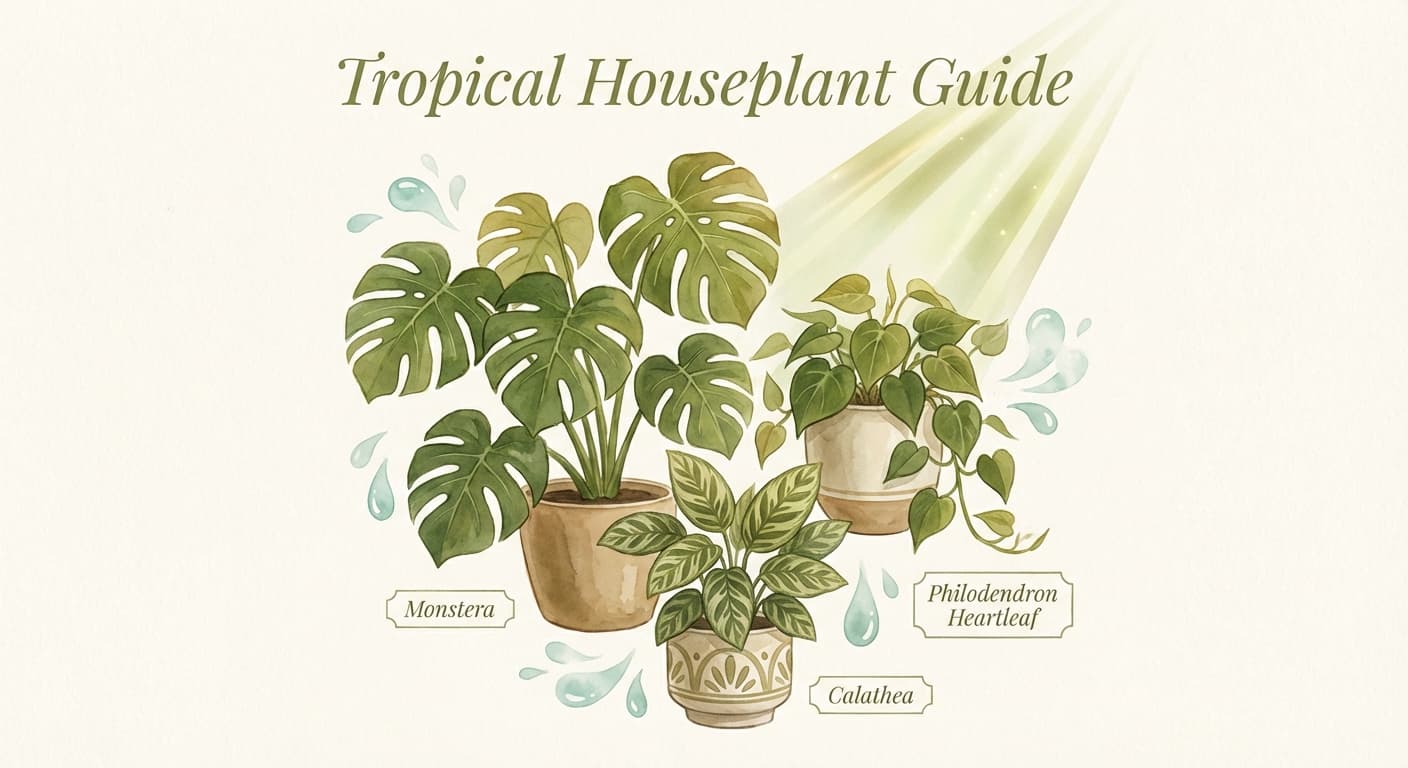
- Monstera (smaller specimens)
- Large Philodendrons
- Alocasia
- Peace Lily
- Rubber Plant
Tabletop and floor plants (under 2 feet) Smaller plants fill in gaps:
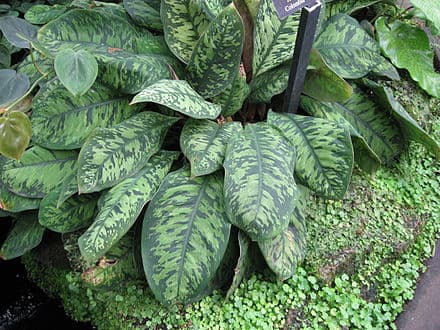
- Calathea
- Maranta
- Small Philodendrons
- Peperomia
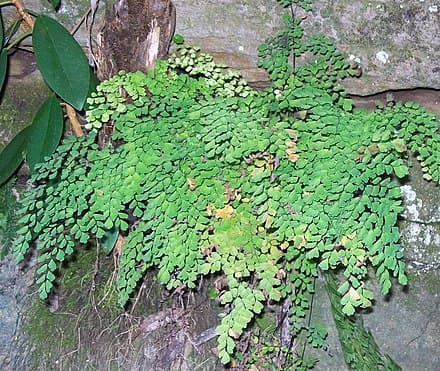
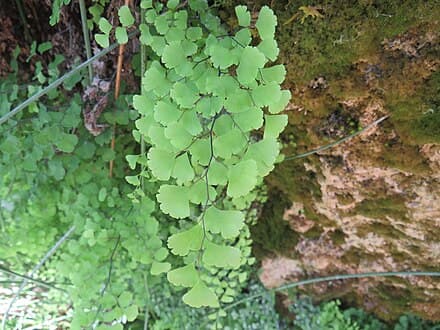
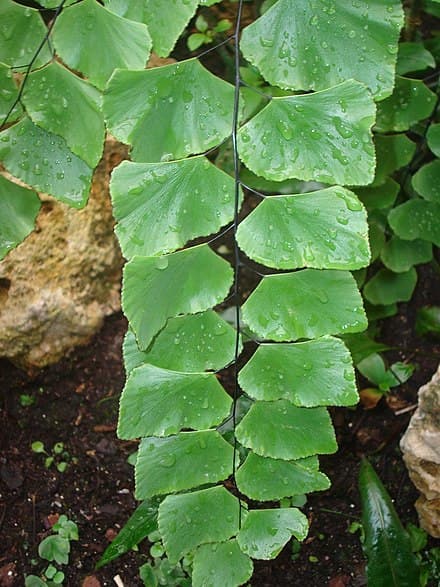
- Ferns
Trailing and hanging plants Add dimension with cascading foliage:
- Pothos
- Heartleaf Philodendron
- String of Hearts
- Tradescantia
Color and Texture Variety
All-green collections are beautiful, but variety creates interest:
Leaf shapes: Mix large dramatic leaves (Monstera, Bird of Paradise) with smaller, intricate ones (Calathea, ferns)
Textures: Combine glossy leaves (Philodendron, Rubber Plant) with matte or velvety ones (Calathea, Alocasia)
Colors: Add plants with variegation (Pothos N'Joy, Philodendron Brasil), colored leaves (Croton, Ti Plant), or patterned foliage (Calathea varieties)
Height Variation
Avoid a flat wall of plants all at the same height:
- Use plant stands of varying heights
- Hang plants from ceiling hooks or wall-mounted planters
- Stack shelves for multiple levels
- Place smaller plants on furniture or risers
Sample Arrangements
Minimalist tropical corner (5-7 plants):
- 1 tall Bird of Paradise or Fiddle Leaf Fig
- 1 medium Monstera
- 1-2 medium Philodendrons
- 1-2 tabletop plants (Calathea, Peperomia)
- 1 trailing Pothos in a hanging planter or on a shelf
Lush jungle corner (12-20+ plants):
- 2-3 tall plants at different heights
- 3-4 medium plants filling middle ground
- 4-6 smaller plants on stands, shelves, and surfaces
- 2-4 trailing plants at various heights
Setting Up Your Humidity System
Tropical corners benefit from concentrated humidity efforts.
Humidifier Placement
Position your humidifier:
- At floor level or on a low table, central to the plant grouping
- With output directed toward (or between) plants, not at walls
- Not so close that it saturates individual plants
- On a waterproof surface to catch any condensation
Target Humidity Levels
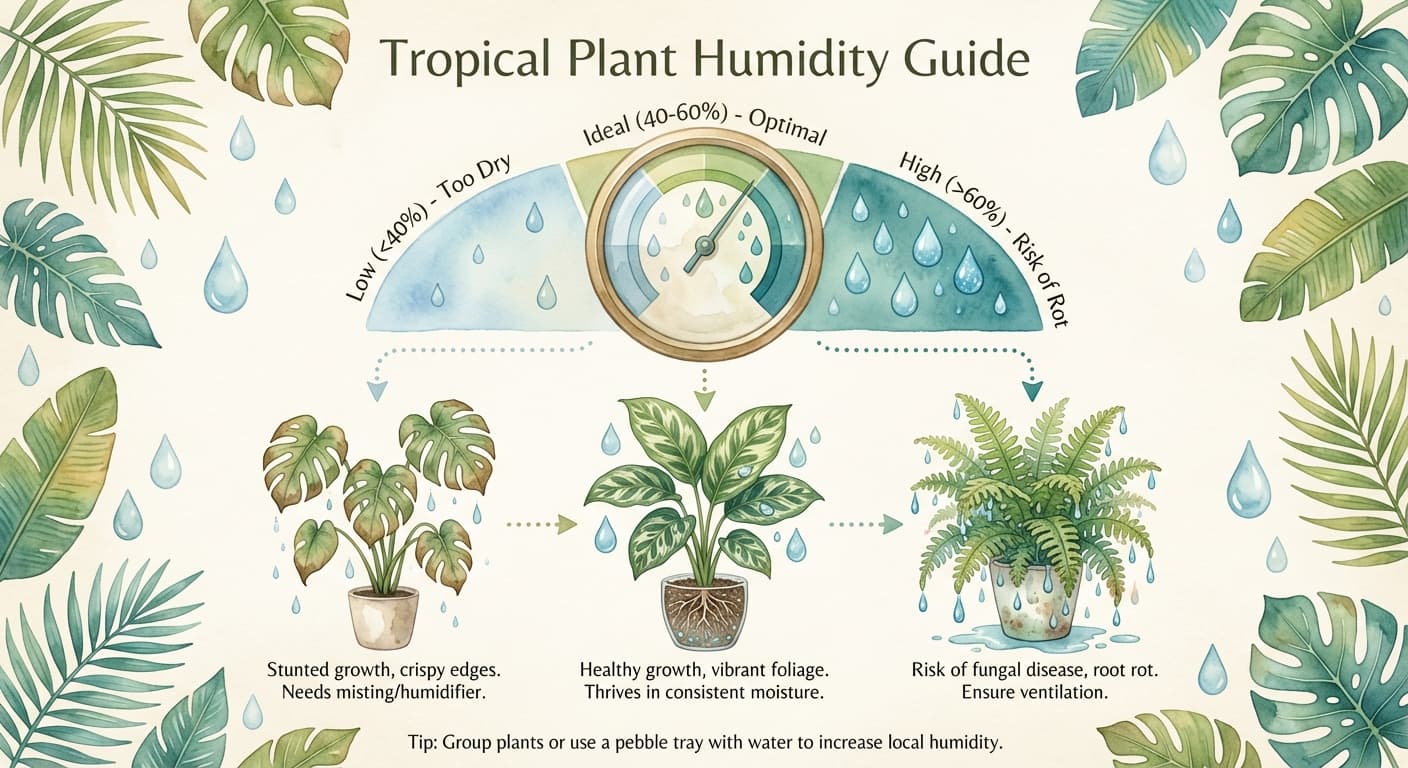
Aim for 50-60% humidity in your tropical corner as a baseline. For Calathea and other humidity-demanding plants, 60-70% is better.
Your hygrometer should show readings consistently in this range. If humidity dips below 50%, increase humidifier output or runtime.
The Grouping Effect
Here's the beauty of a plant corner: grouped plants raise humidity through transpiration. Each plant releases moisture, benefiting its neighbors. A group of 10 plants creates noticeably higher humidity than the same plants scattered around a room.
This "grouping effect" means you may need less humidifier output than you'd expect—the plants help each other.
Avoiding Over-Humidity
Yes, this is possible, though rare in homes. Signs include:
- Condensation on windows or walls
- Moisture damage to walls or floors
- Fungal problems on plant leaves
If you see these issues, reduce humidifier output and ensure some air circulation in the area.
For more on humidity management, see our humidity guide.
Lighting Your Tropical Corner
Even well-positioned corners often benefit from supplemental lighting.
Assessing Natural Light
Before adding lights, evaluate what you have:
- Use a light meter app to check foot-candles at different spots
- Note how light changes throughout the day
- Consider seasonal changes (winter may be much dimmer)
Supplemental Lighting Options
Floor lamp style grow lights ($50-150) Attractive designs that blend with decor. Position to illuminate plants from above or the side.
Clip-on grow bulbs ($20-40 each) Inexpensive and flexible. Clamp to shelves or furniture to spotlight individual plants or areas.
LED strip lights or bars ($30-80) Great for shelving units. Provide even light across a horizontal plane.
Overhead panel lights ($60-150) Suspended above the corner for maximum coverage. More industrial look but very effective.
Lighting Placement Tips
- Position lights above and to the side, mimicking natural sun angles
- Ensure light reaches lower plants, not just the top canopy
- Use timers for consistent 10-14 hour photoperiods
- Adjust height based on plant response
For detailed grow light recommendations, see our lighting guide.
Maintenance Routine
A tropical corner is easier to maintain than scattered plants, but it still needs regular attention.
Daily (1-2 minutes)
- Quick visual scan for problems (wilting, pests, yellowing)
- Check humidifier water level, refill if needed
- Turn on grow lights if not on timers
Weekly (15-30 minutes)
- Check soil moisture on all plants, water as needed
- Empty plant saucers if standing water accumulated
- Wipe humidifier tank and output nozzle
- Rotate plants 1/4 turn for even growth
- Remove any dead leaves
Monthly (30-60 minutes)
- Deep clean humidifier (follow manufacturer instructions)
- Inspect plants closely for pests
- Wipe leaves to remove dust
- Fertilize during growing season
- Reassess plant placement as they grow
- Check for plants needing repotting
Seasonal
Spring:
- Resume fertilizing
- Check if any plants need repotting
- Propagate overgrown plants
Fall:
- Increase humidifier runtime as heating season begins
- Reduce fertilizing
- Prune any leggy growth
Budget vs. Premium Setups
You can create a tropical corner at almost any budget.
Budget Setup (~$100-200)
Equipment:
- Basic humidifier ($30)
- Digital hygrometer ($12)
- Plastic floor tray ($15)
- 2-3 clip-on grow bulbs and clamps ($50)
Plants:
- Start with hardy, affordable tropicals: Pothos, Philodendron, Snake Plant, Peace Lily
- Buy small and let them grow
- Look for sales and clearance sections
- Propagate to expand your collection
Décor:
- Repurpose furniture you have as plant stands
- DIY plant risers from crates or stacked books
- Nursery pots are fine (group them so they're less visible)
Mid-Range Setup (~$300-500)
Equipment:
- Quality humidifier with larger tank ($60)
- Hygrometer with min/max tracking ($15)
- Waterproof mat ($25)
- LED floor lamp grow light ($80)
- Assorted plant stands ($80)
Plants:
- Mix of beginner and intermediate tropicals
- 1-2 statement plants (medium Monstera, Fiddle Leaf Fig)
- Several medium plants
- Tabletop plants in decorative pots
- Hanging planters
Premium Setup (~$800+)
Equipment:
- High-quality humidifier ($100+)
- Smart hygrometer with app ($30)
- Premium floor protection ($50)
- Full LED grow light system ($150+)
- Matching plant stands and furniture ($200+)
- Moss poles, wall-mounted planters, hanging hardware ($100+)
Plants:
- Statement specimens (large Monstera, Bird of Paradise, rare varieties)
- Designer pots and planters
- Full layered arrangement
- Rare or collector plants
Common Setup Mistakes
Learn from others' errors:
Overcrowding
The mistake: Packing plants too tightly, leaving no room to grow or access for care.
The fix: Leave breathing room between plants. Plan for growth—that small Monstera will be massive in two years.
Poor Drainage
The mistake: Plants sitting in water, no protection for floors.
The fix: Always use pots with drainage holes. Use waterproof trays beneath everything. Empty saucers after watering.
Ignoring Air Circulation
The mistake: Creating stagnant air conditions that promote fungal issues.
The fix: Ensure some air movement. A small fan on low, or simply not sealing off the corner completely. Plants need air exchange.
All-or-Nothing Lighting
The mistake: Either relying entirely on insufficient natural light or blasting with grow lights 16+ hours daily.
The fix: Assess actual light levels. Supplement as needed. Use timers for consistent 10-14 hour days.
Neglecting Tall Plant Access
The mistake: Not being able to reach tall plants for watering or pest inspection.
The fix: Ensure you can access all plants. Use rolling caddies for heavy pots. Consider a small step stool.
Forgetting Winter Changes
The mistake: Setting up in summer and being surprised when plants struggle in winter.
The fix: Plan for winter from the start. Your corner will need more humidification and possibly more supplemental light when heating runs and days are short.
Frequently Asked Questions
How many plants do I need for a tropical corner?
A minimum of 5-7 plants creates visual impact and enough grouping effect for humidity benefits. More plants create more drama, but start with what you can maintain and expand gradually.
Can I create a tropical corner in a dark room?
Yes, with adequate grow lights. You'll need to invest more in lighting, but grow lights can fully replace natural light for tropical plants.
How much humidity does a plant corner need?
Aim for 50-60% humidity, higher (60-70%) if you have humidity-demanding plants like Calathea. Grouped plants help maintain humidity through transpiration.
What if I have pets?
Choose pet-safe plants if your pets access the area. Calathea, Peperomia, Prayer Plants, and Spider Plants are non-toxic. Avoid Philodendron, Pothos, and Peace Lily if curious pets might chew leaves.
How big should my tropical corner be?
Start with whatever space you have—even a 3x3 foot corner works for a smaller arrangement. 4x4 feet or larger allows for a more impressive layered display.
Do I need a humidifier if I group my plants?
Grouping helps, but in dry climates or during heating season, most tropical corners still benefit from a humidifier to maintain 50%+ humidity consistently.
Can I put tropical plants near a window?
Yes, near windows is often ideal for light. Just avoid placing plants where they'll receive intense direct afternoon sun (unless they're sun-tolerant species) or be blasted by cold drafts in winter.
How do I prevent pests in a grouped display?
Inspect new plants before adding them to your corner. Check regularly for early signs of pests. Good air circulation helps. If you find pests, isolate affected plants immediately.
Building Your Tropical Paradise
Creating a tropical plant corner is one of the most rewarding houseplant projects you can undertake. That moment when you step back and see your own indoor jungle—lush, layered, and thriving—makes all the planning and investment worthwhile.
Start with what you have and what you can manage. A small corner with five well-cared-for plants beats an ambitious setup you can't maintain. As you gain confidence and your plants grow, expand and refine.
Your tropical corner is a living, evolving thing. Plants will grow, some will need replacing, you'll discover new favorites. Enjoy the process.
For complete tropical plant care, return to our Complete Guide to Tropical Houseplants.